
SkyWest Operated Alaska Airlines SKW3220, an EMBRAER 175, from Seattle to Arcata Makes U turn at Seattle Tacoma International Airport, United States: What You Need to Know
SkyWest operated Alaska Airlines flight SKW3220 (Embraer 175) performed a U-turn to Seattle-Tacoma International Airport

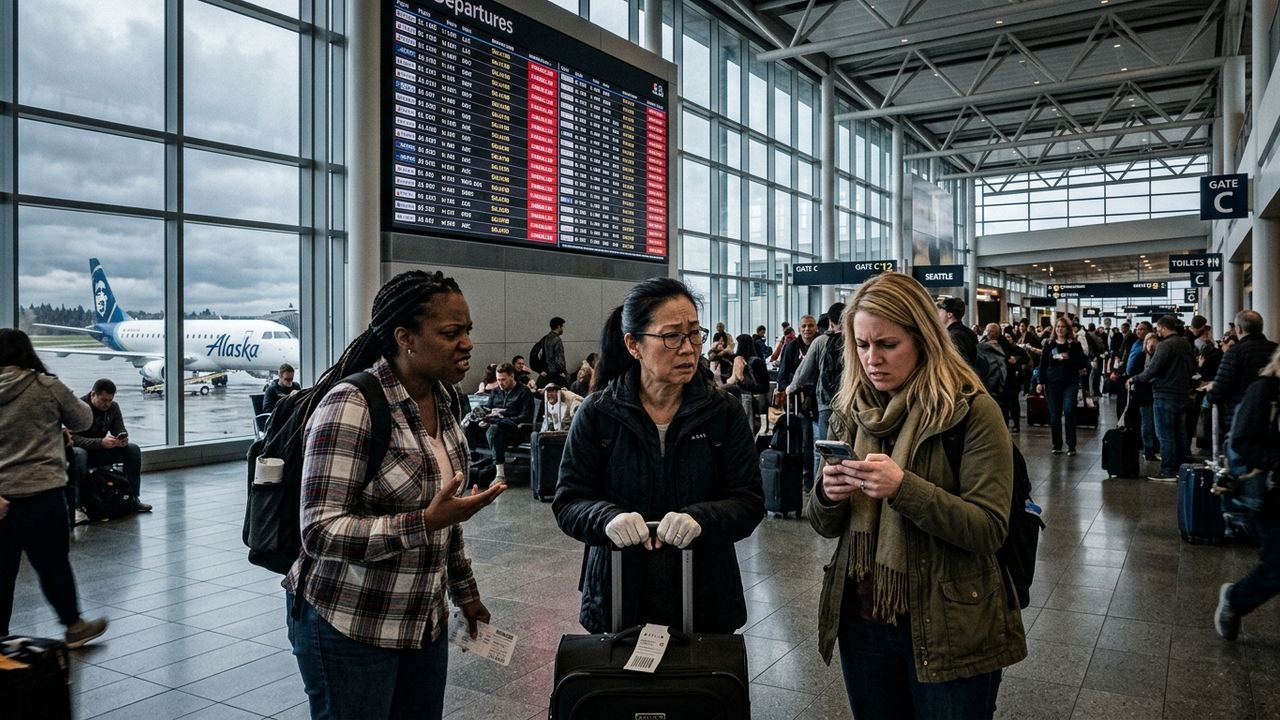
Image generated by AI
[Seattle, June 27, 2026] — A regional flight operated by SkyWest Airlines on behalf of Alaska Airlines was forced to perform a U-turn and return to Seattle-Tacoma International Airport after departing for Arcata, California. The aircraft, an Embraer 175 identified as flight SKW3220, experienced a brief operational disruption that necessitated a return to its point of origin shortly after takeoff.
The incident underscores the rigorous safety protocols governing regional air corridors between Washington and Northern California. While the diversion caused a temporary shift in travel plans for passengers, industry reports indicate that the return was a precautionary measure to ensure aircraft integrity and passenger safety.
FAA Safety Protocols Govern SKW3220 Diversion Decision
The decision to return the Embraer 175 to Seattle was made in accordance with strict operational guidelines established by the Federal Aviation Administration (FAA). Under these federal standards, flight crews are required to prioritize safety over schedule adherence whenever irregular conditions are detected.
Regional aircraft, particularly the Embraer E175, are frequently deployed on high-frequency routes serving secondary airports like Arcata. These destinations often require precise navigation approaches and are highly sensitive to weather-related landing conditions. According to aviation observers, the return of SKW3220 suggests a proactive safety decision rather than a critical emergency. The FAA and the US Department of Transportation maintain continuous oversight of such events to ensure that the stability of domestic regional connectivity is not compromised.
Arcata Regional Tourism Impacted by Flight Disruption
The diversion had a momentary effect on the tourism pipeline for Arcata, located in Humboldt County, Northern California. The Arcata-Eureka Airport serves as a primary gateway for the region, facilitating the arrival of visitors interested in eco-tourism and coastal exploration.
Transportation planning data from Humboldt County highlights the airport's role in maintaining the flow of visitors from major hubs like Seattle. The interruption of flight SKW3220 briefly stalled the arrival of passengers connecting from the Pacific Northwest. However, tourism officials indicate that the region's infrastructure remains resilient, as the coastal Highway 101 corridor provides a reliable secondary transit link for travelers. The disruption was short-lived and is not expected to influence long-term visitor statistics for Northern California.
Seattle-Tacoma International Airport Manages Aircraft Return
Despite the unexpected return of the SkyWest-operated flight, Seattle-Tacoma International Airport (SEA) maintained full operational continuity. Managed by the Port of Seattle, the hub is designed to absorb diverted flights efficiently through its extensive runway capacity and on-site maintenance facilities.
SEA serves as a critical nexus for both international and domestic travel, supporting numerous Alaska Airlines regional rotations every day. The airport's infrastructure allows for rapid aircraft turnaround, meaning diverted flights like SKW3220 can be serviced and reassigned with minimal impact on the broader flight schedule. This operational efficiency ensures that the high volume of tourism traffic—including passengers connecting to Alaska cruises and trans-Pacific flights—remains steady.
Reliability Standards in US Regional Aviation Networks
The handling of flight SKW3220 is emblematic of the broader reliability standards within the US domestic aviation system. Regional carriers, such as SkyWest operating under the Alaska Airlines brand, utilize a flexible decision-making framework that allows pilots to prioritize safety without destabilizing the wider network.
The Embraer E175 is specifically utilized for these lower-demand regional routes due to its operational efficiency. By maintaining a "safety-first" culture, regional aviation supports the economic viability of rural and coastal destinations. These networks are essential for sustaining travel demand in areas that lack major metropolitan airport infrastructure, ensuring that passengers remain protected while the system maintains overall reliability.
Sustaining the Seattle to Arcata Tourism Corridor
Despite the temporary diversion, the structural link between the Seattle hub and the Arcata destination remains robust. Seattle continues to act as the primary gateway for West Coast tourism, while Arcata remains a key destination for nature-based travel under California's coastal tourism frameworks.
The California Department of Transportation (Caltrans) continues to integrate regional airport access with highway networks to ensure tourism resilience. Because the aviation network stabilized quickly following the SKW3220 incident, the flow of leisure and eco-tourism travelers remained largely unaffected.
Passenger Safety Reinforced Through Controlled Diversions
The controlled return of the aircraft to Seattle demonstrates the effectiveness of the current aviation safety net. By adhering to FAA standards, the crew of SKW3220 ensured that the integrity of the flight was maintained, preventing a potential escalation of a technical or operational issue.
The incident reinforces the fact that US aviation infrastructure is capable of sustaining reliable passenger movement even when mid-route adjustments are required. Tourism between Washington and Northern California is expected to proceed without further interruption, as the regional fleet continues to operate under strict federal oversight.
Flight Summary Data
| Flight Number | Aircraft Type | Departure Point | Destination | Action Taken |
|---|---|---|---|---|
| SKW3220 | Embraer 175 | Seattle (SEA) | Arcata (ACV) | U-Turn / Return to SEA |
Why This Matters: The Regional Aviation Safety Paradox
The diversion of flight SKW3220 highlights a critical "safety paradox" in regional aviation: the very disruptions that cause passenger inconvenience are the primary evidence of a functioning safety system. In the context of regional hubs, a U-turn is not a failure of the airline, but a success of the FAA's regulatory framework.
For the tourism industry, this incident proves that regional connectivity is dependent on the ability of airlines to pivot quickly. When a flight to a secondary airport like Arcata is diverted, the economic impact is minimized because the hub (Seattle) possesses the infrastructure to recover the flight almost immediately. This interdependence between high-capacity hubs and specialized regional aircraft like the Embraer 175 ensures that even when a specific flight is disrupted, the broader tourism ecosystem remains intact. This level of systemic resilience is what allows rural destinations to maintain a steady stream of visitors despite the inherent risks of regional flight operations.
Related Travel Guides
Disclaimer
This article is for informational and educational purposes only. It does not constitute legal, financial, or professional advice. While we strive to provide accurate and up-to-date information, travel policies, regulations, and conditions change rapidly. Always verify information with official sources before making travel decisions. Nomad Lawyer makes no representations about the accuracy, reliability, completeness, or suitability of the information provided. Readers should consult qualified professionals for advice specific to their circumstances. The views expressed in this article are those of the author and do not necessarily reflect the views of Nomad Lawyer.
Preeti Gunjan
Contributor & Community Manager
A passionate traveller and community builder. Preeti helps grow the Nomad Lawyer community, fostering engagement and bringing the reader experience to life.
Learn more about our team →