
Singapore, Vienna, Barcelona, Dubai Lead $500B Global Conference Race as Cities Compete for Mega Events in 2026
Top-tier destinations deploy cutting-edge venues and infrastructure to dominate the international conference circuit, reshaping business tourism and economic growth worldwide.

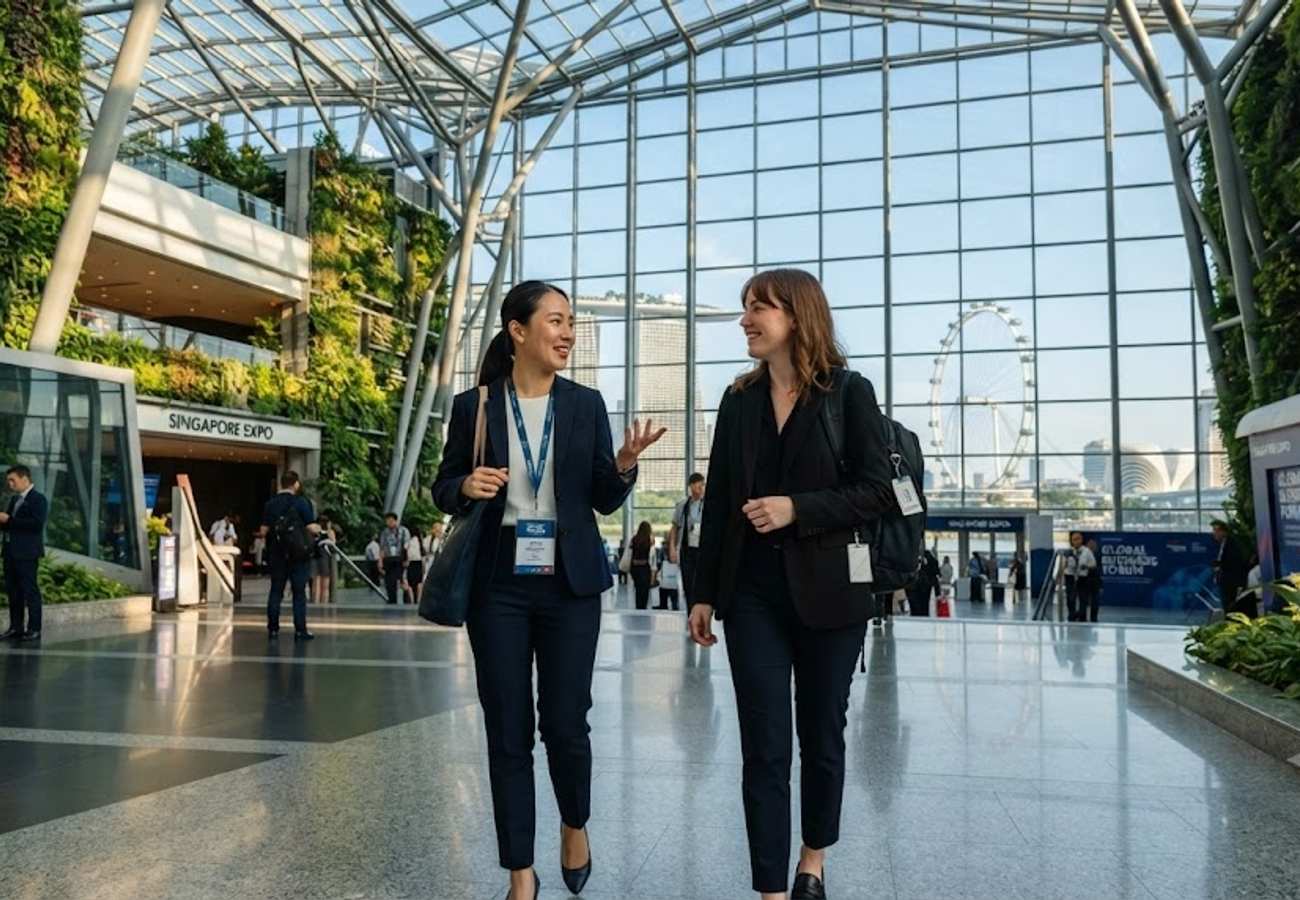
Image generated by AI
The global race for conference supremacy has intensified dramatically. Singapore, Vienna, Barcelona, Dubai, Las Vegas, Paris, Seoul, Chicago, Frankfurt, and Bangkok are no longer simply hosting events—they're orchestrating economic transformation through strategic infrastructure, world-class facilities, and relentless innovation in business event delivery.
These destinations understand a critical truth: international conferences are now engines of GDP growth, foreign investment, and knowledge transfer. The stakes have never been higher.
The Conference Industry's Seismic Shift
Business events have transcended their traditional role as mere meetings. Today, they function as catalysts for global collaboration, driving billions in economic activity across tourism, hospitality, aviation, and technology sectors.
Reddit: "I've attended conferences in five different continents. Singapore and Dubai deliver the seamless experience. Everything works." — r/businesstravel
Cities that master conference hosting gain outsized competitive advantages. They attract multinational corporations, scientific organizations, government bodies, and industry associations. They create jobs. They build brands. They establish themselves as indispensable nodes in the global business network.
The destinations leading this race share a common playbook: massive convention centers, world-class airports with direct international routes, extensive luxury accommodation, modern urban transit systems, and proven expertise in executing events that welcome thousands of delegates simultaneously.
Why Singapore Sets the Benchmark
Singapore has become the gold standard—a city that has engineered conference excellence with surgical precision. Its competitive advantage isn't luck; it's systematic design.
The city's compact geography eliminates friction. Delegates can travel from Changi Airport to Marina Bay Sands or Suntec Singapore Convention & Exhibition Centre in minutes. Hotels, restaurants, entertainment, and business venues cluster within seamless distance. No wasted time. No logistical nightmares.
Singapore's reputation for operational excellence, safety, digital infrastructure, and cleanliness attracts international organisers with demanding standards. Major technology summits, healthcare congresses, and financial forums regularly draw thousands of participants. The city doesn't just host conferences—it perfects them.
Vienna's Scientific Dominance
Vienna has claimed leadership in scientific, medical, and academic congresses through a different but equally effective strategy: positioning itself as a research and knowledge hub.
The city leverages its research institutions, universities, and international organizations to create a continuous pipeline of high-value events. Austria Center Vienna provides world-class facilities while the city's exceptional rail and public transport networks ensure delegates move effortlessly across the destination.
Vienna's cultural heritage amplifies the visitor experience beyond conference halls. Organisers recognize that this combination—substance, logistics, and beauty—attracts both serious scholars and institutional decision-makers.
Barcelona's Innovation Ecosystem
Barcelona has built an ecosystem where technology and entrepreneurship conferences thrive. The city doesn't simply provide venue space; it provides a vibrant innovation landscape.
Fira Barcelona Gran Via, one of Europe's largest exhibition complexes, anchors the city's capacity. But Barcelona's real advantage lies in its thriving start-up community, internationally recognized research institutions, and Mediterranean hospitality that makes networking extend beyond formal sessions.
Organisers seeking to host major technology exhibitions, telecommunications forums, and digital innovation conferences increasingly choose Barcelona because it offers both business infrastructure and cultural magnetism.
Dubai's Strategic Positioning
Dubai has weaponized geography. Positioned at the intersection of Europe, Asia, and Africa, the city serves as a natural gathering point for multinational enterprises and cross-regional organizations.
Government investment has been relentless: state-of-the-art airports, luxury hotel infrastructure, business-friendly regulatory frameworks, and modern transport systems. Dubai World Trade Centre anchors the conference industry, hosting major exhibitions, trade fairs, and government summits across diverse sectors.
The city's year-round accessibility and competitive cost structure relative to comparable European and North American venues have accelerated its rise as a premier business events destination.
Las Vegas: The Unmatched Convention Powerhouse
Las Vegas maintains an irreplaceable position through integrated infrastructure that competing cities struggle to replicate. The city seamlessly blends business with leisure—a deliberate strategy that encourages extended networking and deal-making.
The Las Vegas Convention Center accommodates some of North America's largest trade shows and industry exhibitions, regularly welcoming over 100,000 participants for flagship events. Combined with unmatched hotel capacity and entertainment infrastructure, Las Vegas continues to dominate the North American conference market.
Paris, Seoul, Chicago, Frankfurt, and Bangkok: The Rising Tier
Paris attracts sustainability forums, luxury industry events, and international organizational meetings through renowned hospitality and globally recognized exhibition venues.
Seoul leverages advanced digital infrastructure and technological leadership to dominate innovation-focused conferences in biotechnology and emerging industries.
Chicago's McCormick Place provides enormous exhibition capacity for industrial and healthcare events, securing the city's position as North America's secondary conference hub.
Frankfurt, anchored by Messe Frankfurt, remains Europe's premier trade fair destination with unmatched logistics and international connectivity.
Bangkok represents Asia's fastest-growing conference market, offering modern facilities, competitive operating costs, and exceptional value—attracting organisers seeking efficiency without sacrificing quality.
The Infrastructure Arms Race
These cities are locked in a strategic competition to expand venue capacity, improve airport connectivity, and enhance digital infrastructure. According to recent industry analysis, international conferences represent a $500+ billion global market, with venue selection profoundly influencing ROI for organizers and delegates.
Cities that fail to invest in convention center expansion, airport modernization, and transport infrastructure risk losing marquee events to competitors. The margin for error has narrowed significantly.
What Organisers Actually Demand
International conference organisers evaluate destinations using specific criteria: venue capacity and technical capabilities, airport connectivity and flight frequency, accommodation range and pricing, public transport efficiency, regulatory environment, and proven track record with comparable events.
Cities like Singapore and Dubai dominate because they excel across all metrics simultaneously. They eliminate logistical friction. They provide exceptional delegate experiences. They deliver measurable return on investment for organizers.
The Broader Economic Impact
Conference hosting generates outsized economic returns. Delegates spend money on accommodation, dining, transportation, and tourism activities. Convention centers create permanent jobs. Hotels expand. Airlines add routes. The multiplier effects ripple through entire regional economies.
For smaller cities aspiring to capture conference business, the barrier to entry has become formidable. Success requires sustained investment, political commitment, and years of relationship-building with international event associations and corporate organizers.
Looking Ahead: 2026 and Beyond
The cities dominating this race understand that conference supremacy isn't static. It requires constant innovation: expanding venue capacity, improving airport connectivity, enhancing digital event technology, and cultivating relationships with international event organizations.
The competition will intensify. Secondary cities will invest aggressively. Emerging destinations will challenge established leaders. The winners will be those that combine exceptional infrastructure with deep understanding of organizer needs and delegate expectations.
The global conference circuit isn't just reshaping business travel—it's redefining how cities compete for economic relevance in the 21st century.
Related Travel Guides
Disclaimer
This article is for informational and educational purposes only. It does not constitute legal, financial, or professional advice. While we strive to provide accurate and up-to-date information, travel policies, regulations, and conditions change rapidly. Always verify information with official sources before making travel decisions. Nomad Lawyer makes no representations about the accuracy, reliability, completeness, or suitability of the information provided. Readers should consult qualified professionals for advice specific to their circumstances. The views expressed in this article are those of the author and do not necessarily reflect the views of Nomad Lawyer.
Kunal K Choudhary
Co-Founder & Contributor
A passionate traveller and tech enthusiast. Kunal contributes to the vision and growth of Nomad Lawyer, bringing fresh perspectives and driving the community forward.
Learn more about our team →