
Alternative Singapore: A 24-Hour Guide Beyond the Postcard Spots
Explore Singapore's local neighbourhoods, historic shophouses, UNESCO hawker culture, and green rail corridors on a unique 24-hour alternative itinerary.

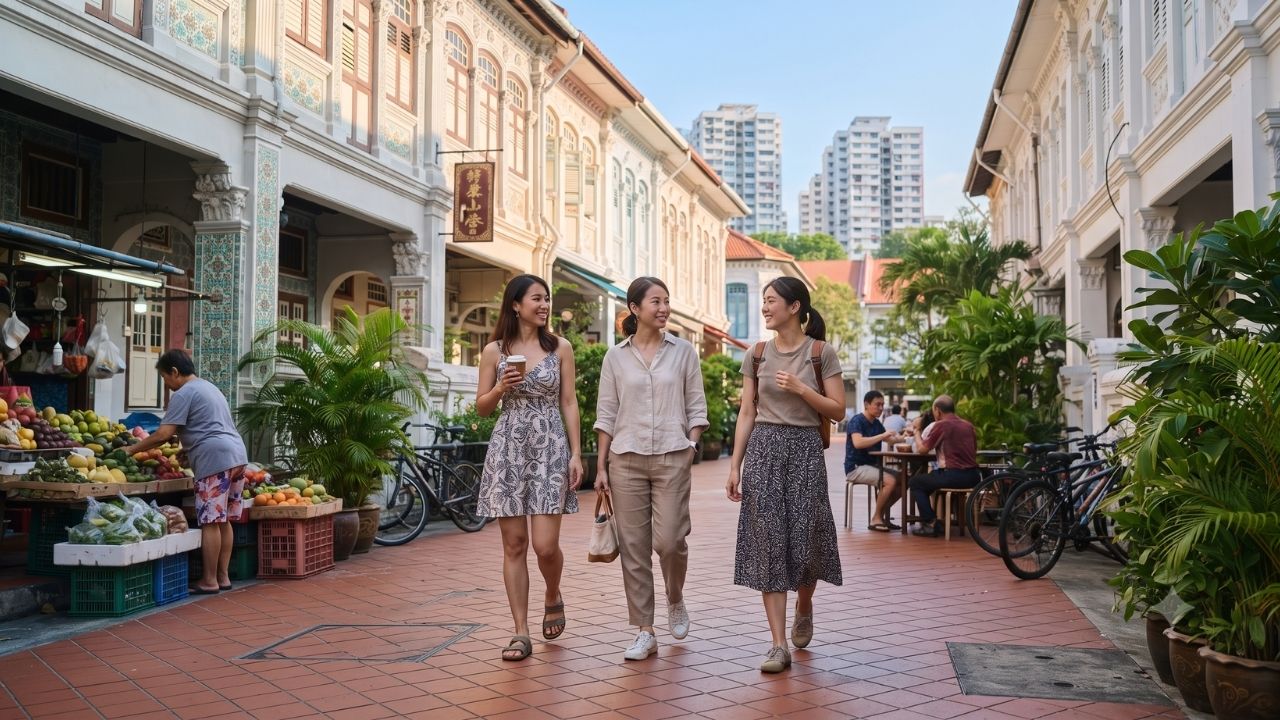
Image generated by AI
Singapore welcomed 16.9 million international tourists in 2025, generating record-breaking receipts of S$32.8 billion and driving a shift toward neighborhood-focused, alternative travel itineraries beyond the tourist core.
Reimagining Singapore: The Neighborhood Travel Trend
According to government statistics, international arrivals to Singapore rose from 16.7 million in 2024 to 16.9 million in 2025, while tourism receipts grew 10% year-on-year to S$32.8 billion (up from S$29.8 billion in 2024). The Singapore Tourism Board's (STB) Tourism 2040 strategy projects receipts to reach between S$47 billion and S$50 billion, placing emphasis on destination attractiveness, future demand, and differentiated, high-value travel experiences.
Rather than concentrating visits around Marina Bay, Sentosa, or Orchard Road, travelers are increasingly exploring residential neighborhoods. With a dense rail network spanning 240 kilometers across more than 170 MRT stations (carrying over three million daily passenger journeys and scheduled to reach 360 kilometers over the next decade), independent, neighborhood-led travel has become highly accessible.
The Alternative 24-Hour Itinerary
To help visitors explore the historic, culinary, and ecological layers of Singapore, local destination specialists suggest a structured 24-hour alternative itinerary:
Suggested 24-Hour Alternative Singapore Itinerary
| Time | Experience & Focus | Highlight District / Access | Ideal Duration |
|---|---|---|---|
| 7:00 AM | Kopitiam breakfast and wet market | Tiong Bahru / Katong / Geylang Serai | 2.0 Hours |
| 9:00 AM | Shophouse trail and historic temples | Chinatown / Kampong Gelam / Little India | 2.0 Hours |
| 11:00 AM | Hawker center lunch (UNESCO heritage) | Maxwell / Old Airport Road / Chinatown | 1.5 Hours |
| 1:00 PM | Botanical walks and National Orchid Garden | Singapore Botanic Gardens (Napier MRT) | 2.0 Hours |
| 3:00 PM | Railway history and green belt hike | Rail Corridor (King Albert Park MRT) | 2.0 Hours |
| 5:30 PM | Golden-hour neighborhood street walk | Heritage conservation precincts | 1.5 Hours |
| 7:00 PM | Regional dinner (Malay/Peranakan/Indian) | Local neighborhood food centers | 2.0 Hours |
| 9:30 PM | Evening walk and late-night local dessert | Kampong Gelam / Joo Chiat | 1.5 Hours |
7:00 AM:kopitiam Breakfast and Neighborhood Markets
Begin your morning in historic residential districts like Tiong Bahru (known for its Art Deco housing), Joo Chiat, Katong, or Geylang Serai. Savor a traditional kopitiam breakfast of kaya toast, soft-boiled eggs, and local coffee (kopi) to observe the working day begin, followed by a walk through a wet market.
9:00 AM: The Heritage Shophouse Trail
Explore the conserved shophouses and narrow lanes of Chinatown, Little India, or Kampong Gelam. Look above the shopfronts to study the decorative motifs and conserved architecture. Chinatown offers an unusual concentration of religious sites, with Thian Hock Keng Temple, Masjid Jamae, and Sri Mariamman Temple sitting within the same heritage precinct.
11:00 AM: Hawker Culture and Intangible Heritage
In 2020, UNESCO inscribed Hawker Culture in Singapore on the Representative List of the Intangible Cultural Heritage of Humanity, recognizing hawker centers as community dining spaces where diverse populations gather over food. Spend 60 to 90 minutes observing the rhythms of communal dining while sampling multi-generational recipes across Chinese, Malay, and Indian stalls.
1:00 PM: Botanical Corridors
Trade skyscrapers for green spaces at the Singapore Botanic Gardens, a UNESCO World Heritage site (open 5:00 AM to midnight; National Orchid Garden operates 8:30 AM to 7:00 PM, final entry at 6:00 PM). Access the gardens directly via the Napier or Botanic Gardens MRT stations.
3:00 PM: The Rail Corridor
Walk a section of the Rail Corridor, a 24-kilometer ecological corridor connecting Woodlands with Tanjong Pagar along a former railway route. The former Bukit Timah Railway Station section (accessible via King Albert Park MRT) provides historical context. Note that the South section between Henderson Road and Spooner Road is closed in 2026 for Phase 2 improvement works, and the corridor is not illuminated at night.
5:30 PM: Golden-Hour Neighborhood Walk
Watch the transition from daylight to evening in a residential district as home lights illuminate and local markets become active, providing a textured view of the city.
7:00 PM: Dinner in a Local Food District
Sample regional food traditions (such as Peranakan, Malay, or southern Indian cuisines) at a neighborhood food center, dispersing your travel spend directly to local culinary practitioners.
9:30 PM: Late-Night Neighborhood Settle
End your day with a slower pace, walking through illuminated shophouses in Kampong Gelam or Joo Chiat, and settling into a local cafe or traditional dessert shop.
Destination Specialist Local Insider Tips
To help travelers navigate Singapore sustainably, local travel specialists recommend the following insider tips:
- Obtain an EZ-Link Card Upon Arrival: To navigate the 240-kilometer rail system seamlessly, purchase a transit card at any MRT station for low-cost, green transportation.
- Carry a Reusable Water Bottle: Singapore's tropical climate is humid and warm. Carry water, use shaded paths, and avoid outdoor walking during peak afternoon sun.
- Pre-check Rail Corridor Access Points: Due to the Phase 2 South section closure (since March 9, 2026), enter the trail at Bukit Timah Railway Station via King Albert Park MRT.
- Observe Hawker Centre Etiquette: Respect the local chope custom (using tissue packets to reserve a table) and return your food trays to designated stations.
- Dress Appropriately for Places of Worship: When exploring temples in Chinatown or Little India, cover your shoulders and knees, and remove your shoes before entering.
Future Outlook
By utilizing the public transit system and exploring independent markets, travelers help distribute tourist receipts directly to small businesses and neighborhood communities. Singapore's Tourism 2040 strategy continues to support this shift, highlighting the value of deeper, differentiated travel experiences that protect regional heritage.
Related Travel Guides
Disclaimer
This article is for informational and educational purposes only. It does not constitute legal, financial, or professional advice. While we strive to provide accurate and up-to-date information, travel policies, regulations, and conditions change rapidly. Always verify information with official sources before making travel decisions. Nomad Lawyer makes no representations about the accuracy, reliability, completeness, or suitability of the information provided. Readers should consult qualified professionals for advice specific to their circumstances. The views expressed in this article are those of the author and do not necessarily reflect the views of Nomad Lawyer.
Preeti Gunjan
Contributor & Community Manager
A passionate traveller and community builder. Preeti helps grow the Nomad Lawyer community, fostering engagement and bringing the reader experience to life.
Learn more about our team →