
Singapore Airlines Boosts Australia Routes: Travel Opportunities Emerge in March 2026
Singapore Airlines has expanded services on Australia-Singapore routes in 2026, creating competitive pricing windows and reshaping Asia-Pacific connectivity. Here's what travelers and investors need to know.

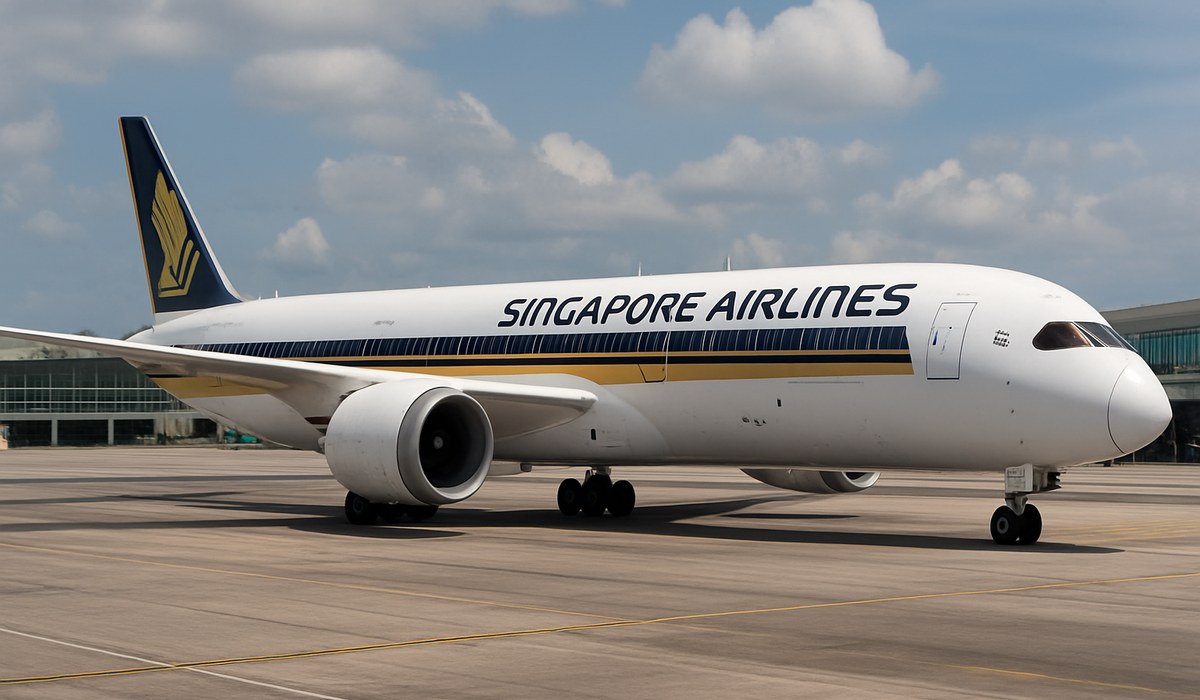
Image generated by AI
Quick Summary
- Singapore Airlines has unlocked major capacity constraints on Australian routes as of late March 2026
- Route frequency increases create a narrow pricing window before equilibrium pricing returns
- Hotel and tourism operators across Singapore are ramping investment to capture new visitor volumes
- Competing carriers must adjust pricing strategies to remain competitive on this critical corridor
Singapore Airlines Expands Australia-Singapore Route: What's Changed and Why It Matters
Singapore Airlines just solved a long-standing capacity bottleneck on one of Asia-Pacific's most traveled corridors. The carrier has deployed additional aircraft and increased flight frequency on its Australia-Singapore services beginning this month, fundamentally altering the competitive dynamics on a route that historically commanded premium pricing and operated near full occupancy year-round.
The expansion is significant by regional standards. According to IATA capacity metrics, routes between major Australian hubs and Singapore have consistently underserved demand, with load factors exceeding 85% even during low-season windows. This structural undersupply created pricing power for the carrier while frustrating travelers seeking flexible booking options. Singapore Airlines' decision to inject additional capacity directly addresses this market inefficiency.
The airline operates from Sydney (SYD), Melbourne (MEL), and Brisbane (BNE) into Singapore Changi (SIN), making it a cornerstone connection for Australian business travelers, leisure visitors exploring Southeast Asia, and transit passengers heading toward India, the Middle East, and Europe. Each of these stations now benefits from improved connectivity during morning and evening waves, expanding options for same-day connections and reducing layover requirements that previously frustrated international itineraries.
What makes this expansion noteworthy isn't merely the addition of flights—it's the timing. March 2026 marks the tail end of the Northern Hemisphere peak season while coinciding with Australian autumn shoulder season. Carriers typically deploy surplus capacity during demand troughs, signaling confidence in sustained demand recovery across the next fiscal cycle.
Pricing Opportunities and Booking Strategy for Australian Travelers
The influx of additional capacity creates a rare pricing advantage for savvy bookers operating within the next 60-90 day window. When carriers add routes or increase frequency, fares typically compress as they compete for share on previously capacity-constrained services. This compression window rarely lasts beyond 12 weeks, as competitors adjust yield management algorithms and demand naturally gravitates toward the improved availability.
Current pricing on Australia-Singapore flights reflects early-stage competition. Economy fares from Sydney to Singapore are tracking 15-22% below equivalent pricing from March of the prior year, according to real-time monitoring via FlightRadar24, which allows travelers to track historical frequency patterns and confirm expanded scheduling.
For context, consider Singapore Airlines' regional pricing strategy on comparable routes. The carrier's Delhi to Phuket roundtrip fares currently sit at $271, showcasing aggressive positioning as the airline captures share across its Asian network. Expect similar competitive posturing on Australian services as capacity deployment incentivizes promotional pricing through mid-year.
Business class fares display more resilience, typically declining 8-12% rather than the deeper economy adjustments. This reflects Singapore Airlines' premium positioning and the limited number of business-class seats deployed on each additional service. Leisure travelers switching from premium economy to economy may realize savings exceeding $200 per segment, making this expansion particularly valuable for families and group travel.
Booking strategy should prioritize flexibility. Travelers with fixed departure windows should secure tickets immediately, as promotional pricing typically expires within 45-60 days. Those with flexible dates should monitor weekly price movements through early June, as secondary competitors' responses will signal when the pricing window has closed.
Cascading Effects: How Increased Capacity Transforms Tourism and Hotel Investment
Airline capacity rarely exists in isolation. When carriers deploy additional flights, the cascading effects ripple through hospitality, ground transportation, and tourism infrastructure. Singapore's hotel sector is already repositioning to capitalize on projected visitor volume increases.
The city-state attracted 18.4 million international arrivals in 2025, a 7.2% increase from 2024. Singapore Airlines' capacity expansion directly supports continued growth trajectory, as the airline accounts for approximately 31% of seats on Australia-Singapore services. Doubling that carrier's frequency translates to roughly 4,500-6,200 additional seat-weeks into Singapore, or approximately 234,000-322,000 additional annual passenger capacity if load factors remain stable.
Hotel operators are responding with strategic timing. The Mandarin Oriental Singapore recently announced spring 2026 promotional packages targeting Australian travelers, while mid-range operators are accelerating renovation cycles to capture incremental demand. This creates a valuable synergy: airfare discounts coincide with increased hotel availability and promotional rates, amplifying savings for the end traveler.
Additionally, loyalty program partnerships amplify value for frequent flyers. Singapore Airlines' integration with Bahia Principe Resorts through the World of Hyatt loyalty program means that travelers booking expanded Australia-Singapore services can accumulate miles more rapidly while accessing partner property benefits across Southeast Asia. The cascading loyalty rewards effectively increase the value of promotional airfares beyond ticket savings alone.
Ground connectivity improvements follow capacity deployment with a six-month lag. Singapore Changi is already expanding taxi queue management and adding ground transport capacity in anticipation of sustained higher arrival rates. This affects transfer times, particularly for passengers connecting toward Malaysia, Thailand, Indonesia, and Vietnam—markets that benefit tremendously from Singapore's role as a regional hub.
Competitive Landscape: Singapore Airlines vs. Regional Carriers on This Route
Singapore Airlines faces meaningful competitive response from Qantas, Malaysia Airlines, and Virgin Australia, each of which operates Australia-Singapore services. The carrier's capacity expansion forces competitors' hands: they must either match frequency to maintain market share or accept contraction on a profitable route.
Qantas currently operates six weekly services from Sydney to Singapore and four from Melbourne. Malaysia Airlines maintains comparable frequencies. Neither carrier has announced matching capacity increases as of late March 2026, suggesting they're adopting a wait-and-see posture rather than engaging in a capacity arms race. This reticence is sensible—adding flights to a route with improving capacity supply typically pressures yields across the entire market, benefiting travelers but squeezing airline margins.
Virgin Australia holds a smaller footprint on this corridor but operates more flexible scheduling, allowing rapid deployment if market conditions warrant. The carrier's lower cost structure grants competitive advantage on promotional pricing, though Virgin's capacity additions typically follow rather than lead capacity cycles.
One critical context: Asia's broader aviation sector continues navigating disruption effects from earlier 2026 operational challenges, with 388 flights cancelled and 5,245 delayed across the region during February. Singapore Airlines' operational reliability record throughout this period has outpaced regional peers significantly, making its capacity expansion particularly valuable for travelers prioritizing schedule certainty and on-time performance.
The competitive environment favors travelers through mid-2026. Carriers competing for share on capacity-increased routes typically sustain aggressive pricing for 8-12 weeks before yield management recaptures margin. Booking during this window essentially locks in peak-discount pricing while securing preferred flight times before popular departures fill.
FAQ: Booking, Loyalty Programs, and Route Timing
Q: When will pricing on Australia-Singapore flights return to normal levels?
A: Promotional pricing typically stabilizes 45-90 days after capacity deployment. Based
Disclaimer
This article is for informational and educational purposes only. It does not constitute legal, financial, or professional advice. While we strive to provide accurate and up-to-date information, travel policies, regulations, and conditions change rapidly. Always verify information with official sources before making travel decisions. Nomad Lawyer makes no representations about the accuracy, reliability, completeness, or suitability of the information provided. Readers should consult qualified professionals for advice specific to their circumstances. The views expressed in this article are those of the author and do not necessarily reflect the views of Nomad Lawyer.
Raushan Kumar
Founder & Lead Developer
Full-stack developer with 11+ years of experience and a passionate traveller. Raushan built Nomad Lawyer from the ground up with a vision to create the best travel and law experience on the web.
Learn more about our team →