
Singapore Airlines Delays A350-900 Premium Cabin Rollout to Early 2027: Supply Chain Disruptions Impact Luxury Travelers From China, India, Australia
Singapore Airlines pushes back next-generation first and business class seats on 41 A350-900 aircraft to early 2027 due to supply chain and certification delays, affecting premium routes to Asia, Europe, and North America.

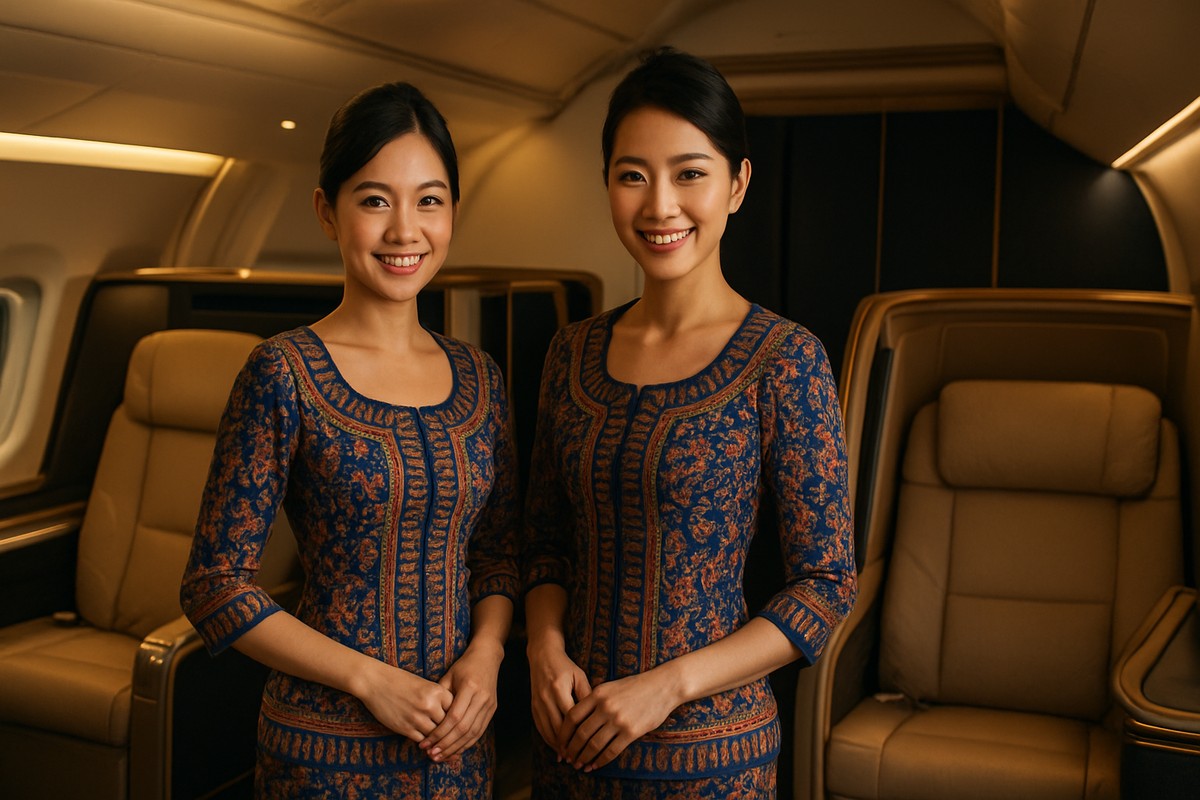
Image generated by AI
Singapore Airlines Delays A350-900 Premium Cabin Rollout to Early 2027: Supply Chain Disruptions Impact Luxury Travelers From China, India, Australia
Major Long-Haul Fleet Retrofit Pushed Back; $863 Million Investment Stalled by Certification and Logistics Challenges
Singapore Airlines has announced a significant delay to its highly anticipated cabin modernization program, postponing the debut of next-generation first and business class seats on its 41 Airbus A350-900 aircraft from Q2 2026 to early 2027. The setback—driven by persistent global supply chain constraints and aviation certification delays—threatens to reshape premium travel dynamics across Asia-Pacific, Europe, and North America routes while competitors race ahead with their own luxury cabin upgrades.
The Delay: Scope and Timeline
Singapore Airlines, one of Asia's most prestigious carriers, has pushed back its transformative $863 million cabin overhaul program by approximately eight to nine months. Originally scheduled to launch in the second quarter of 2026, the new first and business class seats featuring privacy doors, ergonomic recliners, and enhanced amenities will now rollout progressively beginning in early 2027.
The 41-aircraft Airbus A350-900 fleet represents the airline's cornerstone long-haul and ultra-long-range network, servicing premium international routes connecting Singapore to major hubs across Asia, Europe, and North America. The delay affects one of the most critical periods in global premium travel recovery, as luxury travel demand rebounds post-pandemic with particular strength in emerging Asian markets.
Root Causes: Supply Chain and Certification Gridlock
Supply Chain Disruptions
The delay stems from compounding logistical challenges that have plagued the aviation industry since 2020. Complex seat manufacturing requires precision engineering across multiple tiers of suppliers—from aluminum frame fabricators to leather suppliers to avionics integration partners. Global capacity constraints have created bottlenecks in component production and assembly, extending lead times across the premium cabin installation ecosystem.
Specific supply chain constraints include:
- Seat component scarcity: Premium seat mechanisms, including motorized lumbar support systems and automated recline functions, face extended production schedules from Tier-1 manufacturers competing across multiple airline orders
- Materials shortage: Specialty materials for cabin interiors, acoustic panels, and luxury finishes continue to experience supply limitations from European and Asian suppliers
- Logistics delays: Port congestion and air freight capacity limitations have slowed the movement of pre-assembled cabin modules to Singapore's maintenance facilities
Certification Delays
A critical factor in the extended timeline involves the certification process for one of the new seat designs. Aviation regulators—including EASA (European Union Aviation Safety Agency) and Singapore's CAAS (Civil Aviation Authority of Singapore)—require exhaustive testing protocols to ensure premium cabin installations meet strict safety standards, including crash testing, electrical safety verification, and evacuation scenario compliance.
Certification holds directly cascade into retrofit scheduling, as aircraft cannot be returned to service without full regulatory approval of all cabin modifications.
Geographic Impact: Which Markets Face the Greatest Disruption
China: High-Spending Leisure and Business Segment
China represents one of Singapore Airlines' most valuable premium travel markets, with significant originating demand from Shanghai, Beijing, Guangzhou, and Shenzhen. Chinese travelers—both leisure tourists and corporate executives—have demonstrated strong preferences for premium cabin products, particularly on ultra-long-haul services.
Implications: The 8-9 month delay risks incentivizing Chinese premium passengers to shift bookings to competing carriers (Qatar Airways, Emirates, Cathay Pacific) that offer updated cabin products. Business class bookings from Chinese corporations—which represent high-margin revenue—may migrate to alternatives with newly certified seats.
India: Emerging Ultra-Premium Demand
India's fast-growing segment of premium business travelers and high-net-worth individuals has increasingly opted for first and business class travel on long-haul routes. Major originating cities (Mumbai, Delhi, Bangalore) generate substantial premium demand to European and North American destinations via Singapore hubs.
Implications: The postponement arrives as competitors aggressively upgrade premium products. Indigo's partnerships with foreign carriers and Air India's own cabin investments create alternative pathways that may capture market share from Singapore Airlines during the delayed modernization window.
Australia: Corporate and Business Travel Stronghold
Australia generates consistent, high-value premium traffic for Singapore Airlines, driven by corporate travel (financial services, mining, technology sectors), frequent business travelers, and affluent leisure passengers. The airline's historical dominance in the Australia-Singapore-Europe corridor depends significantly on product differentiation.
Implications: Australian business travelers—particularly frequent flyers with elite loyalty status—may face reduced availability of premium seats on preferred routing. Corporate travel procurement teams may negotiate alternative carriers for consistency and product certainty.
Southeast Asian Hubs: Regional Competition Intensifies
Major Southeast Asian business and tourism hubs (Bangkok, Kuala Lumpur, Jakarta, Manila) generate significant transit traffic on Singapore Airlines. The delay creates window for regional competitors to strengthen their own premium offerings and capture connecting traffic.
Impact on Luxury Travelers: Real-World Consequences
Reduced Premium Product Availability
Travelers booking first and business class seats on Singapore Airlines A350-900 flights between mid-2026 and early 2027 will encounter older cabin configurations—legacy business class seats without privacy doors, standard first class amenities lacking the promised ergonomic upgrades. This creates a two-tier experience for premium-class passengers on identical aircraft variants, depending on retrofit timing.
Booking and Rebooking Complications
Premium passengers with existing bookings may face three scenarios:
- Flight assignment to pre-retrofit A350-900: Older cabin experience than expected; potential eligibility for compensation or rebooking
- Rerouting to different aircraft types: Possible reassignment to Boeing 777, Airbus A380, or other widebodies with different cabin configurations and routing constraints
- Rebooking to post-retrofit aircraft: Delayed travel dates or connections to access the promised premium experience
Demand for rebooking to early-2027 flights will likely exceed supply, creating prioritization challenges based on loyalty tier and booking class.
Competitive Disadvantage in Premium Segment
The delay coincides with aggressive premium cabin launches by competitors:
- Qatar Airways: Continuous rollout of updated QSuite business class and First Class products
- Emirates: Expansion of premium economy and refreshed first class suites on Boeing 777X fleet
- Cathay Pacific: New Airbus A350 first and business class introductions (not affected by Singapore Airlines' supply chain)
During the 8-9 month window, Singapore Airlines risks losing premium market share to carriers offering demonstrably newer products with marketing momentum.
Fleet Scale and Operational Complexity
Singapore Airlines' A350-900 fleet comprises 41 aircraft—a substantial portion of the airline's long-haul capacity. Retrofit operations proceed sequentially, with each aircraft requiring approximately 8-12 weeks of maintenance downtime for cabin installation, electrical integration, and certification testing.
Capacity implications:
- Progressive fleet modernization extends across 12-18 months post-launch (early 2027 through mid-2028)
- Temporary reduction in available premium inventory during retrofit phases as aircraft cycle through maintenance
- Increased burden on existing premium cabin products during high-demand travel periods
Industry-Wide Implications: The Broader Certification and Supply Chain Crisis
Cascading Delays Across Aviation Industry
Singapore Airlines' delay reflects systemic challenges affecting the entire premium cabin retrofit ecosystem. Competing seat manufacturers (Zodiac Aerospace, Recaro, Thales) face similar certification backlogs and component supply constraints, suggesting other carriers may experience comparable delays.
Airlines potentially affected by similar delays:
- Other carriers with outstanding Airbus A350 premium cabin retrofit orders
- Airlines awaiting Boeing 777X deliveries with new cabin configurations
- Carriers planning premium cabin retrofits on existing widebody fleets
Seat Manufacturing Industry Under Pressure
Premium seat manufacturers face unprecedented demand from post-pandemic airline fleet modernization initiatives, while working through pandemic-era production capacity losses and supply chain disruptions. The certification backlog at regulatory authorities (EASA, FAA, CAAS) has created bottlenecks that individual airlines cannot resolve unilaterally.
Ripple Effects on Premium Travel Market
The delay reinforces a broader pattern: premium cabin modernization timelines are stretching, giving established premium players (Qatar Airways, Emirates) competitive windows to strengthen market positioning before new entrants launch upgraded products.
Passenger Mitigation Strategies
For Existing Bookings
Passengers with current reservations should:
- Contact Singapore Airlines directly to determine if their specific flight is affected and whether cabin assignment is confirmed as "new" or "legacy" configuration
- Request rebooking to aircraft confirmed for early-2027 delivery of upgraded cabins (if travel dates are flexible)
- Explore compensation options under airline policy—potential eligibility for cabin class upgrades, frequent flyer mile bonuses, or monetary compensation depending on booking terms
- Review travel insurance to assess coverage for airline-caused itinerary changes
For Prospective Bookings (2026-Early 2027)
Luxury travelers planning trips during the delayed period should:
- Explicitly confirm cabin configuration at booking to verify whether a specific flight is pre-retrofit or post-retrofit A350-900
- Consider alternative carriers offering contemporary premium products if the legacy cabin experience is unacceptable (Qatar Airways, Emirates, Cathay Pacific alternatives)
- Delay bookings until early 2027 if possible, when retrofit aircraft enter service predictably
- Prioritize booking flexibility with refundable or flexible change policies to accommodate potential aircraft reassignments
What Singapore Airlines Says
Singapore Airlines has acknowledged the delay as driven by factors beyond the airline's direct control—specifically, global supply chain constraints and certification delays from aviation authorities. The airline has reiterated its commitment to the $863 million modernization program as critical to maintaining competitiveness in premium long-haul markets.
Official positioning:
- Supply chain and certification challenges are industry-wide, not Singapore Airlines-specific
- The investment remains strategically critical to the airline's premium market position
- Existing premium offerings will continue to meet high service standards during the interim period
- Regular updates will be provided as certification and manufacturing progress occurs
Industry Response and Competitive Positioning
Competitor Reactions
Major competitors are positioned to capitalize on the delay:
| Carrier | Status | Competitive Advantage |
|---|---|---|
| Qatar Airways | Continuous QSuite rollout on A350, Boeing 777X | Established premium product leadership; marketing momentum |
| Emirates | Boeing 777X premium suite deliveries; A380 first class | Existing first class dominance; new widebody capacity |
| Cathay Pacific | A350 premium cabin introduction | New aircraft with contemporary design; strong Asia-Pacific positioning |
| Thai Airways | Boeing 787 Dreamliner B787 upgrade in progress | Regional competitive response; long-haul modernization |
Market Share Dynamics
Premium travelers from China, India, and Australia may accelerate bookings with competitors during 2026-early 2027, establishing loyalty patterns that persist even after Singapore Airlines' cabin modernization launches. Switching costs (loyalty program accrual, frequent flyer status) can create sticky competitive advantages for carriers that capture premium market share during the delay window.
Forward Outlook: Early 2027 and Beyond
Expected Retrofit Timeline
Singapore Airlines has indicated early 2027 launch for the first modernized A350-900 aircraft entering service. A phased rollout is expected, with aircraft progressively completing retrofit and re-entering premium long-haul networks through mid-2028.
Demand Forecasting for New Cabins
Once new cabins debut, demand is projected to exceed supply significantly:
- Pent-up demand from premium passengers delayed during 2026-early 2027
- Marketing campaigns showcasing privacy doors, ergonomic seats, and enhanced amenities will drive bookings
- Potential premium fare premium (price increases) as new cabins become available
- Loyalty program scarcity (frequent flyer awards on new aircraft will be heavily sought)
Long-Term Competitive Positioning
Successful execution of the retrofit program should restore Singapore Airlines' competitive standing in premium markets, particularly if:
- Regulatory certification proceeds without further delays post-early 2027
- Product differentiation (privacy doors, seat design) resonates with premium passengers
- Brand recovery campaigns effectively rebuild premium market share lost during delay period
- Service quality remains consistent as cabin crew adapts to new aircraft configurations
Key Takeaways
- Singapore Airlines delays A350-900 premium cabin rollout from Q2 2026 to early 2027 due to supply chain constraints and aviation certification delays affecting one of the new seat designs
- 41-aircraft fleet modernization impacts long-haul routes to Asia, Europe, and North America, with direct consequences for premium travelers from China, India, and Australia
- $863 million investment program stalled by manufacturing bottlenecks and regulatory certification backlogs reflecting broader aviation industry challenges post-pandemic
- Competitors (Qatar Airways, Emirates, Cathay Pacific) positioned to capture premium market share during the 8-9 month delay window with established or newly launched cabin products
- Existing premium passengers face legacy cabin configurations unless they rebook to post-retrofit aircraft or alternative carriers with contemporary products
- Mitigation strategies available: Direct contact with Singapore Airlines for rebooking, exploration of compensation under airline policy, booking on confirmed post-retrofit aircraft, or consideration of competitors offering contemporary premium cabins
- Industry-wide implications suggest similar delays may affect other carriers with outstanding premium cabin retrofit orders, indicating systemic supply chain and
Disclaimer
This article is for informational and educational purposes only. It does not constitute legal, financial, or professional advice. While we strive to provide accurate and up-to-date information, travel policies, regulations, and conditions change rapidly. Always verify information with official sources before making travel decisions. Nomad Lawyer makes no representations about the accuracy, reliability, completeness, or suitability of the information provided. Readers should consult qualified professionals for advice specific to their circumstances. The views expressed in this article are those of the author and do not necessarily reflect the views of Nomad Lawyer.
Kunal K Choudhary
Co-Founder & Contributor
A passionate traveller and tech enthusiast. Kunal contributes to the vision and growth of Nomad Lawyer, bringing fresh perspectives and driving the community forward.
Learn more about our team →