
San Francisco International Airport Announces Bidding Process for Exclusive Private Luxury Terminal Opening Near San Francisco Bay by Late 2028
SFO is launching a competitive bidding process in September 2026 for a new private luxury terminal overlooking San Francisco Bay, set to open in 2028.

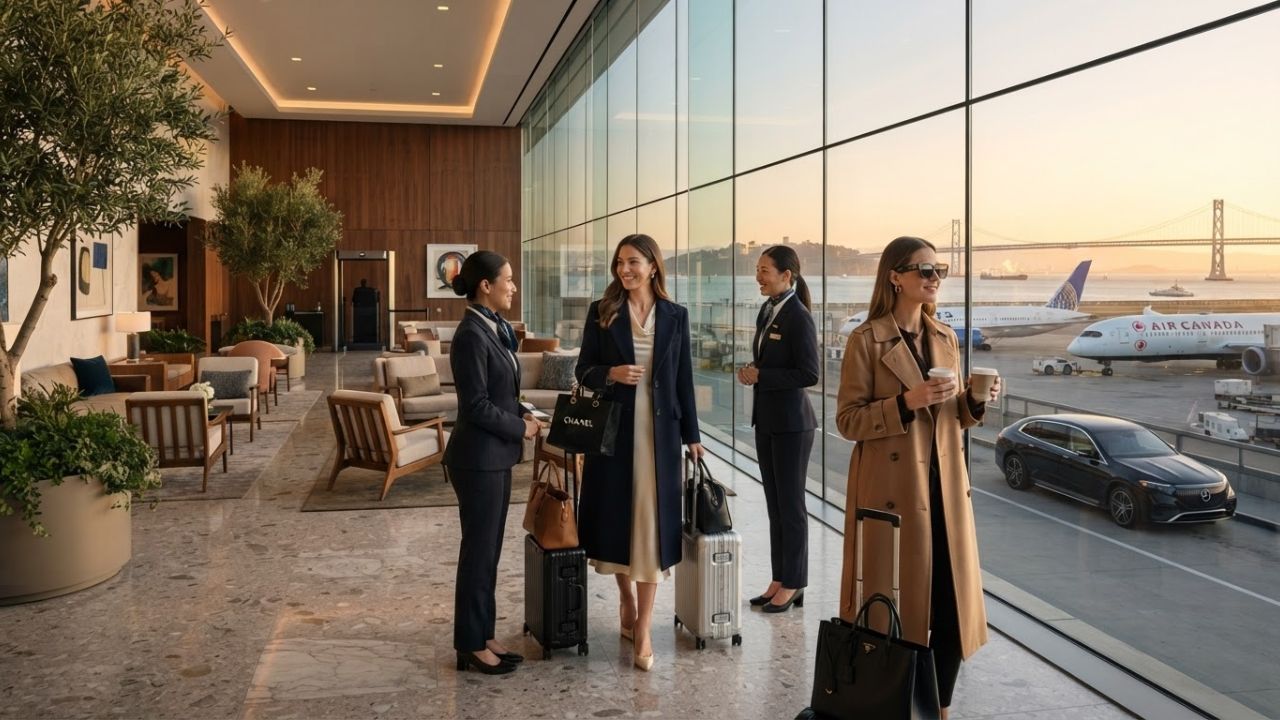
Image generated by AI
San Francisco International Airport Announces Bidding Process for Exclusive Private Luxury Terminal Opening Near San Francisco Bay by Late 2028
SEO Title: SFO Private Terminal Luxury Aviation Experience 2028 Meta Description: SFO is launching a competitive bidding process in September 2026 for a new private luxury terminal overlooking San Francisco Bay, set to open in 2028. Slug: /sfo-private-terminal-luxury-aviation-experience-2028 Standfirst: San Francisco International Airport is launching a competitive bidding process to construct and operate a dedicated luxury terminal. The private facility, scheduled to open by late 2028, will feature dedicated security screening and airside chauffeur transfers.
Article
[San Francisco, July 9, 2026] — Airport administrators at San Francisco International Airport have initiated plans to develop a private passenger facility. The competitive bidding process for commercial operators is scheduled to begin in September 2026.
Project planners aim to finalize the lease agreement with the winning private developer by December 2026. Construction will commence following standard environmental reviews and municipal planning approvals.
Under the current development timeline, the first passengers will utilize the facility in late 2028. The terminal will be located along North Access Road, offering runway views overlooking San Francisco Bay.
Bidding Process and Project Implementation Timeline
The private facility will operate independently of the airport's main terminal terminals. Passengers will arrive at a dedicated security entrance, avoiding the main ticket lobby and public screening lanes.
After completing check-in, travelers will proceed through a dedicated TSA security checkpoint. The facility will house luxury lounge suites staffed by private concierge teams.
Once the flight is ready, passengers will be chauffeured across the airfield directly to their departing aircraft. This airside transfer eliminates the need to walk through terminal boarding gates.
Personalized Airside Services and Terminal Amenities
The decision to build a private terminal matches shifting demographics in the Northern California travel market. Venture capital investments and the expansion of artificial intelligence companies have increased the number of high-net-worth residents.
Local corporate travel managers are increasingly requesting premium ground services for executive travelers. Additionally, international celebrities and business delegations require elevated privacy levels.
Industry observers note that airlines are responding by investing in premium cabins and exclusive airport clubs. A private terminal allows the airport to match the inflight hospitality standards of international first-class cabins.
Market Drivers and Tech Sector Influence in the Bay Area
The SFO project is modeled after a similar private terminal currently operating at Los Angeles International Airport. The Southern California facility allows commercial airline passengers to bypass public terminals for a premium fee.
Pricing at the Los Angeles private terminal ranges from $895 to nearly $5,000 per transit. While SFO has not released its fee structure, analysts expect comparable rates based on local market demand.
Airport financial officers expect the private terminal to generate significant non-aeronautical revenue. These premium service fees will support general airport maintenance and infrastructure improvements.
Data Table
San Francisco International Airport Private Terminal Timeline
| Project Milestone | Target Execution Date | Expected Operational Activities |
|---|---|---|
| Bidding Window Opens | September 2026 | SFO issues requests for proposals to private operators |
| Lease Agreement Target | December 2026 | Board approvals and concession contract finalized |
| Construction Phase | 2027 – Mid-2028 | Site preparation and building along North Access Road |
| Operational Launch | Late 2028 (Earliest) | Opening of terminal, security lanes, and chauffeur service |
Premium Ground Experience Comparison
| Service Parameter | Standard Passenger Terminal | Planned Private Luxury Terminal |
|---|---|---|
| Terminal Entry | Shared public departures road | Separate entrance via North Access Road |
| Security Checkpoint | Shared TSA screening lanes | Private, dedicated TSA security lanes |
| Lounge Amenities | Airline member clubs or paid lounges | Exclusive private suites with concierge |
| Aircraft Boarding | Standard jet bridge or passenger gate | Airside chauffeur transfer directly to plane |
| Pricing Level | Standard ticket check-in | Premium transit fee (estimated $895 to $5,000) |
Why This Matters
This project represents a major shift in how public airports monetize premium travelers. Historically, airports focused on generating revenue through airline gate leases and retail concessions. By introducing a private commercial terminal, SFO is directly competing with fixed-base operators (FBOs) that typically handle private jet travelers. This allows the airport to capture high-margin revenue from commercial first-class passengers who are willing to pay private-jet prices for ground convenience.
Our analysis of the California aviation corridor suggests that the proximity of SFO's planned terminal to Silicon Valley is a deliberate attempt to retain corporate travel share. During peak conference periods, corporate executives often choose private charters to avoid terminal congestion. Providing a private ground experience for scheduled commercial flights allows tech firms to reduce their carbon footprint by using commercial carriers while maintaining executive privacy.
In addition, this unbundled ground service challenges traditional airline loyalty models. Since the private terminal operates independently, a passenger flying economy on any airline can purchase access if they pay the fee. This shifts the control of premium passenger loyalty from individual airlines to the airport authority.
Industry Outlook
Market trends suggest that other high-yield West Coast gateways, including Seattle-Tacoma and Vancouver, will evaluate similar private terminal models before 2030. Success will depend on the ability of private operators to coordinate airside vehicle movements safely with active runway operations.
On the regulatory side, the Federal Aviation Administration must approve the integration of private TSA screening within a privately managed facility. Ensuring consistent security standards while maintaining a high-end customer experience will be a key challenge for the selected operator.
Related Aviation News Guides
- Saudi Arabia Aviation Expansion Drives Massive Fleet Growth for Riyadh Air, flyadeal, and flynas
- Emirates to Deploy Second Daily Airbus A350 to Colombo Doubling Premium Economy Seat Capacity on Key South Asian Route in August 2026
- Thai Airways to Introduce Second Daily Paris to Bangkok Service Deploying Boeing 787-9 Dreamliner Starting December 2026
Disclaimer
This article is for informational and educational purposes only. It does not constitute legal, financial, or professional advice. While we strive to provide accurate and up-to-date information, travel policies, regulations, and conditions change rapidly. Always verify information with official sources before making travel decisions. Nomad Lawyer makes no representations about the accuracy, reliability, completeness, or suitability of the information provided. Readers should consult qualified professionals for advice specific to their circumstances. The views expressed in this article are those of the author and do not necessarily reflect the views of Nomad Lawyer.
Preeti Gunjan
Contributor & Community Manager
A passionate traveller and community builder. Preeti helps grow the Nomad Lawyer community, fostering engagement and bringing the reader experience to life.
Learn more about our team →