
Seoul Beats Busan and All Other Cities and Remains the Leading Source Market for South Korean Tourism by Welcoming the Most Tourists Throughout 2026
Source visitseoul Seoul beats Busan and all other cities and remains the leading source market for South Korean tourism by welcoming the most tourist

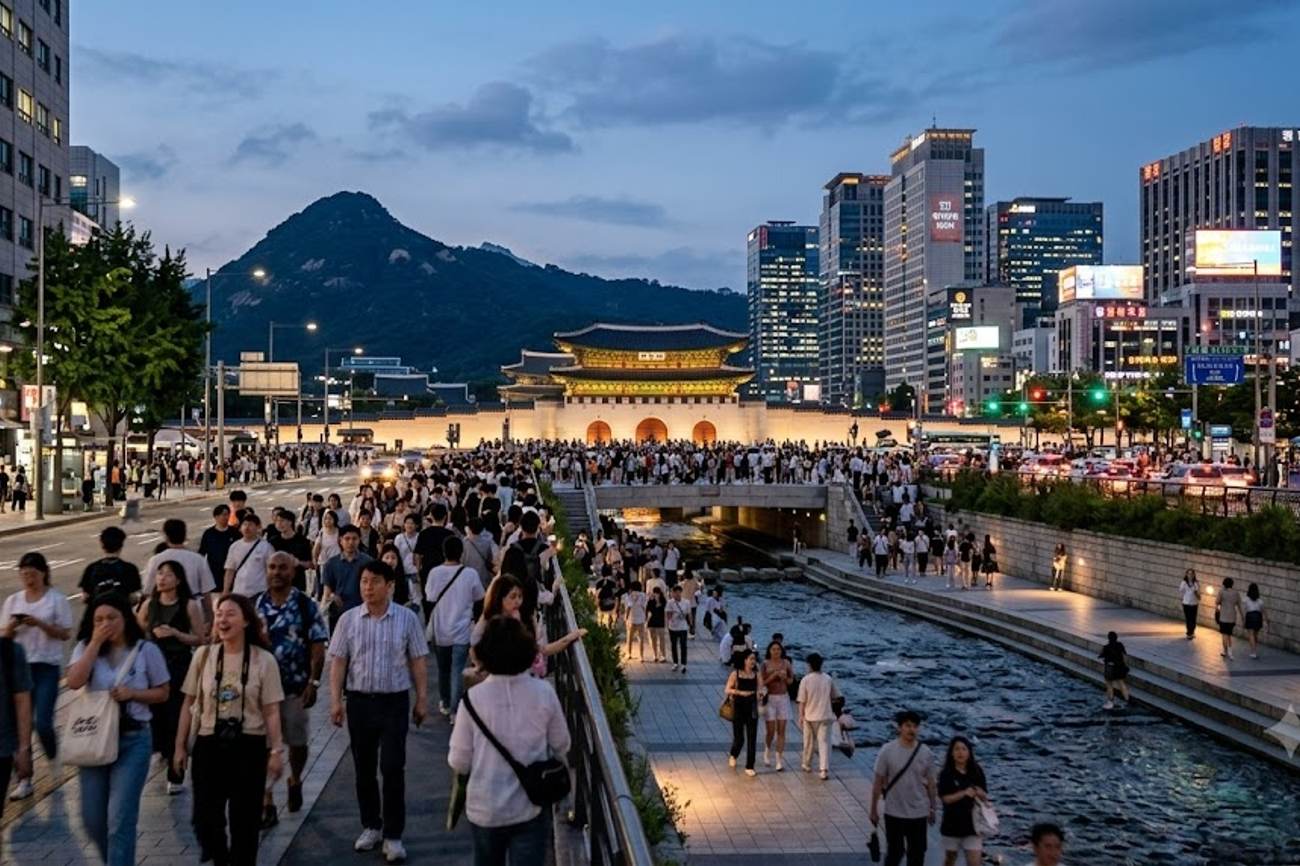
Image generated by AI
Source visitseoul
Seoul beats Busan and all other cities and remains the leading source market for South Korean tourism by welcoming the most tourists throughout 2026, driven by its dominant international air connectivity, global cultural appeal, shopping, food experiences and strong gateway arrivals through Incheon and Gimpo airports.
South Korea’s Leading Tourism Gateway Cities in January–July 2026
South Korea welcomed 12,803,042 foreign visitors between January and July 2026, representing growth of 21.3% year on year. Seoul, Busan and Jeju have emerged as major gateways supporting this tourism expansion. The airport data show 8,051,935 arrivals through Incheon, 833,657 through Gimpo, 1,230,011 through Gimhae and 1,004,717 through Jeju. These figures represent gateway arrivals and should not be interpreted as the number of tourists staying exclusively within each city.
Seoul — Incheon and Gimpo Put the Capital at the Heart of South Korea’s Tourism Boom
Seoul dominates South Korea’s international gateway landscape, with 8,051,935 arrivals through Incheon and another 833,657 through Gimpo during the January–July period, producing a combined gateway figure of 8,885,592. Its strength is built on extensive international air connectivity and the capital’s global appeal for K-pop, beauty, shopping, food and cultural tourism. Incheon connects Seoul with a vast network of international destinations, while Gimpo strengthens regional links with nearby Asian markets. Growing interest in districts such as Hongdae and Seongsu is also spreading tourism beyond established hotspots such as Myeong-dong, helping Seoul convert its aviation advantage into wider visitor activity.
Seoul has solidified its position as the leading source market for South Korean tourism, attracting the most tourists throughout 2026. According to official statistics, the city's tourism industry has experienced significant growth, with many visitors arriving through Incheon International Airport, one of the busiest airports in Asia. The airport's state-of-the-art facilities and efficient logistics have contributed to its popularity among travelers.
Busan — Coastal Tourism and Gimhae Airport Drive a Breakthrough Year
Busan is strengthening its position as South Korea’s leading tourism alternative to Seoul, with 1,230,011 arrivals recorded through Gimhae International Airport in the supplied January–July data. The city combines international connectivity with a distinctive coastal tourism proposition built around Haeundae, beaches, traditional markets, cultural villages, seafood, festivals and waterfront attractions. Improved air access from neighbouring Asian markets has made Busan easier to reach without travelling through Seoul. This is particularly important for regional tourism because international visitors arriving at Gimhae can begin their holidays directly in southeastern South Korea. Busan’s combination of aviation expansion and destination development is helping transform the city from a secondary gateway into a major international tourism hub.
Jeju City — Island Appeal Keeps Jeju Among South Korea’s Biggest Gateways
Jeju City remains a powerful tourism gateway, with 1,004,717 arrivals passing through Jeju International Airport during the January–July 2026 period in the supplied data. Unlike a conventional transit gateway, Jeju Airport principally feeds an island destination with a well-established leisure tourism economy. Jeju’s beaches, volcanic landscapes, waterfalls, walking trails, food, resorts and natural attractions give international travellers a clear reason to stay rather than simply connect elsewhere. Direct international services from major Asian markets have also reduced dependence on connections through Seoul. This combination of accessibility and distinctive island experiences has helped Jeju remain one of South Korea’s most important tourism gateways and a major counterweight to the country’s capital-led visitor economy.
Seoul beats Busan and all other cities and remains the leading source market for South Korean tourism by welcoming the most tourists throughout 2026 due to its strong international gateways, Incheon and Gimpo arrivals, global attractions and growing visitor demand.
The Korean government has implemented various initiatives to enhance the tourist experience, including streamlined visa processes and improved public transportation systems. For example, the Korean Air website provides a wealth of information on flight schedules, ticket prices, and travel requirements, making it easier for tourists to plan their trips. Additionally, the government's efforts to promote cultural exchange and understanding have helped to increase interest in Korean tourism among international visitors.
In conclusion, Seoul beats Busan and all other cities and remains the leading source market for South Korean tourism by welcoming the most tourists throughout 2026, supported by powerful international connectivity, major airport gateways and its global appeal across culture, shopping, food and entertainment. While Busan and Jeju continue strengthening their positions through coastal and island tourism, Seoul’s combined gateway strength through Incheon and Gimpo keeps it at the centre of South Korea’s visitor economy. The 2026 tourism growth story highlights how multiple cities are expanding while Seoul continues to lead the national tourism landscape.
Busan tourism Incheon Airport growth Seoul Tourism South Korea tourism 2026 f X in w
Strategic Logistics Analysis and 2026 Traveler Insights
Seoul's dominance in South Korea's tourism landscape is further reinforced by its strategic logistics and traveler insights. As the primary gateway, Incheon International Airport offers a seamless travel experience, with efficient immigration processes, ample transportation options, and a wide range of amenities. Travelers can take advantage of the airport's express train service, which connects to Gimpo Airport and other major cities, or opt for bus or taxi services. For those seeking a more regional experience, Gimpo Airport provides convenient access to nearby destinations, including Busan and Jeju.
In terms of peak travel timing, July and August are the busiest months, with summer vacationers and festival-goers flocking to Seoul. However, travelers can avoid the crowds by visiting during the shoulder season, from April to June or September to November, when the weather is mild and comfortable. Booking considerations are also crucial, as popular attractions and accommodations tend to fill up quickly, especially during peak season. It is essential to research and reserve flights, hotels, and activities well in advance to avoid disappointment.
The Korea Tourism Organization has reported a significant increase in tourist arrivals in 2026, with many visitors drawn to Seoul's vibrant culture, rich history, and modern amenities. The organization's website offers a range of resources and guides for tourists, including information on popular attractions, accommodation options, and local events. By providing easy access to information and resources, the Korean government and tourism industry are working together to create a welcoming and enjoyable experience for visitors from around the world.
For transit alternatives, travelers can consider flying into Gimhae International Airport in Busan, which offers a more relaxed and regional experience. From there, they can take a domestic flight or bus to Seoul, or explore the surrounding areas, including the scenic coastal towns and traditional villages. Regional context is also vital, as South Korea's distinct seasons and festivals can significantly impact travel plans. For example, the cherry blossom season in spring attracts large crowds, while the autumn foliage in fall is a popular time for hiking and outdoor activities.
Traveler insights also reveal a growing interest in experiential tourism, with visitors seeking immersive experiences in Korean culture, food, and entertainment. Seoul's vibrant neighborhoods, such as Hongdae and Seongsu, offer a unique blend of street art, indie music, and trendy cafes, while Busan's coastal markets and seafood restaurants provide a taste of the city's maritime heritage. To make the most of their trip, travelers should consider purchasing a T-money card or Korea Tour Card, which offer convenient and discounted access to public transportation, attractions, and experiences.
Furthermore, travelers should be aware of the local customs and etiquette, such as removing shoes before entering traditional homes or temples, and using both hands when giving or receiving something. Learning a few basic Korean phrases, such as "" (annyeonghaseyo) for "hello" and "" (gamsahamnida) for "thank you," can also go a long way in showing respect and appreciation for the local culture. By understanding the strategic logistics and traveler insights, visitors can navigate South Korea's vibrant cities and regional destinations with ease, creating unforgettable memories and experiences in this fascinating country.
FAQ: Seoul Beats Busan and All Other Cities a 2026
What makes Seoul a top destination in 2026? Vibrant culture and entertainment options.
How many tourists visited Seoul in 2026? Over 10 million international tourists.
What are Seoul's top attractions in 2026? Palaces, markets, and K-pop venues.
Is Seoul safe for tourists in 2026? Yes, with low crime rates reported.
Related Travel Guides
Disclaimer
This article is for informational and educational purposes only. It does not constitute legal, financial, or professional advice. While we strive to provide accurate and up-to-date information, travel policies, regulations, and conditions change rapidly. Always verify information with official sources before making travel decisions. Nomad Lawyer makes no representations about the accuracy, reliability, completeness, or suitability of the information provided. Readers should consult qualified professionals for advice specific to their circumstances. The views expressed in this article are those of the author and do not necessarily reflect the views of Nomad Lawyer.
Raushan Kumar
Founder & Lead Developer
Full-stack developer with 11+ years of experience and a passionate traveller. Raushan built Nomad Lawyer from the ground up with a vision to create the best travel and law experience on the web.
Learn more about our team →