
Seattle-Tacoma International Plunged into Travel Chaos: 111 Delays and 14 Cancellations Hit Alaska, Delta, and Icelandair as Fog and Radar Glitches Paralyze SEA Hub
Seattle-Tacoma (SEA) faces massive travel chaos with 111 delays and 14 cancellations as dense fog and radar glitches strand thousands of passengers on May 15.

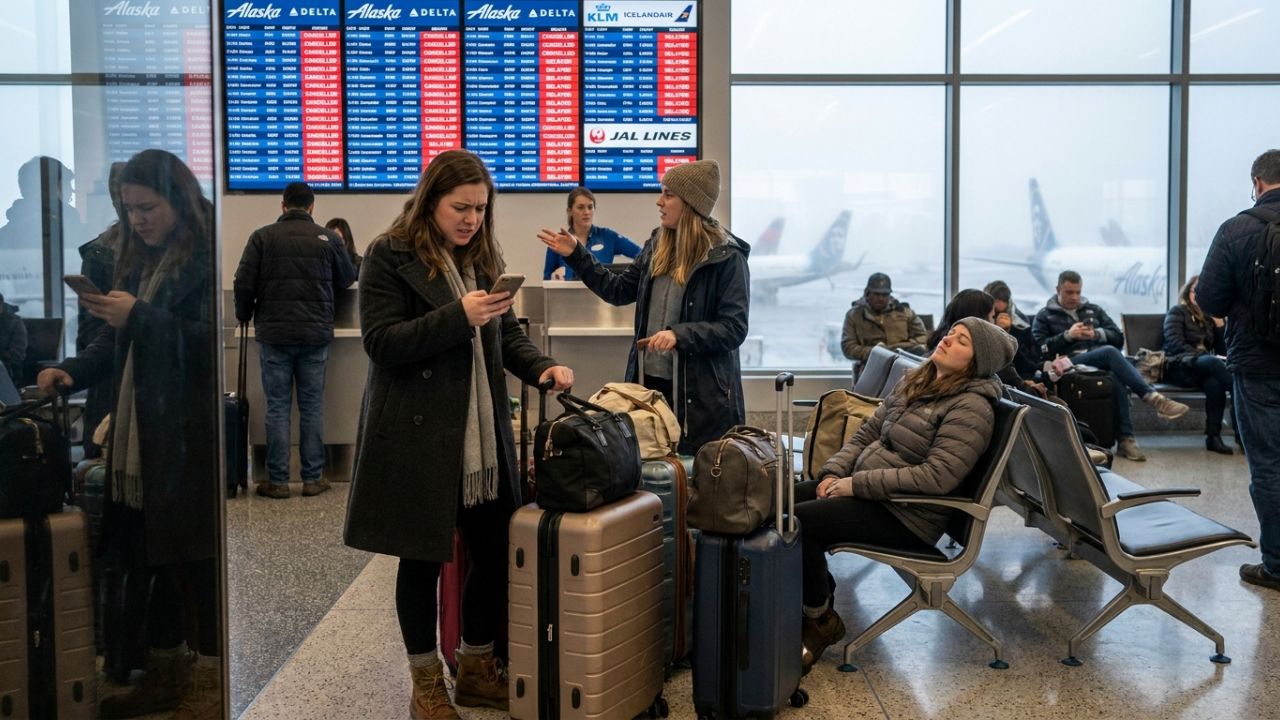
Image generated by AI
In a day defined by atmospheric and technical volatility, Seattle-Tacoma International Airport (SEA) has become the epicenter of a massive travel chaos event affecting thousands of passengers. A "double whammy" of dense morning fog and systemic glitches in the regional radar system has triggered a wave of airport disruptions, resulting in 111 flight delays and 14 outright cancellations on May 15, 2026. This major airline news update has sent shockwaves through the Pacific Northwest aviation corridor, with major carriers like Alaska, Delta, and Icelandair scrambling to manage a logistical nightmare that spans three continents.
Breaking: Fog and Radar Failure Paralyze the Seattle Gateway
The disruption began in the early hours of the morning when a thick blanket of fog reduced visibility at SEA to near-zero levels. This was exacerbated by a technical failure in the regional radar sequencing system, forcing air traffic control to increase spacing between arrivals and departures. The result has been a "bottleneck" that has left thousands of travelers stranded in terminals and on tarmacs.
According to government-validated tracking data, the impact has not been limited to domestic routes. As a vital gateway to Asia and Europe, the airport disruptions at SEA have trickled down to international hubs, stalling traffic for long-haul carriers like KLM, Japan Airlines, and Singapore Airlines.
Expanded Overview: Global Reach of the SEA Disruptions
The scale of today’s chaos underscores Seattle’s critical role in the global aviation network. Because SEA serves as a primary connecting point for the "Great Circle" routes to Asia and the "Over the Pole" routes to Europe, a single operational window missed in Seattle impacts connecting hubs thousands of miles away.
High cancellation rates were reported at key origin airports, including a staggering 50% cancellation rate at Keflavik International (KEF) and a 33% rate at Taiwan Taoyuan International (TPE). Domestically, the ripple effect hit Orlando International (MCO) with 20% cancellations and John F. Kennedy (JFK) with 11%. These figures illustrate the sheer breadth of the failure, as the SEA hub became a vacuum that pulled in flights from across the globe only to stall them upon arrival.
Section-Wise Breakdown: Hubs and Carriers Under Pressure
The Domestic Struggle: Alaska and Delta
As the primary tenant at SEA, Alaska Airlines bore the heaviest numerical burden, recording 6 cancellations and 45 delays. Delta Air Lines followed closely with 5 cancellations and 19 delays. For these carriers, the disruption has compromised their ability to feed traffic into their broader domestic networks, leading to secondary delays in cities like San Francisco (36% delayed origin), Denver (17% delayed), and Houston (33% delayed).
International Gateways: Europe and Asia
The international sector faced an even more grueling day. Icelandair was forced to ground 2 flights, while KLM recorded 1 cancellation and 134 delays (reflecting broader network pressure stemming from the Seattle bottleneck). Destination airports reported extreme punctuality failures, with Singapore Changi (SIN) and Edmonton International (YEG) seeing 100% delay rates for Seattle-bound or arriving traffic. Incheon International (ICN) in South Korea also struggled with an 80% delay rate.
Transatlantic and Regional Impacts
London Heathrow (LHR) saw 25% of its Seattle rotations delayed, while regional carriers like Horizon (ASA) and Hawaiian Airlines reported significant schedule slippages. Even British Airways, which managed to avoid cancellations, recorded delays for its long-haul services, highlighting the systemic nature of the travel chaos.
Flight Details and Operational Impact Matrix
The following table summarizes the performance of major airlines and the regional impact observed during the May 15 disruption at SEA.
Seattle-Tacoma (SEA) Airline Disruption Summary: May 15, 2026
| Airline | Cancellations | Delays | Regional Impact |
|---|---|---|---|
| Alaska Airlines | 6 | 45 | Primary hub disruption |
| Delta Air Lines | 5 | 19 | Major domestic bottleneck |
| Icelandair | 2 | - | 50% rate at Keflavik (KEF) |
| KLM | 1 | 134* | Massive transatlantic slippage |
| Taiwan Taoyuan (TPE) | - | - | 33% cancellation rate |
| Singapore Changi (SIN) | - | - | 100% delay rate |
*Note: Total SEA Disruptions: 111 Delays, 14 Cancellations. KLM delays include network-wide rotations affected by the SEA radar failure.
Passenger Impact: Missed Connections and Stranded Travelers
For the thousands of passengers caught in the SEA meltdown, the day has been one of extreme frustration and logistical uncertainty.
- Missed Connections: With 111 delays, the likelihood of missing onward domestic or international connections has skyrocketed. Travelers heading to Vancouver, Los Angeles, and Boston are reporting that their "buffered" connection times were completely erased by the morning fog.
- Alternative Routing: Passengers are being advised to consider nearby airports such as Portland (PDX) or Vancouver (YVR) as backup options, though availability on these routes is tightening rapidly.
- Logistical Stress: Families and business travelers are facing the added cost of last-minute accommodations and meals, with many reporting wait times for customer service exceeding four hours.
Industry Analysis: Atmospheric and Technical Vulnerabilities
Aviation analysts point to the unique "microclimate" of the Pacific Northwest as a persistent threat to airport efficiency. However, the addition of a regional radar glitch represents a more concerning technical vulnerability.
- Meteorological Factors: SEA is prone to "radiation fog" which can persist for hours, forcing the airport into low-visibility procedures that reduce throughput by as much as 40%.
- Infrastructure Fragility: The radar glitch underscores the need for modernized ATC systems that can maintain sequencing even when visibility is compromised.
- Global Ripple Effect: The 100% delay rate for Singapore and Edmonton highlights how a localized event in Seattle can effectively "sever" the transpacific and transborder air bridges.
Conclusion: A Long Road to Recovery for SEA
As the fog lifts and technical teams work to stabilize the radar system, the recovery for Seattle-Tacoma International will be slow. With 14 flight cancellations and over a hundred delays, the backlog of passengers will likely take several days to clear. This event serves as a stark reminder of the fragile balance required to maintain a global aviation hub in the face of nature and technical failure.
For those traveling through Seattle in the coming 48 hours, the message remains: check your airline app, maintain flexibility, and prepare for a long day at the terminal.
Key Takeaways
- Total Disruptions: 111 delays and 14 cancellations at SEA on May 15/16, 2026.
- Primary Causes: Dense fog and regional radar technical glitches.
- Major Carriers Hit: Alaska (6 cancellations, 45 delays) and Delta (5 cancellations, 19 delays).
- Global Fallout: 100% delay rates observed for Singapore and Edmonton; 50% cancellations at Keflavik.
- Travel Advice: Consider Portland (PDX) or Vancouver (YVR) as alternative gateways if rebooking is necessary.
- Operational Outlook: Slow recovery expected as carriers work to clear the passenger backlog.
Related Travel Guides
Disclaimer
This article is for informational and educational purposes only. It does not constitute legal, financial, or professional advice. While we strive to provide accurate and up-to-date information, travel policies, regulations, and conditions change rapidly. Always verify information with official sources before making travel decisions. Nomad Lawyer makes no representations about the accuracy, reliability, completeness, or suitability of the information provided. Readers should consult qualified professionals for advice specific to their circumstances. The views expressed in this article are those of the author and do not necessarily reflect the views of Nomad Lawyer.
Kunal K Choudhary
Co-Founder & Contributor
A passionate traveller and tech enthusiast. Kunal contributes to the vision and growth of Nomad Lawyer, bringing fresh perspectives and driving the community forward.
Learn more about our team →