
Beyond Legroom: 6 Hidden Premium Economy Perks Redefining Long-Haul Travel in 2026
Travelers are discovering that premium economy value extends far beyond seat pitch, incorporating priority ground services, business-class dining, and enhanced loyalty rewards.

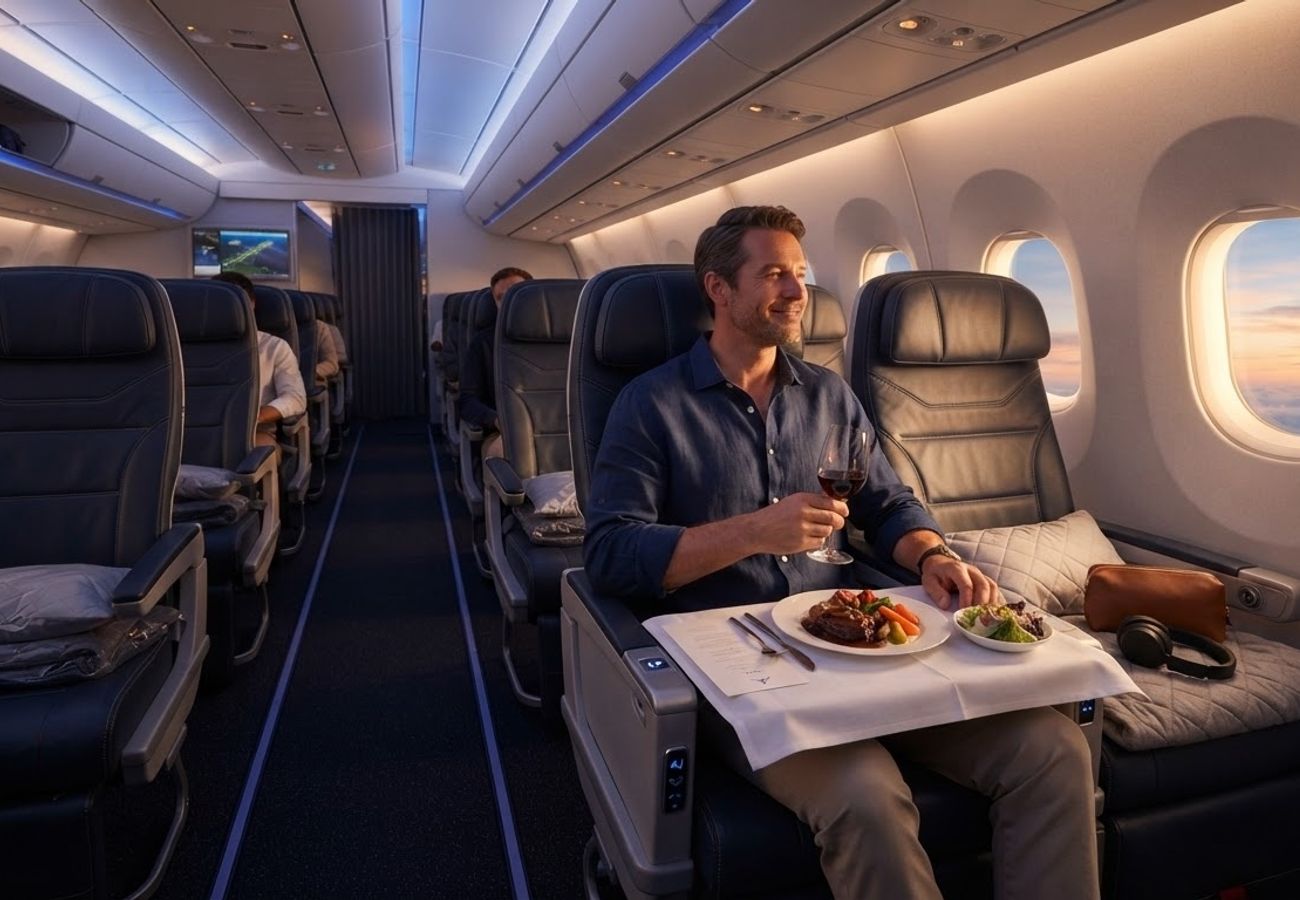
Image generated by AI
While airlines heavily market premium economy based on a single measurement—seat pitch—modern travelers are finding that the true value of the upgrade lies in a suite of overlooked ground and in-flight privileges.
For the long-haul passenger, the decision to pay a premium often hinges on whether the additional cost translates into a tangible improvement in the travel experience. While an extra few inches of legroom are helpful, industry data suggests that the "soft product"—the services and amenities surrounding the seat—is where the most significant gains are made. From the moment a passenger arrives at the terminal to the moment they disembark, premium economy is increasingly functioning as a bridge between the austerity of economy and the luxury of business class.
Airport Efficiency and Priority Ground Services
The premium economy experience begins long before takeoff. According to industry reports, many full-service carriers now integrate their mid-tier cabins with expedited airport processing. This shift aims to remove the primary stressors of international travel: the queues.
Major carriers, including Delta, United, American, British Airways, and Air France, frequently provide premium economy passengers with dedicated check-in counters or fast-track lanes at primary global hubs. For the traveler, this means a drastic reduction in time spent standing in line for bag drops or security screenings, which is particularly valuable at congested airports prone to bottlenecks.
Furthermore, priority boarding groups allow these passengers to enter the aircraft earlier. This is not merely a matter of prestige; it provides a critical logistical advantage by ensuring overhead bin space is available close to their assigned seat, eliminating the stress of searching for storage at the back of the plane.
Beyond speed, baggage entitlements are often expanded. Many airlines offer increased weight limits or additional checked bags for those in premium economy. For digital nomads carrying heavy equipment or long-term travelers, these expanded allowances can effectively offset a portion of the fare increase, making the cabin a pragmatic choice rather than a luxury one.
Dining Standards Approaching Business Class
A significant trend in 2026 is the "premiumization" of the onboard menu. While economy meals are often functional, premium economy is seeing a shift toward presentation and quality that mirrors business class.
On several long-haul routes, airlines such as Singapore Airlines, Japan Airlines, EVA Air, Emirates, and Virgin Atlantic have introduced enhanced dining rituals. These include:
- Plated meals served on china rather than plastic trays.
- The use of metal cutlery.
- Printed menus with a wider variety of choices.
- Welcome drinks upon boarding.
In the North American market, major carriers are reporting a similar evolution. Upgrades now frequently include curated wine selections, high-end desserts, and small service touches, such as bottled water placed at the seat or chocolates served prior to landing.
From a psychological standpoint, these enhancements narrow the gap between the mid-tier and the front of the plane. When a passenger is served a high-quality entree on real porcelain, the perceived value of the ticket increases, regardless of whether the seat is a lie-flat or a deep recliner.
Enhanced Sleep Kits and Wellness Amenities
For overnight transoceanic flights, the ability to actually rest is the ultimate luxury. Aviation analysts note that airlines are now competing via "soft goods" rather than expensive cabin retrofits.
On flights exceeding eight hours, carriers like Emirates, Delta, and American, along with various Asia-Pacific airlines, provide upgraded amenity kits. These typically include:
- High-density pillows and thicker duvets or quilts.
- Noise-reducing or noise-cancelling headphones.
- Pouches containing eye masks, compression socks, and skincare essentials.
For the passenger, a superior blanket and a supportive pillow often contribute more to a restful journey than an extra three inches of legroom. Additionally, some airlines have introduced wellness touches, such as hot towels before meal service and premium skincare products in lavatories reserved for premium cabins, further distancing the experience from the standard economy environment.
Strategic Cabin Layouts and Noise Reduction
The physical placement of the premium economy section is a critical, yet often ignored, factor. Most modern aircraft configurations place this cabin in a self-contained area between the business class and the main economy section.
This separation creates a "buffer zone" that significantly reduces foot traffic and ambient noise. Passengers in these smaller, dedicated cabins benefit from:
- A lower passenger-to-crew ratio, leading to faster service.
- Reduced queues for lavatories.
- Wider aisles and larger personal entertainment screens.
- Integrated storage consoles within the seat shell.
By capping the number of seats in this section, airlines preserve a quieter atmosphere. For the business traveler or the exhausted tourist, this reduction in chaos is often more valuable than the seat dimensions themselves.
Fare Flexibility and Loyalty Accrual
The financial value of premium economy extends into the fine print of the ticket. Travel finance data indicates that these fares often carry more lenient rules than the most restrictive economy tickets.
Passengers frequently find lower change fees or a higher probability of receiving partial credits during rebooking. More importantly, loyalty programs are adjusting their reward structures. Many airlines now award mileage or tier points for premium economy at rates closer to business class than economy.
For those chasing elite status, the accrual benefits—combined with priority ground services—create a long-term return on investment. While lounge access remains rare for this cabin, some carriers are experimenting with bundled promotions or easier upgrade paths to the lounge for premium economy ticket holders.
Comparative Value Overview
| Perk Category | Standard Economy | Premium Economy | Business Class |
|---|---|---|---|
| Check-in | General Queue | Priority/Dedicated | Priority/First Class |
| Boarding | Group-based (Late) | Priority Group | Priority Group |
| Dining | Plastic Trays | China/Metal Cutlery | Full Course/Fine Dining |
| Amenities | Basic/None | Enhanced Kit/Duvet | Luxury Kit/Full Bedding |
| Miles Earned | Base Rate | Enhanced Rate | Maximum Rate |
| Cabin Noise | High Traffic | Moderate/Buffered | Low/Private |
Why This Matters: The Traveler's Perspective
From a logistical standpoint, the shift toward "hidden perks" means that comparing flights based solely on seat pitch is an outdated strategy. For the modern traveler, the real question is not "How much room do I have?" but "How much stress is removed from my day?"
When you factor in the time saved at security, the ability to actually sleep due to better bedding, and the faster accrual of loyalty points, premium economy ceases to be a "slightly better seat" and becomes a strategic tool for travel wellness. For the professional traveler, this creates a sustainable middle ground: you avoid the exorbitant cost of business class while bypassing the physical and mental exhaustion of the main cabin.
The true luxury of the modern flight is no longer just about space—it is about the seamlessness of the journey.
Related Travel Guides
Disclaimer
This article is for informational and educational purposes only. It does not constitute legal, financial, or professional advice. While we strive to provide accurate and up-to-date information, travel policies, regulations, and conditions change rapidly. Always verify information with official sources before making travel decisions. Nomad Lawyer makes no representations about the accuracy, reliability, completeness, or suitability of the information provided. Readers should consult qualified professionals for advice specific to their circumstances. The views expressed in this article are those of the author and do not necessarily reflect the views of Nomad Lawyer.
Raushan Kumar
Founder & Lead Developer
Full-stack developer with 11+ years of experience and a passionate traveller. Raushan built Nomad Lawyer from the ground up with a vision to create the best travel and law experience on the web.
Learn more about our team →