
Savannah National Wildlife Refuge Emerges as Lowcountry Escape
Located just 10 miles from Savannah, the Savannah National Wildlife Refuge offers scenic trails, birdwatching, and the Laurel Hill Wildlife Drive.
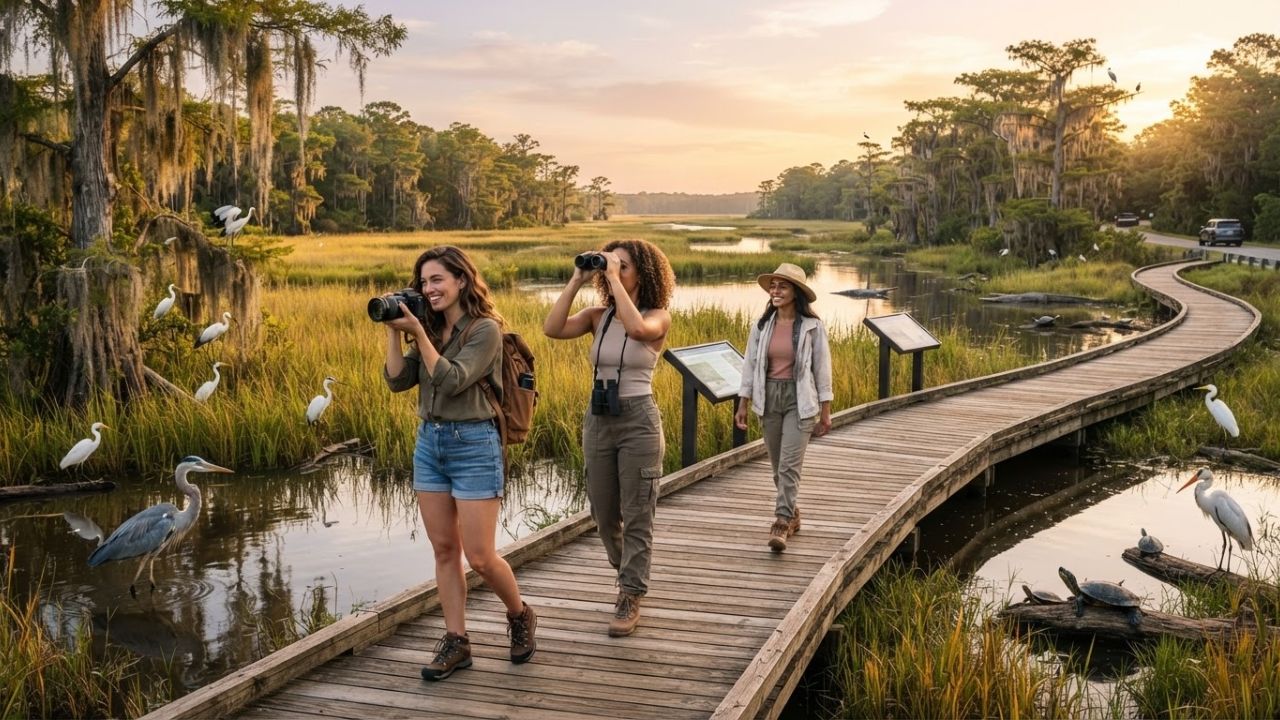
Image generated by AI
Located just 10 miles north of Savannah, the Savannah National Wildlife Refuge provides a scenic outdoor retreat featuring Lowcountry wetlands, hiking loops, and wildlife viewing.
Outdoor recreation and nature-based tourism are growing in the coastal South. Located just 10 miles north of Savannah, Georgia, the Savannah National Wildlife Refuge preserves thousands of acres of wetlands, hardwood forests, and historical rice fields along the Savannah River.
As a protected ecosystem spanning the Georgia and South Carolina state borders, the refuge serves as a vital sanctuary for resident and migratory wildlife, providing city travelers with an accessible outdoor experience outside Savannah's historic district.
Refuge Trails and Activity Specifications
Planning a visit to cross-border conservation areas requires tracking trail lengths, wildlife profiles, and state licensing rules. The following table provides specifications for five primary trails, drives, and waterways within the Savannah National Wildlife Refuge.
| Refuge Trail / Landmark Feature | Area Distance / Length | Primary Access Option | Main Wildlife & Species Focus | Practical Activity Restrictions | Licensing / Jurisdiction |
|---|---|---|---|---|---|
| Laurel Hill Wildlife Drive | 4.5 miles | Vehicle route (unpaved) | Wading birds, alligators | Drive slowly, stay in vehicle | U.S. Fish & Wildlife Service |
| Kingfisher Pond Loop | Shorter walking loop | Pedestrian trail head | Wading birds, freshwater turtles | No swimming, watch for alligators | Georgia or South Carolina license |
| Little Back River Trail | Long-distance trail | Pedestrian trail head | River otters, wading birds | Drones and pets prohibited | Georgia or South Carolina license |
| Plantation Island Trail | Shorter walking trail | Pedestrian trail head | Wood storks, bald eagles | Stay on earthen dikes | U.S. Fish & Wildlife Service |
| Savannah River Bank | Riverfront segment | Boat launch / Shoreline | Tidal fish species, bass, catfish | State regulations apply | Georgia or South Carolina license |
Refuge boundaries and fishing regulations verified in coordination with the U.S. Fish & Wildlife Service (USFWS) and local state wildlife departments.
Traveler Logistics and Lowcountry Visit Guide
From a ground-level perspective, the best way to navigate this is to download offline GIS trail maps from the U.S. Fish & Wildlife Service before entering the refuge, as cellular reception drops significantly along the low-lying dikes of the Little Back River Trail. Confirming regional fishing rules is essential for anglers.
To manage your outdoor excursion:
- Driving Connections: The refuge is a 15-minute drive north from Savannah via US-17. If arriving by air, Savannah/Hilton Head International Airport (SAV) is located 12 miles southwest of the refuge gate.
- Laurel Hill Drive Rules: The 4.5-loop is one-way and unpaved. Drive slowly, keep doors closed when near basking alligators, and avoid feeding or approaching any wildlife.
- Fishing Licenses: The refuge waters span two states. Anglers need a valid Georgia or South Carolina fishing license depending on the specific shoreline or tidal creek where they fish.
- Seasonal Punctuality: Winter is the peak window for birdwatchers seeking migratory waterfowl, while hot summer days are best for spotting alligators and freshwater turtles near the dikes.
Biodiversity Preservation and Lowcountry Tourism
The Savannah National Wildlife Refuge highlights the value of preserving natural wetlands near expanding urban centers. In addition to vehicle access via the Laurel Hill Wildlife Drive, visitors can explore walking trails around Kingfisher Pond or take the longer Little Back River Trail.
By managing water levels in former agricultural impoundments, the U.S. Fish & Wildlife Service supports populations of wood storks, great blue herons, snowy egrets, and bald eagles. Integrating these conservation areas with historical Savannah tourism itineraries helps spread visitor economic impact and raises awareness of coastal wetland protection efforts.
Related Travel Guides
US Tightens Guidelines on Birth Tourism and Citizenship Eligibility
US Inbound Tourism Faces Pressures from Softening Job Market
10 Best Travel Tips for Savannah Georgia, According to Reddit
Disclaimer
This article is for informational and educational purposes only. It does not constitute legal, financial, or professional advice. While we strive to provide accurate and up-to-date information, travel policies, regulations, and conditions change rapidly. Always verify information with official sources before making travel decisions. Nomad Lawyer makes no representations about the accuracy, reliability, completeness, or suitability of the information provided. Readers should consult qualified professionals for advice specific to their circumstances. The views expressed in this article are those of the author and do not necessarily reflect the views of Nomad Lawyer.