
Saudi Arabia's National Carrier Takes Delivery of First A321XLR With Unprecedented Business Class Luxury
Breaking airline news and aviation industry updates for 2026.

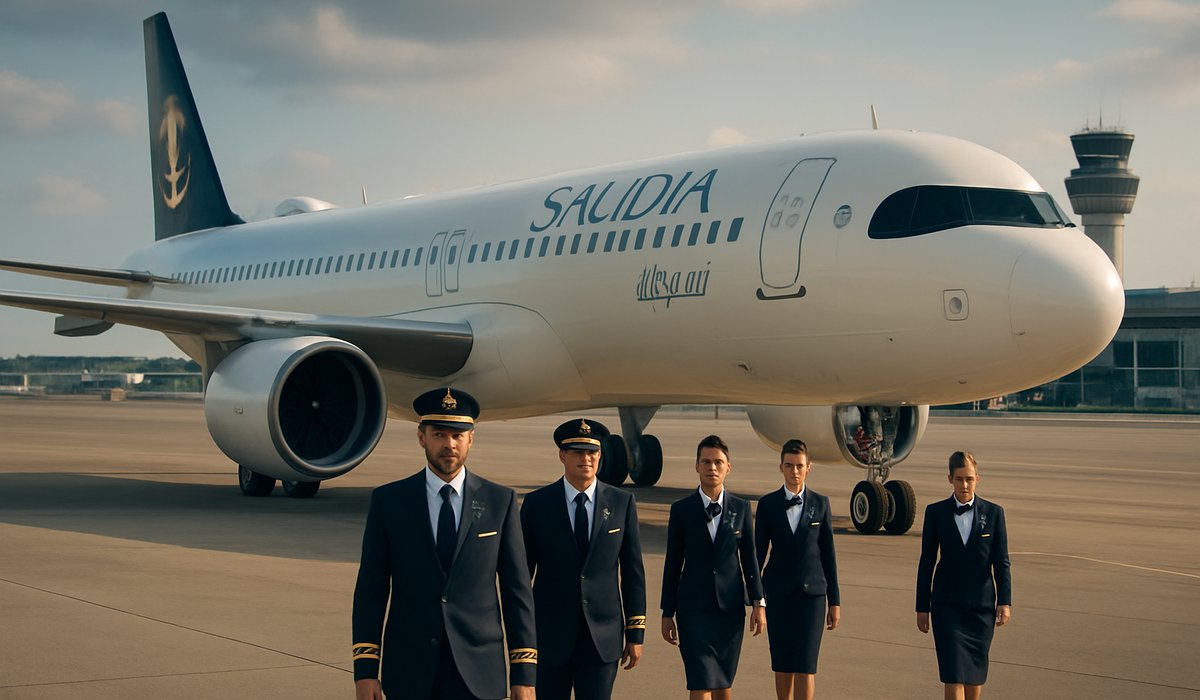
Image generated by AI
Saudi Arabia's National Carrier Takes Delivery of First A321XLR With Unprecedented Business Class Luxury
Saudia becomes Middle East pioneer of Airbus's ultra-long-range narrowbody, setting new premium cabin standards with 24-suite business configuration
Historic Milestone for Gulf Aviation
Saudi Arabia's flagship carrier Saudia has officially received its first Airbus A321XLR following a formal handover ceremony at Airbus's manufacturing headquarters in Toulouse, marking a watershed moment for aviation in the Middle East. The delivery establishes Saudia as the region's first operator of the revolutionary extended-range narrowbody aircraft, positioning the airline to compete aggressively on long-haul premium routes with enhanced passenger capacity and operational efficiency.
Premium Cabin Configuration Sets Industry Benchmark
The A321XLR delivered to Saudia features an exceptionally configured business cabin with 24 luxury suites—the largest premium compartment deployed on the aircraft type to date. This configuration demonstrates the airline's strategic pivot toward high-yield long-haul services, allowing the carrier to maximize premium revenue while expanding its network reach beyond what conventional narrowbody aircraft typically permit.
Growing International Adoption
Saudia joins an expanding roster of global carriers operating the A321XLR since Spain's Iberia inaugurated commercial service over 18 months ago. This growing fleet represents a fundamental shift in long-haul travel dynamics, as airlines increasingly deploy advanced narrowbody platforms to capture premium-cabin traffic on transcontinental routes traditionally dominated by wide-body aircraft. The trend reflects broader industry momentum toward fuel-efficient, cost-effective alternatives that reduce jet fuel consumption and operational expenses—factors increasingly critical as energy prices remain volatile.
Strategic Implications for Middle East Aviation
The acquisition underscores Saudia's ambitions to strengthen its position within fiercely competitive Gulf aviation markets. With enhanced range capabilities and a premium-focused cabin design, the A321XLR enables Saudia to serve unserved or underserved long-haul destinations while maintaining superior unit economics compared to larger aircraft on thinner routes. This aligns with the airline's broader fleet modernization strategy and Saudi Arabia's Vision 2030 economic diversification objectives.
Airbus's A321XLR represents a transformative aircraft category, bridging widebody and narrowbody operations through advanced fuel efficiency and extended-range technology. For Saudia, the platform offers competitive advantages in pursuing premium leisure and business travelers on intercontinental European, African, and Asian routes—markets increasingly vital to the airline's growth trajectory.
Industry analysts expect additional Middle Eastern carriers to evaluate the A321XLR platform as delivery schedules accelerate and operational performance data accumulates, potentially reshaping regional long-haul travel economics.
Frequently Asked Questions
What is an A321XLR and how does it differ from standard A321 aircraft? The Airbus A321XLR is an extended-long-range variant featuring approximately 4,700 nautical mile maximum range—enabling true transcontinental single-aisle operations previously requiring wide-body jets. Enhanced fuel capacity and aerodynamic improvements deliver superior efficiency and lower per-seat costs.
Why are airlines prioritizing business class suites on narrowbody aircraft? Premium cabin suites command significantly higher per-seat revenue than economy configurations, allowing airlines to offset smaller passenger counts on long-haul narrowbodies through yield maximization. Enhanced passenger comfort justifies premium pricing on extended flights.
How does the A321XLR impact airline operating costs and jet fuel economics? The A321XLR consumes approximately 30-40% less jet fuel than comparable wide-body aircraft, directly reducing exposure to volatile energy prices while lowering seat-mile costs—critical advantages amid geopolitical fuel market volatility and climate-focused sustainability pressures.
Which other Middle Eastern carriers might adopt the A321XLR? Gulf-based carriers including Emirates, Qatar Airways, and Etihad are monitoring A321XLR operational performance. Strong unit economics and premium cabin potential position the aircraft as attractive for regional carriers expanding long-haul networks.
When will Saudia deploy its A321XLR on commercial routes? While official deployment schedules remain unconfirmed, industry expectations suggest near-term route launches targeting European leisure destinations and potentially underserved long-haul markets where premium-focused narrowbody economics offer competitive advantages.
Related Travel Guides
Flight Delay Compensation Guide 2026
Understanding Airline Route Changes
Airport Security Process Updated (2026)
External Resources
Disclaimer
This article is for informational and educational purposes only. It does not constitute legal, financial, or professional advice. While we strive to provide accurate and up-to-date information, travel policies, regulations, and conditions change rapidly. Always verify information with official sources before making travel decisions. Nomad Lawyer makes no representations about the accuracy, reliability, completeness, or suitability of the information provided. Readers should consult qualified professionals for advice specific to their circumstances. The views expressed in this article are those of the author and do not necessarily reflect the views of Nomad Lawyer.
Kunal K Choudhary
Co-Founder & Contributor
A passionate traveller and tech enthusiast. Kunal contributes to the vision and growth of Nomad Lawyer, bringing fresh perspectives and driving the community forward.
Learn more about our team →