
Saudi Arabia Aligns With United States As Riyadh Security Alert Tests Tourism Confidence
Saudi Arabia Aligns With United States As Riyadh Security Alert Tests Tourism Confidence

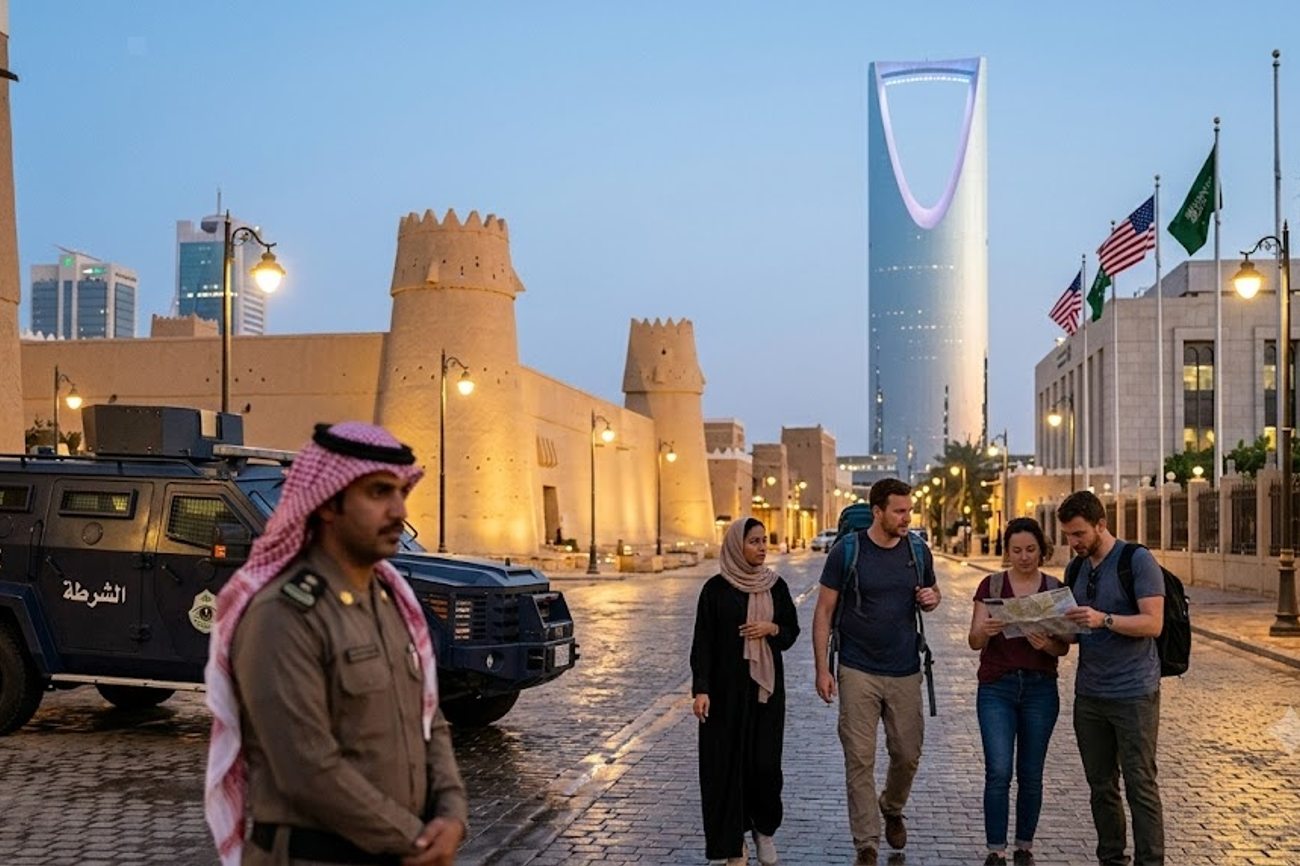
Image generated by AI
123 million domestic and inbound tourists visited Saudi Arabia in 2025, a figure that underscores the massive scale of the Kingdom's economic pivot toward tourism. However, a security alert issued on Saturday, 19 September 2026, serves as a stark reminder that physical infrastructure cannot entirely insulate a destination from the volatility of regional instability. When the Saudi Civil Defense ordered residents of Riyadh and Al-Kharj to seek shelter and avoid windows, it triggered a ripple effect of anxiety that transcends the actual physical damage—which, in this instance, remained unconfirmed.
The Friction Between Infrastructure and Perception
The incident in Riyadh highlights a systemic vulnerability in the Kingdom's Vision 2030 strategy. Saudi Arabia has spent billions constructing world-class hospitality assets and expanding its aviation footprint, yet the "perception gap" remains its most significant hurdle. In the travel industry, the distinction between a precautionary security warning and a confirmed kinetic attack is often lost on the casual consumer. For a traveler in London or Manila, a headline regarding "explosions" in Riyadh creates an immediate psychological barrier, regardless of whether the alert was lifted hours later.
This volatility is particularly dangerous for a sector that relies on forward-looking bookings. Tourism is a business of confidence; when that confidence is shaken, the impact is felt not just in hotel occupancy, but in the risk premiums charged by travel insurers and the cautiousness of international tour operators. The International Air Transport Association (IATA) frequently notes that aviation recovery and growth are inextricably linked to geopolitical stability. For Saudi Arabia, the challenge is moving from a model of "building the destination" to "managing the narrative" of the destination.
Economic Stakes and Operational Data
The financial weight of the tourism sector makes these security fluctuations a matter of national economic security. The scale of the industry is evidenced by the SAR 304 billion in total tourism spending recorded in 2025. A significant portion of this—SAR 176.6 billion—was generated specifically by inbound international visitors, who numbered 29.3 million.
The following data outlines the specific pressure points created by the 19 September alert:
| Tourism Variable | Potential Market Reaction | Risk Level |
|---|---|---|
| International Arrivals | Postponement of leisure trips due to perceived risk | Moderate |
| Aviation Logistics | Increased scrutiny of flight paths and hub reliability | Low to Moderate |
| Hospitality Revenue | Surge in cancellation requests for Riyadh-based hotels | Moderate |
| Corporate Travel | Heightened "Duty of Care" audits by multinational firms | High |
| Event Planning | Revision of contingency plans for Riyadh-based summits | Moderate |
These variables demonstrate that even a "non-event"—where no major physical damage is confirmed—can create a measurable economic drag if the communication strategy fails to outpace the spread of unverified reports.
Expert Analysis: The Riyadh Air Hub Strategy
The timing of this security alert is particularly sensitive given the aggressive rollout of Riyadh Air. The airline is not merely a carrier; it is a geopolitical tool designed to shift the center of gravity in Middle Eastern aviation away from established hubs. The announcement on 17 September of Manchester as a second UK destination, alongside existing routes to London, Madrid, Kuala Lumpur, Mumbai, and Dubai, shows a strategy of rapid global penetration.
For travelers booking through Riyadh Air, the direct consequence of regional instability is not necessarily a cancelled flight, but a shift in the "hub risk" profile. Riyadh Air has recently expanded its reach to include Islamabad, Lahore, Manila, and Bangkok. By connecting these diverse markets through a single point of failure—Riyadh—the airline ties its operational success directly to the perceived safety of the capital.
The pricing pressure created by these security alerts often manifests in the insurance market. When a destination is flagged for instability, travel insurance premiums can spike, or specific "acts of war" exclusions become more stringent. This creates a hidden cost for the traveler, making the destination less competitive compared to other regional hubs. If Riyadh Air is to compete with the likes of Emirates, it must prove that its hub is not only technologically advanced but geopolitally resilient. The 19 September incident proves that the airline's biggest challenge isn't fleet acquisition or route planning—it is the fragility of passenger confidence in a volatile region.
Key Takeaways
- Economic Scale: Saudi Arabia's 2025 tourism figures (123 million total visitors; SAR 304 billion spend) indicate the sector is now a primary pillar of GDP.
- Perception Risk: The 19 September alert in Riyadh and Al-Kharj demonstrates that "perceived risk" can disrupt travel patterns even in the absence of confirmed physical damage.
- Aviation Expansion: Riyadh Air is aggressively expanding its network (adding Manchester on 17 September; serving Bangkok, Manila, and others) to establish Riyadh as a global transit hub.
- Communication Gap: There is a critical need for real-time, transparent communication from the Saudi Tourism Authority to prevent unverified reports from impacting international booking volumes.
FAQ: Riyadh Travel Safety 2026
Is it safe to fly into Riyadh after the September 2026 security alert? Yes. The Saudi Civil Defense lifted the alert shortly after it was issued. There is no evidence of ongoing disruption to commercial aviation or public safety for international travelers.
How does a security alert affect my travel insurance? Depending on your policy, a formal government travel warning can trigger "cancel for any reason" clauses or, conversely, make it harder to claim for disruptions if the region is reclassified as high-risk.
Will Riyadh Air flights be delayed due to regional instability? While the 19 September alert caused no confirmed major disruptions, regional tensions can lead to airspace changes. Always check your flight status via the official airline app.
What should I do if I am in Riyadh during a Civil Defense alert? Follow official instructions immediately. In the 19 September event, residents were told to move away from windows and exposed areas and seek shelter until the alert was lifted.
In the race to become a global tourism superpower, Saudi Arabia is discovering that concrete and steel are easier to build than lasting international confidence.
Tags: Riyadh Air, Saudi Vision 2030, Riyadh Security Alert 2026, Saudi Arabia Tourism Statistics, Middle East Aviation Hubs
Related Travel Guides
- ATM 2026 Draws Global Tourism Community to Dubai, with Travel Buyers Representing More than 115 Countries
- Viennale 2026: Guide to Austria’s Premier International Film Festival
- United Arab Emirates Joins Other Countries in Leading an Unstoppable $116 Billion Middle East Tourism Surge in Astonishing Global Growth Juggernaut
Disclaimer
This article is for informational and educational purposes only. It does not constitute legal, financial, or professional advice. While we strive to provide accurate and up-to-date information, travel policies, regulations, and conditions change rapidly. Always verify information with official sources before making travel decisions. Nomad Lawyer makes no representations about the accuracy, reliability, completeness, or suitability of the information provided. Readers should consult qualified professionals for advice specific to their circumstances. The views expressed in this article are those of the author and do not necessarily reflect the views of Nomad Lawyer.
Kunal K Choudhary
Co-Founder & Contributor
A passionate traveller and tech enthusiast. Kunal contributes to the vision and growth of Nomad Lawyer, bringing fresh perspectives and driving the community forward.
Learn more about our team →