
United Arab Emirates Joins Other Countries in Leading an Unstoppable $116 Billion Middle East Tourism Surge in Astonishing Global Growth Juggernaut
United Arab Emirates Joins Other Countries in Leading an Unstoppable $116 Billion Middle East Tourism Surge in Astonishing Global Growth Juggernaut

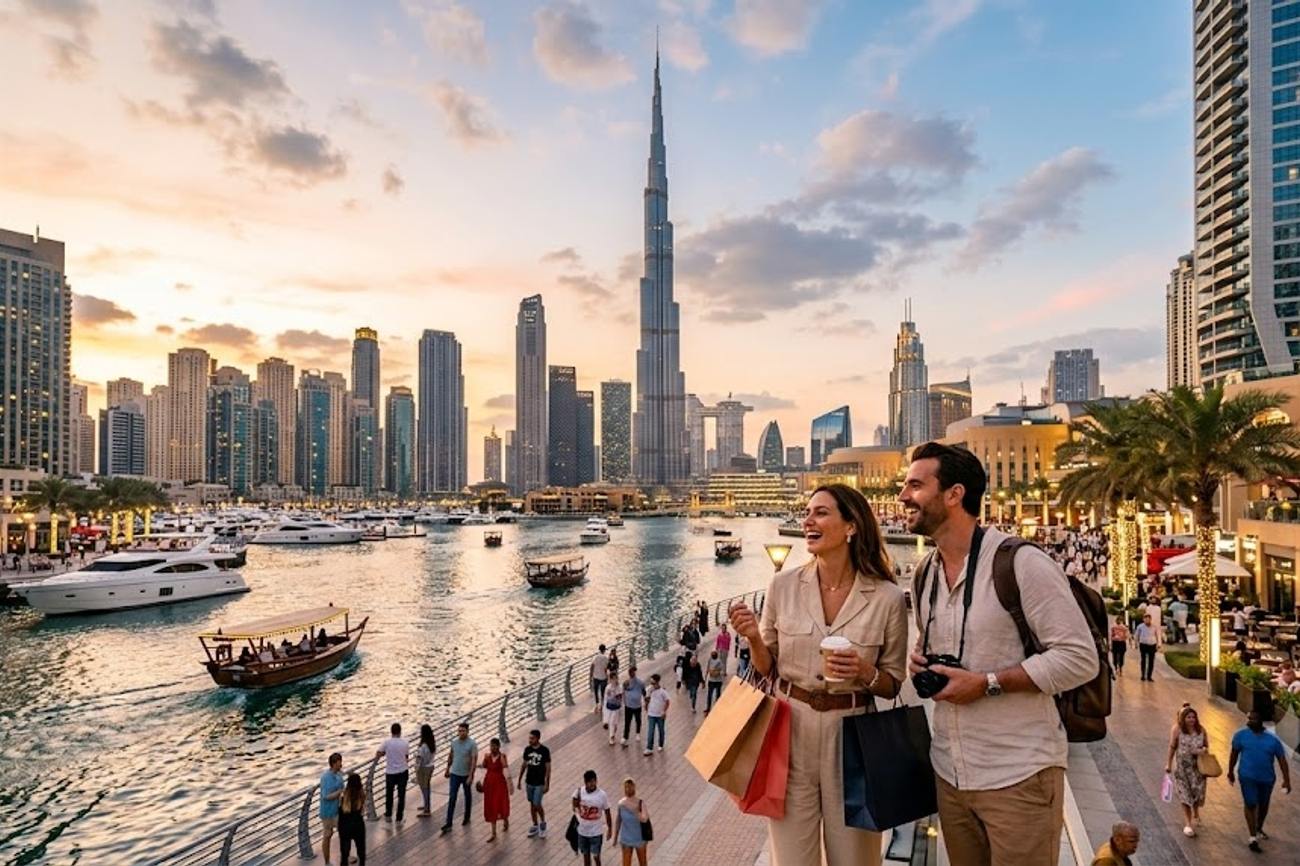
Image generated by AI
[Dubai, May 2026] — International visitor spending across China, Saudi Arabia, and the United Arab Emirates is projected to surge by $116 billion, marking a 57% increase between the 2025-2030 period compared to 2019-2024. The forecast comes from the ATM Travel Trends Report 2026, a joint analysis by Arabian Travel Market and Tourism Economics, a division of Oxford Economics.
Presented by Dave Goodger, Managing Director EMEA at Tourism Economics, the data indicates that the Middle East, North Africa, and South Asia (MENASA) region is now the primary engine for global tourism growth. This expansion follows a record-breaking 2025, where global visitor nights hit 24 billion—a 16% rise over 2019—and worldwide in-destination spending reached $7.2 trillion.
The MENASA Growth Catalyst
The surge in regional travel is not merely a post-pandemic recovery but a structural shift in global tourism patterns. In 2025, travel volumes across the MENASA region grew by nearly 50% compared to 2019 levels, outstripping the global growth rate by three times. The region was responsible for more than half of the total worldwide increase in international travel during this window.
While 2026 is expected to face headwinds due to geopolitical instability and economic uncertainty, the outlook for 2027 remains bullish. Tourism Economics predicts a global growth rate of 8% for next year, but the MENASA region is expected to outperform this significantly with a projected 17% increase. This resilience is attributed to a shrinking "recovery window" following major disruptions; where recovery once took 24 months in the early 2000s, it now typically takes only 10 to 12 months.
By 2030, the MENASA region is forecast to hit the following milestones:
- International Arrivals: 316 million (a 36% increase from 2025).
- Visitor Nights: 2.3 billion (a 46% increase from 2025).
- Total Spending: $408 billion (a 55% increase from 2025).
Markets and Capacity Shifts
Long-haul travel, specifically from East Asia, is identified as the primary driver for future Middle Eastern tourism. The report forecasts a massive 160% increase in leisure nights spent in the Middle East by Chinese travelers by 2030 compared to 2025 levels.
This demand is being met by an aggressive expansion of hospitality infrastructure. Industry data shared by Eddy Tannous, COO of Rotana Hotel Management Corporation PJSC, highlights the scale of this growth. Dubai's hotel capacity has ballooned from approximately 45,000 keys during the 2008 recession to between 160,000 and 170,000 keys today. Meanwhile, Abu Dhabi has reached approximately 55,000 keys.
The Saudi Tourism Authority continues to push regional ambitions, evidenced by the upcoming WTM Spotlight in Saudi Arabia. This event will run from September 8 to 10, 2026, at the Riyadh Front Exhibition and Conference Centre (RFECC) to integrate the Kingdom’s tourism sector with global networks.
Practical Traveler Advisory and Strategic Insights
For the average traveler, these figures translate into a fundamental shift in how trips to the Middle East are planned and experienced.
1. Higher Volume, Better Options: The massive increase in hotel "keys" (rooms) means more variety in accommodation, from luxury to mid-scale, reducing the risk of total sell-outs during peak seasons in Dubai and Abu Dhabi.
2. AI-Driven Planning: Travelers to this region are adopting technology faster than anywhere else. 28% of prospective visitors to the Middle East have used AI chatbots for trip planning, compared to just 12% for other global regions. Expect highly personalized, AI-generated itineraries and faster customer service via Dubai World Trade Centre affiliated events and local operators.
3. Increased Connectivity: The region is evolving into a "dual-purpose" hub. Travelers will find it increasingly easier to use the Middle East as a transit point between Asia, Europe, and Africa, with more integrated flight and hotel packages.
4. Price Volatility: While capacity is rising, the 57% projected increase in spending suggests a trend toward high-value, luxury experiences. Budget travelers may find that "essential" travel trends drive up prices for core experiences.
The Tech Integration Wave
The report reveals that the Middle East is currently a global laboratory for travel technology. A staggering 91% of travel businesses in the region are either piloting or fully operating Artificial Intelligence (AI) within their operations. This is not just a trend—85% of these businesses report that AI has led to measurable cost savings.
This technological push is the centerpiece of the Arabian Travel Market 2026, scheduled for September 14 to 17 at the Dubai World Trade Center. The event has grown by 16% this year, making it the largest in the history of the ATM. It will host over 55,000 professionals from 166 countries.
The UAE continues to drive regional growth through strategic infrastructure investments and diversified visa policies. Travelers can access comprehensive entry requirements and official destination guides via the Visit Dubai portal to streamline their arrival.
A dedicated "ATM Travel Tech" section will feature more than 180 exhibitors from 30+ countries. Across two exhibition halls and an 850-square-meter specialized zone, companies are showcasing advancements in:
- Generative AI and Robotics
- Virtual Reality (VR) and Augmented Reality (AR)
- Fintech and sustainable "eco-technologies"
Future Projections and Stability
Industry leaders, including Tarik Fadil of Agoda, emphasize that the region's success depends on "deepening localisation." The goal is to move beyond being a transit hub and solidify the Middle East as a primary destination.
The overarching sentiment from Tourism Economics is that travel has transitioned from a discretionary luxury to an "essential" experience. This shift, combined with rising wealth and favorable demographics in the MENASA region, suggests that the growth is structural. Even as 2026 navigates a complex geopolitical landscape, the long-term momentum toward the 2030 targets remains intact.
FAQ: Middle East Travel 2026-2030
Will hotel prices increase in Dubai and Abu Dhabi? While room capacity has increased significantly (Dubai now has 160,000-170,000 keys), the projected 57% increase in spending suggests a shift toward high-end luxury. Prices may remain high for premium experiences despite the increased supply of rooms.
How is AI changing trip planning for the Middle East? The region is a leader in AI adoption. 28% of visitors now use AI chatbots for planning. Travelers can expect more automated, personalized itineraries and more efficient digital booking processes than in other global regions.
Is it safe to book travel to the MENASA region for 2026? The report acknowledges "geopolitical disruption" in 2026, but emphasizes a strong rebound by 2027. Travel is being treated as "essential" by consumers, and structural investments in capacity continue unabated.
What is the significance of the Chinese market for this region? Chinese leisure travel is a critical growth pillar. Leisure nights from China to the Middle East are expected to grow by 160% by 2030, prompting airlines and hotels to prioritize Chinese-language services and tailored offerings.
The Middle East is no longer just a stopover; it is becoming the world's primary travel engine.
Related Travel Guides
- Thailand’s Iconic Chiva-Som Hua Hin Opens New Wellness Escape With Adrienne Everett Yoga Programme
- India Commercial Vehicle Sales Surge 30.7 Percent As Infrastructure And Logistics Demand Drive Strong August Growth
- South Korea Sparks A New Tourism Boom With Anseong Namsadang Baudeogi Festival And Global Performances
Disclaimer
This article is for informational and educational purposes only. It does not constitute legal, financial, or professional advice. While we strive to provide accurate and up-to-date information, travel policies, regulations, and conditions change rapidly. Always verify information with official sources before making travel decisions. Nomad Lawyer makes no representations about the accuracy, reliability, completeness, or suitability of the information provided. Readers should consult qualified professionals for advice specific to their circumstances. The views expressed in this article are those of the author and do not necessarily reflect the views of Nomad Lawyer.
Kunal K Choudhary
Co-Founder & Contributor
A passionate traveller and tech enthusiast. Kunal contributes to the vision and growth of Nomad Lawyer, bringing fresh perspectives and driving the community forward.
Learn more about our team →