
Saudi Arabia Approves New Air Arabia-Led Low-Cost Airline in Dammam: Insider Guide to Eastern Province Travel
GACA grants an Air Operator Certificate to an Air Arabia-led consortium in Dammam, opening 81 domestic and international routes across Saudi Arabia's Eastern Province.

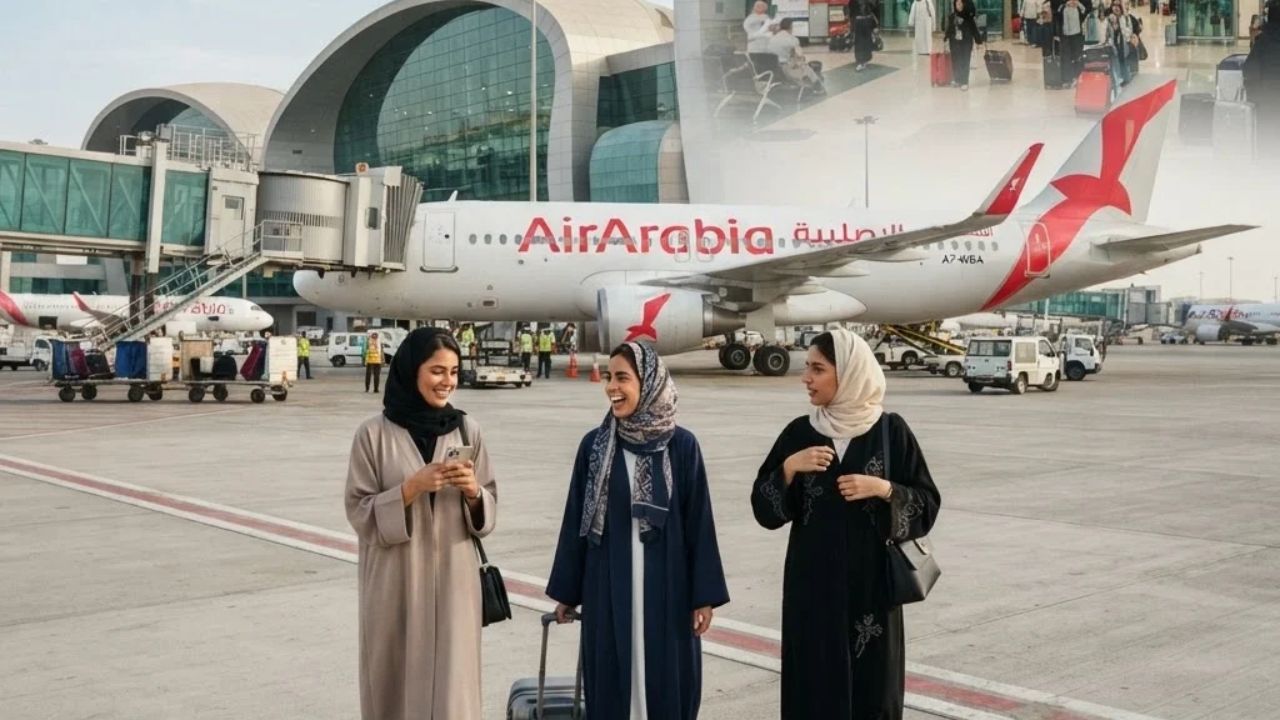
Image generated by AI
Sprawling across roughly 776 square kilometers of desert sands—making it physically larger than the entire neighboring island nation of Bahrain—Dammam’s King Fahd International Airport has long operated beneath its vast potential as an industrial corporate gateway. That dynamic changes permanently as the General Authority of Civil Aviation (GACA) grants an official Air Operator Certificate to a consortium led by Air Arabia, formalizing the launch of a dedicated national budget airline based in Saudi Arabia’s Eastern Province. Backed by majority Saudi ownership alongside domestic partners Nesma Group and KUN Holding, the new carrier plans an expansive network spanning 24 domestic and 57 international routes, targeting an annual capacity of 10 million passengers by 2030 while generating over 2,400 direct jobs. For travelers, this new aviation nexus unlocks affordable access not only to the Kingdom's primary commercial centers, but to the ancient date palm oases, tranquil coastal promenades, and deep culinary traditions of the Persian Gulf shore.
Dammam's Sky Horizon: Inside the Air Arabia-Led Low-Cost Expansion
The formal licensing of the Dammam-based carrier marks a decisive step in decentralizing the Kingdom’s commercial aviation footprint away from the traditional duopoly of Riyadh and Jeddah. Selected by GACA in July 2025 to develop the national budget operator, the consortium brings together Air Arabia's seasoned low-cost operating expertise with substantial domestic capital from Nesma Group and KUN Holding. By securing its Air Operator Certificate, the airline has satisfied all regulatory, safety, and operational mandates required to commence scheduled commercial flights.
The scale of the planned network underscores the Eastern Province's rising strategic importance. With 81 total destinations envisioned—combining 24 domestic trunk and regional links with 57 international routes—the carrier will connect Dammam directly to secondary cities across the Middle East, North Africa, and South Asia. The objective is to absorb surging regional mobility while creating competitive pricing for both leisure travelers and the substantial expatriate workforce residing in the industrial corridor between Jubail, Dammam, and Al Khobar. By targeting 10 million annual travelers by 2030, the project directly supports the National Aviation Strategy's overarching goal of tripling passenger traffic across Saudi skies.
For passengers, the establishment of a dedicated home-base carrier at King Fahd International Airport transforms regional logistics. Travelers who previously relied on long highway journeys to Bahrain or connecting flights through Riyadh will soon gain non-stop point-to-point options. While commercial launch dates, aircraft deliveries, and initial booking schedules will be announced in upcoming phases, the regulatory approval sets the stage for a new era of competitive, value-oriented regional travel across the Gulf.
What Makes Dammam and the Eastern Province Different
Travelers arriving in Dammam encounter a region that defies generic desert stereotypes. The Eastern Province (Sharqiyah) is characterized by a maritime soul that predates the modern energy industry by thousands of years, rooted in pearl diving, dhow maritime trade, and ancient agricultural life.
Just forty minutes south of Dammam lies Al Khobar, where the manicured seaside corniche features contemporary art installations, open-air cafes, and the sweeping 25-kilometer King Fahd Causeway leading across azure waters to Bahrain. Nearby in Dhahran, the King Abdulaziz Center for World Culture (Ithra) rises like an arrangement of colossal weathered desert pebbles, housing world-class contemporary art galleries, an eight-story library, and performing arts theaters designed by international architectural masters.
Further inland, the province gives rise to the extraordinary Al Ahsa Oasis, recognized by the UNESCO World Heritage Centre. Holding the title of the largest self-contained desert oasis on Earth, Al Ahsa encompasses over 2.5 million date palms fed by hundreds of ancient artesian springs. Here, visitors can wander through the naturally cooled limestone caverns of Al Qarah Mountain, explore the earthen battlements of Ibrahim Palace, and visit the historic Al Qaisariyah Souq, which has welcomed nomadic camel caravans since the nineteenth century. Supported by cultural preservation initiatives from Visit Saudi, the Eastern Province reveals an authentic world where desert wilderness and coastal refinement meet.
Visitor Insider Tips
Experiencing the Eastern Province like a seasoned resident requires local road knowledge, transit timing, and an appetite for traditional Gulf hospitality.
- Factor in King Fahd International Airport Distances: King Fahd International Airport is situated roughly 30 kilometers northwest of downtown Dammam and nearly 50 kilometers from Al Khobar. Never rely on spontaneous street hails during late-night arrivals. Pre-book an authorized ride-hailing vehicle via regional mobile apps or arrange an airport car through your hotel, allowing at least 45 minutes of driving time along the desert expressway to reach your accommodation.
- Ride the High-Speed Passenger Train to Al Ahsa: Rather than booking a private car, take the Saudi Arabia Railways (SAR) passenger train from Dammam Central Station to Hofuf in Al Ahsa. In less than two comfortable hours, you leave coastal high-rises behind and glide directly into the emerald canopy of the date palm groves, with tickets costing a fraction of private taxi hires.
- Explore the Architectural Marvel of Ithra: When visiting the King Abdulaziz Center for World Culture (Ithra) in Dhahran, book your entry passes online in advance. While access to the central plaza, energy exhibit, and towering library is complimentary, special museum galleries and theater performances require pre-reserved timed tickets that sell out quickly on weekend evenings.
- Embrace Traditional Gahwa Coffee Rituals: When entering traditional coastal majlis or heritage cafes in Al Khobar, hosts will pour warm Arabic coffee (gahwa) scented with cardamom, saffron, and cloves from a long-spouted brass dallah. Always receive the small handleless cup (finjan) with your right hand. When you have enjoyed enough coffee, gently tilt and shake the cup from side to side before handing it back to indicate you are satisfied.
- Savor Unique Hasawi Regional Cuisine: Seek out local heritage kitchens to taste ruz hasawi—a unique reddish whole-grain rice cultivated exclusively in the natural spring waters of Al Ahsa. Simmered for hours with tender spiced lamb, whole dried black limes (loomi), and cardamom pods, this nutrient-dense comfort food is a proud regional specialty found nowhere else in the Arabian Peninsula.
Cultural and Environmental Context
The establishment of a low-cost carrier in Dammam represents a vital element in Saudi Arabia's post-oil economic transition under Vision 2030. Regulated through the General Authority of Civil Aviation, the aviation transformation aims to balance rapid tourism expansion with meaningful community job creation. The projected creation of over 2,400 direct aviation positions provides high-skill technical, managerial, and customer-service employment for young Saudi men and women across the Eastern Province.
At the same time, expanding regional aviation in an arid coastal climate demands strict environmental accountability. The aviation authority and airport operators are implementing green airport standards, including solar photovoltaic generation for terminal power, high-efficiency apron cooling systems, and optimized flight paths to reduce fuel burn across Arabian Gulf airspace.
Preserving regional cultural heritage is equally intertwined with environmental health. In Al Ahsa, maintaining millions of date palms and natural springs requires careful groundwater management to prevent aquifer depletion. By encouraging travelers to visit certified agricultural farms, purchase locally grown Khalas dates, respect coastal marine environments along Half Moon Bay, and travel through regional train corridors, visitors actively support the sustainable preservation of the Eastern Province's living agricultural and maritime heritage.
FAQ: Traveling to Dammam and the Eastern Province 2026
Who is operating the new low-cost airline in Dammam?
The carrier is operated by a consortium led by Air Arabia in partnership with Saudi firms Nesma Group and KUN Holding, backed by majority Saudi ownership.
How many routes will the new Dammam-based carrier fly?
The airline plans to operate 81 destinations, consisting of 24 domestic routes within Saudi Arabia and 57 international routes across regional markets by 2030.
When is the best time of year to visit Dammam and Al Khobar?
November through March provides the best weather, with comfortable daytime temperatures between 20 and 26 degrees Celsius, ideal for waterfront dining and oasis excursions.
What entry visa is required for international visitors to Saudi Arabia?
Citizens from more than 60 countries can obtain a one-year, multiple-entry tourist eVisa online in minutes or receive a visa on arrival at King Fahd International Airport.
[Beneath the modern steel canopy of King Fahd International or resting beneath the ancient shade of two million date palms, Dammam invites travelers to discover the untold cultural soul of the Gulf shore.]
Related Travel Guides
Disclaimer
This article is for informational and educational purposes only. It does not constitute legal, financial, or professional advice. While we strive to provide accurate and up-to-date information, travel policies, regulations, and conditions change rapidly. Always verify information with official sources before making travel decisions. Nomad Lawyer makes no representations about the accuracy, reliability, completeness, or suitability of the information provided. Readers should consult qualified professionals for advice specific to their circumstances. The views expressed in this article are those of the author and do not necessarily reflect the views of Nomad Lawyer.
Preeti Gunjan
Contributor & Community Manager
A passionate traveller and community builder. Preeti helps grow the Nomad Lawyer community, fostering engagement and bringing the reader experience to life.
Learn more about our team →