
Gulf Aviation Stunned by $4.3 Billion Loss Forecast as Emirates and Qatar Airways Confront Transit Headwinds
Middle Eastern airlines face an $11.5 billion financial swing in 2026 as soaring jet fuel at $152 a barrel, airspace detours, and shifting transfer patterns challenge Dubai and Doha.

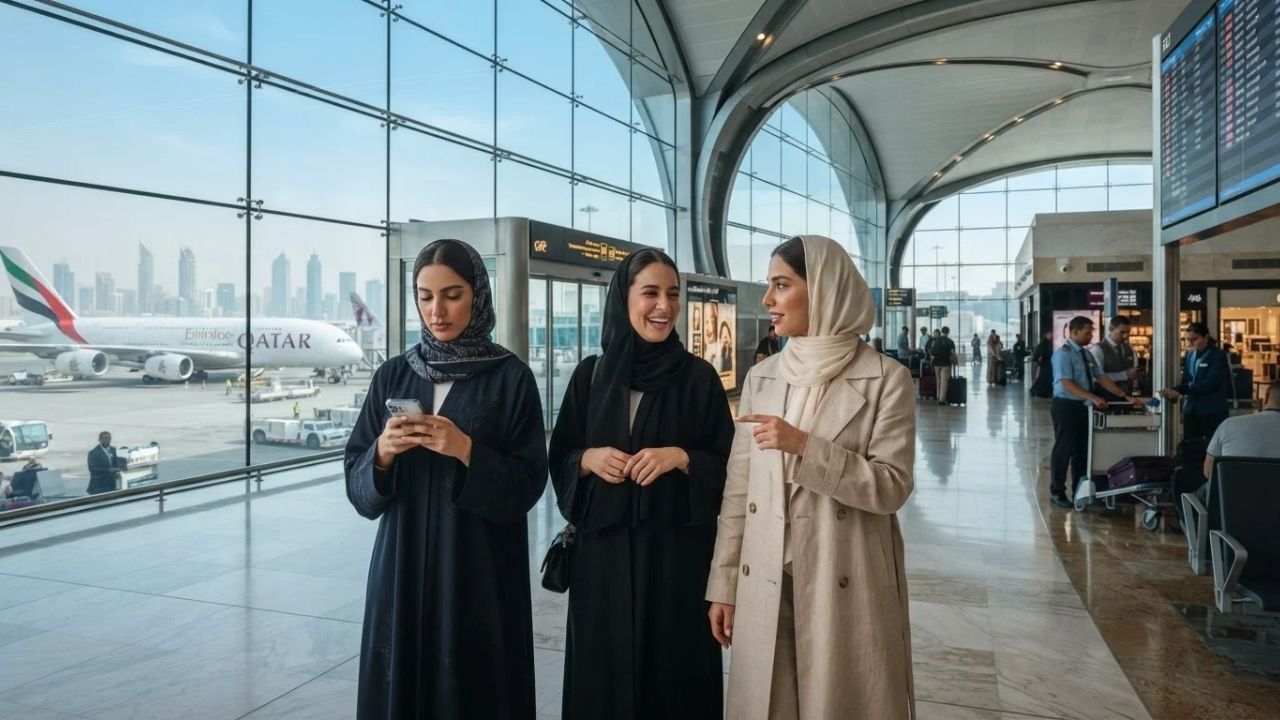
Image generated by AI
In one of the most abrupt reversals in commercial aviation history, Middle Eastern carriers that earned an industry-topping $31.50 in profit per passenger in 2025 are now forecast to lose $21.40 on every traveler who boards their aircraft in 2026. According to the latest global industry projections from the International Air Transport Association (IATA), regional carriers across the Persian Gulf are tumbling from a record $7.2 billion net profit and a 9.4 per cent margin in 2025 to an anticipated $4.3 billion net loss with a -6.1 per cent negative margin. This represents an unprecedented $11.5 billion financial swing within twelve months, leaving the Middle East as the only major continental aviation market operating in the red while global competitors in the Asia-Pacific post $6.6 billion in profits. Driven by lingering airspace detours following military exchanges that began on 28 February 2026, aviation jet fuel surging nearly 70 per cent to average $152 a barrel, and a 14 per cent drop in June passenger demand, the classic Gulf super-connector model is being tested as never before.
The Super-Connector Vulnerability: Beyond Open Runways to Passenger Sentiment
For over three decades, the Gulf aviation empire was built on an invincible geographic equation: position widebody aircraft in Dubai, Doha, and Abu Dhabi to connect any two points on the globe with a single effortless layover. In 2025, Dubai International Airport (DXB) proved the dominance of this architecture by welcoming 95.2 million guests, maintaining its reign as the world’s busiest international airport connecting 291 global destinations via 108 international carriers.
However, the geopolitical friction that erupted in early 2026 exposed the Achilles' heel of pure transfer traffic. While airports have remained open and flight frequencies have resumed, passenger booking psychology has diverged sharply. June aviation data illustrated a telling divide: while point-to-point Europe-Asia traffic excluding Gulf connections expanded by 11 per cent, Middle Eastern network carriers experienced a 14 per cent drop in passenger demand, forcing an 11 per cent capacity reduction and depressing average passenger load factors to 76.3 per cent.
As IATA Director General Willie Walsh bluntly noted in June, war-related regional disruptions and rising fuel costs have drastically worsened the outlook for airlines. With passenger demand expected to contract by 11.4 per cent and capacity down 4.4 per cent across 2026, empty connecting seats on long-haul A380s and Boeing 777s threaten the profitability of entire intercontinental trunk corridors. While global air cargo rose 8.5 per cent year-on-year in June—with Middle Eastern carriers securing 5.6 per cent freight growth on a 2.5 per cent capacity increase—cargo yields alone cannot offset the loss of high-yield international passenger connections.
What Makes Navigating Gulf Hubs Different in 2026
Traveling through the Middle East in 2026 requires understanding that open runways do not mean unrestricted skies. The European Union Aviation Safety Agency (EASA) maintains active regional safety information bulletins covering airspace across Bahrain, Kuwait, Qatar, the UAE, and Oman. Revised on 31 August 2026 and extending through 30 September 2026, these advisories require continuous risk assessments regarding drone activity, air-defence systems, and potential falling debris, forcing airlines to fly extended zigzag routings that inflate flight durations and burn through expensive fuel reserves.
Yet on the ground, the physical transit experience remains undeniably luxurious. Stepping off an Emirates flight at DXB or deplaning a Qatar Airways service at Hamad International Airport (DOH) immerses travelers in hyper-modern airport oases. In Doha, the indoor tropical garden known as The Orchard offers lush living vegetation and tranquil water features directly inside the terminal concourse. In Dubai, passengers gliding through Concourse A encounter multi-level duty-free arcades, quiet sleeping lounges, and sensory dining outposts that mirror the city's cosmopolitan energy.
The primary difference lies in operational flexibility. Recognizing traveler hesitations, Emirates launched its Comprehensive Travel Cover in June, packaging conflict-related medical protection, emergency assistance, and complimentary rebooking on alternative partner airlines. Furthermore, since 10 August, the carrier introduced unlimited free date modifications on Dubai-bound bookings across designated fare classes. Navigating these hubs is no longer just about choosing the shortest layover; it is about leveraging airline flexibility guarantees.
Visitor Insider Tips: Layover Strategy, Transit Hacks, and Local Etiquette
To turn a complex flight connection through Dubai or Doha into a seamless cultural interlude, keep these essential strategies in mind:
- Build Generous Transit Windows: With regional air corridors compressed, inbound flights occasionally absorb tactical air-traffic holding patterns. Avoid tight 60-minute connections; book layovers of at least three to four hours to eliminate the stress of sprint-transfers between distant concourses.
- Capitalize on Subsidized Stopover Packages: Both Visit Dubai and Qatar Tourism provide government-backed stopover visas and heavily discounted luxury hotel packages for stays between 12 and 96 hours. Instead of enduring an eight-hour terminal wait, step through immigration to enjoy a rooftop pool and an evening dune safari.
- Cultural Etiquette in the Terminals and Cities: While airport transit zones are internationalized, maintain respectful cultural decorum. Dress modestly when venturing into city centers, covering shoulders and knees when visiting cultural monuments like Dubai's Al Fahidi Historical Neighbourhood or Doha's Souq Waqif. During the call to prayer, lower your speaking volume in public areas.
- Authentic Gulf Flavors on a Short Layover: Skip standard airport fast food. In Dubai, seek out traditional Emirati breakfast dishes like balaleet (sweet cardamom vermicelli topped with a savory egg omelet) paired with rich saffron tea. In Doha, wander into Souq Waqif to savor freshly baked regag bread smeared with cheese and za'atar, washed down with spiced karak chai.
- Booking and Fare Hacks: With jet fuel averaging $152 a barrel—pushing the total industry fuel bill to $350 billion and accounting for 31.4 per cent of airline operating expenses—ticket revenue is forecast to climb 9.2 per cent as carriers attempt cost recovery. To avoid inflated change fees, book directly through carrier websites rather than third-party online travel agencies to ensure instant access to fee-free date change waivers.
Cultural and Environmental Context: Rerouting Emissions and Desert Tourism
The operational shifts across Gulf aviation carry profound environmental consequences. Aircraft flying lengthened detours to bypass restricted airspace consume thousands of additional kilograms of aviation kerosene per flight, intensifying sector emissions at a time when global carriers are striving toward net-zero targets. The stark difference between Brent crude at $95 a barrel and jet fuel at $152 underlines the heavy economic penalty of operating fuel-thirsty regional detours.
Simultaneously, the domestic tourism economies of the United Arab Emirates and Qatar are deliberately pivoting to diversify beyond pure passenger transit. Municipal initiatives are investing heavily in heritage conservation, eco-tourism reserves, and desert wilderness preservation. In Dubai, projects like the Dubai Desert Conservation Reserve protect indigenous Arabian oryx and gazelles, while Qatar’s coastal mangrove reserves at Al Thakira highlight the delicate marine ecology of the Persian Gulf.
By encouraging international travelers to step beyond terminal transit lounges and engage directly with local historical districts, traditional dhow shipyards, and community museums, both nations are building resilient visitor economies that do not rely solely on the precarious economics of connecting passengers.
FAQ: Navigating Gulf Flights and Layovers 2026
Why are Middle Eastern airlines forecast to lose $4.3 billion in 2026?
Soaring jet fuel prices averaging $152 a barrel, combined with airspace avoidance detours and an 11.4 per cent drop in passenger demand following early-year military tensions, have triggered severe regional airline losses.
Is it currently safe to connect through Dubai or Doha airports?
Yes. Both Dubai (DXB) and Doha (DOH) operate standard international schedules under continuous security oversight. International civil aviation bodies like EASA provide dynamic safety advisories to ensure safe civilian flight corridors.
What flexible booking protections are Gulf carriers offering?
Emirates and regional carriers have introduced comprehensive travel insurance covering conflict-related disruptions, alongside flexible fare options that allow unlimited free date changes on eligible tickets.
How much layover time should I allow when booking flights via the Gulf?
Travelers should schedule a connection window of at least three to four hours to account for possible air-traffic delays and to comfortably transfer between expansive terminal gates.
Above shifting sands and complex skies, the great crossroads of the Gulf endures by turning every unexpected delay into an invitation to discover the desert.
Related Travel Guides
Disclaimer
This article is for informational and educational purposes only. It does not constitute legal, financial, or professional advice. While we strive to provide accurate and up-to-date information, travel policies, regulations, and conditions change rapidly. Always verify information with official sources before making travel decisions. Nomad Lawyer makes no representations about the accuracy, reliability, completeness, or suitability of the information provided. Readers should consult qualified professionals for advice specific to their circumstances. The views expressed in this article are those of the author and do not necessarily reflect the views of Nomad Lawyer.
Raushan Kumar
Founder & Lead Developer
Full-stack developer with 11+ years of experience and a passionate traveller. Raushan built Nomad Lawyer from the ground up with a vision to create the best travel and law experience on the web.
Learn more about our team →