
SAS at 80: Scandinavian Airlines Celebrates Eight Decades of Aviation Innovation and Nordic Connectivity

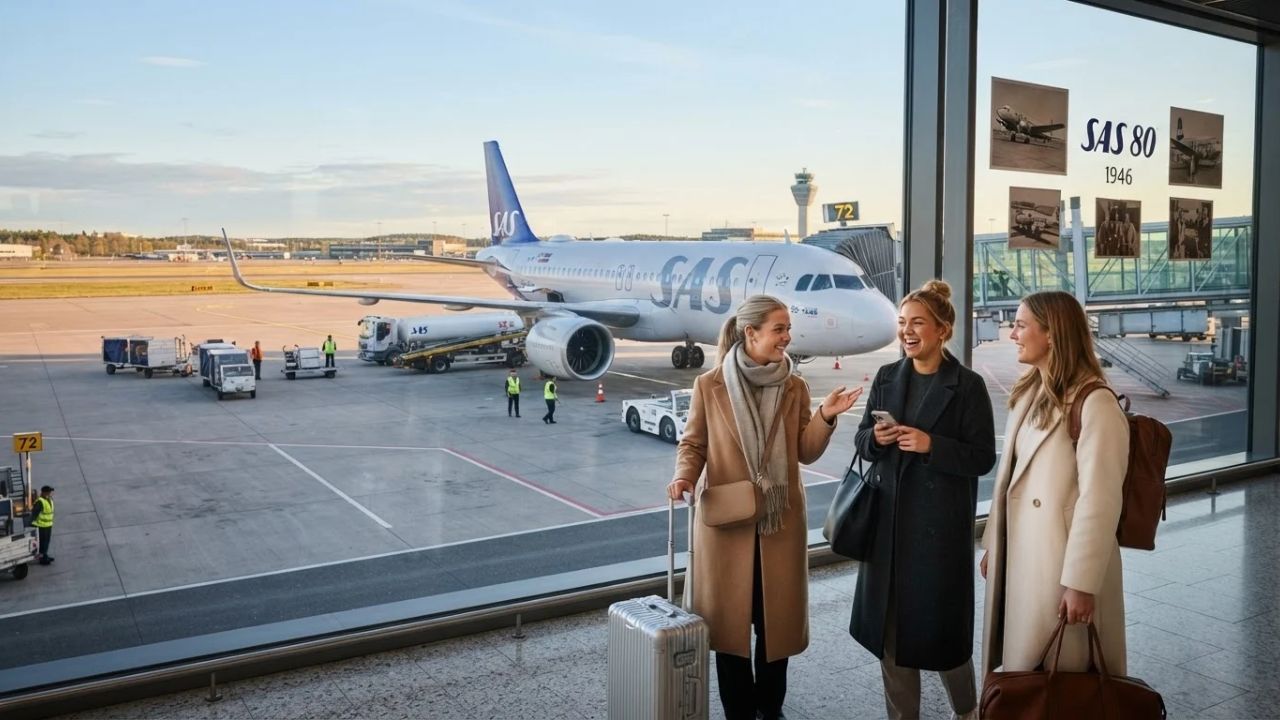
Marking 80 years of aviation innovation since its 1946 founding, Scandinavian Airlines (SAS) celebrates eight decades of pioneering transatlantic flight, Arctic polar navigation, and iconic Nordic design. From the world's first commercial polar route in 1954 to its modern sustainable fleet transformation with Air France-KLM backing, the tri-nation carrier continues to shape Northern European connectivity.
The Local Trend Revealed: Eight Decades of Tri-Nation Aviation Excellence
Few airlines embody regional cooperation as effectively as Scandinavian Airlines (SAS). Reaching its 80th anniversary milestone in 2026, the carrier represents an enduring partnership formed in 1946 between three independent Nordic carriers:
- Denmark: Det Danske Luftfartselskab A/S (DDL)
- Norway: Det Norske Luftfartselskap A/S (DNL)
- Sweden: Svensk Intercontinental Lufttrafik AB (SILA)
Recognizing that international long-haul aviation required resources and technical expertise beyond the capacity of individual small nations, the three countries united their operations. This cross-border alliance allowed SAS to launch its inaugural transatlantic service in 1946, connecting Stockholm and New York, and firmly establishing Scandinavia as a major player on the global stage.
Historical Milestones in SAS Aviation History
Across eight decades, SAS repeatedly redefined commercial international aviation through bold navigational breakthroughs, jet-age acquisitions, and service innovations:
| Year / Era | Defining Milestone | Industry & Passenger Impact |
|---|---|---|
| 1946 | Tri-national foundation; Stockholm–New York launch | United Danish, Norwegian, and Swedish aviation assets |
| 1954 | First scheduled commercial polar route (Copenhagen–Los Angeles) | Cut transatlantic flight times via specialized Arctic navigation |
| 1957 | First round-the-world route over the North Pole (Copenhagen–Tokyo) | Transcontinental routing via Anchorage, revolutionizing Far East access |
| 1959 | Introduction of first jet aircraft (Sud Aviation Caravelle) | Transitioned carrier into the high-speed commercial jet era |
| 1960 | Opening of the SAS Royal Hotel Copenhagen | Pioneered integrated travel design under architect Arne Jacobsen |
| 1981 | Jan Carlzon appointed CEO; "Moments of Truth" philosophy | Restructured customer service into a passenger-first global standard |
| 1997 | Founding member of Star Alliance | Co-founded the world's first global multi-carrier airline alliance |
| 2024–2026 | Strategic recapitalization with Danish State and Air France-KLM | Restructured ownership and initiated alignment with global airline partners |
The Polar Navigation Breakthrough: Conquering the Arctic Skies
SAS’s defining historic achievement arrived in 1954, when it became the world’s first airline to operate a scheduled commercial service over the North Pole, linking Copenhagen with Los Angeles. Flying through the magnetic and meteorological extremes of the Arctic required pioneering gyroscopic navigational instruments, specialized cold-weather survival gear, and newly developed celestial compasses.
Three years later, in 1957, SAS extended this achievement by launching the world’s first commercial route encircling the globe over the North Pole, connecting Copenhagen to Tokyo via Anchorage, Alaska. By proving that high-latitude great-circle routes were reliable and safe, SAS shortened travel times by thousands of nautical miles and established navigational frameworks still used by global carriers today.
Nordic Design and the Jan Carlzon Customer Revolution
Beyond technical aviation firsts, SAS fundamentally shaped how modern airlines approach hospitality and aesthetics:
- Arne Jacobsen and the Total Design Concept: In 1960, SAS opened the SAS Royal Hotel in Copenhagen, hailed as the world's first designer hotel. Danish architect Arne Jacobsen designed every element—from the exterior curtain-wall facade to the iconic Egg, Swan, and Drop chairs—creating an integrated design philosophy that became synonymous with Scandinavian functionalism.
- The "Moments of Truth": When Jan Carlzon assumed leadership as CEO in 1981, he revolutionized airline management by focusing on front-line customer touchpoints. Carlzon demonstrated that an airline's true value is won or lost during the thousands of daily interactions between passengers and staff, a principle that transformed corporate hospitality theory worldwide.
Cultural & Environmental Value: Arctic Stewardship and Low-Emission Flight
For Scandinavian travelers, flying has always been balanced by a deep societal commitment to environmental preservation:
- Decarbonizing Northern Skies: Operating in fragile sub-Arctic biomes, SAS is modernizing its regional and long-haul fleet with fuel-efficient Airbus A320neo and A350-900 aircraft, cutting fuel burn and noise footprints across Nordic cities.
- Expanding Sustainable Aviation Fuel (SAF): Working in partnership with Scandinavian energy producers and regional governments, SAS actively integrates SAF into its regular flight operations, supporting Nordic targets for fossil-free domestic aviation.
- Safeguarding Fragile Arctic Regions: By providing reliable air bridges to remote communities—from Tromsø and the Lofoten Islands to Kiruna and Svalbard—SAS sustains vital scientific research, Indigenous Sámi community connections, and low-impact nature-based tourism.
Visitor Insider Tips: Exploring Scandinavia via SAS Hubs
Whether transiting through Stockholm, Copenhagen, or Oslo, use these practical specialist tips to enhance your Nordic journey:
- Hub Transit Strategy:
- Copenhagen Kastrup (CPH): Compact and renowned for hardwood floors and daylight architecture. Catch the regional DSB train from Track 2 directly inside the terminal to reach Copenhagen Central Station in just 13 minutes.
- Stockholm Arlanda (ARN): Take the high-speed electric Arlanda Express from underneath Terminal 5, reaching Stockholm Central Station in 18 minutes without highway traffic.
- SAS Lounges: Visit the flagship lounges at CPH and ARN to sample fresh smørrebrød open-faced sandwiches, organic Danish pastries, and draft Nordic beers in a serene minimalist setting.
- Nordic Etiquette and Social Norms:
- Quiet Consideration: Public transit and aircraft cabins across Scandinavia are exceptionally peaceful. Avoid speaking loudly on mobile phones, use headphones, and respect personal boundaries.
- Punctuality: Flight boarding and train departures operate precisely on schedule; arriving at the gate 20 minutes before departure is standard etiquette.
- Completely Cashless: Sweden, Denmark, and Norway are virtually 100% cashless. Contactless credit cards, debit cards, and Apple/Google Pay are accepted everywhere, from luxury boutiques to rural buses and public restrooms.
- Iconic Architectural and Cultural Stops:
- Radisson Collection Royal Hotel (Copenhagen): Step into the historic SAS Royal Hotel near Tivoli Gardens. While the property has been modernized, Room 606 has been painstakingly preserved in its original 1960 Arne Jacobsen state with vintage turquoise fabrics and original rosewood paneling.
- The Vasa Museum (Stockholm): Located on the island of Djurgården, this maritime museum houses the world's only intact 17th-century warship, salvaged after 333 years beneath the sea.
- Torvehallerne (Copenhagen): Two glass market halls in central Copenhagen offering artisanal cheeses, fresh oysters, craft chocolates, and traditional smørrebrød from Hallernes Smørrebrød.
- Local Culinary Specialties:
- The Daily Fika: In Sweden, partake in fika—a coffee break accompanied by freshly baked cardamom buns (kardemummabullar) or cinnamon buns (kanelbullar).
- Toast Skagen: A Swedish starter featuring fresh North Sea prawns tossed in mayonnaise, sour cream, and fresh dill, crowned with golden bleak roe (löjrom) on butter-toasted brioche.
- Smørrebrød: Dense, seed-crusted Danish rye bread topped with curried pickled herring, hard-boiled eggs, capers, and fresh dill.
Tourism Outlook: Transforming for the Next Century of Flight
As SAS celebrates 80 years, its recent financial restructuring—including strategic capital investment from the Danish State and the Air France-KLM consortium—positions the airline for a new era of global competitiveness.
By pairing its historic Arctic route mastery and iconic Scandinavian design with next-generation fleet efficiency, SAS proves that legacy carriers can honor eight decades of heritage while adapting to modern sustainability imperatives. For international travelers seeking authentic Northern European culture, SAS remains the definitive airborne gateway to the Nordic world.
Related Travel Guides
Disclaimer
This article is for informational and educational purposes only. It does not constitute legal, financial, or professional advice. While we strive to provide accurate and up-to-date information, travel policies, regulations, and conditions change rapidly. Always verify information with official sources before making travel decisions. Nomad Lawyer makes no representations about the accuracy, reliability, completeness, or suitability of the information provided. Readers should consult qualified professionals for advice specific to their circumstances. The views expressed in this article are those of the author and do not necessarily reflect the views of Nomad Lawyer.
Preeti Gunjan
Contributor & Community Manager
A passionate traveller and community builder. Preeti helps grow the Nomad Lawyer community, fostering engagement and bringing the reader experience to life.
Learn more about our team →