
Korean Air Launches Free Starlink Satellite WiFi: In-Flight Connectivity and Passenger Guide

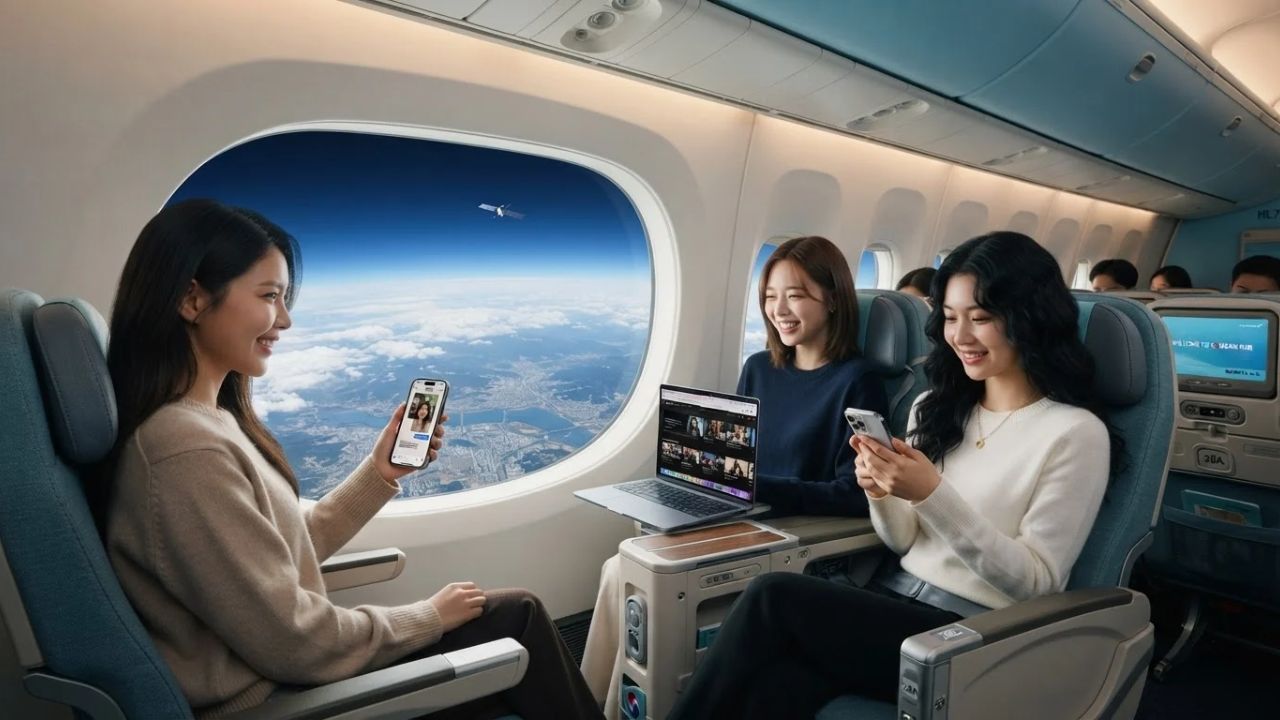
Eliminating expensive onboard data passes, Korean Air is launching complimentary high-speed Starlink satellite internet across its international fleet starting in September 2026. Powered by SpaceX’s low Earth orbit constellation, the carrier and its merger partner Asiana Airlines are providing low-latency streaming and real-time connectivity at 35,000 feet.
The Local Trend Revealed: Complimentary Low-Latency Satellite Flight
The global airline industry is transitioning toward fully connected digital cabins, moving away from slow, paywalled in-flight internet. South Korea’s flagship carrier, Korean Air, is accelerating this change by equipping its passenger fleet with free, high-speed Starlink satellite WiFi beginning in September 2026.
Unlike legacy airborne internet systems that rely on distant geostationary satellites or terrestrial cell towers—often plagued by high latency, packet loss, and steep hourly fees—Starlink utilizes a constellation of satellites operating in low Earth orbit (LEO). Operating hundreds of kilometers above Earth rather than tens of thousands, these satellites slash signal delays, delivering broadband download speeds capable of supporting continuous video streaming, remote cloud computing, online voice calls, and real-time flight tracking.
Fleet Rollout and Asiana Airlines Integration
The deployment arrives alongside the historic merger integration between Korean Air and Asiana Airlines. Both carriers are preparing to implement Starlink aviation technology across their long-haul and regional fleets, creating a unified digital cabin standard across South Korea's international aviation sector.
| System Parameter | Legacy Geostationary Systems | Korean Air Starlink LEO Network |
|---|---|---|
| Service Cost to Passenger | $15 – $30+ per flight segment | 100% Free for all passengers |
| Rollout Timeline | Phased obsolescence | Entering passenger service September 2026 |
| Satellite Architecture | Geostationary orbit (~35,786 km) | Low Earth orbit (~550 km) |
| Signal Latency | 600 ms – 900 ms (pronounced delay) | Low latency (25 ms – 50 ms responsiveness) |
| Supported In-Cabin Uses | Basic messaging, text emails | HD video streaming, live sports, cloud work |
| Airline Adoption Scope | Fragmented paid packages | Korean Air & Asiana integrated fleets |
For travelers on long-haul routes spanning the Pacific and Eurasian corridors—connecting Seoul Incheon International Airport (ICN) with North America, Europe, and Oceania—free high-speed internet shifts the in-flight environment from an isolated cabin into an agile airborne office and entertainment suite.
Cultural & Environmental Value: Aerodynamic Efficiency and Sustainable Travel
The introduction of low Earth orbit aviation connectivity supports broader environmental and cultural stewardship:
- Aerodynamic Fuel Savings: Traditional satellite radomes resemble bulky humps on the aircraft fuselage, creating parasitic aerodynamic drag and burning excess aviation fuel. Starlink’s low-profile, electronically steered phased array antennas lie flat against the aircraft crown, substantially lowering drag and corresponding carbon emissions across long-haul journeys.
- Paperless Cabin Operations: Universal onboard connectivity enables Korean Air to eliminate heavy printed magazines, paper customs declaration slips, and printed duty-free catalogs, reducing aircraft weight and operational waste.
- Empowering Regional Korean Heritage: With seamless skyward connectivity, inbound passengers can explore regional South Korean cultural initiatives before touchdown—booking rural temple stays in Gyeongsangbuk-do, reserving slots for the Gyeongbokgung Night Tours, or researching community artisan workshops supported by the Korea Tourism Organization (KTO).
Visitor Insider Tips: Flying Korean Air via Seoul Incheon
For international travelers flying Korean Air and transiting through Seoul Incheon International Airport (ICN), consider these specialist travel insights:
- Terminal 2 Transit Amenities: Korean Air operates primarily out of Incheon’s Terminal 2. If you have a layover exceeding two hours, take advantage of the complimentary passenger shower facilities on the 4th floor (near Gates 231 and 268), which supply fresh towels and toiletries free of charge.
- Free Cultural Experiences at Incheon: The Korea Cultural Experience Zones in Terminal 2 offer complimentary hands-on workshops where passengers can craft traditional hanji paper fans, assemble Mother-of-Pearl (najeonchilgi) trinkets, or witness the ceremonial Royal Walk of the Joseon King and Queen in authentic royal regalia.
- In-Flight Dining Protocol: Korean Air’s signature economy meal is authentic bibimbap served with warm steamed rice, seasonal vegetables, minced beef, a tube of roasted gochujang chili paste, and fragrant sesame oil. Squeeze the chili paste over the ingredients and stir vigorously with your metal spoon. Do not miss the accompanying bowl of miyeokguk (seaweed broth).
- Seasonal Travel Timing in South Korea:
- Autumn Foliage (September to November): The most comfortable season to explore Seoul, with dry weather, crisp afternoon temperatures (15°C–22°C), and brilliant red maples across Bukhansan National Park.
- Spring Blooms (April to May): Mild weather and cherry blossom canopies lining Yeouido and the historic stone walls of Deoksugung Palace.
- Korean Cultural Etiquettes:
- Two-Handed Respect: When handing credit cards, boarding passes, or passports to cabin crew or immigration officers, hold the item with both hands or support your right wrist lightly with your left hand.
- Subway Conduct: On the AREX express train from Incheon Airport to Seoul Station, avoid loud mobile conversations and leave designated seats at the ends of carriages clear for elderly and mobility-impaired passengers.
- Under-the-Radar Seoul Neighborhoods:
- Eunpyeong Hanok Village: Situated at the base of Mount Bukhansan, this tranquil traditional village offers sweeping mountain vistas, artisan tea houses, and far fewer tourist crowds than Bukchon.
- Mullae-dong Art Village: A cluster of functioning metal fabrication workshops intermixed with indie ceramics studios, craft taprooms, and hidden coffee roasteries.
- Mangwon Market: An authentic local market near the Han River, famous for hand-pulled kalguksu (knife-cut noodle soup) and sweet-spicy dakgangjeong (crispy fried chicken bites).
Tourism Outlook: Connected Aircraft Redefine Asia-Pacific Aviation
Korean Air’s September 2026 rollout of free Starlink satellite internet sets a new standard for passenger expectations across the Asia-Pacific aviation sector.
By removing financial and technical friction from in-flight connectivity, South Korea strengthens its reputation as a global technological powerhouse. Passengers connecting through Seoul Incheon now experience uninterrupted digital access from gate to destination, reinforcing the carrier's competitive standing against international competitors and elevating global travel convenience.
Related Travel Guides
Disclaimer
This article is for informational and educational purposes only. It does not constitute legal, financial, or professional advice. While we strive to provide accurate and up-to-date information, travel policies, regulations, and conditions change rapidly. Always verify information with official sources before making travel decisions. Nomad Lawyer makes no representations about the accuracy, reliability, completeness, or suitability of the information provided. Readers should consult qualified professionals for advice specific to their circumstances. The views expressed in this article are those of the author and do not necessarily reflect the views of Nomad Lawyer.
Kunal K Choudhary
Co-Founder & Contributor
A passionate traveller and tech enthusiast. Kunal contributes to the vision and growth of Nomad Lawyer, bringing fresh perspectives and driving the community forward.
Learn more about our team →