
Newark Liberty International Airport Hit by 82 Flight Delays and 9 Cancellations: Major Disruptions Across United, American, and Delta Routes
82 flights delayed and 9 canceled at Newark Liberty International Airport on April 15, 2026, disrupting major carriers and stranding hundreds of travelers across domestic and international routes.

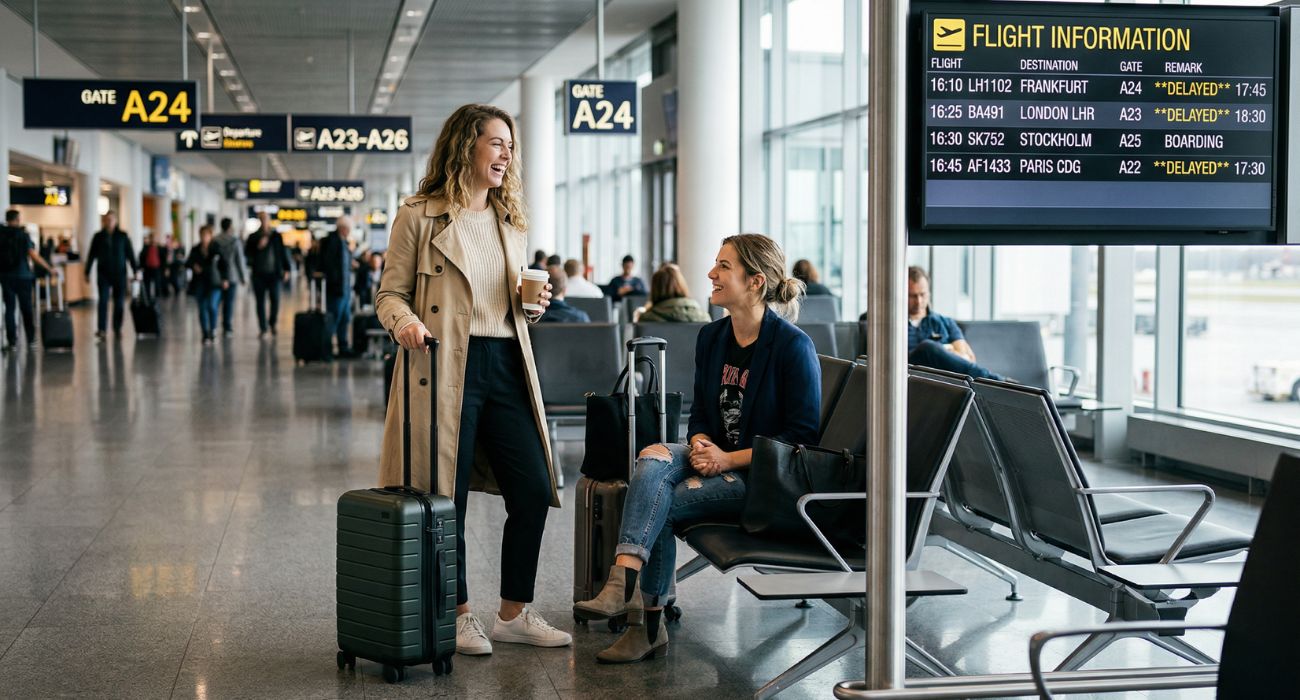
Image generated by AI
Major Operational Disruption Strikes Newark Liberty International Airport
Newark Liberty International Airport – a critical transportation hub serving the New York–New Jersey region – faced significant operational challenges on April 15, 2026, when 82 flights were delayed and 9 flights were canceled in a single day. The disruption affected hundreds of travelers and impacted multiple major carriers including United Airlines, American Airlines, and Delta Air Lines, with cascading effects on key domestic and international routes to Chicago, Los Angeles, Orlando, London, and Toronto.
For families, business professionals, and leisure travelers, the day transformed routine journeys into extended periods of uncertainty and frustration. Parents attempting to reunite with children, executives managing tight schedules, and vacationers hoping to begin or conclude trips found themselves navigating unexpected delays and potential itinerary changes.
Understanding the Scale of Disruption
The operational impact at Newark Liberty International on this date was substantial:
- 82 flights delayed across both departures and arrivals
- 9 flights canceled outright
- Multiple major carriers affected simultaneously
- Hundreds of passengers stranded or significantly delayed
While individual disruptions typically have specific triggers, patterns observed in similar events at major U.S. airports often reveal a combination of factors: weather conditions, compressed scheduling windows, and broader congestion within the national airspace system. According to the Federal Aviation Administration (FAA), the Northeast corridor represents one of the most operationally complex air traffic environments in the country.
The Northeast Corridor: America's Most Complex Airspace
The Northeast airspace presents unique operational challenges that distinguish it from other regions:
Capacity Constraints and Complexity
Aviation authorities have consistently identified the Northeast corridor as operating near maximum capacity during peak travel periods. The region's three major New York-area airports – Newark Liberty International (EWR), John F. Kennedy International (JFK), and LaGuardia Airport (LGA) – collectively handle some of the highest traffic volumes in the United States.
Weather Sensitivity
When meteorological conditions deteriorate – including low cloud ceilings, strong winds, or thunderstorms – air traffic controllers must reduce the number of takeoffs and landings per hour to maintain safety margins. This reduction cascades rapidly through the system:
- Departure holds accumulate on the ground
- Arrival delays extend for inbound aircraft
- Crew duty-time limitations become binding constraints
- Aircraft rotation schedules break down
- Cancellations become necessary to reset operations
What Disruption Means Inside the Terminal
For passengers at Newark Liberty International, operational disruptions translate into immediate, tangible impacts:
Passenger Experience
- Extended lines at check-in and customer service counters
- Crowded gate areas with uncertain departure times
- Constant monitoring of airline mobile applications for status updates
- Anxiety regarding onward connections and time-sensitive commitments
Differential Impact by Traveler Type
The consequences vary significantly based on individual circumstances:
- Domestic travelers with flexible schedules: Minor inconvenience, extended layover time
- International connection passengers: Potential missed connections, rebooking complications, additional costs
- Cruise departure passengers: Risk of missing ship departure, complete trip cancellation
- Business travelers: Missed meetings, compromised professional commitments
- Time-critical event attendees: Inability to reach weddings, funerals, or important family events
Coordinated Response from Port Authority and Federal Agencies
The Port Authority of New York and New Jersey, which operates Newark Liberty International, maintains continuous coordination with federal aviation officials and airline operations centers during periods of operational stress. This collaborative approach includes several tactical responses:
Operational Mitigation Strategies
- Re-sequencing of flight departure orders to optimize runway utilization
- Temporary ground holds on departures to manage arrival capacity
- Runway configuration adjustments to accommodate traffic flow
- Real-time communication with airline operations centers
- Coordination with neighboring airports (JFK and LGA) to distribute traffic
Despite these coordinated efforts, days featuring dozens of delays and multiple cancellations demonstrate the inherent limits of what even close inter-agency coordination can prevent when systemic capacity is exceeded.
Airline Operations: Complex Scheduling Challenges
For carriers operating Newark Liberty International as a hub or focus city, severe disruption creates a multifaceted operational puzzle:
Cascading Operational Impacts
Airlines must simultaneously manage:
- Aircraft positioning: Late-arriving aircraft from other cities cannot depart on schedule
- Crew duty-time compliance: Federal regulations limit consecutive flight hours; delayed crews cannot operate subsequent flights
- Gate availability: Limited terminal space constrains aircraft parking and turnaround times
- Network effects: Delays at Newark ripple through entire route networks
Strategic Cancellation Decisions
When operational conditions become unsustainable, carriers strategically cancel specific flights to:
- Reset aircraft and crew positioning
- Protect subsequent flights in the schedule
- Minimize network-wide knock-on effects
- Restore schedule reliability for remaining operations
What This Means for Travelers
Understanding passenger rights and available protections is essential during disruption events:
Passenger Entitlements and Protections
While U.S. regulations differ from those in other jurisdictions (notably the European Union's more stringent requirements), passengers retain certain protections:
- Clear communication: Airlines must provide timely, accurate information about delays and cancellations
- Rebooking assistance: Carriers must rebook passengers on alternative flights at no additional cost
- Meal and accommodation vouchers: Extended delays (typically 3+ hours) may trigger meal and lodging provisions
- Compensation eligibility: Some cancellations may qualify for compensation depending on cause and airline policy
Travelers are strongly advised to review specific airline policies before travel and understand their rights under U.S. Department of Transportation regulations.
Systemic Strain on U.S. Aviation Infrastructure
Beyond the immediate operational numbers, Newark's 82 delays and 9 cancellations reflect broader structural challenges facing American aviation:
Contributing Factors to System Strain
- Strong demand: Post-pandemic travel recovery continues to stress airport and airspace capacity
- Infrastructure limitations: Terminal facilities, runway configurations, and ground support equipment operate near maximum utilization
- Staffing constraints: Air traffic control facilities and airline ground operations face persistent staffing challenges
- Climate impacts: Increasing frequency of severe weather events disrupts schedules more frequently
Policy and Investment Discussions
These operational realities inform ongoing policy discussions regarding:
- Modernization of the National Airspace System
- Airport facility upgrades and capacity expansion
- Air traffic control staffing and technology investments
- Resilience planning for climate-related disruptions
Ripple Effects Throughout the Region
The impact of Newark Liberty International disruptions extends well beyond airport perimeter:
Regional Economic and Operational Consequences
- Hotel occupancy: Nearby hotels fill rapidly with stranded passengers requiring unexpected accommodations
- Ground transportation: Car rental counters, taxi services, and ride-sharing platforms experience surge demand
- Business operations: Regional meetings, conferences, and events face postponement as attendees struggle to arrive
- Supply chain effects: Companies dependent on reliable air cargo and personnel transport experience operational disruptions
- Tourism impact: Visitor arrivals and departures become unpredictable, affecting hospitality and attraction operations
Adaptive Strategies Among Frequent Travelers
Passengers with regular Newark Liberty International experience have developed resilience strategies:
Best Practices for Newark Flyers
- Connection padding: Building additional time between connecting flights (minimum 2–3 hours for international connections)
- Weather monitoring: Tracking forecasts 3–5 days before travel to anticipate potential disruptions
- Flexible ticketing: Purchasing refundable or flexible tickets when possible
- Real-time alerts: Using airline mobile applications and services like FlightAware for continuous status monitoring
- Backup itineraries: Identifying alternative flights and routing options before disruption occurs
- Travel insurance: Obtaining comprehensive coverage including trip delay and cancellation protection
- Advance communication: Contacting airlines proactively when conditions deteriorate
Looking Forward: System Resilience and Passenger Experience
The April 15, 2026 disruption at Newark Liberty International – affecting 82 flights and 9 cancellations – serves as a reminder of modern aviation's dependence on complex, interconnected systems operating at high utilization rates.
Path to Improvement
As officials, airlines, and regulators work on both immediate operational fixes and long-term infrastructure improvements, passengers transiting Newark Liberty International will continue monitoring departure boards with hope that future journeys prove less disruptive and more aligned with original travel plans.
The experience underscores the importance of:
- Continued investment in air traffic control modernization
- Airport capacity expansion in the Northeast corridor
- Workforce development in aviation operations
- Passenger communication and compensation frameworks
- Climate resilience planning for aviation infrastructure
Related Travel Guides
Disclaimer
This article is for informational and educational purposes only. It does not constitute legal, financial, or professional advice. While we strive to provide accurate and up-to-date information, travel policies, regulations, and conditions change rapidly. Always verify information with official sources before making travel decisions. Nomad Lawyer makes no representations about the accuracy, reliability, completeness, or suitability of the information provided. Readers should consult qualified professionals for advice specific to their circumstances. The views expressed in this article are those of the author and do not necessarily reflect the views of Nomad Lawyer.
Kunal K Choudhary
Co-Founder & Contributor
A passionate traveller and tech enthusiast. Kunal contributes to the vision and growth of Nomad Lawyer, bringing fresh perspectives and driving the community forward.
Learn more about our team →