
San Cristóbal, Morelia, and Campeche Lead Canadian Tourist Surge into Mexico's Cultural Interior in 2026

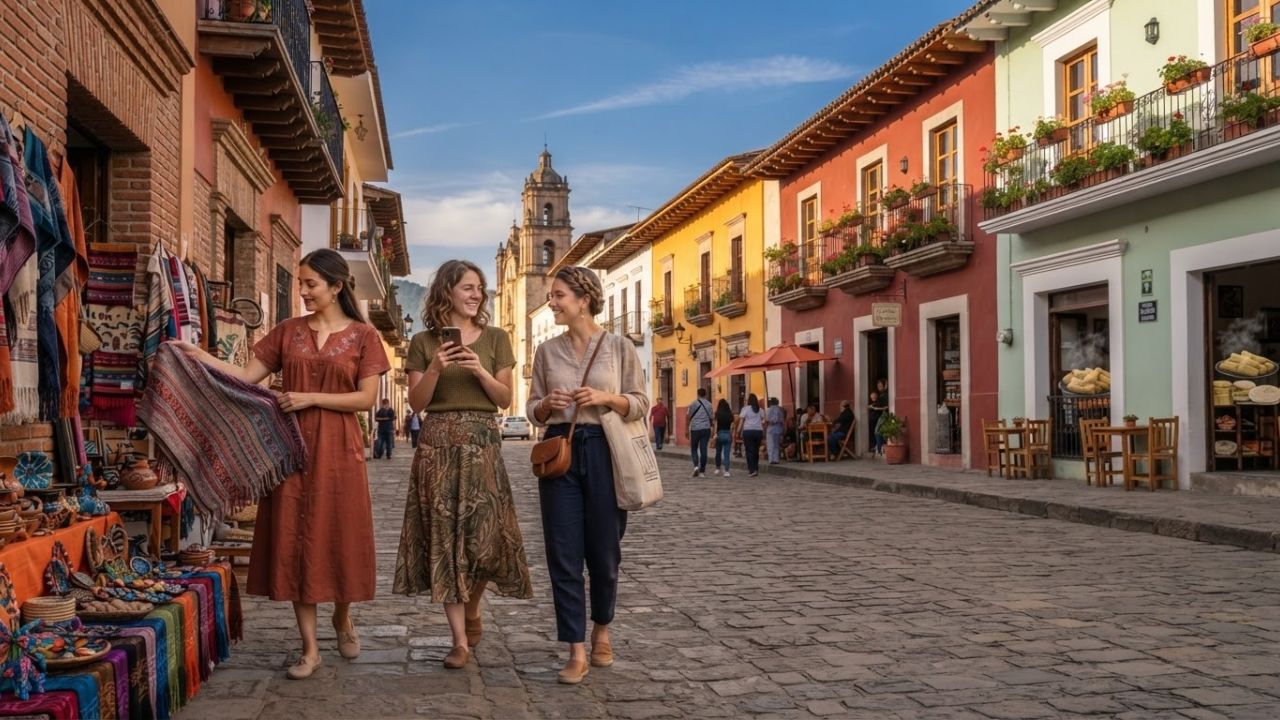
With more than 2.6 million Canadians traveling to Mexico annually and generating over US$2.779 billion in foreign expenditure, Canadian travelers are staging a structural pivot away from congested all-inclusive beach enclaves toward colonial heritage centers and highland Indigenous towns. Driven by rising coastal resort costs and a desire for authentic cultural immersion, secondary destinations like San Cristóbal de las Casas, Morelia, and Campeche are capturing record visitor numbers across the national interior.
According to official data from Mexico’s Tourism Secretariat (SECTUR) and the Government of Canada, Canada firmly defends its position as Mexico’s second-largest international tourism market, trailing only the United States. Following a rapid post-pandemic ascent—climbing from roughly 504,000 air arrivals in 2021 to 1.759 million in 2022 (+249.4%), 2.468 million in 2023 (+40.3%), and surpassing 2.6 million overall travelers in 2024—the Canadian travel segment is evolving. Rather than confining entire vacations to coastal corridors in Quintana Roo or Baja California Sur, travelers are utilizing expanding regional air links and passenger rail networks to explore the nation's profound historical heartlands.
The Cultural Shift: Why Canadian Explorers Are Venturing Beyond the Resort Belt
The sheer scale of Mexico’s national tourism economy creates a compelling backdrop for regional diversification. In 2024, Mexico welcomed 45 million international tourists—a 7.4% expansion over 2023—generating US$32.96 billion in foreign-exchange revenue. Across all categories, the country registered 86.4 million international visitors, with air arrivals accounting for 23.2 million international tourists who spent an average of US$1,166.60 per journey. Nationally, Mexico maintained its position as the world's sixth-most visited country, according to UN Tourism data cited by SECTUR.
However, international arrivals remain intensely concentrated. Between January and October 2024, Cancún Airport handled approximately 7.3 million foreign tourists, followed by Mexico City International Airport with 2.8 million, Los Cabos with 1.8 million, and Puerto Vallarta with 1.4 million. In contrast, emerging cultural gateways like Querétaro Airport processed roughly 150,000 foreign tourists during the same period, representing just 0.9% of Mexico’s airport-based international tourist volume.
| Mexico International Tourism Metric | 2021 Baseline | 2022 Performance | 2023 Benchmark | 2024 Official Record |
|---|---|---|---|---|
| Total International Tourists | Pandemic recovery | Rebounding | Expanding | 45.0 million (+7.4% YoY) |
| Total International Visitors (All Types) | — | — | — | 86.4 million |
| International Air Tourists | 14.09 million | Strong rebound | 21.87 million | 23.2 million |
| Canadian Air Arrivals | ~504,000 | 1.759 million (+249.4%) | 2.468 million (+40.3%) | 2.6M+ Canadians overall |
| Total Foreign-Exchange Revenue | US$16.223 billion | Strong rebound | Steady climb | US$32.956 billion |
| Average Air Tourist Spending | — | — | — | US$1,166.60 |
| Canadian Market Position | Major source | Major source | No. 2 globally | No. 2 globally |
This sharp concentration has created an opening for seasoned Canadian travelers. Scheduled air connections between Canada and Mexico spanned 25 Canadian origin cities and 18 Mexican destinations between 2018 and 2023. During the first seven months of 2024, five primary carriers—WestJet, Sunwing, Air Transat, Flair Airlines, and Air Canada—commanded 89.9% of all commercial flight routes between the two countries. Connecting through primary hubs like Toronto, Vancouver, Montréal, Calgary, and Edmonton, Canadian travelers are leveraging regional domestic connections to build multi-city cultural itineraries.
Six Underrated Mexican Cities Transforming the 2026 Travel Scene
For travelers seeking architectural preservation, culinary distinction, and Indigenous traditions without the inflated prices of beachfront megaproperties, six interior cities stand out:
1. Morelia, Michoacán: Pink Quarry Stone and Purepecha Gastronomy
The state capital of Michoacán offers an exceptional alternative to Mexico City's overwhelming urban footprint. Inscribed as a UNESCO World Heritage site, Morelia’s historic center features more than two hundred historic edifices constructed from locally quarried pink trachyte stone, blending Spanish Renaissance, Baroque, and neoclassical styles. Municipal planning data show that Morelia welcomed 855,153 hotel guests in 2023 (737,400 domestic and 117,753 international travelers, representing roughly 13.8% foreign arrivals), rising from 679,865 total hotel visitors in 2022.
Canadian visitors spending two to three nights can walk beneath the monumental seventeenth-century aqueduct with its 253 arches, visit the soaring baroque Cathedral of the Divine Savior, and sample traditional Michoacán dishes recognized by UNESCO’s Intangible Cultural Heritage list, including savory sopa tarasca, steamed corn corundas, and sweet uchepos. Morelia also serves as an ideal launchpad for excursions to Lake Pátzcuaro and the artisan copper-smithing village of Santa Clara del Cobre.
2. Campeche, Campeche: Fortified Maritime Bastions and Maya Biospheres
Fronting the Gulf of Mexico, the historic fortified town of Campeche is one of only two walled colonial cities in the Americas. Protected by UNESCO across 181 hectares—with approximately 45 hectares and nearly 1,000 historic monuments enclosed by seventeenth-century defensive ramparts and sea bastions—Campeche was fortified against Caribbean pirate raids. Official state figures indicate that Campeche received 1,747,057 tourists in 2024, an increase of 9.7% over 2023, generating more than MX$4.049 billion in economic activity, with secondary state reports confirming a record year surpassing MX$4.2 billion in economic impact.
The regional mobility equation received a major boost in 2024 with more than 75,000 passengers disembarking via the newly operational Tren Maya network. Visitors can spend three days walking the ramparts, sampling layered dogfish pastries (pan de cazón) and citrus-cured seafood cocktails, before venturing south into the Ancient Maya City and Protected Tropical Forests of Calakmul, a dual-inscribed UNESCO World Heritage biosphere covering over 331,000 hectares.
3. Zacatecas, Zacatecas: Silver Mining Heritage and High-Altitude Culture
Nestled in a narrow mountain ravine 2,400 meters above sea level, Zacatecas flourished following the discovery of monumental silver deposits in 1546. Inscribed by UNESCO in 1993, the historic core spans 207.72 hectares of steep cobblestone alleys, ornate pink-stone facades, and the Churrigueresque masterpiece of the Zacatecas Cathedral. Official state tourism records show the city surpassed 120,000 visitors by October 2024, continuing its steady trajectory away from a post-pandemic baseline of roughly 28,000 visitors.
Zacatecas is also a cultural powerhouse: the 2024 Feria Nacional de Zacatecas drew more than 1 million attendees, while the 2024 Festival Cultural de la Paz engaged 253,407 participants across 351 activities in 12 municipalities. Travelers can descend into the depths of the historic Mina El Edén silver mine, ride the aerial tramway (teleférico) across the canyon to the crest of Cerro de la Bufa, and savor slow-braised wedding pork stew (asado de boda) and red-chile enchiladas zacatecanas.
4. Aguascalientes, Aguascalientes: Monumental Fairs and Regional Traditions
Located in central Mexico, Aguascalientes combines nineteenth-century railway heritage with celebrated public festivals. The city hosts the historic Feria Nacional de San Marcos, recognized by SECTUR as the largest and most significant cultural fair in Latin America. The 2025 fair, held from April 19 to May 11, recorded more than 8.5 million visits—a 5.7% expansion over the 2024 edition—generating over MX$10 billion in regional economic impact, sustaining 37,200 jobs, and driving hotel occupancy across the city to 74%.
Beyond festival weeks, travelers can explore historic plazas, thermal bath springs, and the National Museum of Death, while sampling savory clay-pot braised birria and regional sweet pastries in traditional residential neighborhoods like Barrio del Encino.
5. San Cristóbal de las Casas, Chiapas: Highland Traditions and Maya Crafts
Perched at 2,200 meters in the misty highlands of Chiapas, San Cristóbal de las Casas represents one of Mexico's most culturally distinct destinations. Official state tourism figures confirm that San Cristóbal welcomed 1,437,618 visitors in 2024, climbing by 56,371 travelers (roughly 4.1%) from 1,381,247 visitors in 2023. The town accounted for exactly 16.2% of Chiapas state's total reported visitor volume in both 2023 (8,505,150 total visitors) and 2024 (8,853,418 visitors, up by 348,268).
Surrounded by pine-forested mountains, San Cristóbal is celebrated for its centuries-old open-air textile markets, traditional backstrap weaving, and independent amber workshops. The town offers a rich culinary profile centered around highland Chiapas cheese, hand-ground heirloom corn tamales, ceremonial cocoa preparations, and warm glasses of pozol (a refreshing pre-Hispanic roasted corn and cacao beverage). It also provides an ethical base for day excursions to the autonomous Maya communities of San Juan Chamula and Zinacantán.
6. Querétaro, Querétaro: Colonial Aqueducts, Viticulture, and Artisan Cheeses
Situated two hours north of Mexico City, Santiago de Querétaro pairs pristine viceregal architecture with thriving modern infrastructure. The UNESCO-listed Historic Monuments Zone of Querétaro features grand civil mansions, flowering plazas, and a majestic 74-arch stone aqueduct completed in 1738. In addition to handling 150,000 foreign tourists via its international airport between January and October 2024, the city serves as the official gateway to the Central Mexican Wine and Cheese Route (Ruta del Queso y Vino).
Travelers can spend two to three days walking pedestrianized colonial lanes, dining on enchiladas queretanas (tortillas bathed in guajillo chile sauce and folded around queso fresco), touring boutique vineyards in Tequisquiapan, and scaling the massive monolith of Peña de Bernal.
| Destination | Official Reported Visitor Volume | Growth / Comparison Benchmark | Primary Travel Appeal |
|---|---|---|---|
| Morelia, Michoacán | 855,153 hotel tourists (2023) | +25.8% vs 679,865 in 2022 | UNESCO pink stone architecture, culinary heritage |
| Campeche, Campeche | 1,747,057 state tourists (2024) | +9.7% YoY; MX$4.049B impact; 75K+ Tren Maya riders | Fortified maritime walls, Calakmul biosphere |
| Zacatecas, Zacatecas | 120,000+ visitors (by Oct 2024) | Rebound from ~28,000 post-pandemic; 1M+ at fair | Historic silver mining, Cerro de la Bufa cable car |
| Aguascalientes, Ags. | 8.5M+ visits at 2025 San Marcos Fair | +5.7% YoY; MX$10B economic impact; 74% occupancy | Historic fair, railway heritage, thermal springs |
| San Cristóbal, Chiapas | 1,437,618 visitors (2024) | +4.1% YoY (+56,371 visitors); 16.2% of state total | Highland Indigenous culture, artisan textiles |
| Querétaro, Querétaro | ~150,000 foreign airport tourists | 0.9% share of national foreign airport arrivals | Colonial aqueduct, baroque plazas, wine country |
Cultural Stewardship and Community-Based Tourism
Traveling into Mexico’s interior directly supports regional economic resilience. When Canadian visitors spend their travel dollars in cities like San Cristóbal, Morelia, and Zacatecas, the economic multiplier reaches family-owned mesónes, certified heritage docents, indigenous weaving cooperatives, and organic agricultural smallholders.
In Chiapas, responsible community tourism enables Tzotzil and Tzeltal Maya artisan collectives in Zinacantán and San Juan Chamula to preserve ancestral backstrap weaving traditions while maintaining fair, independent pricing. Similarly, in Michoacán, community tourism supports Purepecha woodcarvers, potters, and copper artisans around Lake Pátzcuaro, creating viable local economic livelihoods that protect forested watersheds from agricultural deforestation.
Low-impact passenger transit is also playing an expanding role. With the integration of passenger rail through the Tren Maya in Campeche, travelers can move between archaeological preserves and coastal communities with a reduced carbon footprint compared to private vehicular charters, supporting federal conservation corridors in the Calakmul biosphere.
Local Visitor Insider Tips: Seasons, Cultural Codes, and Highland Specialties
To plan an enriching journey through Mexico’s interior, Canadian travelers should heed these local insights:
- Optimal Travel Windows: Travel during the dry, sunny shoulder seasons from mid-October through late November, or from February through April. Late autumn brings crisp mountain air, vibrant cempasúchil marigold displays, and cultural celebrations, while avoiding both the mid-summer rainy season and peak holiday crowds.
- Highland Climate Realities: Do not pack solely for tropical heat. Cities like San Cristóbal de las Casas (2,200m) and Zacatecas (2,400m) sit at significant mountain altitudes where evening temperatures frequently plunge to 4°C to 8°C (39°F to 46°F) between November and February. Pack warm wool layers, a wind-resistant jacket, and comfortable, treaded walking footwear for slick colonial cobblestones.
- Indigenous Community Etiquette: When visiting traditional highland villages in Chiapas, such as San Juan Chamula, strict cultural prohibitions must be observed. Photography inside the sacred church of San Juan Bautista and photographs of village elders, traditional healers, and religious processions are strictly forbidden and can result in equipment confiscation or detention by municipal community police. Always ask permission before photographing individual artisan weavers in village markets.
- Regional Culinary Highlights: Skip standard hotel buffets to explore municipal markets and heritage dining rooms. Order pan de cazón (shredded dogfish layered between fresh corn tortillas, black refried beans, and habanero-spiced chiltomate sauce) in Campeche; savor slow-cooked asado de boda (pork shoulder simmered in ancho chile, orange peel, and dark chocolate) in Zacatecas; and drink single-origin, shade-grown organic coffee from the Soconusco region accompanied by hot pan coleto in San Cristóbal.
- Under-the-Radar Excursions: In Morelia, plan an afternoon drive to the ancient Purepecha circular pyramids (yácatas) at Tzintzuntzan overlooking Lake Pátzcuaro. In Campeche, explore the silent, uncrowded archaeological acropolis of Edzná. In Zacatecas, visit the Rafael Coronel Museum, housed within the dramatic roofless ruins of the sixteenth-century San Francisco Convent and exhibiting over 16,000 traditional Mexican ceremonial masks.
A Seven-Day Cultural Heritage Itinerary for Canadian Explorers
For travelers looking to trade beach chairs for historic streets, this seven-day overland circuit connects three of central Mexico’s most rewarding destinations:
- Days 1–2: Colonial Splendor in Morelia. Arrive via Morelia International Airport (MLM) or take a comfortable express first-class coach from Mexico City. Check into a boutique hotel in the historic center. Spend day one exploring the pink-stone Cathedral, walking the historic aqueduct, and dining on sopa tarasca. On day two, tour the Clavijero Cultural Center and the Government Palace before enjoying an evening concert in the main plaza.
- Day 3: Indigenous Traditions in Lake Pátzcuaro. Take an easy 45-minute day trip to Pátzcuaro. Explore the basilica, browse lacquered wood and woven textile workshops, and visit the pre-Hispanic Purepecha archaeological site at Tzintzuntzan before returning to Morelia for the night.
- Days 4–5: Aqueducts and Viticulture in Querétaro. Travel two hours northeast to Querétaro. Spend day four admiring the historic 74-arch stone aqueduct, wandering through the pedestrian plazas of the Monuments Zone, and sampling artisanal cheeses. On day five, embark on a day excursion to the vineyards of Tequisquiapan and scale the dramatic rock monolith of Peña de Bernal.
- Days 6–7: Railway Heritage and Festivities in Aguascalientes. Continue two hours northwest to Aguascalientes. Tour the historic railway repair shops at the Tres Centurias Macrospace, explore the printmaking legacy of José Guadalupe Posada in the Barrio del Triana, and sample slow-roasted birria in traditional markets before evening departure.
(Southern Alternative): Travelers prioritizing Maya heritage and jungle wilderness can pair a three-night stay in San Cristóbal de las Casas (exploring indigenous weaving communities and Sumidero Canyon) with a three-night stay in fortified Campeche, connected via Tren Maya rail access to the Calakmul biosphere.
Tourism Outlook: Sustainable Diversification Shapes Mexico's Future
The steady diversification of Canadian travelers into Mexico’s interior signals a mature, resilient phase of international tourism. Rather than viewing Mexico merely as a seasonal winter-sun getaway, international visitors are recognizing the country's unparalleled depth as one of the world's great cultural civilizations.
Supported by SECTUR’s strategic investments in regional passenger rail, artisan promotion, and municipal heritage preservation, cities like Morelia, Campeche, Zacatecas, and San Cristóbal de las Casas are proving that Mexico’s true wealth lies well beyond the coastline. For the curious Canadian explorer, venturing into the interior reveals a nation of living traditions, astonishing architecture, and warm hospitality that leaves an indelible impression.
Related Travel Guides
- Mexico and Colombia Lead Latin American Romance Tourism Surge into a Billion-Dollar Travel Powerhouse
- Baja California Mexico Eco-Tourism and Gastronomy Guide: Coastal Sustainability and Adventure 2026
- Queretaro Mexico Heritage and Eco-Tourism Expansion: Sustainable Vineyard and Highland Travel Guide
- Puerto Vallarta Airport Passenger Traffic and Coastal Tourism Transit Guide 2026
Disclaimer
This article is for informational and educational purposes only. It does not constitute legal, financial, or professional advice. While we strive to provide accurate and up-to-date information, travel policies, regulations, and conditions change rapidly. Always verify information with official sources before making travel decisions. Nomad Lawyer makes no representations about the accuracy, reliability, completeness, or suitability of the information provided. Readers should consult qualified professionals for advice specific to their circumstances. The views expressed in this article are those of the author and do not necessarily reflect the views of Nomad Lawyer.
Raushan Kumar
Founder & Lead Developer
Full-stack developer with 11+ years of experience and a passionate traveller. Raushan built Nomad Lawyer from the ground up with a vision to create the best travel and law experience on the web.
Learn more about our team →