
Campeche Mexico Emerges as Premier Destination for Maya Ruins and Eco-Tourism
Campeche is emerging as Mexico’s top destination for cultural slow travel, linking UNESCO-fortified streets with Maya ruins at Edzná and Calakmul.

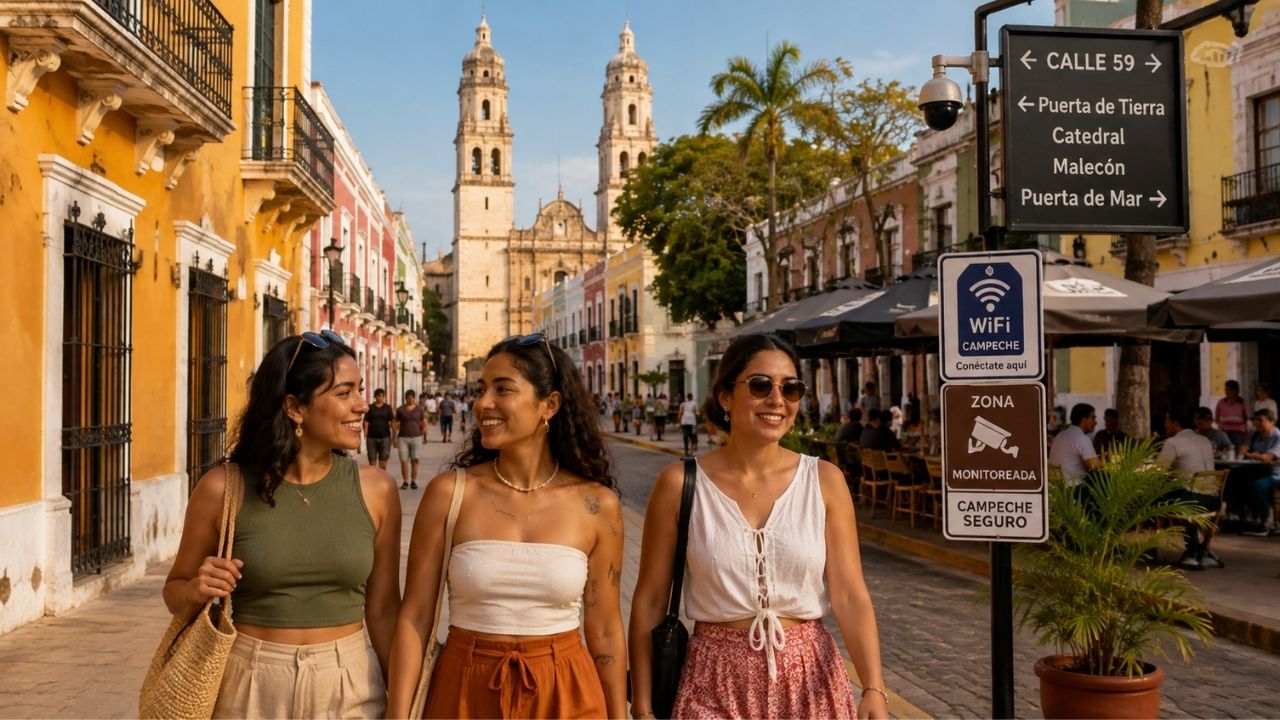
Image generated by AI
The state of Campeche is positioning itself as one of Mexico’s top cultural destinations. Situated on the Gulf of Mexico on the western side of the Yucatán Peninsula, Campeche offers a relaxed alternative to crowded resort corridors by combining UNESCO-walled colonial architecture, tropical rainforest reserves, and ancient Maya cities.
UNESCO Walled Capital of San Francisco de Campeche and Calle 59
[CAMPECHE, Mexico] — As international travelers increasingly seek slow, authentic cultural experiences, the state capital of San Francisco de Campeche is gaining recognition. Founded in the 16th century by Spanish colonizers, the historic port city features a preserved walled center designated as a UNESCO World Heritage Site.
Originally fortified to defend maritime trade routes against Gulf piracy, the city’s defense network remains central to its modern character:
- Historic City Gates: Travelers can walk along stone ramparts and pass through historic entry gates including Puerta de Tierra and Puerta de Mar.
- Calle 59 Pedestrian Corridor: Connecting the two historic gates, this vibrant street features pastel-colored colonial buildings, outdoor cafes, local artisan shops, and access to the main plaza and cathedral.
- The 5-Kilometer Malecón: A waterfront promenade stretching for over five kilometers along the Gulf coast, popular for evening walks, cycling, and observing Gulf of Mexico sunsets.
Unlike pure museum cities, San Francisco de Campeche remains a living urban environment where local residents live, dine, and gather daily.
Maya Archaeological Wonders: The Temple of Five Storeys at Edzná and Calakmul Rainforest
Campeche serves as a major gateway to some of Mesoamerica’s most significant Maya archaeological sites:
Edzná Archaeological Site
Located a short distance from the state capital, Edzná provides an accessible day-trip option for travelers exploring Maya architecture. The site features expansive ceremonial plazas, ancient water management canals, and the five-tiered Templo de los Cinco Pisos (Temple of the Five Storeys), which highlights early Maya engineering.
Calakmul Biosphere Reserve and Ancient City
For deeper exploration, Calakmul lies embedded in the Calakmul Biosphere Reserve, one of Mexico’s largest protected tropical rainforests. Recognized by UNESCO for both its cultural and natural heritage, Calakmul was once a dominant Maya superpower city-state. Massive stone pyramids rise above the jungle canopy, where visitors encounter wild howler monkeys, spider monkeys, deer, tapirs, and rare jaguars while exploring ancient stelae and monuments.
Coastal Flavors, Community Heritage, and Maya Train Transport
Beyond its capital and archaeological zones, Campeche’s tourism appeal encompasses regional gastronomy and coastal ecosystems:
- Regional Gastronomy: Famous for coastal specialties like Pan de cazón—a dish layered with corn tortillas, black beans, tomato sauce, and dogfish—alongside fresh Gulf seafood.
- Community & Nature Destinations: Northern coastal zones like Isla Arena offer mangrove boat tours and wild flamingo watching, while the village of Pomuch is celebrated for traditional Maya baking methods and cultural heritage.
- Transport Connectivity: Travelers can reach the region via Campeche International Airport or the San Francisco Campeche station on the Tren Maya (Maya Train) network, linking the state directly with Mérida, Bacalar, Chetumal, Palenque, and Xpujil.
The primary season for outdoor exploration runs from November to May, when weather conditions are drier and more comfortable for jungle trekking.
The table below outlines primary destination zones, key features, signature experiences, and practical travel logistics for exploring Campeche:
| Destination Zone | Key Attraction / Feature | Signature Travel Experience | Practical Logistics & Access |
|---|---|---|---|
| San Francisco de Campeche | UNESCO Walled Colonial City | Walking Puerta de Tierra, Calle 59 & Malecón sunset | Connects via Maya Train & Campeche International Airport |
| Edzná Archaeological Site | Maya Ceremonial Center | Exploring the Temple of the Five Storeys & plazas | Easy 1-hour day trip from Campeche City |
| Calakmul Biosphere Reserve | UNESCO Dual Cultural/Natural Site | Climbing giant jungle pyramids & wildlife watching | Requires full-day expedition from Xpujil / Campeche |
| Isla Arena & Northern Coast | Mangroves & Coastal Reserves | Boat tours, birdwatching & wild flamingo viewing | Day trips focused on eco-tourism & local seafood |
| Pomuch Village | Heritage Maya Community | Traditional wood-fired bakeries & local Maya customs | Short stop along the Mérida–Campeche transit route |
Why This Matters for Passengers and Cultural Explorers
For travelers planning a trip to Mexico, adding Campeche to a Yucatán itinerary offers an uncrowded alternative to mass-market beach resorts. Riding the Maya Train into San Francisco de Campeche allows visitors to combine colonial architecture with world-class Maya ruins at Edzná and Calakmul without dealing with commercial tour crowds. Supporting local bakeries in Pomuch or guide cooperatives in Calakmul ensures your travel spending directly benefits indigenous communities.
Frequently Asked Questions
What makes San Francisco de Campeche a UNESCO World Heritage Site?
San Francisco de Campeche was designated a UNESCO World Heritage Site due to its exceptionally preserved 16th-to-18th-century Spanish colonial architecture, grid plan, and fortified sea walls built to protect against Gulf piracy.
How can travelers visit Calakmul from Campeche?
Travelers can reach Calakmul by driving or taking regional transport via the Maya Train toward Xpujil, followed by a guided eco-expedition through the Calakmul Biosphere Reserve.
How does the Maya Train connect Campeche with other regions in Mexico?
The Tren Maya (Maya Train) connects the San Francisco Campeche station directly with major tourist hubs across southeastern Mexico, including Mérida, Bacalar, Chetumal, and Palenque.
Related Travel Guides
Complete Maya Train Route and Itinerary Guide
Yucatán Peninsula Hidden Cultural Destinations Guide
10 Best Maya Archaeological Sites in Mexico, According to Reddit
Disclaimer
This article is for informational and educational purposes only. It does not constitute legal, financial, or professional advice. While we strive to provide accurate and up-to-date information, travel policies, regulations, and conditions change rapidly. Always verify information with official sources before making travel decisions. Nomad Lawyer makes no representations about the accuracy, reliability, completeness, or suitability of the information provided. Readers should consult qualified professionals for advice specific to their circumstances. The views expressed in this article are those of the author and do not necessarily reflect the views of Nomad Lawyer.
Raushan Kumar
Founder & Lead Developer
Full-stack developer with 11+ years of experience and a passionate traveller. Raushan built Nomad Lawyer from the ground up with a vision to create the best travel and law experience on the web.
Learn more about our team →