
Salt Lake City International Airport Faces 35 Flight Delays: Delta, Southwest, and SkyWest Hit as Operational Strain Slows Mountain West Travel Chaos Avoidance
Salt Lake City International Airport (SLC) logged 35 delays as Delta and SkyWest navigated operational hurdles across Denver, Las Vegas, and major US routes.

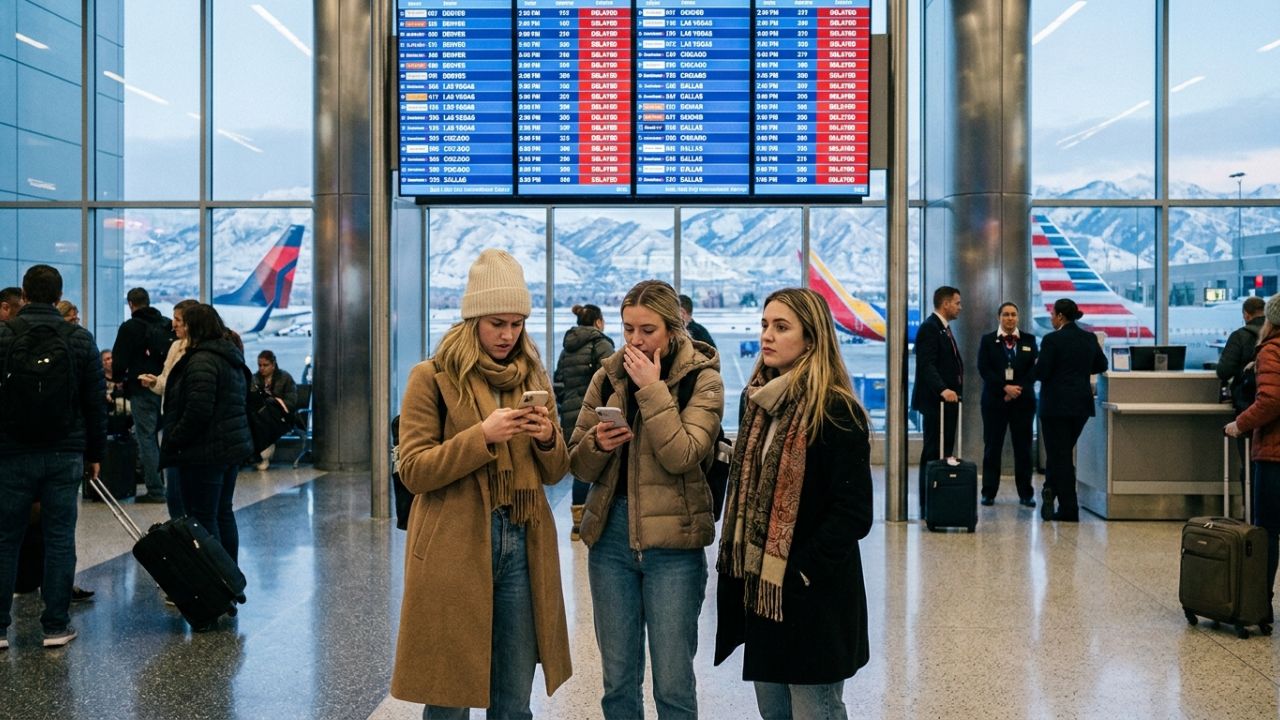
Image generated by AI
In a day defined by mounting operational friction in the Mountain West corridor, Salt Lake City International Airport (SLC) witnessed 35 flight delays and 1 cancellation, signaling a localized strain on one of the region's most critical aviation hubs. While the absence of mass flight cancellations provided some relief, the scheduling slippage has sparked concern within the airline news sector regarding the reliability of regional transportation networks. Major carriers, including Delta Air Lines, Southwest, and SkyWest, found themselves navigating a day of logistical hurdles that rippled across high-volume routes to Denver, Las Vegas, and major US gateways. This major aviation update highlights the sensitivity of the SLC hub, which serves as a vital artery for Utah’s multi-billion dollar tourism and business ecosystems.
Breaking: Operational Strain Slows SLC’s Gateway Efficiency
The disruption at SLC, a primary gateway for both domestic and international travel, was characterized by a systemic slippage in punctuality. According to data from the Bureau of Transportation Statistics (BTS) and federal flight tracking sources, the 36 total incidents today represent a noticeable "hiccup" in an otherwise high-performing hub. For the thousands of passengers moving through the terminal, these irregularities translated into extended gate waits and disrupted connections, particularly for those bound for time-sensitive commitments in the Intermountain West.
Aviation experts suggest that while the one cancellation is a statistically low figure, the 35 delays create a "propagation effect" throughout the network. Because carriers like Delta operate a robust hub-and-spoke model out of SLC, a delay on a single inbound flight can cascade through the rotation of aircraft and crews, taxing the airport's terminal management and passenger flow systems during peak midday operations.
Expanded Overview: Delta Hub Pressure and SkyWest Reliability
The statistical deep dive into today’s operational performance shows an uneven impact across the carriers serving SLC. Delta Air Lines recorded the highest raw volume of disruption with 14 departures held up, representing roughly 4% of its daily schedule at the airport. This strain is significant given Delta’s central role in regional connectivity, where it handles the lion's share of SLC's annual passenger throughput.
SkyWest Airlines, which operates regional connections on behalf of major partners, followed closely with 12 delays. These regional flights are the "connective tissue" of the Mountain West, linking smaller markets into the main SLC hub. When SkyWest faces even moderate airport disruptions, the impact is amplified as it truncates itineraries for travelers bound for Utah's world-class ski resorts and national parks.
Section-Wise Breakdown: Carrier Punctuality and Route Impact
Delta Air Lines: The Hub-and-Spoke Bottleneck
As the primary hub carrier, Delta’s 14 delays have the largest footprint on the airport’s overall efficiency. These delays are often linked to crew scheduling constraints or air traffic flow management as the airline rotates its fleet through the SLC hub to international destinations and major US capitals.
SkyWest: The Regional Connector Strain
With 12 delays (a 4% rate), SkyWest’s performance is critical for "last-mile" connectivity in the Mountain West. Any disruption here often results in missed connections for travelers journeying between smaller regional airports and the international gates of SLC.
Southwest and Frontier: Network vs. Low-Cost
Southwest Airlines saw 5 flights delayed (7% rate), while Frontier Airlines recorded 2 delays, which—due to its lower frequency—represented a higher 11% delay rate. For the budget-conscious traveler, these delays can be particularly taxing, as low-cost carriers often have fewer alternative flights available in the event of a total schedule failure.
American Airlines: The transcontinental Drag
American Airlines also reported 2 delayed flights (8% rate), specifically affecting those on long-haul routes connecting SLC to major East Coast and Midwest hubs.
Flight Details and Comprehensive Operational Matrix
The following table provides the exact metrics for the carriers affected at Salt Lake City International Airport (SLC) on May 16, 2026.
Salt Lake City International (SLC) Airline Delay Breakdown: May 16, 2026
| Airline | Delayed Flights | Delay Rate (%) | Role at SLC |
|---|---|---|---|
| Delta Air Lines | 14 | 4% | Major Hub Carrier |
| SkyWest Airlines | 12 | 4% | Regional Partner |
| Southwest Airlines | 5 | 7% | Major Network |
| American Airlines | 2 | 8% | Major Network |
| Frontier Airlines | 2 | 11% | Low-Cost Carrier |
Passenger Impact: Tourism Fallout and Missed Meetings
For the thousands of passengers moving through SLC, the travel chaos has translated into tangible consequences for both business and leisure.
- Tourism Truncation: Travelers bound for Utah’s "Mighty 5" national parks or world-class ski resorts often have tight itineraries involving ground transportation or equipment rentals. A two-hour delay at SLC can result in a lost day of exploration.
- Business Erosion: For the executive moving between Denver and Salt Lake, even a moderate delay can ripple into missed meetings or overnight stays, adding significant cost and stress to the trip.
- Systemic Stress: Depending on aircraft capacity, these 35 delays likely impacted upwards of 4,000 travelers, taxing customer service lines and adding demand for airport dining and retail services during the wait.
Industry Analysis: The Intermountain West Grid
Aviation analysts suggest that while weather in the Intermountain West is a perennial factor, today's airport disruptions at SLC appear to be tied to "network flow constraints" rather than a catastrophic weather system.
- Hub propagation: The hub-and-spoke model is highly efficient but lacks "surge capacity." When 14 Delta flights are late, the crews and aircraft for 14 subsequent departures are potentially compromised.
- Regional Sensitivity: The reliance on partners like SkyWest means that SLC is highly sensitive to any operational friction in smaller regional markets, which can then "feed" delays into the main hub.
- Strategic Planning: Government-verified flight performance data from the BTS is becoming a crucial tool for both travelers and businesses to analyze and plan their travel, as consistency becomes as important as price.
Conclusion: SLC’s Evolving Reliability Outlook
Salt Lake City International Airport’s 35 flight delays today highlight the ongoing challenges of maintaining a high-frequency hub in a fast-evolving travel industry. While the lack of massive flight cancellations is a positive sign for SLC’s operational resilience, the delays serve as a reminder of the airport’s central role in regional connectivity. As Utah continues to grow as a premier destination for global tourism and business, the performance of carriers like Delta and SkyWest will remain under intense scrutiny by both government oversight agencies and the traveling public.
Key Takeaways
- Total Delays: 35 flights delayed at SLC; 1 cancellation reported.
- Hub Impact: Delta Air Lines recorded the highest volume with 14 delays.
- Regional Strain: SkyWest logged 12 delays, affecting "last-mile" connectivity.
- Key Routes: Significant delays reported on routes to Denver (DEN) and Las Vegas (LAS).
- Tourism Concern: Utah’s ski and national park sectors are highly sensitive to SLC’s on-time performance.
- Data Source: All figures are manually retrieved from official FlightAware and BTS oversight logs.
Related Travel Guides
Disclaimer
This article is for informational and educational purposes only. It does not constitute legal, financial, or professional advice. While we strive to provide accurate and up-to-date information, travel policies, regulations, and conditions change rapidly. Always verify information with official sources before making travel decisions. Nomad Lawyer makes no representations about the accuracy, reliability, completeness, or suitability of the information provided. Readers should consult qualified professionals for advice specific to their circumstances. The views expressed in this article are those of the author and do not necessarily reflect the views of Nomad Lawyer.
Kunal K Choudhary
Co-Founder & Contributor
A passionate traveller and tech enthusiast. Kunal contributes to the vision and growth of Nomad Lawyer, bringing fresh perspectives and driving the community forward.
Learn more about our team →