
Mallorca's Coastal Treasure Sa Calobra Faces Unprecedented Traffic Under Selfie Tourism Surge
Mallorca's remote coastal village of Sa Calobra is experiencing severe traffic congestion and parking shortages as day-trippers flock to the iconic 26-bend mountain road for photos.
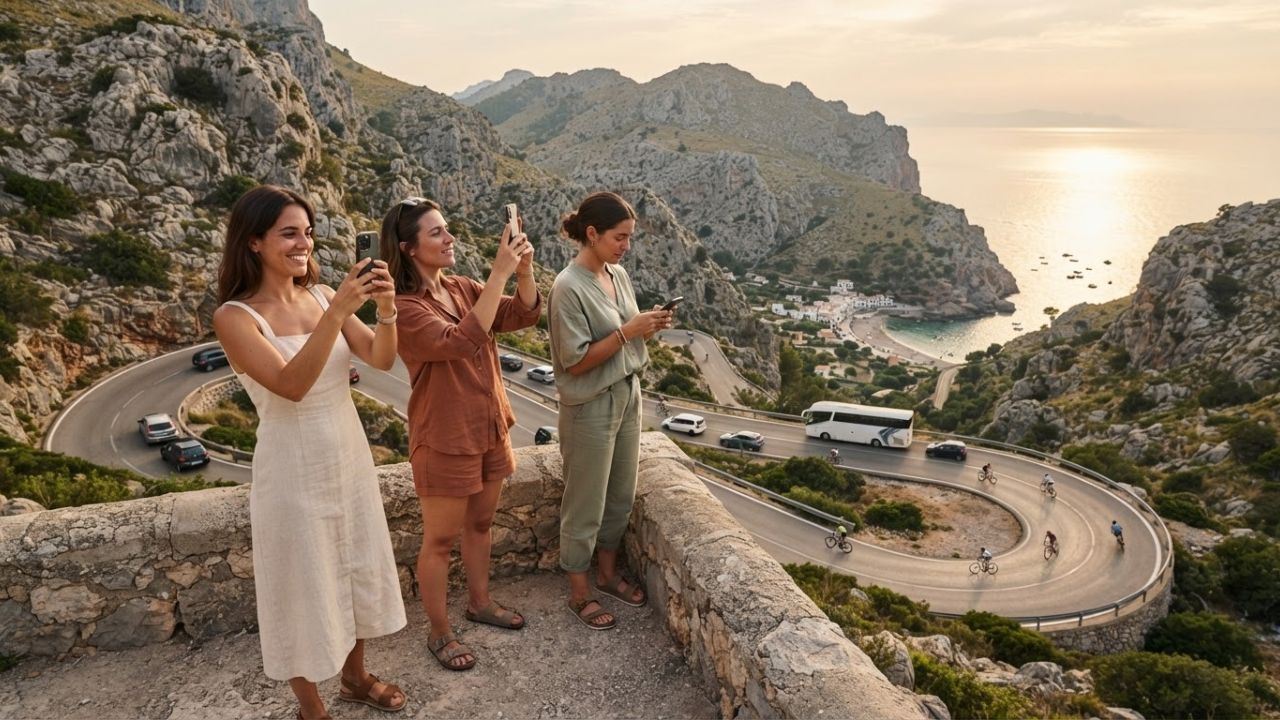
Image generated by AI
Mallorca's remote coastal village of Sa Calobra is experiencing unprecedented traffic congestion on its famous 26-bend mountain road as short-stay photo tourism overwhelms local infrastructure. With hundreds of rental cars and large tour buses competing daily for limited parking slots, municipal managers are struggling to balance tourism revenues with environmental preservation.
Winding Peaks and the Overtourism Surge
Located on Mallorca’s northwestern coast and surrounded by the peaks of the Serra de Tramuntana mountain range, Sa Calobra represents one of the most geographically isolated destinations on the Balearic Islands. The village is famous for its natural gateway to the Torrent de Pareis, a dramatic canyon that meets the Mediterranean Sea. The primary access point to this coastal hidden treasure is the Coll dels Reis mountain road. Designed by engineer Antonio Parietti and completed in 1932, the road features 26 sharp bends, including a 270-degree loop known as the Nus de sa Corbata (tie knot), stretching across almost six miles.
Due to the extreme elevation changes, the descent requires drivers to use low gears to prevent brake failure, adding a layer of physical challenge to the trip. The route is highly popular among professional road cyclists training in the Balearic Islands, who must share the narrow lanes with large vehicles, further complicating the flow of traffic during peak morning periods. While the road is celebrated as an engineering marvel, it was never designed to handle the heavy traffic volumes of modern mass tourism. In recent years, the popularity of Sa Calobra has grown rapidly, driven by travel platforms and social media campaigns highlighting its unique geography. Today, the location experiences severe traffic pressure, particularly during the peak summer holiday months, as day-trippers, organized coach tours, and cycling groups descend on the narrow route simultaneously.
The Selfie Tourism Cycle and Road Gridlock
The rise of selfie tourism has changed travel patterns in Sa Calobra, creating new challenges for traffic and visitor management. Rather than staying in the village to hike or dine, many contemporary visitors arrive with the sole purpose of taking a quick photograph at the Torrent de Pareis gorge. This behavior has created a constant cycle of vehicles arriving, searching for parking, stopping briefly, and departing, leading to continuous congestion along the single access road.
For the visitor, the real impact is a significant decline in the quality of the travel experience. The limited parking capacity in the village can accommodate only a fraction of the daily arrivals, resulting in long queues of idling cars and gridlock on the narrow mountain pass. When large tour coaches encounter private rental cars on the sharp bends, traffic can stall for hours, creating safety concerns for emergency vehicles. The constant flow of short-stop visitors also reduces the economic benefit for local businesses, as transient tourists rarely spend money on local dining or accommodations.
Infrastructure Limits and Traffic Control Initiatives
To address the growing traffic pressure, local authorities and the Consell de Mallorca have introduced several management measures. These initiatives include installing real-time informational signs along the approach roads, deploying traffic controllers at key intersections, and monitoring parking availability. When the village parking slots reach capacity, vehicles are redirected to alternative parking areas further up the mountain, preventing complete gridlock at the coastal dead-end.
In addition, the local government has discussed charging a clean-air entry fee for non-resident vehicles accessing the Tramuntana roads, with revenues directed toward funding regional conservation projects. This proposal has sparked debates among rental car agencies and local hospitality operators, who worry it could discourage travel to the island's western municipalities. However, during peak travel hours, these temporary traffic control systems struggle to manage the sheer volume of vehicles. The remote location and steep terrain make expanding road or parking infrastructure environmentally and physically impossible. Consequently, local environmental groups and municipal councils are calling for more structured visitor management strategies, such as capping the number of rental cars permitted on the Coll dels Reis road during peak hours.
Balearic Islands Address the Carrying Capacity Challenge
The traffic crisis in Sa Calobra is part of a wider debate regarding carrying capacity and sustainable tourism across the Balearic Islands. Tourism remains the main economic engine of Mallorca, but the concentration of visitors in fragile ecological zones has prompted regional heritage associations and conservation bodies to seek a more sustainable balance. The Serra de Tramuntana is a UNESCO World Heritage Site, recognized for its cultural terrain and traditional agricultural terraces, which are threatened by heavy vehicle emissions and waste accumulation.
To protect these natural resources, regional departments are focusing on promoting sustainable travel options. Rather than encouraging private vehicle rentals, authorities are advising visitors to utilize public transportation networks or alternative access routes that minimize environmental impact. By shifting focus from maximizing visitor numbers to preserving the natural environment, Mallorca aims to protect its unique cultural terrain for future generations.
Visitor Guide: Alternative Transit, Dining, and Canyon Safety
Exploring Sa Calobra responsibly requires careful planning, safety awareness, and respect for the local environment. By choosing sustainable transport and observing regional guidelines, visitors can minimize their impact on this fragile coastal ecosystem.
To avoid the stress and environmental impact of driving the winding Coll dels Reis road, take the local ferry from Port de Sóller. Operated by regional boat captains, this maritime route offers spectacular views of the Tramuntana cliffs and delivers visitors directly to the Sa Calobra harbor, bypassing the road congestion entirely. If you choose to drive, visit during off-peak hours—either before 9:00 AM or after 5:00 PM—and use navigation tools to monitor real-time traffic updates from the Dirección General de Tráfico.
When dining in the region, seek out traditional Mallorcan restaurants in nearby Escorca or Sóller to sample local culinary specialties. Try Tumbet, a classic vegetable dish made of layered potatoes, eggplants, and red bell peppers fried in olive oil and topped with a savory garlic-tomato sauce. For dessert, enjoy Ensaimada, a sweet, spiral-shaped pastry dusted with powdered sugar, which has protected geographical status in Mallorca. Always purchase food and crafts from local vendors to ensure your travel spending directly supports the regional economy.
If you plan to hike the Torrent de Pareis canyon, observe strict safety rules. The canyon hike is highly challenging and should only be attempted between May and October when the gorge is dry. Never enter the canyon if rain has occurred in the past ten days, as flash floods present severe drowning risks. Wear sturdy hiking boots, carry a minimum of three liters of water per person, and travel with a registered local guide. Respect the natural environment by packing out all trash and avoiding the construction of stone cairns, which disrupt local flora and fauna.
Long-Term Outlook: Moving Toward Digital Caps and Green Corridors
The future of tourism in Sa Calobra depends on the successful implementation of sustainable management models that protect the destination from overcrowding. Regional planners are studying the introduction of digital reservation systems for vehicles entering the Coll dels Reis road, similar to systems used in other fragile European natural parks.
This sustainable transition is supported by the European Union's green tourism directives, which provide funding for infrastructure modernization in protected ecological zones. By investing in zero-emission transport options and digital traffic monitoring, Mallorca can demonstrate how high-density destinations can successfully adapt to the demands of modern travel without sacrificing their natural heritage. By integrating digital access permits, electric shuttle bus corridors, and visitor capacity limits, Mallorca can transition from unregulated mass tourism to a managed, high-value travel model. This structural shift is essential for preserving the natural beauty of Sa Calobra, ensuring that the dramatic meeting of the Tramuntana mountains and the Mediterranean Sea remains a pristine destination for future generations of travelers.
Related Travel Guides
Disclaimer
This article is for informational and educational purposes only. It does not constitute legal, financial, or professional advice. While we strive to provide accurate and up-to-date information, travel policies, regulations, and conditions change rapidly. Always verify information with official sources before making travel decisions. Nomad Lawyer makes no representations about the accuracy, reliability, completeness, or suitability of the information provided. Readers should consult qualified professionals for advice specific to their circumstances. The views expressed in this article are those of the author and do not necessarily reflect the views of Nomad Lawyer.