
Royal Caribbean Expands Travel Advisor Rewards as Caribbean Cruise Demand Hits Record 37.2 Million Passengers
Royal Caribbean is leveraging aggressive travel advisor incentives and family-centric promotions to capture a booming Caribbean market, following a global industry surge to 37.2 million cruise passengers.

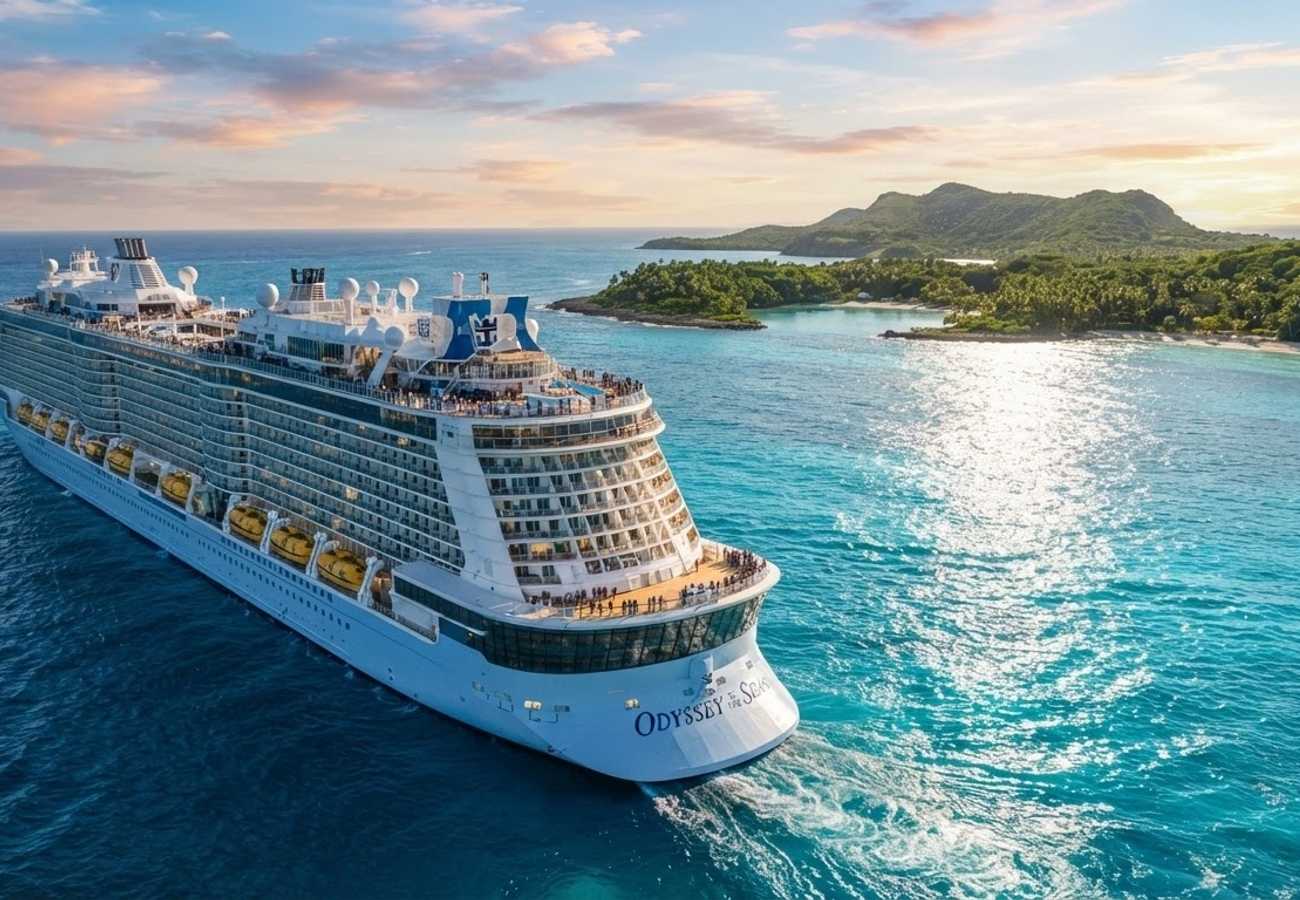
Image generated by AI
Royal Caribbean is aggressively expanding its incentive structures for travel professionals to capitalize on a historic surge in Caribbean tourism, as global ocean-cruise passenger numbers reached a record 37.2 million in 2025. This strategic push comes alongside new family-oriented discounts and a broader industry trend of strengthening ties with accredited booking agents to drive high-capacity sailings.
The cruise sector has transitioned from a period of pandemic-driven volatility to an era of unprecedented growth. For the modern traveler, this means more itinerary options and competitive pricing, but it also necessitates stricter adherence to international documentation and port-specific regulations. As major lines like Royal Caribbean, Carnival, and Norwegian intensify their market share battles, the role of the travel advisor is becoming more pivotal in navigating these complex options.
Royal Caribbean Incentives for Accredited Travel Agents
To stimulate bookings for the autumn and winter seasons, Royal Caribbean has introduced a targeted September incentive program. Five eligible travel advisors will be selected to win an oceanview stateroom for two on a short-duration Caribbean cruise.
The eligibility for this draw is strictly limited to accredited travel agents operating within the United States (excluding Puerto Rico) and Canada (excluding Quebec). To qualify, advisors must secure eligible Caribbean bookings by September 22, 2026. A critical requirement for entry is that each booking must be fully named and the deposit paid in full before the promotional window closes.
In a bid to boost traffic to specific Florida hubs, Royal Caribbean is offering double entries for any qualifying bookings departing from Port Canaveral or Tampa. The winners of the giveaway are scheduled to be announced by November 13, 2026, with the prize consisting of a short Caribbean sailing subject to the company's standard terms and conditions.
Family Travel Promotions for 2027 Summer Season
While the agent giveaway focuses on industry professionals, the cruise line is simultaneously targeting the family demographic with a "Kids & Teens Sail Free" offer. This promotion is designed to lock in summer 2027 travel plans well in advance.
The deadline for these family bookings is September 14, 2026. The offer applies to selected sailings departing between May 28 and August 20, 2027. Given the high demand for summer Caribbean itineraries, industry observers suggest that families should verify specific eligible ships and dates immediately, as these slots typically fill rapidly once "sail free" promotions are launched.
Essential Documentation and Port Logistics for Caribbean Voyagers
The increase in cruise volume brings a renewed focus on the legal and logistical requirements of Caribbean travel. The U.S. Department of State continues to emphasize that passengers must be fully aware of the entry requirements for every single port of call on their specific itinerary.
A valid passport remains the gold standard for travel. Officials warn that while some "closed-loop" cruises (starting and ending at the same U.S. port) may allow alternative WHTI-compliant documents, emergencies—such as medical evacuations—can force a passenger to leave the ship and fly home from a foreign country. In such instances, a passport is often the only acceptable document for air travel.
For those visiting The Bahamas, U.S. citizens generally require a valid passport and proof of intended departure. Because documentation rules vary significantly between island nations, the risk of being denied boarding is a real concern for unprepared travelers.
Strategic Importance of Florida Departure Hubs
The emphasis on Tampa and Port Canaveral in recent promotions highlights the logistical importance of Florida's coast. Port Canaveral, in particular, serves as a primary gateway for Bahamas-centric itineraries. Current offerings include a four-night sailing from Port Canaveral that visits Nassau and the private destination, Perfect Day CocoCay.
For international travelers, the choice of a Florida port introduces additional layers of planning. Coordination of flights, hotel stays, and ground transfers is essential. Aviation and travel experts recommend arriving in the departure city at least one day prior to embarkation to mitigate the risk of flight delays that could result in a missed ship.
Analyzing Global Cruise Passenger Growth Trends
The push for advisor rewards is a direct response to the massive scaling of the industry. Data from the Cruise Lines International Association indicates a steady upward trajectory in passenger volumes over the last several years.
| Cruise Company / Sector | 2021 Passengers | 2022 Passengers | 2023 Passengers | 2024 Passengers | 2025 Passengers |
|---|---|---|---|---|---|
| Royal Caribbean Group | 1,030,403 | 5,536,335 | 7,646,203 | 8,564,272 | 9,446,010 |
| Norwegian Cruise Line Holdings | 232,448 | 1,663,275 | 2,716,546 | 2,926,794 | 2,997,829 |
| Carnival Corporation & plc | 1.22m | 7.73m | 12.46m | 13.509m | 13.627m |
| Global Ocean-Cruise Industry | Pandemic-disrupted | Recovery | 31.7m | ~34.6m | ~37.2m |
Royal Caribbean Group has seen a remarkable recovery, growing from roughly 1 million passengers in 2021 to over 9.4 million in 2025, achieving an occupancy rate of 109.7% in the most recent full year. Similarly, Norwegian Cruise Line Holdings reached nearly 3 million passengers in 2025, with an occupancy rate of 103.5% and revenues climbing to $9.83 billion.
Carnival Corporation remains the largest operator by volume, carrying 13.627 million passengers in 2025. Their strategy involves a massive multi-brand portfolio including Princess Cruises, Holland America Line, Seabourn, Cunard, P&O Cruises, Costa, and AIDA.
Market Distribution and Capacity Allocation
Carnival Corporation's dominance is evident in its geographic allocation. For 2026, the company has dedicated 35% of its total passenger capacity to Caribbean itineraries, a slight increase from the 34% maintained in 2024 and 2025. This underscores the region's status as the primary engine of growth for the cruise industry.
The company's 2025 data reveals a strong reliance on North American markets, with the U.S. and Canada providing 8.09 million passengers. Continental Europe contributed 2.75 million, the UK added 1.11 million, and Australia/New Zealand provided 944,000.
Within the Carnival umbrella, Princess Cruises remains a cornerstone of the North American and Australian segments. In 2022, Princess held approximately 18% of that segment's capacity with 15 ships in service or returning to service, maintaining a capacity of roughly 46,270 berths into 2023.
Why This Matters: The Shift in Cruise Logistics
For the traveler, the aggressive pursuit of travel advisors by lines like Royal Caribbean and Virgin Voyages is not just a corporate game—it changes the booking experience. As cruise ships become "floating cities" with complex pricing tiers and varying port requirements, the value of a professional intermediary increases.
From a logistical standpoint, the record-breaking occupancy rates (some exceeding 100% due to third berths and sofa beds) mean that ships are operating at maximum capacity. This increases the importance of early booking and precise documentation. A single missing visa or an expired passport can now result in a costly loss, as the high demand means there are fewer last-minute alternatives for missed sailings.
For the global nomad or frequent traveler, the trend indicates that the Caribbean is no longer just a seasonal destination but a year-round industrial hub. The focus on Florida ports suggests a streamlining of the "fly-cruise" model, making the region more accessible but also more crowded, necessitating a more strategic approach to travel timing and port selection.
The era of the casual cruise is evolving into a high-capacity, professionally managed travel industry where preparation is the only way to ensure a seamless voyage.
Related Travel Guides
Disclaimer
This article is for informational and educational purposes only. It does not constitute legal, financial, or professional advice. While we strive to provide accurate and up-to-date information, travel policies, regulations, and conditions change rapidly. Always verify information with official sources before making travel decisions. Nomad Lawyer makes no representations about the accuracy, reliability, completeness, or suitability of the information provided. Readers should consult qualified professionals for advice specific to their circumstances. The views expressed in this article are those of the author and do not necessarily reflect the views of Nomad Lawyer.
Preeti Gunjan
Contributor & Community Manager
A passionate traveller and community builder. Preeti helps grow the Nomad Lawyer community, fostering engagement and bringing the reader experience to life.
Learn more about our team →