
Royal Caribbean Reroutes Spectrum of the Seas Asia Cruises Amid Geopolitical Tensions 2026
Royal Caribbean is modifying Spectrum of the Seas itineraries in China and Asia, swapping Japanese ports for South Korean alternatives as geopolitical instability and port restrictions force operational shifts.

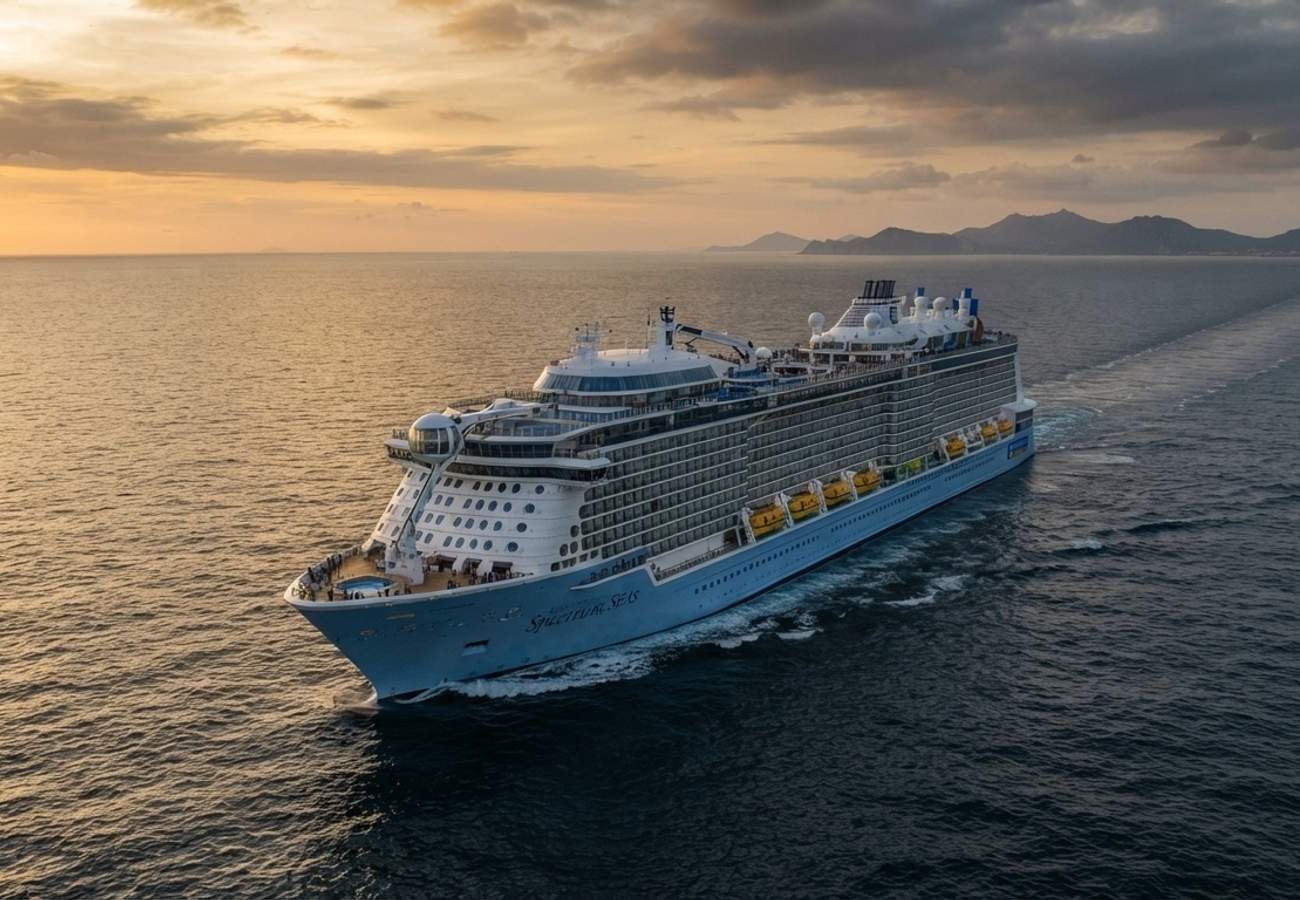
Image generated by AI
Royal Caribbean is adjusting Spectrum of the Seas itineraries across China and wider Asia, responding to intensifying geopolitical tensions and restrictive port access.
The cruise giant is selectively modifying voyages departing from Shanghai, with several Japan-focused routes being shortened, altered, or replaced. These changes reflect a broader industry trend where operational prudence and risk management now outweigh fixed itinerary commitments in Northeast Asia.
Shanghai Departures: Cancellations and Port Swaps
Current deployment data for 2026 shows Spectrum of the Seas maintaining a heavy presence in Shanghai, offering a mix of short-haul trips to South Korea and Japan, alongside extended "Best of Japan" voyages. However, internal communications and agency updates reveal a shift in strategy.
Key modifications include:
- Removal of Japanese Calls: Certain marquee destinations, specifically Okinawa and Ishigaki, have been stripped from several Shanghai-based departures.
- South Korean Substitutions: Routes previously targeting Japan are being redirected toward South Korean ports, such as Busan.
- Increased Sea Days: Some itineraries have been revised to include more days at sea or calls at ports closer to the Chinese mainland.
- Selective Adjustments: While shorter, politically sensitive runs are seeing the most volatility, longer Japan-intensive itineraries remain largely intact for now.
Passenger reports indicate that these changes are not being applied as a blanket suspension of the Shanghai season. Instead, Royal Caribbean is reshaping the program around ports that offer higher operational certainty.
Geopolitical Friction and Port Access
The instability of these routes is closely linked to the strained diplomatic relationship between Beijing and Tokyo. Market data suggests a clear divide in stability based on the port of embarkation.
Our analysis of the route maps indicates that sailings departing from Hong Kong remain significantly more stable than those leaving Shanghai. This suggests that voyages originating in Hong Kong are viewed as less exposed to the immediate policy shifts and diplomatic frictions characterizing the China-Japan relationship.
Historically, cruise lines in East Asia have dealt with fluid visa regulations and sudden regulatory shifts. The current removal of ports like Okinawa highlights a return to a high-risk operating environment where maritime security concerns and diplomatic disputes dictate the daily schedule.
Regional Volatility and Industry Risk Management
The adjustments to Spectrum of the Seas are not isolated. A wider pattern of itinerary volatility is emerging across the Western Pacific, driven by several factors:
- Military Activity: Sustained large-scale naval exercises and simulated blockades around Taiwan have prompted a more cautious approach to routing.
- Regulatory Shifts: Evolving public health screenings and short-notice maritime advisories.
- Global Precedent: Similar flexibility is being seen in the Caribbean, where security incidents and infrastructure failures have led to frequent port swaps.
From a logistical perspective, Royal Caribbean is prioritizing vessel utilization over itinerary adherence. By keeping ships in key homeports but swapping the destinations, the line maintains its market share in Asia while mitigating the risk of total voyage cancellations.
Impact on Passenger Logistics
For those booked on Spectrum of the Seas, the experience is shifting from guaranteed destinations to "aspirational" targets.
Current Passenger Experience:
- Revised Documentation: Guests are receiving updated confirmations and revised invoices after initial bookings.
- Compensation: Depending on the scale of the change, some passengers are being offered rebooking options, fare adjustments, or onboard credits.
- Land Arrangement Risks: Travelers are facing complications with non-refundable airfare and hotel bookings tied to specific port timings.
Asia Market Strategic Outlook
Despite these operational hurdles, Royal Caribbean continues to view China and the wider Asian region as a primary growth engine. Multi-year deployment plans remain in place, with Shanghai and Hong Kong continuing to serve as strategic hubs.
The industry is moving toward a model of "conditional itineraries." For the modern cruiser in Asia, the ship's amenities are becoming the primary product, while the ports of call are treated as flexible variables.
The era of the guaranteed Asian itinerary has been replaced by a strategy of operational fluidity.
Related Travel Guides
Disclaimer
This article is for informational and educational purposes only. It does not constitute legal, financial, or professional advice. While we strive to provide accurate and up-to-date information, travel policies, regulations, and conditions change rapidly. Always verify information with official sources before making travel decisions. Nomad Lawyer makes no representations about the accuracy, reliability, completeness, or suitability of the information provided. Readers should consult qualified professionals for advice specific to their circumstances. The views expressed in this article are those of the author and do not necessarily reflect the views of Nomad Lawyer.
Kunal K Choudhary
Co-Founder & Contributor
A passionate traveller and tech enthusiast. Kunal contributes to the vision and growth of Nomad Lawyer, bringing fresh perspectives and driving the community forward.
Learn more about our team →