
Seattle Ballard Link Light Rail Extension Targets 2042 Opening Amid $35 Billion Funding Gap
Sound Transit targets a 2042 completion for the Ballard Link extension to Market Street, but a massive funding shortfall threatens the final segment across the Ship Canal.

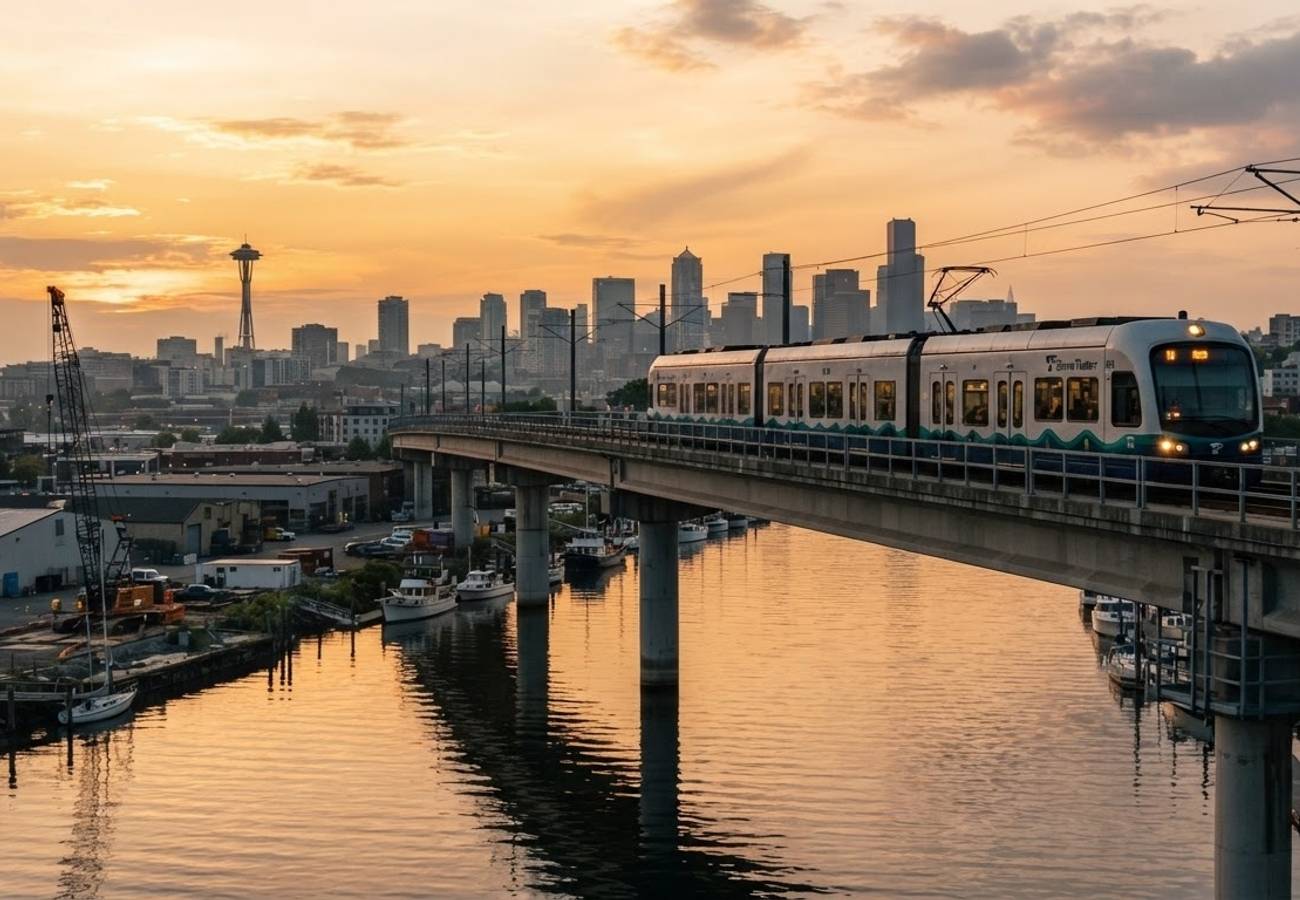
Image generated by AI
Seattle’s Ballard Link light rail extension now targets a 2042 opening to Market Street, but a severe funding shortfall leaves the final connection across the Ship Canal in jeopardy.
Project Timeline and Phased Implementation
Sound Transit has transitioned to a phased delivery model for the Ballard Link Extension. Our analysis of recent project summaries indicates that the initial segment—extending the existing 1 Line from SODO through downtown to Seattle Center—is currently fully funded and poised for construction.
However, the extension from Seattle Center to Market Street remains precarious. While the agency has set a tentative target date of 2042 for full service, this timeline is conditional upon meeting specific revenue and cost-saving milestones over the next decade. Internal projections suggest that if these milestones are not met, the opening window could slip as far back as the 2060s.
The 2042 goal replaces earlier, more optimistic estimates that projected completion in the late 2030s. This shift follows a comprehensive reevaluation of the Sound Transit 3 (ST3) expansion program necessitated by escalating construction costs and revenue shortfalls.
Financial Breakdown and ST3 Restructuring
In May 2026, the Sound Transit Board formalized a restructured ST3 system plan to address a long-term affordability gap estimated between $34 billion and $35 billion over the next 20 years.
Key Financial Drivers of the Shortfall:
- Construction Costs: Rising bids for labor and materials.
- Right-of-Way Acquisition: High costs associated with acquiring land in dense urban corridors.
- Revenue Loss: Slower-than-anticipated tax revenues compounded by pandemic-era losses.
- Budget Inflation: The Ballard Link budget has more than doubled, rising from an initial estimate of $11 billion to over $20 billion.
As part of this restructuring, the board prioritized the West Seattle Link Extension for a 2032 opening. The Seattle Center to Ballard segment has been reclassified as an "unfunded segment," meaning it will proceed through final design and environmental clearance but lacks the capital for actual construction.
Infrastructure Challenges: The Ship Canal Crossing
The primary risk factor for the 2042 deadline is the technical complexity of the route between Seattle Center and central Ballard. This stretch requires a combination of high-cost engineering solutions:
- Interbay Segment: At-grade guideway construction.
- Ship Canal Crossing: A complex tunnel beneath the Lake Washington Ship Canal.
- Ballard Terminus: A new underground station located near 14th or 15th Avenue Northwest and Market Street.
Despite the costs, the demand for this corridor is immense. Projections indicate that the combined West Seattle and Ballard extensions could facilitate over 100,000 daily trips by 2042, making it one of the highest-demand segments in the entire ST3 program.
Passenger Impact and Advisory
For the daily commuter and regional traveler, the current funding gap creates a "split-service" reality. For the next several years, passengers can expect the following:
- Partial Access: Transit users will likely see service reach Seattle Center long before it reaches Ballard.
- Continued Congestion: Dependence on congested bus corridors and freight routes into Ballard will persist well into the 2040s.
- Uncertainty in Planning: Residents and businesses in the Market Street area should treat the 2042 date as a target rather than a guarantee.
Our analysis of the current strategy suggests that the project is being kept "shovel ready." By completing design and right-of-way work now, Sound Transit aims to be positioned for immediate construction should federal grants or state partnerships bridge the multibillion-dollar gap.
Industry Analyst View
The Ballard Link situation is a textbook example of "optimism bias" in large-scale urban infrastructure. The doubling of the budget from $11 billion to $20 billion reflects a failure to account for the extreme volatility of urban tunneling and land acquisition in a booming tech hub.
The decision to prioritize West Seattle over Ballard is a strategic move to deliver "wins" to the public while deferring the most expensive engineering risks. However, there is a significant political risk: once the line reaches Seattle Center, the urgency to fund the final, most expensive miles into Ballard may diminish, potentially turning the "phased approach" into a permanent truncation.
The future of Seattle's northern transit connectivity now rests on federal grants rather than local engineering.
Related Travel Guides
Disclaimer
This article is for informational and educational purposes only. It does not constitute legal, financial, or professional advice. While we strive to provide accurate and up-to-date information, travel policies, regulations, and conditions change rapidly. Always verify information with official sources before making travel decisions. Nomad Lawyer makes no representations about the accuracy, reliability, completeness, or suitability of the information provided. Readers should consult qualified professionals for advice specific to their circumstances. The views expressed in this article are those of the author and do not necessarily reflect the views of Nomad Lawyer.
Preeti Gunjan
Contributor & Community Manager
A passionate traveller and community builder. Preeti helps grow the Nomad Lawyer community, fostering engagement and bringing the reader experience to life.
Learn more about our team →