
Italian Ministry of Culture Issues Preservation Update for Ancient Roman Architectural Hotspots Mediterranean 2026, Guiding Heritage Road Trips: New Travel Alert
Roman architectural hotspots Mediterranean 2026: Discover Colosseum updates, Leptis Magna ruins, Pantheon history, and travel safety tips.

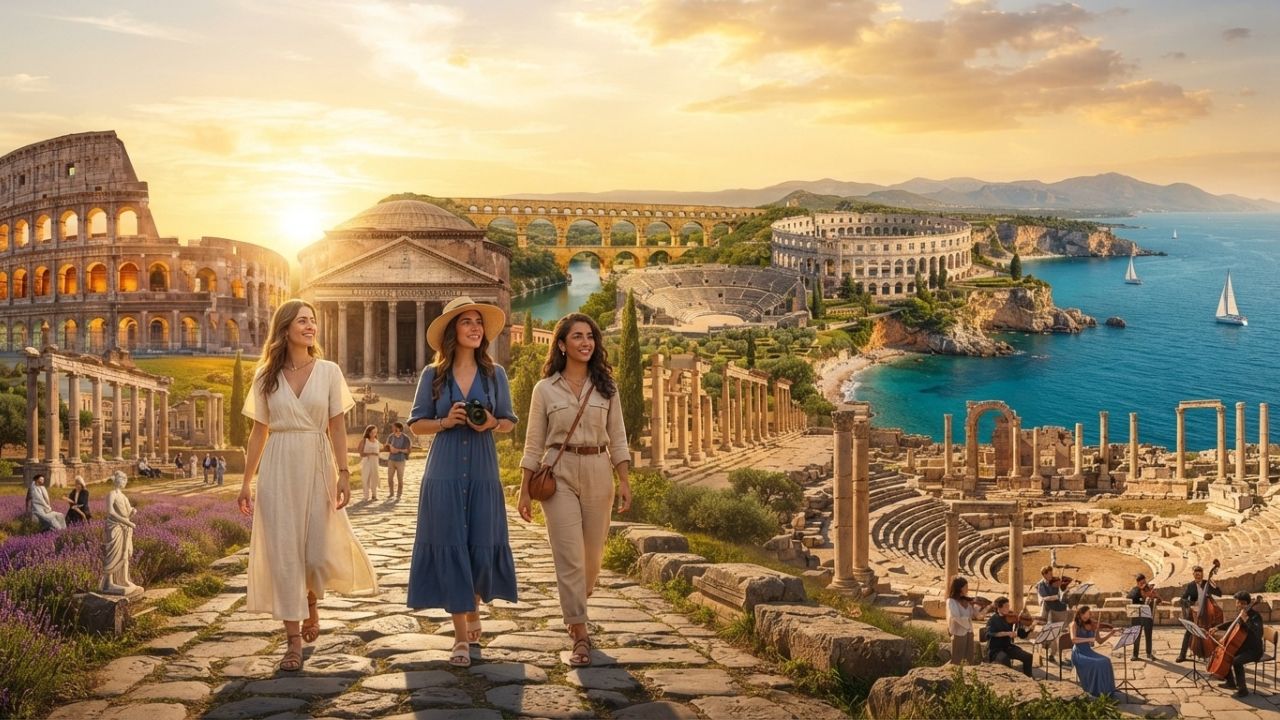
Image generated by AI
Published on July 26, 2026
For travelers designing historical itineraries across Southern Europe, North Africa, and the Levant, exploring Roman architectural hotspots Mediterranean 2026 provides a direct physical connection to classical antiquity. Spanning monumental structures from Italy to Libya, these enduring stone ruins represent the peak of ancient engineering, public utility, and imperial propaganda. Holidaymakers planning study visits are urged to secure official entry reservations early and keep track of updated national conservation boundaries.
Quick Summary
- Advanced Material Science: Roman concrete used pozzolana volcanic ash to cure underwater, ensuring marine structures remain intact today.
- Monumental Architectural Anchors: Key locations include Rome's Colosseum and the Pantheon, alongside the ancient city of Leptis Magna in Libya.
- The Power of Adaptive Reuse: Consecrating the Pantheon as a Christian church in the seventh century protected it from being stripped for building materials.
- Standardized Structural Loadings: Standardized use of the true arch and groin vault allowed Romans to build massive public structures without solid thick walls.
- International Monitoring Standards: Archeological conservation is supervised by the Italian Ministry of Culture and the UNESCO World Heritage Centre.
Context and Background: Developing Roman Architectural Hotspots Mediterranean 2026
The monumental stone structures scattered across the Mediterranean basin are far more than ruins; they are physical documents of ancient governance, engineering, and cultural synthesis. Under the direction of the Ministero della Cultura, international archaeologists are continuously updating conservation frameworks to protect these structural marvels. By studying how classical cities were built and adapted through different eras, modern planners gain crucial insights into the architectural foundations that shaped European, Middle Eastern, and North African urban designs.
Event/Incident Details: Masterpieces under the Roman Architectural Hotspots Mediterranean 2026
The geographic reach and preservation history of the Mediterranean's classical monuments are detailed in the index below:
| Historical Monument | Location & Region | Historical Dynasty / Era | Core Architectural Features | Structural Preservation Highlights |
|---|---|---|---|---|
| The Colosseum (Flavian Amphitheatre) | Rome, Italy | Flavian Dynasty | Subterranean hypogeum logistics, tiered civic seating, travertine stone arches | Major public engineering and ancient societal organization showcase |
| Leptis Magna Ruins | Al-Khums, Libya (North Africa) | Severan Dynasty | Grand forum, ornate basilica, triumphal arches, coastal port facilities | Irreplaceable urban planning representing provincial empire trade |
| The Pantheon | Rome, Italy | Imperial Roman Period | Massive concrete dome, central oculus, temple portico | Near-complete survival due to seventh-century Christian consecration |
To understand how these structures survived for thousands of years, scientists analyze their specific engineering properties:
| Engineering Breakthrough | Construction Materials | Mechanical Function | Preservation Role & Longevity |
|---|---|---|---|
| Pozzolana Concrete | Volcanic ash mixed with lime | Cures underwater and strengthens upon contact with saltwater | Anchors coastal structures and harbor installations across centuries |
| True Arch & Groin Vault | Standardized stone blocks and mortar | Distributes structural weight evenly, reducing reliance on solid walls | Allows open, vaulted spaces in monumental baths and amphitheaters |
| Adaptive Reuse | Repurposed ancient structures | Converted temples into basilicas and defensive walls into fortifications | Prevented buildings from being dismantled for raw materials |
Meticulous structural surveys conducted by the Parco archeologico del Colosseo verify that the subterranean chambers and drainage systems were designed to handle high visitor capacity, showing the advanced civil planning of the Flavian period.
Risk/Impact: Preservation Threats to Roman Architectural Hotspots Mediterranean 2026
Despite their extreme durability, ancient Mediterranean ruins face multiple modern threats and natural risks:
- Modern Environmental Degradation: Acid rain, air pollution, and carbon emissions damage ancient marble, travertine, and limestone facade surfaces.
- Marine and Coastal Erosion: Saltwater crystallization and wave action threaten coastal harbor ruins and ancient Roman concrete installations.
- Vandalism and Tourism Congestion: High visitor traffic at major monuments like the Colosseum can accelerate structural wear if paths are not managed.
- Looting and Material Stripping: Unprotected provincial sites remain vulnerable to illegal excavation or the removal of stones for local building materials.
- Geopolitical and Monitoring Challenges: Restricting access or failing to secure international conservation funding limits monitoring work in remote areas.
What Authorities Are Saying
Cultural ministries and heritage curators emphasize that global coordination is vital to preserve classical history. Regional archeologists at the Soprintendenza Speciale Archeologia Belle Arti e Paesaggio di Roma state that continuous public and civic use is the primary reason why structures like the Pantheon avoided being dismantled.
According to monitoring reports from the UNESCO World Heritage Centre, provincial capitals like Leptis Magna in North Africa provide irreplaceable information regarding ancient trade routes and cultural integration.
Consequently, park directors are urging governments to enforce strict visitor caps at crowded monuments, arguing that preservation blueprints must prioritize structural integrity over raw tourist numbers to ensure these landmarks survive for future generations.
Practical Traveler Advice Section
For heritage-focused travelers planning to tour these classical Roman monuments, safety and travel experts recommend the following guidelines:
- Book Time-Slotted Colosseum Tickets: Reserve entry passes for the Colosseum and Pantheon weeks in advance to secure access to restricted areas like the hypogeum.
- Hire Certified Archeological Guides: Engage registered guides approved by local cultural ministries to gain authentic historical context and support site upkeep.
- Stay on Approved Walkways: Always follow designated tourist paths, and do not climb or lean on ancient stone masonry or balustrades.
- Confirm Travel Advisories for North Africa: Check international travel advisories and secure certified local operators before organizing tours to Leptis Magna.
- Use Public Heritage Transit Passes: Utilize official municipal transit passes in Rome to travel easily between archaeological parks and museums.
Broader Context Section
The survival of the Roman Empire's architecture is rooted in a unique combination of standardization and adaptation. Rather than erasing previous structures, successive civilizations frequently converted pagan temples into Christian basilicas and incorporated Roman defensive walls into medieval fortifications.
This cycle of adaptation saved landmarks from being treated as quarries for raw building materials. By studying these transformations, researchers can trace the political, religious, and social changes that shaped the modern geopolitical landscape of Southern Europe, North Africa, and the Levant.
What to Expect Next / Looking Ahead
Looking ahead, conservation teams in Rome will deploy new laser scanning technologies to monitor micro-movements in the Colosseum's structural arches. International archeological teams will work to launch new conservation partnerships for Leptis Magna, aiming to improve security and stabilization for its basilica and forum.
In the digital space, the Italian Ministry of Culture will expand its virtual reality archives, allowing remote students to explore 3D models of the Pantheon and other classical ruins. Environmental agencies will also implement new air quality zones around archaeological parks to protect ancient stone facades from traffic pollution.
Conclusion
In conclusion, the Roman ruins of the Mediterranean serve as timeless testaments to human engineering and governance. By securing your entry tickets early, staying on designated paths, and choosing certified guides, you can enjoy a safe and rewarding archaeological tour. Remaining informed and prepared will guarantee an authentic journey through classical history.
FAQ: Roman Architectural Hotspots Mediterranean 2026
What makes Roman concrete so durable?
Roman concrete utilized pozzolana, a unique volcanic ash mixed with lime, which allowed it to cure underwater and grow stronger over centuries when exposed to marine elements.
How did the Pantheon survive so well?
The Pantheon's near-complete survival is due to its consecration as a Christian church in the seventh century, preventing it from being dismantled for raw building materials.
Where is Leptis Magna located?
Leptis Magna is a remarkably well-preserved ancient Roman city located in present-day Libya, North Africa, representing urban planning from the Severan dynasty.
What is the Flavian Amphitheatre?
The Flavian Amphitheatre is the official historic name of the Colosseum in Rome, celebrated for public engineering, tiered seating, and subterranean logistics.
Which bodies monitor these heritage sites?
Preservation and monitoring are coordinated by national bodies like the Italian Ministry of Culture and international organizations like the UNESCO World Heritage Centre.
Related Travel Guides
- European Union Approves Free Adjacent Seating for Children Under Fourteen, Strengthening Family Airline Seating Rights Across Member States: New Travel Alert
- 7.4 Magnitude Earthquake Hits Southern Mexico Pacific Coast Triggering Safety Alerts for Oaxaca and Guerrero
- Air France Suspends Flights to Dubai, Riyadh, and Beirut Amid Heightened Middle East Security Risks: New Travel Alert
Suggested SEO Metadata & Assets
- Meta Title: Roman Architectural Hotspots Mediterranean Guide 2026
- Meta Description: Roman architectural hotspots Mediterranean 2026: Discover Colosseum updates, Leptis Magna ruins, Pantheon history, and travel safety tips.
- URL Slug: roman-architectural-hotspots-mediterranean-2026
- Tags:
ancient history preservation,Mediterranean Travel,Roman architecture,Roman engineering,UNESCO World Heritage sites - Featured Image Alt Text: A majestic view of the ancient Colosseum in Rome under a golden sunset sky, showcasing its stone arches and historic tiered structure.
Disclaimer
This article is for informational and educational purposes only. It does not constitute legal, financial, or professional advice. While we strive to provide accurate and up-to-date information, travel policies, regulations, and conditions change rapidly. Always verify information with official sources before making travel decisions. Nomad Lawyer makes no representations about the accuracy, reliability, completeness, or suitability of the information provided. Readers should consult qualified professionals for advice specific to their circumstances. The views expressed in this article are those of the author and do not necessarily reflect the views of Nomad Lawyer.
Kunal K Choudhary
Co-Founder & Contributor
A passionate traveller and tech enthusiast. Kunal contributes to the vision and growth of Nomad Lawyer, bringing fresh perspectives and driving the community forward.
Learn more about our team →