
Rob Brandenberg Named General Manager as Populus Seattle Enters New Leadership Chapter
Rob Brandenberg Named General Manager as Populus Seattle Enters New Leadership Chapter

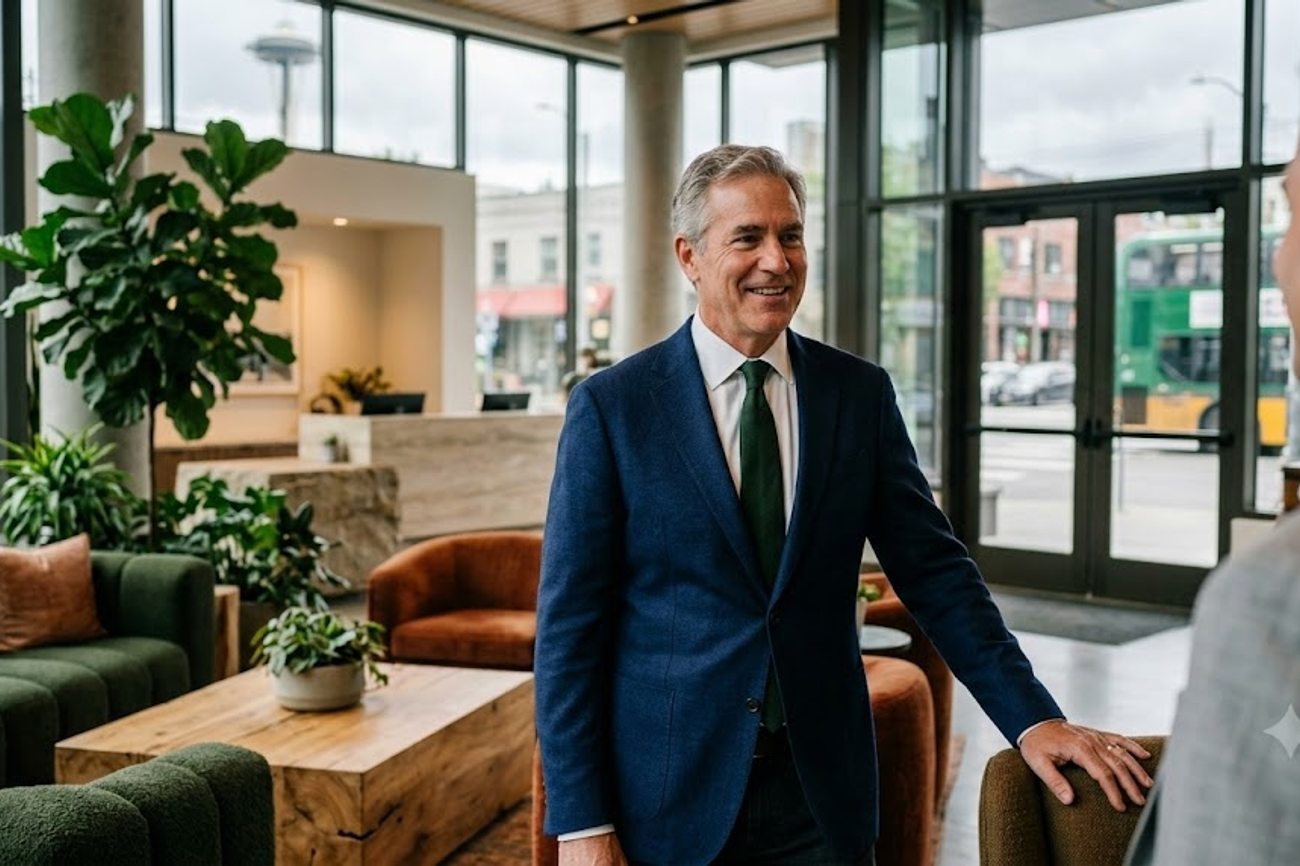
Image generated by AI
20 years of international luxury hospitality experience is the professional benchmark Rob Brandenberg brings to his new role as General Manager of Populus Seattle. This appointment signals a strategic move by Populus Hotels to anchor its regenerative hospitality model with a leader who possesses both a Swiss-trained culinary foundation and a deep operational history within the specific competitive landscape of the Pacific Northwest.
The Strategic Pivot to Adaptive Reuse
Populus Seattle does not follow the traditional blueprint of luxury hotel development. Instead, it occupies the Westland Building, a historic structure dating back to 1907, located in the Pioneer Square district. The property is a case study in adaptive-reuse architecture, executed by the Miller Hull Partnership, with interior design handled by Curioso. This architectural approach reduces the carbon footprint associated with new construction—a core tenet of the hotel's identity.
The property features 120 guest rooms and suites, but its value proposition extends beyond lodging. The hotel serves as a gallery for the city's creative economy, housing more than 300 onsite commissioned artworks. By integrating these pieces, the hotel attempts to bridge the gap between a commercial hospitality entity and a cultural institution, reflecting the specific artistic character of Seattle.
Operational Scale and Environmental Metrics
The operational framework of Populus Seattle is built on "regenerative hospitality," a step beyond traditional sustainability. While many hotels aim for "net zero," Populus Seattle is positioned as the second carbon-positive hotel in the United States. This means the property is engineered to sequester more carbon than it emits over its entire lifecycle.
The data supporting this claim is integrated into the guest experience and the hotel's financial structure:
- Energy Source: 100% of the property's electricity is derived from renewable sources.
- Direct Offsetting: The "One Night, One Tree" program ensures one tree is planted for every single night a guest stays at the property.
- Financial Commitment: 1% of total revenue is diverted to regional environmental conservation efforts via the Populus Seattle Stewardship Grant.
Beyond the environmental metrics, the property leverages a diverse F&B (Food and Beverage) strategy to drive local foot traffic and guest loyalty. This includes Salt Harvest, a restaurant centered on seasonal open-hearth cooking; Firn, which is marketed as the first rooftop bar in its specific neighborhood; and The Café at Populus.
Expert Analysis: The "Localist" Leadership Strategy
For travelers and industry observers, the appointment of Rob Brandenberg is not merely a personnel change; it is a tactical decision to mitigate the risks associated with "lifestyle" hotel branding. Many luxury hotels struggle to feel authentic to their location, often feeling like sterilized versions of global corporate standards. By hiring a longtime Seattle resident who previously managed both Pan Pacific Seattle and 1 Hotel Seattle, Populus Hotels is buying immediate local credibility and market intelligence.
The direct consequence of Brandenberg’s background is a shift toward a more integrated guest journey. Because he began his career in pastry and French cuisine in Switzerland, he possesses a granular understanding of F&B operations—the highest-margin and highest-risk area of luxury hospitality. For the guest, this means the dining experience at Salt Harvest is likely to be treated as a primary destination rather than a secondary hotel amenity.
Furthermore, Brandenberg’s history with 1 Hotel Seattle—where he managed a full renovation and rebranding—makes him uniquely qualified to handle the complexities of an adaptive-reuse building. Historic structures like the Westland Building often present unforeseen operational hurdles; having a GM who has navigated the "transformation" phase of a luxury property reduces the likelihood of service disruptions during the hotel's critical early growth phase.
The pricing pressure this creates for other Seattle luxury hotels is significant. By combining a MICHELIN One Key distinction and AFAR recognition for 2026 with a carbon-positive mandate, Populus Seattle is targeting the "conscious luxury" traveler. This demographic is typically less price-sensitive but more demanding regarding ethical transparency and authentic local integration.
Key Takeaways
- Carbon-Positive Mandate: Populus Seattle is only the second hotel in the U.S. to operate on a model that sequesters more carbon than it emits.
- Local Leadership: General Manager Rob Brandenberg brings 20+ years of experience and specific expertise in the Seattle market via previous roles at Pan Pacific and 1 Hotel.
- Architectural Heritage: The hotel is housed in the 1907 Westland Building, utilizing adaptive reuse to minimize environmental impact.
- Revenue-Linked Conservation: 1% of the hotel's revenue is legally committed to the Populus Seattle Stewardship Grant for regional conservation.
- Cultural Integration: The property functions as a local art hub with over 300 curated works created onsite.
FAQ: Populus Seattle 2025-2026
What does "carbon-positive" mean for a hotel guest? It means the hotel removes more CO2 from the atmosphere than it produces. For guests, this is realized through 100% renewable energy and the "One Night, One Tree" initiative, which plants a tree for every night stayed.
Where is Populus Seattle located? The hotel is situated in the historic Pioneer Square neighborhood of Seattle, occupying the Westland Building, which was originally constructed in 1907.
What dining options are available at the hotel? Guests have access to Salt Harvest (seasonal open-hearth cooking), Firn (a rooftop bar), and The Café at Populus.
How does the hotel support the local Seattle community? Beyond employing a local General Manager, the hotel supports the region by donating 1% of its revenue to environmental conservation and showcasing over 300 works by local artists.
A calculated fusion of Swiss precision and Pacific Northwest environmentalism.
#PopulusHotels #SeattleHospitality #RobBrandenberg #RegenerativeTourism #PioneerSquare #CarbonPositiveTravel
Related Travel Guides
Disclaimer
This article is for informational and educational purposes only. It does not constitute legal, financial, or professional advice. While we strive to provide accurate and up-to-date information, travel policies, regulations, and conditions change rapidly. Always verify information with official sources before making travel decisions. Nomad Lawyer makes no representations about the accuracy, reliability, completeness, or suitability of the information provided. Readers should consult qualified professionals for advice specific to their circumstances. The views expressed in this article are those of the author and do not necessarily reflect the views of Nomad Lawyer.
Preeti Gunjan
Contributor & Community Manager
A passionate traveller and community builder. Preeti helps grow the Nomad Lawyer community, fostering engagement and bringing the reader experience to life.
Learn more about our team →