
Renfe Restores Electric Scooter Access With Strict Safety Mandates
Effective September 7, 2026, Renfe has restored electric scooter access across most of its rail network, provided vehicles meet strict DGT registration and in

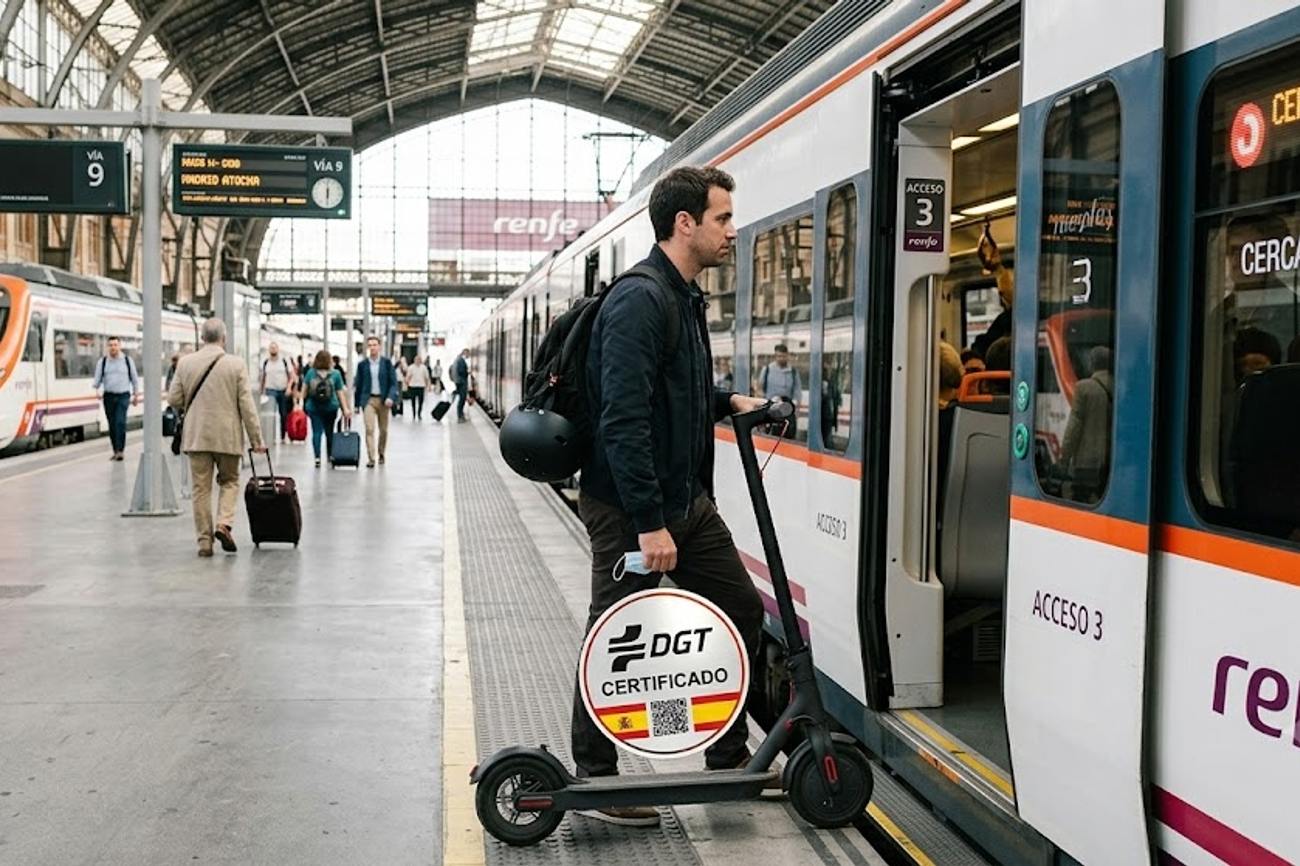
Image generated by AI
Renfe has officially updated its transit policy to allow approved electric scooters on board most train services starting Monday, September 7, 2026. This move aims to integrate rail travel with "first-and-last-mile" sustainable urban mobility, allowing commuters and leisure travelers to bypass the need for private cars when connecting to railway hubs.
However, this is not a blanket reinstatement. The policy is tied to a new Spanish national regulatory framework for personal mobility vehicles (PMVs), shifting the focus from simple carriage to strict legal compliance and safety verification.
Service Availability and Restrictions
The restoration of scooter access applies to the majority of Renfe's operations, but significant regional exclusions remain. While passengers on long-distance and regional lines can now bring their vehicles, those utilizing commuter rails in specific autonomous communities are still restricted.
| Renfe Service | Scooter Status (From Sept 7, 2026) | Primary Transit Use |
|---|---|---|
| Cercanías | Permitted (Subject to rules) | Urban/Metropolitan |
| Media Distancia | Permitted (Subject to rules) | Regional |
| Larga Distancia | Permitted (Subject to rules) | Intercity |
| Rodalies Catalonia | Not Permitted | Local Catalonia Rail |
| Cercanías Euskadi | Not Permitted | Local Basque Rail |
Mandatory Legal and Technical Requirements
To board, passengers must prove that their vehicle is not merely a consumer electronic, but a legally registered vehicle. Renfe and the Directorate-General for Traffic (DGT) now require the following:
- DGT Registration: Every scooter must be registered with Spain’s Directorate-General for Traffic.
- Physical Identification: A visible identification plate or label must be attached to the vehicle.
- Insurance: Valid compulsory third-party liability insurance is mandatory.
- Certification: Passengers must carry a valid circulation certificate confirming the vehicle meets technical safety standards.
Onboard Safety Protocols
To mitigate fire risks and passenger congestion, Renfe has implemented a zero-tolerance policy regarding vehicle operation on trains. All scooters must be folded and powered off for the duration of the trip. Charging scooters via onboard power sockets is strictly prohibited. Vehicles must be stored in designated luggage areas and are forbidden from obstructing aisles, emergency exits, or priority seating.
Traveler Logistics Guide
From a ground-level perspective, the best way to navigate these changes is to treat your electric scooter as a registered motor vehicle rather than a piece of luggage.
Pre-Trip Checklist:
- Documentation: Keep a digital or physical copy of your DGT registration and insurance certificate. Security staff may request these during boarding.
- Hardware Check: Ensure your folding mechanism is secure. A scooter that does not fold completely may be denied entry to avoid blocking corridors.
- Route Planning: If your journey involves a transfer to Rodalies (Catalonia) or Cercanías Euskadi, you cannot bring your scooter on those specific legs. Plan for secure bike/scooter parking at the transfer station.
Navigating the Station: To avoid boarding delays, fold your scooter before entering the platform area. This signals to staff that you are compliant with the "folded and off" mandate and prevents bottlenecks at the train doors.
Infrastructure Impact Assessment
This policy shift reflects a broader European trend toward multimodal transit integration. By aligning rail access with DGT registration, Renfe is effectively professionalizing the use of PMVs, moving them from "toys" to recognized transit components. This reduces the pressure on station parking lots and encourages a shift away from private car usage for short-distance urban connections. However, the current exclusion of Catalonia and the Basque Country creates a fragmented transit experience for cross-regional travelers.
Related Travel Guides
Disclaimer
This article is for informational and educational purposes only. It does not constitute legal, financial, or professional advice. While we strive to provide accurate and up-to-date information, travel policies, regulations, and conditions change rapidly. Always verify information with official sources before making travel decisions. Nomad Lawyer makes no representations about the accuracy, reliability, completeness, or suitability of the information provided. Readers should consult qualified professionals for advice specific to their circumstances. The views expressed in this article are those of the author and do not necessarily reflect the views of Nomad Lawyer.
Raushan Kumar
Founder & Lead Developer
Full-stack developer with 11+ years of experience and a passionate traveller. Raushan built Nomad Lawyer from the ground up with a vision to create the best travel and law experience on the web.
Learn more about our team →