
RDU Terminal 2 Security Lines Stabilize: Wait Times Return to Typical Summer Patterns in 2026
Security wait times at Raleigh-Durham International Airport’s Terminal 2 have eased back to typical summer levels after recent delays, with mid-day waits averaging 10 to 20 minutes.

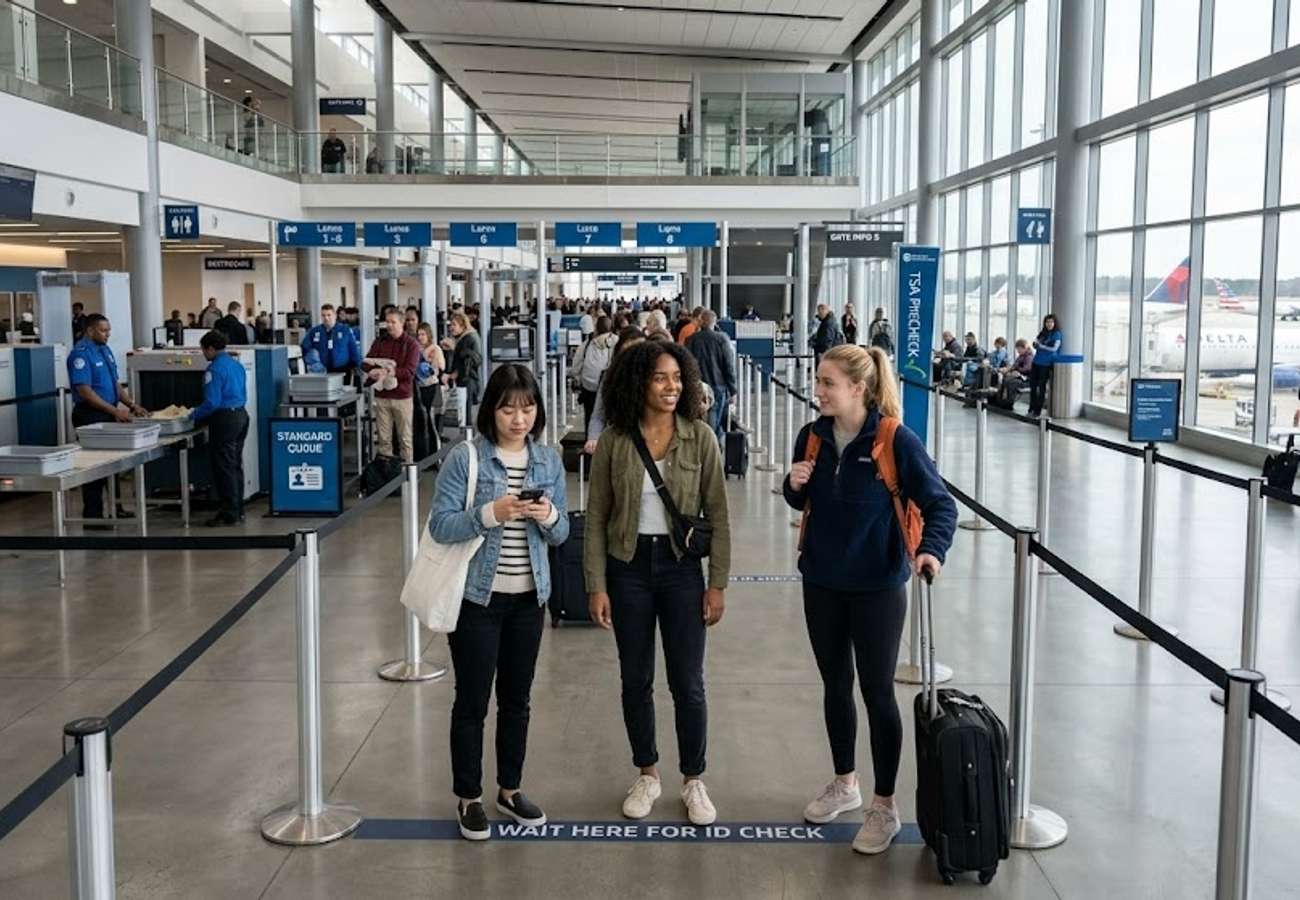
Image generated by AI
Security screening at Raleigh-Durham International Airport’s Terminal 2 has largely returned to typical summer patterns after recent delays. Third-party tracking tools now show mid-day wait times stabilizing between 10 and 20 minutes, easing frustrations for early-morning and late-afternoon travelers.
Security screening at Raleigh-Durham International Airport (RDU) has normalized following a period of unusually long Transportation Security Administration (TSA) lines that caused significant frustration. Recent federal funding disputes affected security staffing at several large U.S. airports, leading to irregular wait times. However, data aggregators that compile live checkpoint estimates and historical patterns now indicate that conditions at Terminal 2 have moderated significantly.
Travelers frequenting the Raleigh-Durham region will find that the severe backups experienced during the height of these staffing disruptions have subsided. The overall experience, according to publicly available crowd-sourced updates and airport status dashboards, now resembles a typical high-season pattern rather than an ongoing operational disruption. Tools that specialize in airport operations have adjusted their guidance for RDU, characterizing current Terminal 2 waits as "normal" for July.
Terminal 2 Peak Window and Wait Time Specifications
Despite the return to standard operations, certain periods at Terminal 2 remain consistently challenging. Reports compiled from traveler forums and live wait-time dashboards point to specific pressure points tied to flight banks. The first wave of departures, generally between 5 a.m. and 7 a.m., remains the most congested segment of the day. Late-afternoon and early-evening hours, roughly from 4 p.m. to 7 p.m., represent another predictable bottleneck, especially on Sundays and Mondays when business and leisure traffic overlap.
| Time Window | Wait Time Expectation | Operational Notes |
|---|---|---|
| 5:00 a.m. - 7:00 a.m. | High (First-bank rush) | Multiple major carriers launch earliest outbound flights; lines move steadily but can lengthen quickly. |
| 10:00 a.m. - 2:00 p.m. | 10 to 20 minutes | Off-peak, steady flow; standard screening often clears in under 30 minutes. |
| 4:00 p.m. - 7:00 p.m. | High (Late-afternoon wave) | Business and leisure overlap; longest waits typically measured in tens of minutes. |
| Late Evening | Negligible to Low | Off-peak hours with minimal waits in standard and expedited lanes. |
Historical pattern charts for RDU suggest that these morning and evening peaks are not new, but they appeared sharper during the recent period of irregular TSA staffing. With screening times now closer to standard levels, the first-bank rush still produces some of the longest waits at Terminal 2, yet they are typically measured in tens of minutes rather than approaching an hour or more. Outside of those well-known peaks, travelers departing in mid-morning or mid-day often report brief or negligible waits in both standard and expedited lanes.
Traveler Logistics Guide: Navigating RDU Security
From a ground-level perspective, the best way to navigate the current security landscape at RDU is through proactive monitoring and strategic timing. The recent swings in checkpoint conditions have pushed travelers to rely on a growing ecosystem of wait-time tracking tools. A mix of government-built and independent platforms now offer real-time estimates for Terminal 2, blending user reports, historical patterns, and airport operational data.
For passengers departing from Terminal 2, where multiple large carriers concentrate their operations, the standard sequence of actions can significantly reduce uncertainty. Airport travel guidance continues to emphasize arriving at least two hours before domestic departures and allowing additional time for international flights, particularly during the busiest morning and evening waves.
Optimizing Your Transit Experience:
- Leverage Digital Tracking: Check wait-time tracker applications on your way to the airport. These platforms highlight high- and low-risk windows by day of the week. For RDU, these charts frequently identify early morning and late afternoon as the highest-risk periods. Check conditions more than once, as a calm checkpoint can become busy within minutes when several large aircraft begin boarding in close succession.
- Expedited Screening: Enrollment in trusted traveler programs such as TSA PreCheck remains a significant differentiator for frequent flyers at RDU. Expedited lanes often experience shorter and more predictable waits even during peak windows. CLEAR or similar identity-verification services may also be available, though policies can vary by terminal.
- Check-in Protocol: Passenger information pages for RDU recommend that travelers check in online when possible, monitor their airline’s mobile app for schedule updates, and head directly to security after dropping bags. This minimizes last-minute congestion at check-in counters.
- Connection Planning: If you are flying through RDU as a connecting passenger, you will remain within the secure area, bypassing the Terminal 2 checkpoint bottlenecks entirely. However, if your itinerary requires rechecking bags or switching terminals, build a minimum two-hour layover to accommodate potential security line variations during the 5 a.m. to 7 a.m. or 4 p.m. to 7 p.m. peaks.
Infrastructure Impact and Regional Connectivity
Raleigh-Durham International Airport has been experiencing steady growth in traffic, and Terminal 2 sits at the center of that expansion. Publicly available airport planning updates describe Terminal 2 as the primary home for many large domestic and international carriers, making its TSA checkpoint a critical bottleneck during peak travel periods.
Recent construction projects, including a new runway designed to support additional long-haul and international service, are intended to set the stage for more gates and more flights operating from Terminal 2. Infrastructure planners have highlighted that future passenger growth will need to be matched by efficient security processing, gate access, and landside facilities to keep the travel experience predictable.
As summer traffic and special events add layers of demand, the airport’s broader modernization program is likely to keep checkpoint performance under close scrutiny. Analysts who follow airport operations point out that even brief episodes of abnormal wait times can ripple through a terminal’s reputation, especially at a field that serves a tech-focused region where many travelers are frequent flyers with high expectations for efficiency.
The recent return to more typical security-line behavior at Terminal 2 may ease some of those concerns, yet it also underscores how sensitive the system can be to staffing, schedule changes, and larger national disruptions. The latest indicators suggest that Terminal 2 at RDU has moved beyond the most acute phase of recent security-line issues. For the moment, passengers who plan ahead, monitor conditions as they evolve, and build in a reasonable buffer are once again finding security screening to be a manageable part of the journey through one of the Southeast’s fastest-growing airports.
Strategic planning and real-time data remain the most effective tools for navigating the evolving landscape of airport security.
Related Travel Guides
Disclaimer
This article is for informational and educational purposes only. It does not constitute legal, financial, or professional advice. While we strive to provide accurate and up-to-date information, travel policies, regulations, and conditions change rapidly. Always verify information with official sources before making travel decisions. Nomad Lawyer makes no representations about the accuracy, reliability, completeness, or suitability of the information provided. Readers should consult qualified professionals for advice specific to their circumstances. The views expressed in this article are those of the author and do not necessarily reflect the views of Nomad Lawyer.
Preeti Gunjan
Contributor & Community Manager
A passionate traveller and community builder. Preeti helps grow the Nomad Lawyer community, fostering engagement and bringing the reader experience to life.
Learn more about our team →