
Rapid City Regional Airport Hits Historic Passenger Records in 2026 Boosting South Dakota Tourism
Rapid City Regional Airport reports unprecedented growth with 419,553 passengers in H1 2026, cementing its role as the primary gateway to the Black Hills and Mount Rushmore.

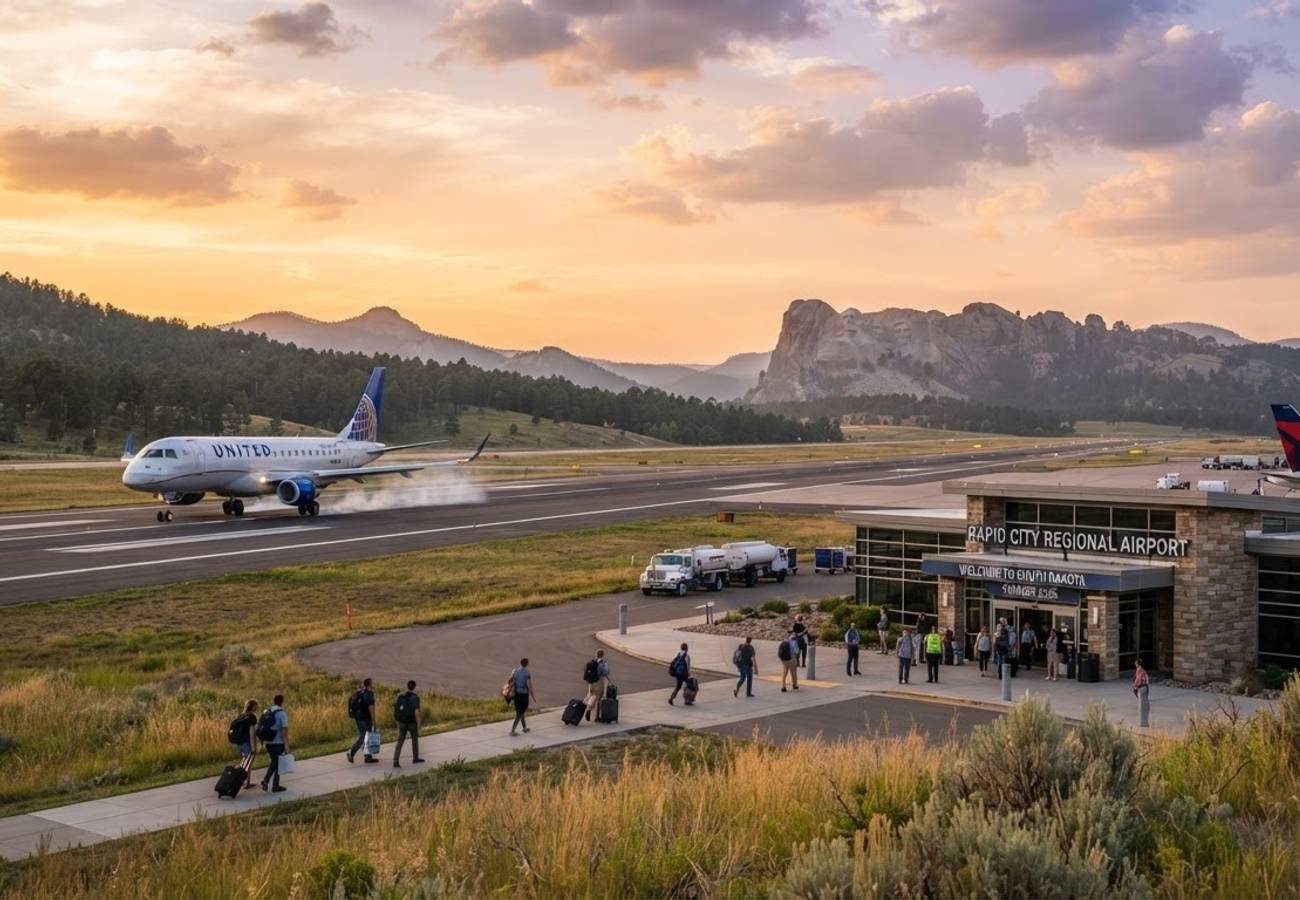
Image generated by AI
Rapid City Regional Airport has recorded its strongest first-half performance in history, welcoming 419,553 total passengers between January and June 2026. This surge underscores a critical shift in regional aviation demand as travelers increasingly bypass major hubs for direct access to the Black Hills.
Record-Breaking Passenger Volume
Data from the first half of 2026 indicates a powerful trajectory for western South Dakota’s aviation infrastructure. The airport recorded 206,010 departing passengers during the first six months of the year.
When combining arrivals and departures, the total passenger count reached 419,553. This growth follows a record-setting 2025, where the facility handled more than 905,000 total passengers.
Aviation Hub & Route Connectivity
The expansion in passenger volume is directly linked to increased connectivity between Rapid City and primary US aviation hubs. The airport currently facilitates nonstop and seasonal services to the following markets:
- Denver
- Dallas/Fort Worth
- Chicago
- Minneapolis
- Phoenix
Our analysis indicates that seasonal flight availability is the primary driver during peak summer windows, allowing high-volume access to regional events and national parks.
Regional Tourism Impact
The airport serves as the strategic entry point for the Black Hills region. The spike in aviation traffic correlates with increased visitation to several high-traffic landmarks:
- Mount Rushmore National Memorial: The primary global draw for the state.
- Badlands National Park: High demand for nature-based and landscape photography tourism.
- Custer State Park: Key destination for wildlife viewing and bison herds.
- Specialized Interests: Significant traffic from the Sturgis Motorcycle Rally and visitors to the Crazy Horse Memorial and Deadwood.
Passenger Rights & Advisory
For passengers traveling through regional hubs like Rapid City, disruption management differs from major international gateways. Our analysis of current US Department of Transportation (DOT) guidelines and airline policies suggests the following for affected travelers:
Flight Cancellations and Delays For the affected passenger, a cancellation on a regional route often means fewer rebooking options compared to a hub like Atlanta or JFK. If a flight is canceled, passengers are entitled to a full refund of the unused ticket if they choose not to travel on the alternative offered.
Rebooking Rights Because Rapid City relies heavily on seasonal capacity, peak-period disruptions can lead to multi-day delays. Passengers should prioritize requesting "interline" rebooking—where the airline places you on a competitor's flight—to avoid prolonged stranding in a regional market.
Baggage and Logistics With record-breaking passenger volumes, regional ground infrastructure (rental cars and shuttles) often reaches capacity before the airport terminal does. We advise passengers to secure ground transportation at least 30 days prior to arrival during the H2 2026 peak season.
Industry Analyst View
The performance of Rapid City Regional Airport reflects a broader industry trend: the "de-hubbing" of tourism. Travelers are increasingly prioritizing direct access to "experience-based" destinations over the traditional hub-and-spoke model.
Regional airports are no longer mere feeders; they are becoming essential economic engines. The ability of a regional facility to attract nonstop service from cities like Phoenix or Dallas directly dictates the GDP growth of the surrounding tourism economy. For South Dakota, the transition from a "stopover" to a "primary destination" is now being codified by these passenger statistics.
Continued investment in terminal capacity and runway infrastructure will be the deciding factor in whether Rapid City can sustain this momentum or if it will hit a ceiling of operational inefficiency.
The era of the regional gateway is here, turning remote landscapes into accessible luxury.
Related Travel Guides
Disclaimer
This article is for informational and educational purposes only. It does not constitute legal, financial, or professional advice. While we strive to provide accurate and up-to-date information, travel policies, regulations, and conditions change rapidly. Always verify information with official sources before making travel decisions. Nomad Lawyer makes no representations about the accuracy, reliability, completeness, or suitability of the information provided. Readers should consult qualified professionals for advice specific to their circumstances. The views expressed in this article are those of the author and do not necessarily reflect the views of Nomad Lawyer.
Preeti Gunjan
Contributor & Community Manager
A passionate traveller and community builder. Preeti helps grow the Nomad Lawyer community, fostering engagement and bringing the reader experience to life.
Learn more about our team →