
European Airline Fare Analysis 2026: Most and Least Expensive Carriers by Revenue Per Seat Kilometre
New 2026 aviation data reveals a widening price gap between legacy carriers like Lufthansa and ultra-low-cost leaders such as Wizz Air based on RASK metrics.

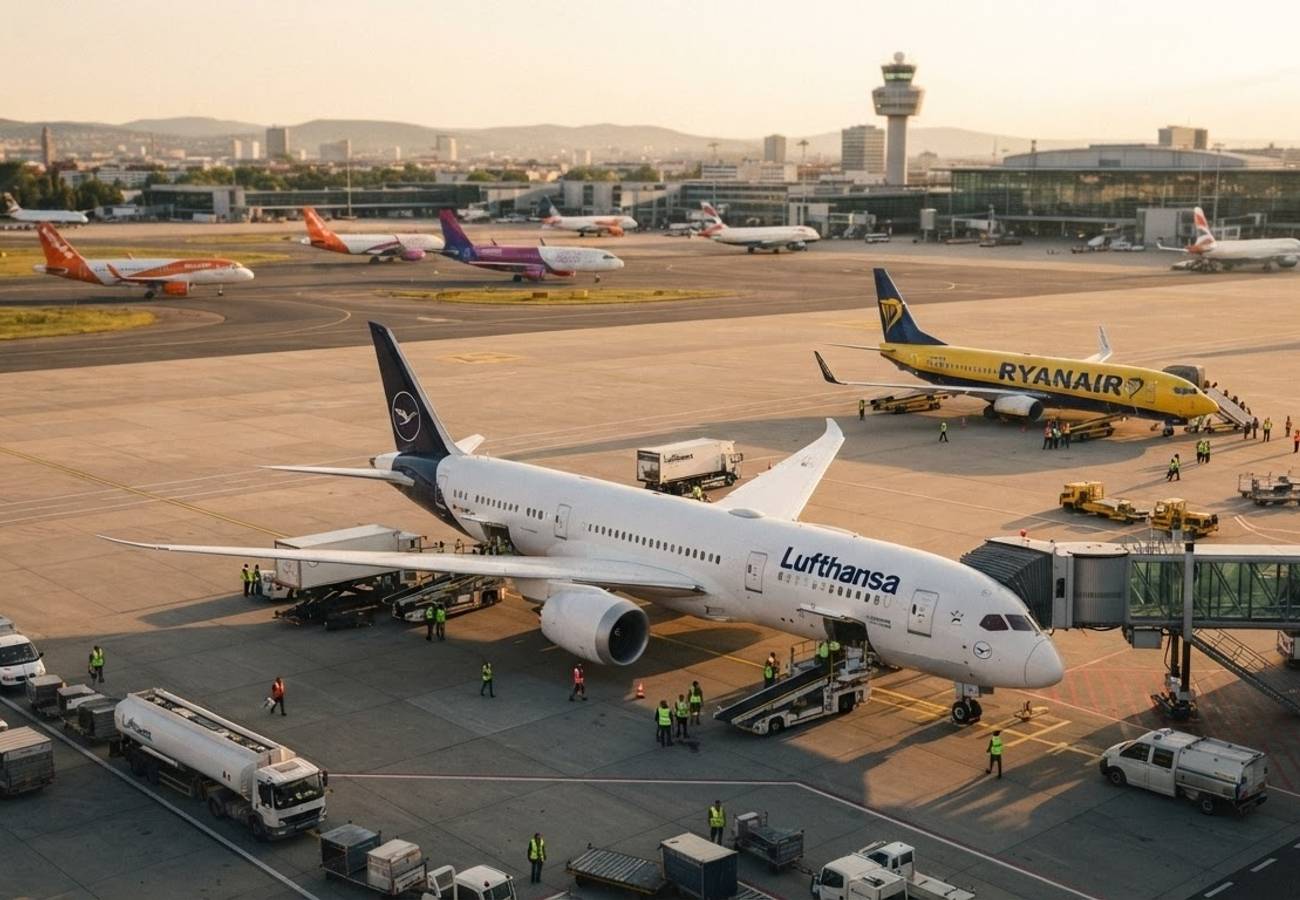
Image generated by AI
New analysis of Revenue per Available Seat Kilometre (RASK) confirms a stark divide in European airfare structures for 2026. Legacy carriers continue to command premium pricing through hub dominance, while ultra-low-cost carriers (ULCCs) aggressively undercut the market.
The Mechanics of Airline Pricing Analysis
Current industry rankings for 2025 and 2026 utilize Revenue per Available Seat Kilometre (RASK) to determine the actual cost of flying across Europe. Unlike promotional "lead-in" fares, RASK aggregates vast volumes of booking data to identify the average revenue a carrier extracts per seat for every kilometre flown.
Our analysis indicates that this metric highlights the structural difference between business models. Full-service carriers with premium cabins and long-haul networks naturally produce higher RASK figures. Conversely, budget operators utilizing high-density seating and secondary airports maintain lower average revenues per kilometre.
Industry data from IATA confirms that while European air traffic has recovered strongly post-pandemic, capacity constraints on specific routes have allowed legacy carriers to maintain higher yields despite inflationary pressures on fuel and airport charges.
High-Cost Carriers: The Premium Tier
For 2026, traditional network airlines dominate the most expensive bracket. These carriers leverage slot-constrained hubs and a heavy reliance on corporate travel to sustain higher pricing.
- Lufthansa: Consistently ranks at the top of the most expensive lists. Analysis suggests this is due to tight capacity control in core markets and a strategy prioritizing yield over volume.
- Swiss & British Airways: Both carriers maintain high average costs per seat kilometre, driven by their operations at primary hubs (Zurich and London Heathrow) and extensive long-haul schedules.
- SAS & Iberia: These mid-sized brands have climbed into the upper pricing tier, supported by strong demand on Nordic and transatlantic routes (SAS) and Latin American connections (Iberia).
Notably, a gap has emerged between legacy brands and their own budget subsidiaries. Data shows that carriers like Eurowings and Transavia often sit in the middle or upper half of the price spectrum, sometimes exceeding the costs of independent low-cost rivals.
Budget Leaders: The Ultra-Low-Cost Sector
At the opposite end of the spectrum, the ULCC model continues to provide the lowest average fares per kilometre, though the leadership position has shifted.
- Wizz Air: Recent datasets for 2024 and 2025 indicate Wizz Air has overtaken Ryanair as the lowest-cost major European airline based on average revenue per passenger kilometre.
- Ryanair: While still a dominant budget force, fare growth and network adjustments have slightly narrowed its previous price advantage over Wizz Air.
- easyJet: Remains consistently among the lowest average fare providers across the continent.
The ULCC model relies on "unbundling," where the base fare is kept artificially low while revenue is recovered through ancillary charges for baggage, seat selection, and airport check-ins.
Strategic Drivers of Fare Variance
The divergence in pricing is not accidental but a result of specific operational strategies:
- Operational Infrastructure: Full-service airlines invest in lounges, premium cabins, and complex hub-and-spoke systems. Budget carriers utilize point-to-point routes and single-type fleets (e.g., Airbus A320 or Boeing 737) to minimize maintenance and training costs.
- Airport Selection: ULCCs frequently operate out of secondary airports with lower landing fees, whereas legacy carriers pay premiums for access to major city-center hubs.
- Geographic Costs: Carriers based in Northern and Western Europe face higher labor and infrastructure expenses compared to those headquartered in Central or Eastern Europe.
Passenger Rights & Advisory
For the affected passenger, choosing between a legacy carrier and a ULCC involves more than just the ticket price. Our analysis of current aviation policies suggests the following considerations:
1. The "All-In" Cost Calculation When booking with Wizz Air or Ryanair, passengers must calculate the total cost including mandatory add-ons. On some routes, a sale fare from a full-service carrier (which may include a carry-on or better airport location) can be more economical than a ULCC fare once bags are added.
2. Compensation Rights (EU261/2004) Regardless of whether you fly a budget airline or a premium carrier, passengers on flights departing from an EU airport or arriving in the EU on an EU-based carrier are protected under Regulation (EC) No 261/2004.
- Cancellations/Long Delays: If a flight is cancelled or delayed by more than 3 hours for reasons within the airline's control, passengers may be entitled to compensation ranging from €250 to €600.
- Right to Care: Budget airlines are equally obligated to provide food, refreshments, and hotel accommodation during significant disruptions.
3. Rebooking Flexibility Our analysis indicates that legacy carriers (Lufthansa, British Airways) generally offer more robust rebooking options during disruptions due to their larger networks. ULCC passengers often face longer delays in re-accommodation due to the point-to-point nature of their schedules.
The gap between luxury and budget aviation in Europe has never been wider, leaving the burden of cost-benefit analysis entirely on the traveler.
Related Travel Guides
Disclaimer
This article is for informational and educational purposes only. It does not constitute legal, financial, or professional advice. While we strive to provide accurate and up-to-date information, travel policies, regulations, and conditions change rapidly. Always verify information with official sources before making travel decisions. Nomad Lawyer makes no representations about the accuracy, reliability, completeness, or suitability of the information provided. Readers should consult qualified professionals for advice specific to their circumstances. The views expressed in this article are those of the author and do not necessarily reflect the views of Nomad Lawyer.
Preeti Gunjan
Contributor & Community Manager
A passionate traveller and community builder. Preeti helps grow the Nomad Lawyer community, fostering engagement and bringing the reader experience to life.
Learn more about our team →