
Queen Beatrix International Airport Transport Guide: Why Uber and Lyft Are Unavailable in Aruba 2026
Navigating Queen Beatrix International Airport requires a shift in mindset for rideshare users. Discover the regulated taxi system, fixed zone pricing, and pre-booked transfer alternatives for Aruba arrivals in 2026.
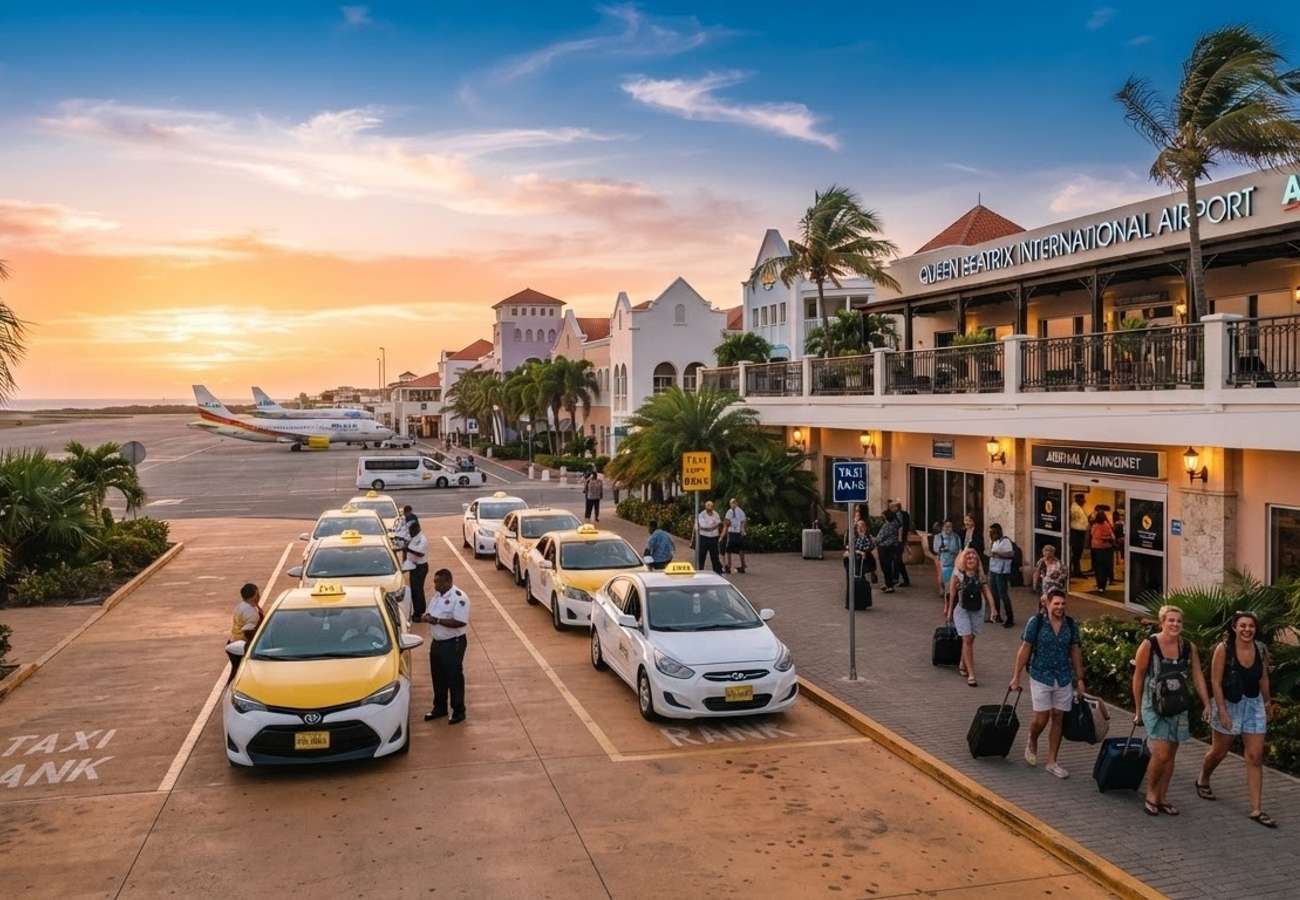
Image generated by AI
Arrivals at Queen Beatrix International Airport (AUA) in 2026 require a departure from modern rideshare habits. Major apps like Uber and Lyft do not operate on the island, meaning travelers must rely on a strictly regulated system of licensed taxis, pre-booked shuttles, and rental vehicles.
The Rideshare Gap: No Uber or Lyft in Aruba
As of mid-2026, major rideshare platforms including Uber and Lyft have no operational presence in Aruba. This extends to Queen Beatrix International Airport in Oranjestad. Travelers attempting to summon a vehicle via app upon landing will find no designated pick-up zones, no official signage, and no licensed rideshare drivers.
Aruba’s transport infrastructure is governed by the national government, which prioritizes licensed taxis and approved private transfer services. While informal drivers may advertise via social media or messaging platforms, these are not endorsed by airport authorities. For security and reliability, passengers are directed to the official taxi queue immediately outside the arrivals terminal.
Regulated Taxi System and Fixed Zone Pricing
Unlike the dynamic, surge-based pricing found in North American cities, Aruba utilizes a fixed, government-regulated fare system based on destination zones. Taxis queue at the official stand, where dispatchers assign vehicles based on the passenger's destination.
Standard one-way fares from the airport to central Oranjestad or the cruise port typically range between 25 and 33 US dollars. Trips to the high-density resort areas of Eagle Beach and Palm Beach are slightly higher but remain tied to the official government fare table.
Travelers should account for specific surcharges that can increase the final cost:
- Luggage Fees: Additional charges per piece of luggage.
- Temporal Surcharges: Supplements for late-night arrivals or public holidays.
- Passenger Volume: Extra fees for vehicles exceeding a set passenger limit.
In practical terms, a base fare of 30 US dollars may increase to 35 or 40 US dollars once luggage and timing factors are applied. Payments are accepted in US dollars and Aruban florins, with many drivers now accepting credit cards, though cash remains the most efficient method.
Comparison of Airport Transit Options
The following table outlines the primary transport methods available at Queen Beatrix International Airport for 2026.
| Transport Method | Estimated Cost (One Way) | Best For | Key Feature |
|---|---|---|---|
| Official Taxi | $25 – $40 | Small groups / Quick transit | Fixed zone pricing; no app needed |
| Shared Shuttle | ~$9 per person | Solo travelers / Budget couples | Cost-effective; multiple stops |
| Private Minivan | ~$80 (1-6 passengers) | Families / Large groups | Pre-booked; guaranteed space |
| Private Minibus | ~$118 (1-8 passengers) | Group tours / Corporate | High capacity; name-sign greeting |
| Rental Car | ~$40 per day | Explorers / Long stays | Maximum flexibility; unlimited mileage |
Private Transfers and Pre-Booking Logistics
For those seeking to avoid the taxi queue, pre-booked transfers provide a seamless transition from the terminal to the hotel. Local operators, such as Aruba Taxi Company and Kini Kini Transfers & Tours, offer tiered services from shared shuttles to luxury private vans.
From a ground-level perspective, the best way to navigate this is to pre-pay online or coordinate via messaging apps 24 hours before arrival. This is especially beneficial for families who require child seats or those traveling with excessive luggage, as it eliminates the need to coordinate multiple taxis upon landing.
Car Rental Strategy for Island Exploration
Given Aruba's compact geography—centered around one main ring road—rental cars are a highly viable alternative. Rental counters are located directly opposite the arrivals hall.
With weekly rates starting around 40 US dollars per day, rental cars become the most economical choice for travelers planning to visit distant sites such as Baby Beach in the southeast or the California Lighthouse in the northwest. While a couple staying exclusively at Palm Beach might save money using a few taxis, those visiting Arikok National Park or San Nicolas will find the flexibility of a rental car far superior to the cost of repeated taxi fares.
Pro Tip: During peak seasons (Christmas, New Year, and school holidays), the island's fleet sells out rapidly. Book vehicles several weeks in advance to secure competitive rates.
Infrastructure Impact and Regional Connectivity
The reliance on a regulated taxi and rental system rather than rideshare apps maintains a controlled flow of traffic around the airport and the Oranjestad hub. This prevents the congestion often seen at major international hubs where hundreds of rideshare drivers congregate. For the tourism sector, this ensures a standardized price point for visitors, removing the volatility of surge pricing during peak flight arrival windows.
Navigate your next arrival with precision and local insight.
Related Travel Guides
Disclaimer
This article is for informational and educational purposes only. It does not constitute legal, financial, or professional advice. While we strive to provide accurate and up-to-date information, travel policies, regulations, and conditions change rapidly. Always verify information with official sources before making travel decisions. Nomad Lawyer makes no representations about the accuracy, reliability, completeness, or suitability of the information provided. Readers should consult qualified professionals for advice specific to their circumstances. The views expressed in this article are those of the author and do not necessarily reflect the views of Nomad Lawyer.