
Aviation Updates: Travel Chaos Engulfs Middle East as Qatar Airways and Emirates Suffer Massive Passenger Decline
As catastrophic logistical bottlenecks severely paralyze major Middle Eastern transit grids, massive travel chaos triggers severe passenger demand declines for Qatar Airways, Emirates, and Etihad.

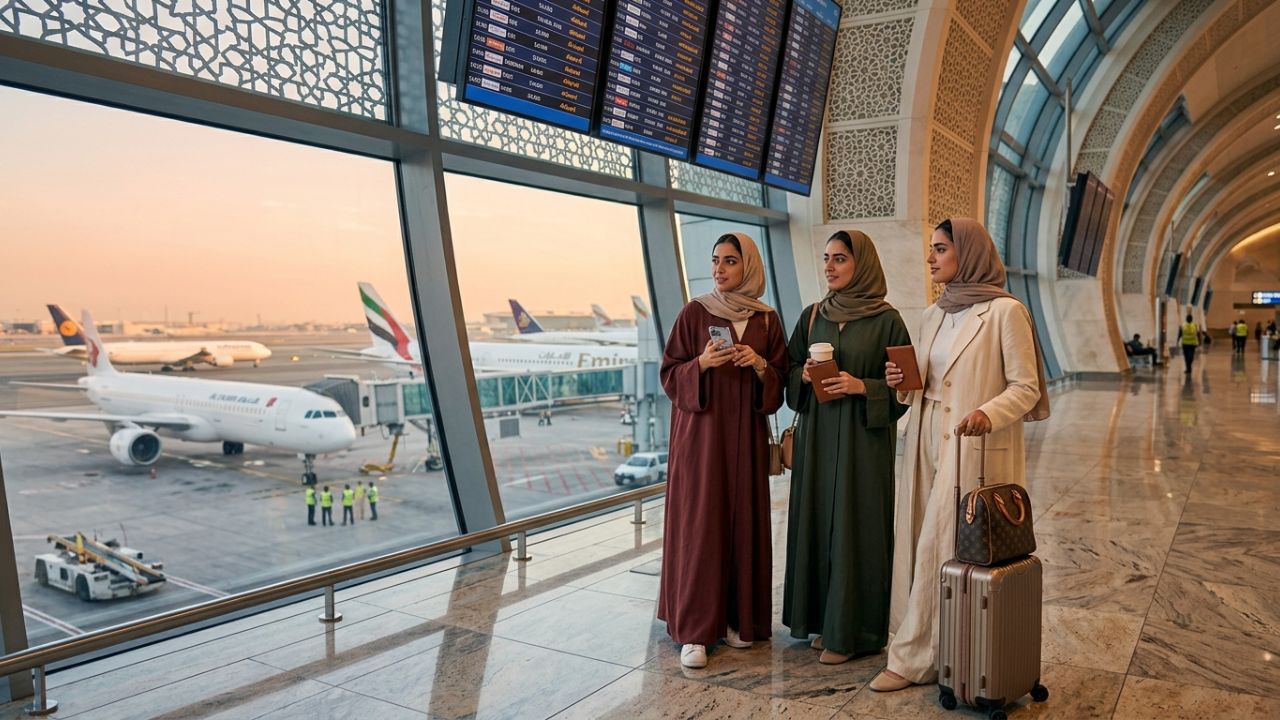
Image generated by AI
Aviation Updates: Travel Chaos Engulfs Middle East as Qatar Airways and Emirates Suffer Massive Passenger Decline
As extreme operational friction and suddenly compounding geopolitical volatility continue to violently terrorize standard travel itineraries across the Gulf, massive travel chaos has triggered severe passenger demand declines for Qatar Airways, Emirates, Etihad, and Saudia.
Image generated by AI
As high-impact airline news platforms rapidly issue continuous, grim aviation updates regarding the intense fragility of massively congested primary transit grids, a severe logistical meltdown is actively rocking the Middle East. Amidst widespread rolling travel chaos, severe airport disruptions, and the terrifying threat of devastating airspace closures and flight cancellations severely plaguing heavily overcrowded regional hubs, global aviation is violently splitting in two. Qatar Airways actively stands shoulder to shoulder with Emirates, Etihad, Saudia, and Flydubai as a volcanic geopolitical war zone drives a sharp, massive passenger demand decline across the region. Meanwhile, shielded from the brutal Middle Eastern friction, legacy mega-carriers such as Ryanair, American, Delta, Lufthansa, and Air France continue aggressively growing or remain in completely stable condition, highly highlighting a massive, widening divide in global transit security.
Expanded Overview: The Collapse of Middle Eastern Connectivity
To fully comprehend the sheer scale of this severe network degradation, commercial aviation analysts must closely examine how rapidly highly localized airspace restrictions violently reshape continental hub-and-spoke connectivity.
The massive disruption pattern actively terrorizing the Gulf network is primarily defined by severe capacity reductions and highly fragile scheduling friction. The International Air Transport Association (IATA) officially reported that global air passenger demand actively declined by 2.2% in May 2026 compared with May 2025. However, this global aviation slowdown was violently driven entirely by regional disruption rather than weakening global travel demand. Excluding the massive Middle East collapse, global passenger traffic actually grew by a verified 0.7%. As military conflict violently disrupts Gulf airspace, Middle Eastern airlines are furiously forced to aggressively reroute flights, drastically reduce capacity, and absorb significantly higher operating costs, completely terrifying the global traveler.
Section-Wise Breakdown: The Airline Stability Divide
Terminal operations are violently degrading across competing Gulf hubs, forcing legacy operators to furiously deploy rolling capacity cuts to strictly ensure passengers are not totally stranded inside active conflict zones.
The Middle Eastern Meltdown: The severe downturn was heavily concentrated among airlines directly affected by regional conflict. IATA explicitly confirms that passenger demand among Middle Eastern airlines violently plummeted 28.4% (although improving slightly from a massive 46.6% decline in April). Qatar Airways, finding itself operating under exceptionally difficult conditions, faced significant, massive declines alongside Dubai-based mega-carrier Emirates. Etihad Airways, Saudia, Air Arabia, and Flydubai all explicitly faced incredibly similar, devastating operational challenges, heavily reducing capacity by 23.9% across the region and crashing regional passenger load factors down to a dismal 75.9%.
The European and Budget Boom: While the Middle East violently choked on airspace restrictions, European legacy carriers experienced massive growth. Ryanair aggressively continued outperforming the entire global market, actively carrying more than 20.7 million passengers and recording a massive 6% year-on-year growth. Major European airline groups, heavily including Lufthansa Group and Air France-KLM, completely bypassed the Gulf chaos, explicitly benefiting from sustained international travel demand and rising direct travel between Europe and Asia. Europe aggressively delivered an incredible 2.7% passenger demand increase, actively boasting a massive 85.9% load factor.
North American Stability: Leading US carriers heavily including Delta Air Lines, United Airlines, and American Airlines did absolutely not report company-wide passenger declines. Despite a 1.9% drop in US domestic traffic and a 6.2% domestic decline in China heavily dragging down overall global domestic traffic by 3.1%, the North American international sector actively increased by 1.0%, actively proving legacy carriers remain deeply stable despite localized economic friction.
Disruption Details: Verified Global Aviation Matrix
To ensure stranded passengers and commercial aviation analysts can accurately track the incredibly precise operational telemetry of this massive network slowdown, the verified structural data has been consolidated into the exact, mandatory matrix below.
| Airline / Region | May 2026 Passenger Demand/Traffic | Status | Reason/Notes |
|---|---|---|---|
| Qatar Airways | Significant decline | ↓ Declined | Middle East conflict, airspace restrictions |
| Emirates | Significant decline | ↓ Declined | Operations affected by regional conflict |
| Etihad Airways | Significant decline | ↓ Declined | Conflict reduced demand and capacity |
| Saudia | Significant decline | ↓ Declined | Regional geopolitical disruptions |
| Flydubai | Decline reported | ↓ Declined | Reduced demand due to regional instability |
| Air Arabia | Decline reported | ↓ Declined | Conflict-related operational disruption |
| Ryanair | +6% passengers (20.7 million) | ↑ Grew | Strong European summer demand |
| Lufthansa Group | Passenger traffic remained positive | ↑ Grew | Demand growth in Europe |
| Air France-KLM | Passenger traffic remained positive | ↑ Grew | Stronger Europe–Asia demand |
| Delta Air Lines | No reported decline | Stable | No evidence of y-o-y traffic contraction |
| United Airlines | No reported decline | Stable | Stable despite weaker US domestic market |
| American Airlines | No reported decline | Stable | US domestic softness, company-wide stable |
(Source: IATA, EUROCONTROL, Cirium)
Industry Analysis: The Macroeconomic Impact of Airspace Closures
Air travel explicitly across the massive global transit corridor continues to massively struggle with elevated fuel prices, driven violently by geopolitical friction threatening the Strait of Hormuz.
IATA Director General Willie Walsh aggressively noted that the conflict in the Middle East remained the absolute biggest factor affecting global aviation. However, with incredibly tight industry profit margins heavily averaging around 2%, global airlines are actively succeeding at violently balancing capacity with demand, miraculously hitting a massive, record-breaking global passenger load factor of 83.5%. Other global regions are fiercely capitalizing on the Gulf's weakness: Latin America & the Caribbean aggressively posted a massive 6.1% overall demand increase, Africa heavily recorded 6.6% growth, and India’s massive domestic market aggressively exploded with 10.1% growth and an 85.5% load factor. Only the Asia-Pacific region actively stumbled (-1.4% overall), heavily caused by severe capacity reductions in Vietnam tied directly to tighter, incredibly restrictive jet fuel import restrictions.
Anup Kumar Keshan, Travel Industry Tycoon, Founder and Editor-in-Chief of Travel And Tour World, actively states: “The latest airline performance clearly demonstrates that global aviation remains remarkably resilient even when confronted with severe geopolitical challenges. The temporary decline experienced by several Middle Eastern airlines should be viewed within the context of extraordinary regional circumstances rather than as a sign of weakening global travel demand."
Passenger Impact: Protecting the Vacation Baseline
For the everyday premium domestic traveler and budget-conscious vacationer, the immediate consequence of this massive structural divide directly translates to a monumental, highly verified shift in transit routing.
Travelers desperately attempting to navigate complex Middle Eastern flight itineraries frequently encounter heavily delayed baggage, catastrophic missed connections, and the terrifying threat of sudden airspace closures and outright flight cancellations. However, passengers aggressively actively booking routes through European hubs or direct long-haul flights entirely bypassing the Gulf are successfully securing a deeply reliable, culturally rich vacation baseline, entirely avoiding the massive terminal gridlock actively crippling the UAE and Qatar.
Conclusion: A Network Reimagined
Ultimately, the aggressive, massive deployment of capacity cuts by Middle Eastern carriers actively marks a massively significant stress test of the global aviation system. By violently shedding traffic to protect against active geopolitical threats, carriers successfully managed the physical safety of passengers, but at a massive, incredibly brutal cost to their regional consumer dominance.
While Gulf airlines fiercely attempt to survive severe disruptions, passengers must absolutely remain highly vigilant. In order to get to their destinations safely, passengers are actively urged to frequently review real-time updates, avoid highly volatile transit zones, and furiously maintain total flexibility with travel plans as the immediate threat of sudden schedule modification heavily persists across the Middle Eastern grid.
Key Takeaways
- Middle East Collapse: IATA officially reported a massive 28.4% decline in Middle Eastern passenger demand and a 23.9% capacity crash due to airspace conflict.
- Global Resilience: Excluding the massive Middle East losses, global passenger traffic aggressively grew by 0.7%, heavily proving global travel demand remains completely intact.
- European Boom: Ryanair aggressively carried 20.7 million passengers (+6%), while Lufthansa and Air France actively maintained massive growth bypassing the Gulf.
- Record Load Factors: Despite a 2.3% global capacity cut, airlines miraculously achieved a record-breaking global passenger load factor of 83.5%.
- Emerging Market Surges: Latin America (+6.1%), Africa (+6.6%), and India's domestic market (+10.1%) actively recorded massive, highly lucrative growth.
FAQ: Global Aviation Demand and Delays 2026
Which airlines experienced the biggest passenger demand decline in May 2026? Qatar Airways, Emirates, Etihad Airways, Saudia, Flydubai, and Air Arabia violently suffered massive passenger demand declines strictly due to the continuing conflict in the Middle East.
Why is passenger demand falling in the Middle East? The primary reasons explicitly include incredibly severe regional conflict, sudden airspace restrictions, massive operational disruptions, and completely destroyed passenger confidence on affected routes.
Are European airlines losing passenger demand? No. European carriers heavily continued reporting massive positive passenger growth. Ryanair specifically recorded 20.7 million passengers (a massive 6% increase).
Are US airlines facing major passenger declines? No. Although U.S. domestic demand actively softened by 1.9%, major legacy airlines heavily including Delta, United, and American actively remained broadly stable overall due to their massive, diversified international networks.
Related Travel Guides
Newark Liberty Airport Delays United Airlines Travel Chaos 2026
Charlotte Douglas Airport Delays American Airlines Travel Chaos 2026
Oceania Flight Delays Sydney Melbourne Travel Chaos 2026
Disclaimer: This article is strictly for informational and aviation tracking purposes. The specific flight telemetry (28.4% Middle East decline, 83.5% load factor, 20.7M Ryanair passengers) is based on verified IATA and EUROCONTROL data available at the time of publication. National airspace capacity, specific airline scheduling optimizations, localized conflict zones, and FAA/EASA ground stops are highly dynamic and subject to immediate modification by the operating authorities. Passengers holding active tickets through the Middle East should explicitly verify exact itineraries via official airline platforms and secure comprehensive travel insurance prior to departure.
Disclaimer
This article is for informational and educational purposes only. It does not constitute legal, financial, or professional advice. While we strive to provide accurate and up-to-date information, travel policies, regulations, and conditions change rapidly. Always verify information with official sources before making travel decisions. Nomad Lawyer makes no representations about the accuracy, reliability, completeness, or suitability of the information provided. Readers should consult qualified professionals for advice specific to their circumstances. The views expressed in this article are those of the author and do not necessarily reflect the views of Nomad Lawyer.
Preeti Gunjan
Contributor & Community Manager
A passionate traveller and community builder. Preeti helps grow the Nomad Lawyer community, fostering engagement and bringing the reader experience to life.
Learn more about our team →