
Qantas Expands With Boeing 787-10 Dreamliners: Insider Guide to Australia's Next-Gen Asian Routes
Qantas orders eight Boeing 787-10 Dreamliners to replace aging A330s on Asian routes from FY31, adding 250+ seats, sliding-door Business suites, and Premium Economy.

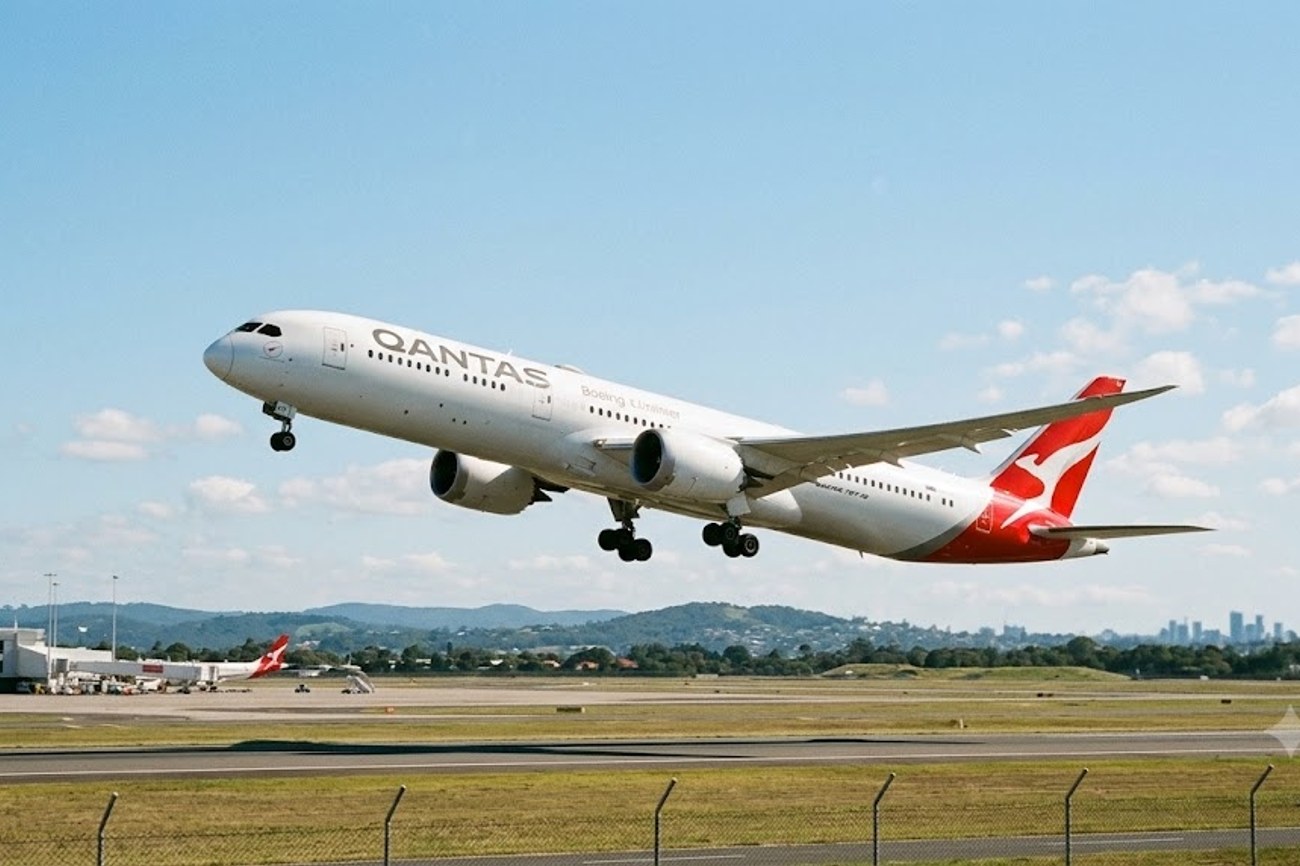
Image generated by AI
Measuring almost six meters longer than the long-range 787-9 aircraft that pioneered nonstop flights from Perth to London, Qantas’ incoming Boeing 787-10 Dreamliners make a deliberate trade-off: sacrificing ultra-long-range endurance to unlock massive passenger capacity on dense Asian routes. As part of a major international fleet renewal program, the Australian flag carrier has ordered eight Boeing 787-10 Dreamliners alongside four additional 787-9 airframes. Designed to carry more than 250 passengers in a three-class configuration, these stretched composite twin-jets will progressively replace aging Airbus A330s starting from Fiscal Year 2031 (FY31), introducing sliding-door Business Class suites and dedicated Premium Economy cabins across high-demand corridors linking Australia with regional Asia.
The Asia Corridor Evolution: Stretched Dreamliners and Qantas Fleet Renewal
The addition of the Boeing 787-10 marks an important evolution in Qantas' international network architecture. For years, the airline has relied on the 787-9 variant to pioneer ultra-long-haul point-to-point flights connecting Australia directly with Europe, North America, and South America. However, medium-range routes into Asian business and leisure capitals do not require the massive fuel tanks needed for seventeen-hour nonstops; they require high passenger capacity and freight volume.
To execute this transition, Qantas confirmed a two-phase Dreamliner acquisition timeline. Between mid-2027 and mid-2028, four additional Boeing 787-9 aircraft will join the fleet to bolster long-haul flexibility. Beginning in FY31, the first of eight Boeing 787-10 aircraft will enter commercial service, with the remaining airframes arriving in subsequent years.
The physical dimensions of the two variants illustrate their different roles. Measuring roughly 68.3 meters in length, the 787-10 provides a noticeably longer passenger fuselage compared to the 62.8-meter 787-9. While the existing 787-9 is configured with 236 seats, the 787-10 is expected to seat more than 250 travelers. This additional space allows Qantas to meet surging demand across commercial, educational, and family travel markets without adding congested takeoff and landing slots at crowded airports. Detailed insights into Australian international aviation regulation are maintained by the Civil Aviation Safety Authority.
The primary operational mission of the 787-10 is to replace the workhorse Airbus A330 fleet on trunk routes into East and Southeast Asia. Currently, many Qantas A330 services operate with two cabin classes, offering only Business and Economy. The introduction of the 787-10 permanently brings Premium Economy to these routes, giving business and leisure travelers an intermediate choice between standard economy and premium lie-flat seating. Travelers coordinating itineraries across Australian hubs can review official destination resources via Tourism Australia.
What Makes the Boeing 787-10 and Qantas Cabins Different
Stepping into a next-generation Dreamliner represents an immediate upgrade in physical passenger comfort over legacy wide-body airliners. The carbon-composite fuselage allows cabin pressurization at a simulated altitude of 6,000 feet—significantly lower than the 8,000-foot environment found inside conventional aluminum aircraft—which reduces headaches, dry eyes, and jet lag on long overnight sectors.
For the incoming 787-10 deliveries, Qantas announced an evolution of its acclaimed Business Class product. Future cabins will introduce personal sliding privacy doors, expanded work surfaces, oversized high-definition entertainment screens, and integrated wireless device charging. Each suite provides direct aisle access in a 1-2-1 layout, allowing travelers to sleep completely flat on overnight flights from Tokyo, Singapore, or Hong Kong back to Sydney, Melbourne, or Brisbane.
In Premium Economy, the dedicated cabin bridges the comfort gap with wider seats, greater pitch, leg rests, and chef-curated dining. Even in Economy Class, the extra fuselage width of the 787-10 allows for redesigned ergonomic seating, adjustable headrests, and personal entertainment monitors. Large dimmable electrochromic windows allow passengers to adjust ambient light levels at the touch of a button, avoiding harsh cabin glare across daytime flights. Travelers exploring onward Japanese routes can consult the Japan National Tourism Organization.
Visitor Insider Tips
Planning long-haul flights across the Asia-Pacific network requires understanding fleet deployments, seat configurations, and booking windows. Having logged thousands of flight hours on transpacific and Asian sectors, I recommend using these practical strategies:
- Verifying Your Aircraft Type at Booking: When reserving flights between Australia and Asian destinations like Singapore, Tokyo, or Bangkok, always check the designated aircraft code. Booking a Dreamliner service (787-9 today or 787-10 in the future) ensures access to modern cabin pressurization and dedicated Premium Economy seating that legacy A330s cannot provide.
- The Premium Economy Daylight Strategy: On daytime flights from Australia to Asia (such as morning departures from Sydney to Haneda or Melbourne to Changi), Premium Economy offers the ideal balance of productivity and comfort. You receive dedicated dining and extra workspace without spending the premium required for an overnight lie-flat bed.
- Maximizing Transit Lounges in Asian Hubs: If you connect through major Asian gateways, schedule layovers that permit time in Qantas International Lounges. The Singapore Changi lounge in Terminal 1 features a signature cocktail bar and freshly prepared hawker noodle dishes, while the Hong Kong lounge offers scenic runway views and authentic Cantonese roasted meats.
- Booking Award Seats Early: Qantas releases Classic Flight Reward seats up to 353 days in advance. If you plan to use frequent flyer points to experience Business Class or Premium Economy on high-demand Asian routes, set calendar reminders to search for availability the moment booking windows open.
Cultural and Environmental Context
The expanding aviation bridge between Australia and Asia reflects profound cultural, social, and demographic ties. More than one in three Australian residents was born overseas, with Asian diaspora communities representing a vital part of modern Australian society. Expanding seat capacity on routes to Tokyo, Singapore, Manila, and other regional capitals ensures accessible travel options for families, international university students, and independent cultural travelers.
Environmental responsibility is central to this fleet transition. Replacing older twin-engine aircraft with the composite Boeing 787-10 delivers up to a 25% reduction in fuel consumption and carbon emissions per seat. Advanced General Electric GEnx engines feature noise-reducing serrated nacelles that reduce the acoustic footprint over communities surrounding urban airports.
By deploying high-efficiency 787-10s on medium-range international routes, Qantas optimizes aircraft range and fuel weight, preventing the unnecessary carbon expenditure of flying ultra-long-haul planes on short sectors. This disciplined fleet strategy supports the airline’s broader roadmap toward achieving net-zero carbon emissions by 2050 while preserving vital connectivity across the southern hemisphere.
FAQ: Flying Qantas Boeing 787-10 Dreamliners 2026
When will Qantas receive its first Boeing 787-10? The first Boeing 787-10 Dreamliner is scheduled to enter commercial service during Fiscal Year 2031 (FY31), joining eight total ordered aircraft.
How many seats will the Qantas Boeing 787-10 feature? The aircraft will seat more than 250 passengers across Business Class, Premium Economy, and Economy, compared to 236 seats on the 787-9.
Which routes will the new 787-10 operate? The 787-10 will primarily serve medium-haul international routes between Australia and major hubs across Asia, replacing current Airbus A330 services.
Will Business Class have sliding doors? Yes. Qantas confirmed that future Boeing 787 deliveries will feature an updated Business Class suite incorporating sliding privacy doors.
As dawn breaks over the Pacific and the next generation of Dreamliners takes flight, Australia and Asia are drawn closer together through quieter skies and elevated comfort.
Related Travel Guides
Disclaimer
This article is for informational and educational purposes only. It does not constitute legal, financial, or professional advice. While we strive to provide accurate and up-to-date information, travel policies, regulations, and conditions change rapidly. Always verify information with official sources before making travel decisions. Nomad Lawyer makes no representations about the accuracy, reliability, completeness, or suitability of the information provided. Readers should consult qualified professionals for advice specific to their circumstances. The views expressed in this article are those of the author and do not necessarily reflect the views of Nomad Lawyer.
Preeti Gunjan
Contributor & Community Manager
A passionate traveller and community builder. Preeti helps grow the Nomad Lawyer community, fostering engagement and bringing the reader experience to life.
Learn more about our team →