
Portugal Travel Destination Revolution Grows as Ponta Delgada and Horta Drive Azores Sustainable Tourism Shift
Portugal Travel Destination Revolution Grows as Ponta Delgada and Horta Drive Azores Sustainable Tourism Shift

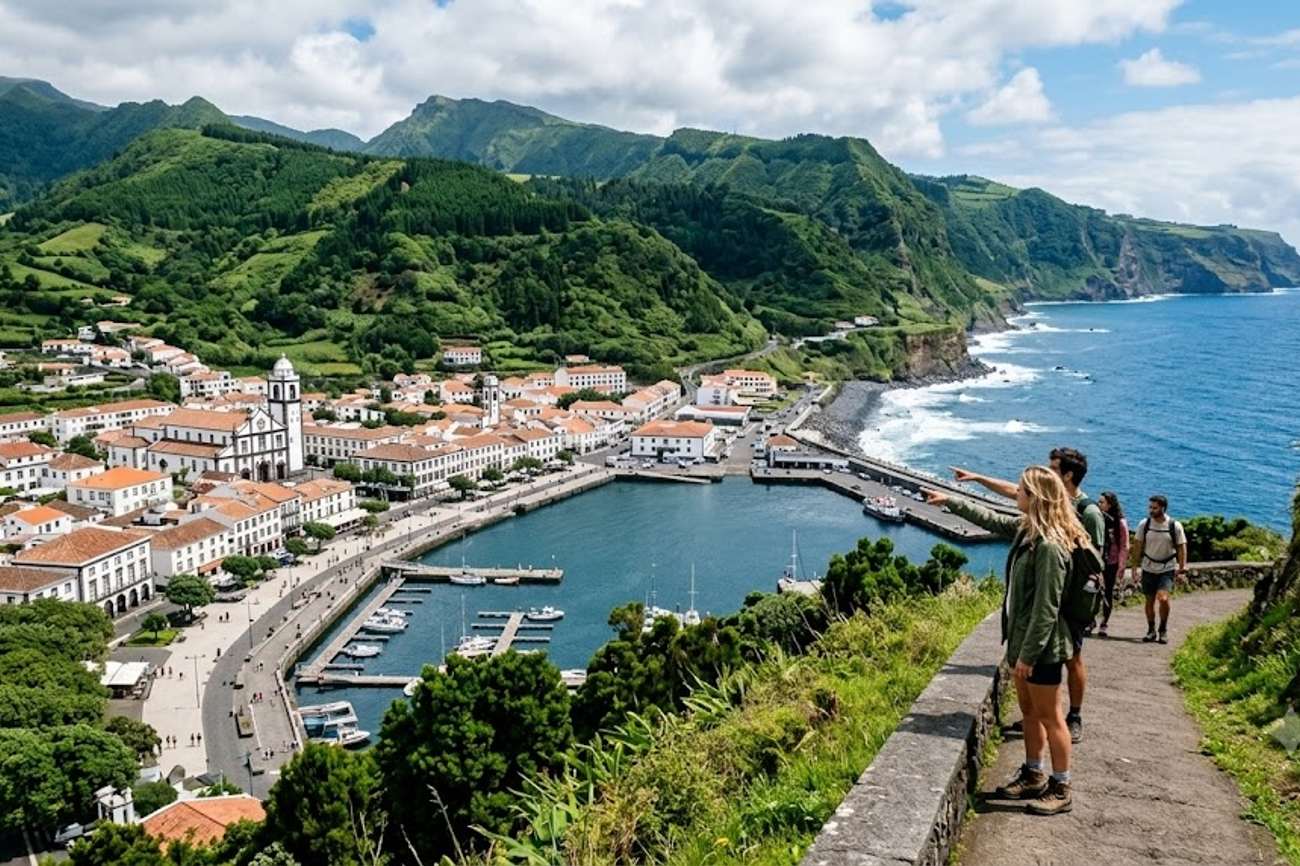
Image generated by AI
The Azores became the first archipelago globally to receive official certification as a sustainable tourism destination via the EarthCheck programme, a designation that signals a fundamental pivot from the mass-market beach tourism that defines much of the Mediterranean. This is not a mere branding exercise; it is a systemic restructuring of how a remote volcanic territory manages the tension between economic growth and ecological fragility. By centering its operational framework on the Regional Government of the Azores, the archipelago is attempting to decouple tourism revenue from environmental degradation.
The Strategic Bifurcation of Atlantic Tourism
The Azores has avoided the "overtourism" traps seen in other Portuguese hubs by implementing a dual-hub strategy that separates the logistical needs of international arrivals from the specialized needs of conservation-based travel. This geographic distribution prevents the concentration of foot traffic that typically leads to the degradation of volcanic soil and the displacement of local populations.
Ponta Delgada, situated on São Miguel Island, serves as the primary logistical engine. It is the critical arrival point that provides the necessary infrastructure—hotels, transport links, and service hubs—to support international visitors. However, its role is designed as a transition point. The objective is to move travelers quickly from the urban center into low-density natural environments, ensuring that the "gateway" does not become the destination itself.
Conversely, Horta on Faial Island has been positioned as the intellectual and experiential center for marine conservation. While Ponta Delgada manages the volume, Horta manages the value. By focusing on whale watching and scientific tourism, Faial attracts a higher-spending, lower-impact demographic. This creates a balanced ecosystem where the economic benefits of tourism are spread across the nine islands rather than being sequestered in a single urban center.
Operational Metrics of a Sustainable Model
The transition to a sustainable destination economy is tracked through a structured management system overseen by the Azores DMO. This framework moves beyond promotional rhetoric to implement measurable environmental monitoring.
| Destination Hub | Primary Tourism Identity | Core Traveler Interest |
|---|---|---|
| Ponta Delgada (São Miguel) | Primary Atlantic Gateway | Volcanic landscapes, hiking, urban infrastructure |
| Horta (Faial) | Marine Adventure Center | Whale watching, ocean conservation, sailing |
The sustainability framework is not a static set of rules but a dynamic assessment of several key pillars:
- Biodiversity Protection: Active safeguarding of unique volcanic flora and marine ecosystems.
- Energy and Waste Management: Implementing international criteria to reduce the carbon footprint of remote island logistics.
- Visitor Distribution: Using rural accommodation growth to pull tourists away from urban centers and into smaller community-led stays.
- Environmental Education: Integrating the visitor experience with the preservation of cultural and natural heritage.
Expert Analysis: The Economics of Controlled Growth
For the modern traveler and the travel professional, the Azores model represents a shift toward "regenerative travel"—a philosophy where the goal is not just to leave no trace, but to leave the destination better than it was found. The direct consequence of this approach is a deliberate ceiling on mass-market accessibility.
When a destination prioritizes EarthCheck certification over raw arrival numbers, the pricing pressure shifts. We are seeing a move away from budget-centric, high-volume packages toward premium, nature-focused itineraries. For the traveler booking these routes, this means higher entry costs but a significantly higher quality of experience, characterized by lower crowd density and more authentic interactions with the environment.
The Azores archipelago, comprising Ponta Delgada and Horta, is experiencing a surge in sustainable tourism, driven by the region's unique natural beauty and commitment to environmental preservation. For travelers planning to visit the Azores, it is essential to check the latest flight schedules and book in advance through the official TAP Air Portugal website to ensure a smooth journey. This will also provide an opportunity to explore the various travel options and packages offered by the airline.
From a business perspective, this creates a vacuum for specialized operators. The growth in rural tourism infrastructure reported by regional statistics indicates that the market is moving toward "slow travel." Companies that can bundle multi-island itineraries—combining the logistical ease of Ponta Delgada with the scientific depth of Horta—will capture the highest margins. The risk for the Azores is the potential for "green-washing" as demand grows, but by tying their competitive advantage to a third-party certification, they have created a regulatory moat that protects the brand from the volatility of mass tourism trends.
Key Takeaways
- Global First: The Azores is the first archipelago certified as a sustainable destination by the EarthCheck programme, moving beyond marketing to a measurable management system.
- Hub Specialization: Ponta Delgada (São Miguel) manages international logistics and urban infrastructure, while Horta (Faial) specializes in marine biodiversity and conservation.
- Diversified Lodging: A strategic shift toward rural accommodation is being used to distribute economic benefits to remote communities and prevent urban overcrowding.
- High-Value Targeting: The region is pivoting away from beach tourism in favor of high-value, low-impact activities such as whale watching, hiking, and scientific tourism.
- Regulatory Framework: Sustainability is integrated into the destination's competitive advantage through the International Air Transport Association (IATA) standards and regional government mobility authorities.
FAQ: Azores Sustainable Travel 2024
Is the Azores better for adventure or relaxation? The region is specifically designed for adventure and nature-based travel. While luxury rural stays offer relaxation, the core appeal lies in volcanic hiking, geothermal exploration, and marine wildlife experiences rather than traditional beach resorts.
Which island should I fly into first? São Miguel is the primary gateway. Flying into Ponta Delgada provides the easiest access to the archipelago's main infrastructure and serves as the most efficient starting point for multi-island journeys.
How does the Azores limit overtourism? The region uses a "controlled growth" model. By promoting rural stays over urban hotels and focusing on high-value nature experiences rather than mass-market packages, they manage visitor density across the nine islands.
What makes whale watching in Horta different? Horta focuses on biodiversity and conservation. The experience is built around responsible interaction with marine wildlife and scientific tourism, prioritizing the protection of the ecosystem over passenger volume.
The Azores is no longer just a destination; it is a blueprint for the survival of island tourism in an era of ecological collapse.
Tags: Azores 2024, Ponta Delgada, Horta Faial, EarthCheck Certification, Sustainable Tourism Portugal, Marine Conservation Tourism
Related Travel Guides
Disclaimer
This article is for informational and educational purposes only. It does not constitute legal, financial, or professional advice. While we strive to provide accurate and up-to-date information, travel policies, regulations, and conditions change rapidly. Always verify information with official sources before making travel decisions. Nomad Lawyer makes no representations about the accuracy, reliability, completeness, or suitability of the information provided. Readers should consult qualified professionals for advice specific to their circumstances. The views expressed in this article are those of the author and do not necessarily reflect the views of Nomad Lawyer.
Raushan Kumar
Founder & Lead Developer
Full-stack developer with 11+ years of experience and a passionate traveller. Raushan built Nomad Lawyer from the ground up with a vision to create the best travel and law experience on the web.
Learn more about our team →