
Poland Rail Revolution 2026: PKP Intercity Boosts Multi-City Travel with PLN 1 Billion Investment
Poland is transforming European regional travel in 2026, with PKP Intercity investing over PLN 1 billion to enable high-speed, multi-city itineraries across Warsaw, Kraków, and Gdańsk.

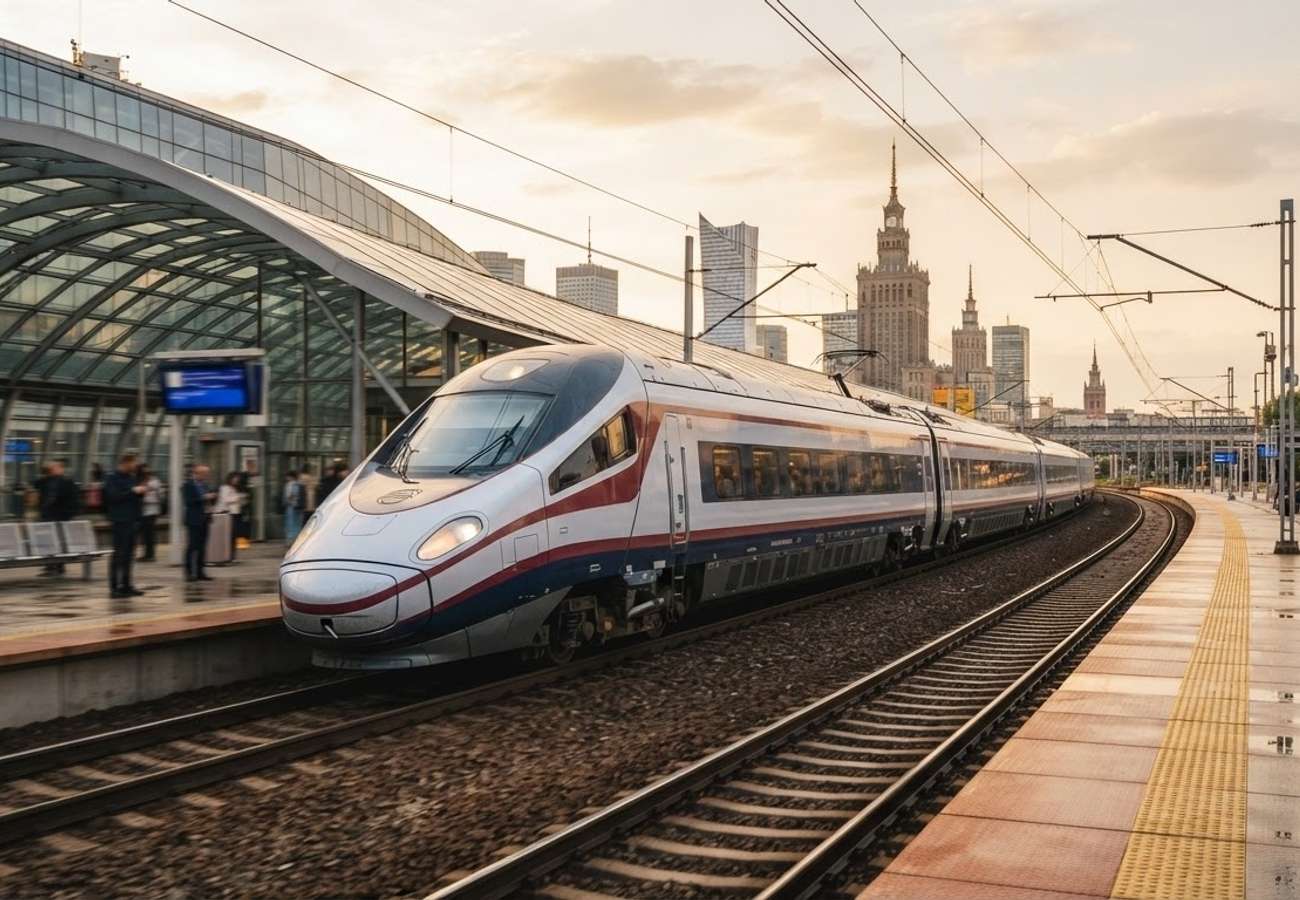
Image generated by AI
Poland is aggressively outpacing its European neighbors in rail modernization, turning the country into a seamless multi-city destination. With a massive PLN 1 billion investment in 2026, the rail network now allows travelers to bypass domestic flights entirely.
The shift toward high-speed rail is fundamentally changing how international visitors experience Poland. By leveraging the Express InterCity Premium (EIP) service, PKP Intercity has effectively collapsed the distance between the nation's primary cultural and political hubs.
Rather than treating Warsaw, Kraków, and Gdańsk as isolated destinations, the current infrastructure supports a fluid, single-itinerary approach. This removes the friction of airport transfers and long-distance road travel, making the "rail holiday" a viable alternative for the modern traveler.
High-Speed Corridors: Connecting the Capital to the Coast and Culture
The Warsaw–Kraków route stands as the gold standard for Polish rail efficiency. Utilizing EIP trains, the journey now takes approximately 2 hours 20 minutes. This allows visitors to bridge the gap between Warsaw’s contemporary architecture and museums and Kraków’s royal heritage, including Wawel Castle and the Main Market Square.
Parallel to this, the connection to the Baltic coast has seen similar optimization. The journey from Warsaw to Gdańsk now clocks in at approximately 2 hours 30 minutes. This route opens up the Tri-City area—comprising Gdańsk, Sopot, and Gdynia—offering a stark contrast of waterfront architecture and beaches to the urban density of the capital.
Infrastructure Growth and Passenger Surge
The demand for this modernized network is evident in the passenger data. PKP Intercity reported a significant uptick in usage, moving 88.1 million passengers in 2025, which represents a 9% increase over 2024 figures.
To sustain this growth, the 2026 investment plan exceeds PLN 1 billion. These funds are being directed toward:
- The procurement of new, modern rolling stock.
- Comprehensive refurbishment of existing trains.
- Upgrades to passenger stations and core track infrastructure.
- Enhanced maintenance facilities to ensure reliability.
Expanding Beyond the Primary Triangle
While the Warsaw-Kraków-Gdańsk circuit is the most popular, the rail revolution extends into the heart of the country. Wrocław and Poznań have become integral stops for those seeking a diverse itinerary.
Wrocław is noted for its riverside islands and market-square architecture, while Poznań is recognized for its culinary scene and historic Old Market Square. Because both are linked to Warsaw via long-distance services, travelers can now map out a geographically diverse loop—starting in Warsaw, moving through Poznań and Wrocław, and concluding in Kraków.
Further east, Lublin is emerging as a key cultural node. Its multicultural heritage and historic castle are now more accessible, allowing tourists to integrate eastern Poland into their travel plans without requiring separate, complex transport arrangements.
Sustainability and the Shift from Short-Haul Flights
The expansion of the PKP Intercity network is not merely about speed; it is a strategic move toward lower-carbon tourism. By providing a competitive alternative to short-haul domestic flights and long-haul car rentals, Poland is reducing the environmental footprint of its tourism sector.
The 2026 strategy emphasizes energy efficiency, with a specific focus on electric and hybrid traction projects. For the eco-conscious traveler, the railway now serves as the primary connective tissue for a sustainable national tour.
Essential Logistics for International Travelers
Navigating the Polish rail system requires a few key operational insights:
- Primary Hubs: In Warsaw, long-distance services primarily operate out of Warszawa Centralna and Warszawa Zachodnia. Other major terminals include Kraków Główny, Gdańsk Główny, Poznań Główny, Wrocław Główny, and Lublin.
- Currency: All transactions are conducted in Polish złoty (PLN).
- Booking Strategy: Due to high demand, premium EIP services should be booked in advance, especially during holiday periods and weekends.
Polish Rail Evolution: Key Data and Milestones
| Metric/Event | Detail |
|---|---|
| 2026 Investment Plan | Over PLN 1 Billion |
| 2025 Total Passengers | 88.1 Million |
| 2025 Year-on-Year Growth | ~9% |
| Warsaw to Kraków (Fastest) | ~2 hours 20 minutes |
| Warsaw to Gdańsk (Fastest) | ~2 hours 30 minutes |
| Premium Service Tier | Express InterCity Premium (EIP) |
| Primary Operator | PKP Intercity |
Key Takeaways
- Rapid Transit: Major cities like Kraków and Gdańsk are now reachable from Warsaw in under 2.5 hours.
- Massive Investment: A PLN 1 billion+ injection in 2026 is modernizing rolling stock and stations.
- Tourism Shift: The network encourages multi-city itineraries over single-destination trips.
- Sustainability: High-speed electric rail is actively replacing short-haul domestic flights.
Frequently Asked Questions
What is the fastest way to get from Warsaw to Kraków? The Express InterCity Premium (EIP) services are the fastest option, completing the trip in approximately 2 hours 20 minutes.
How long does it take to reach the Baltic coast from the capital? The fastest rail connection from Warsaw to Gdańsk takes approximately 2 hours 30 minutes via EIP services.
Which cities are best for a multi-city rail tour in Poland? A comprehensive itinerary typically includes Warsaw, Kraków, Gdańsk, Wrocław, Poznań, and Lublin.
Poland's rail network is no longer just a utility—it is the primary engine driving the country's tourism growth.
Related Travel Guides
Disclaimer
This article is for informational and educational purposes only. It does not constitute legal, financial, or professional advice. While we strive to provide accurate and up-to-date information, travel policies, regulations, and conditions change rapidly. Always verify information with official sources before making travel decisions. Nomad Lawyer makes no representations about the accuracy, reliability, completeness, or suitability of the information provided. Readers should consult qualified professionals for advice specific to their circumstances. The views expressed in this article are those of the author and do not necessarily reflect the views of Nomad Lawyer.
Preeti Gunjan
Contributor & Community Manager
A passionate traveller and community builder. Preeti helps grow the Nomad Lawyer community, fostering engagement and bringing the reader experience to life.
Learn more about our team →