
Poland Deploys First 3 F-35A Stealth Fighters, Becomes NATO's Eastern Flank Game-Changer in 2026
Poland officially inducted three F-35A Husarz jets, becoming the first NATO eastern flank nation to operate fifth-generation stealth fighters. Here's what this means for European security and travel.

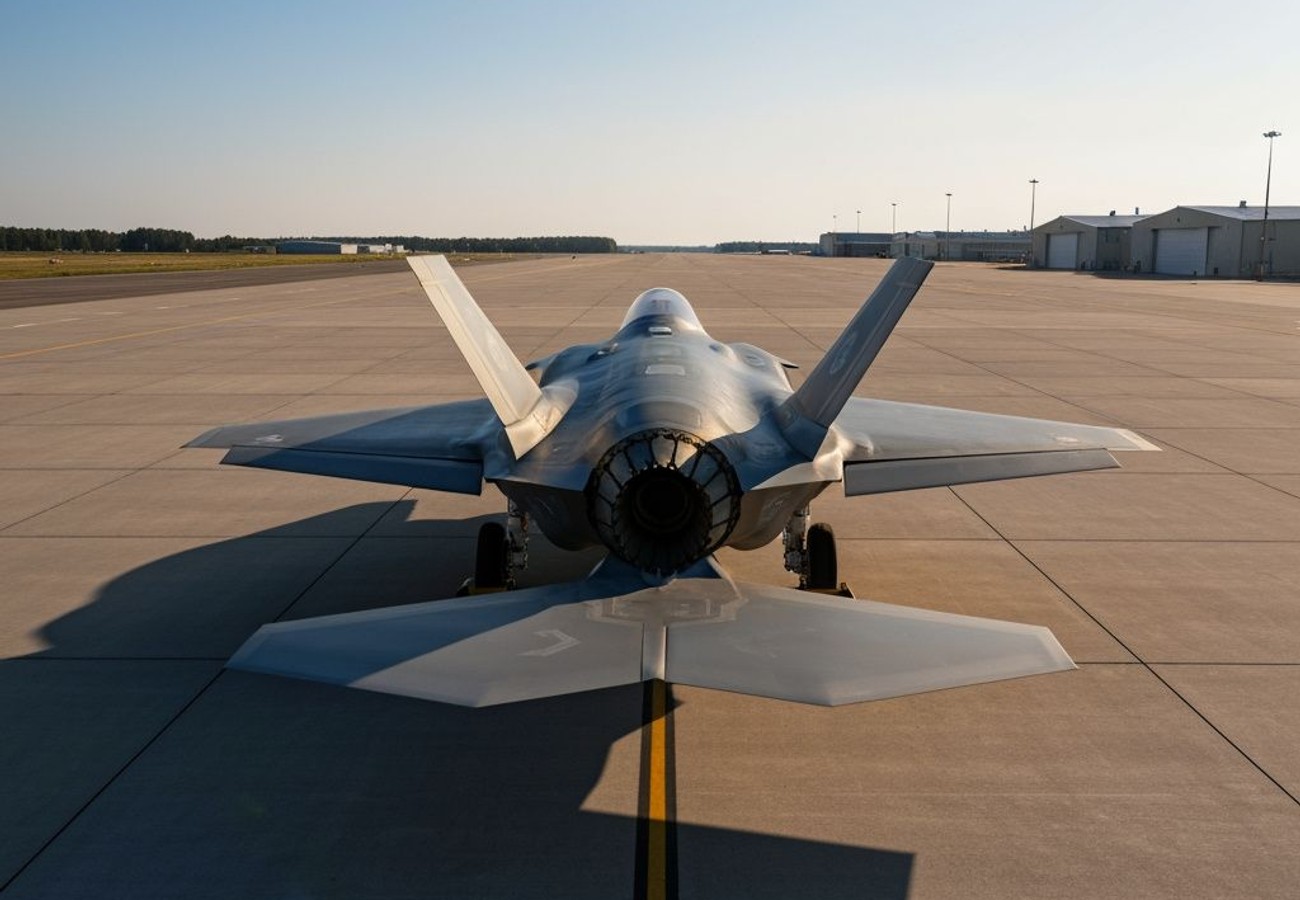
Image generated by AI
Poland Just Became NATO's Most Formidable Eastern Guardian
WARSAW — On June 14, 2026, the Republic of Poland formally accepted three F-35A Husarz fighter jets into active service, marking a watershed moment for both Polish military capability and the geopolitical balance across Eastern Europe. This wasn't just another defense procurement. It was Poland's thundering declaration that it had arrived as a full fifth-generation air power player.
The ceremony at the 32nd Tactical Air Base in Łask drew President Karol Nawrocki, Defence Minister Władysław Kosiniak-Kamysz, U.S. officials, and allies from across NATO. The message was unmistakable: Warsaw was no longer borrowing security from others. It was building it.
A Historic NATO Milestone Nobody Expected This Soon
Let me be clear: Poland is now the first nation on NATO's eastern flank — that critical strip of alliance territory bordering Russia — to field a fifth-generation stealth combat aircraft. That distinction matters immensely.
For decades, Polish pilots flew Soviet-era MiG-29s and Su-22 fighter-bombers manufactured in the 1980s. The leap to the F-35A isn't just an upgrade. It's a generational transformation in airpower that fundamentally reshapes how Poland defends itself and supports allied operations across the continent.
Reddit: "Poland getting F-35s before half of Western Europe even finished their modernization plans. That's a power move." — r/militarynews
The Symbolic Flypast That Shook Three Countries
What happened next was pure theater—but theater with strategic weight. Two F-35 jets, escorted by two F-16 fighters, executed a formation flypast over Polish airspace at noon. The route was deliberate: Westerplatte (where World War II began for Poland), then the Vistula River, Warsaw's spine, and finally Kraków.
This wasn't just celebrating new hardware. It was Poland telling its own citizens and its neighbors: We are sovereign. We are capable. We are here.
The Numbers Behind the Husarz Designation
The three aircraft that arrived carry serial numbers 3509, 3510, and 3511. They're officially designated F-35PL Husarz in Polish service—"Husarz" referencing the legendary Polish cavalry that once terrorized European battlefields.
Poland's full commitment is substantial: a $4.6 billion contract signed in January 2020 to acquire 32 F-35A Lightning II variants. The package includes spare engines, advanced mission simulators, and comprehensive logistical support. Eight additional jets are currently undergoing training operations at Ebbing Air National Guard Base in Arkansas.
The entire fleet will eventually be split between two bases: Łask (the primary hub) and Świdwin.
From Fort Worth to Eastern Europe: How They Got Here
The journey itself tells you something about modern defense supply chains. These three jets were manufactured at Lockheed Martin's production facility in Fort Worth, Texas, then flown across the Atlantic with a stopover at Lajes Air Base in the Azores.
It's a 5,000-mile journey that represents the entanglement of North American industrial capability, European geopolitical needs, and allied deterrence architecture.
What Makes the F-35A So Transformative
The F-35A is the conventional takeoff-and-landing variant used by the United States Air Force and most international customers. Its stealth capability derives from a constellation of design features: aligned edge geometry, radar-absorbent coatings, internal weapons bays that keep the radar signature minimal, and advanced electronic warfare systems.
Poland's airframes are Block 4-capable, meaning they can carry the latest munitions: Joint Strike Missiles, AIM-9X Sidewinders, AIM-120D-3 AMRAAM long-range missiles, and GBU-39 Small Diameter Bombs. The aircraft reaches speeds around Mach 1.6, carries a 25mm GAU-22/A cannon, and is powered by a Pratt & Whitney F135 engine.
But here's what matters for allied operations: the F-35A integrates sensor fusion across air, land, sea, space, and cyber domains. It doesn't just fly. It thinks.
Poland Now Joins an Elite European Club
With these three jets, Poland becomes the ninth European nation operating the F-35A. The roster includes Italy, the Netherlands, Norway, Denmark, Belgium, the United Kingdom, Finland, and Germany. More are coming online.
Globally, the F-35 is now operational or on order with 20 allied nations. More than 1,330 aircraft are flying worldwide, making it the most advanced, survivable, and networked fighter in the world. It's the fighter of NATO's future.
According to Lockheed Martin's operational data, the F-35 ecosystem represents the largest military aircraft program ever executed. Poland's entry strengthens that ecosystem geometrically.
The Industrial Backbone: Jobs and European Defense
Beyond the cockpit, this deal fuels European manufacturing. Roughly 25 percent of the F-35's production value comes from European suppliers, sustaining high-tech jobs and fortifying the region's defense industrial base.
Polish suppliers have been collaborating on F-35 production for years. This isn't just about buying American hardware. It's about embedding Polish engineering into NATO's most critical platform.
OJ Sanchez, President of Lockheed Martin Aeronautics, said the arrival "represents an important step for Poland's defense and for regional security across Europe." He emphasized Poland's commitment to modernization and interoperability—the buzzwords that actually matter in 21st-century warfare.
What This Means for Travelers and Regional Stability
For nomads, expats, and international travelers, military modernization isn't usually front-page news. But it should be. When a nation dramatically upgrades its defense capabilities, it signals confidence in the region's future and commitment to stability.
Poland's F-35 deployment says: This country is investing in itself. It's not going anywhere. It's preparing for the next 30 years of European security architecture.
NATO has consistently emphasized Eastern European modernization as critical to alliance coherence, and Poland is now proving it's serious about pulling its weight.
The Geopolitical Subtext
This ceremony happened weeks before the 2026 NATO summit. Poland wanted to send a message before that gathering: We're not dependent. We're contributors. The timing was intentional.
For travelers and business people monitoring Central European stability, this is reassuring. Nations that invest in cutting-edge military capability do so because they believe in their own futures. Poland is betting on Poland.
Poland's F-35A arrival rewrites the rules for Eastern European deterrence—and proves fifth-generation capability is no longer exclusive to Western Europe.
Related Travel Guides
Disclaimer
This article is for informational and educational purposes only. It does not constitute legal, financial, or professional advice. While we strive to provide accurate and up-to-date information, travel policies, regulations, and conditions change rapidly. Always verify information with official sources before making travel decisions. Nomad Lawyer makes no representations about the accuracy, reliability, completeness, or suitability of the information provided. Readers should consult qualified professionals for advice specific to their circumstances. The views expressed in this article are those of the author and do not necessarily reflect the views of Nomad Lawyer.
Preeti Gunjan
Contributor & Community Manager
A passionate traveller and community builder. Preeti helps grow the Nomad Lawyer community, fostering engagement and bringing the reader experience to life.
Learn more about our team →