
Philippines Bohol International Airport Begins A Bold Tourism Transformation With More Local Treasures And Passenger Experiences
Philippines Bohol International Airport Begins A Bold Tourism Transformation With More Local Treasures And Passenger Experiences

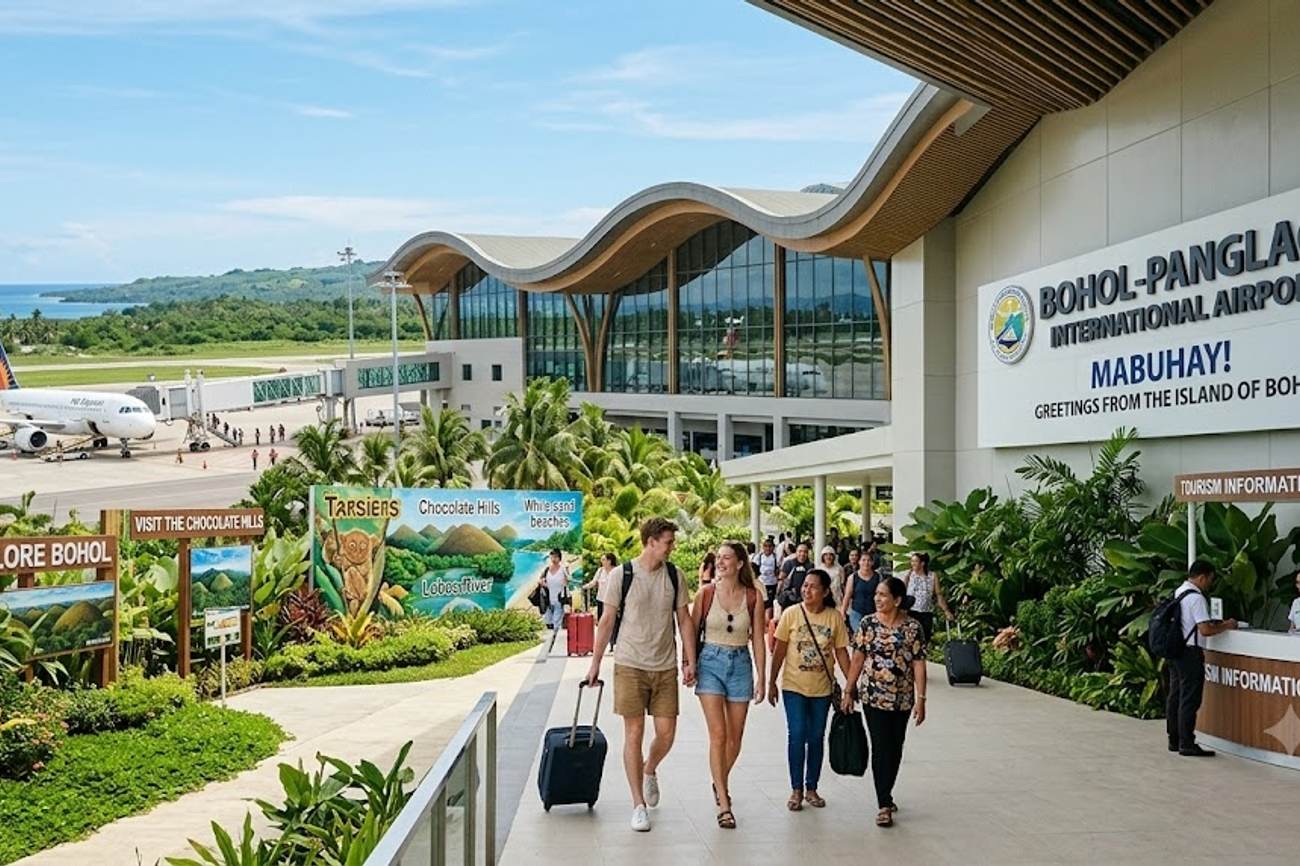
Image generated by AI
Are you planning a trip to the beaches or heritage sites of Bohol and wondering what to expect upon arrival? The Bohol-Panglao International Airport (BPIA) has recently overhauled its terminal services to move beyond basic transit, integrating local commerce and expanded dining directly into the passenger flow.
The BPIA Commercial Expansion
The Bohol-Panglao International Airport is shifting its operational model to function as a cultural gateway rather than a mere transit hub. This transformation centers on a significant increase in retail and food and beverage (F&B) outlets designed to accommodate a passenger volume that has already exceeded 2.16 million travelers since the current operator assumed control.
The expansion is not merely about adding luxury brands; it is a strategic integration of the Department of Trade and Industry’s One Town One Product (OTOP) program. This means the terminal now serves as a primary marketplace for Bohol-based entrepreneurs, allowing passengers to access traditional delicacies and handcrafted cultural souvenirs without leaving the airport grounds. For the traveler, this reduces the need for frantic last-minute souvenir shopping in the city before a flight.
Route and Schedule Details
While BPIA serves as the primary entry point for the province, the efficiency of your transit depends on the carrier and the flight origin. Most travelers arrive via Manila or Cebu.
| Route | Frequency | Typical Aircraft | Status |
|---|---|---|---|
| Manila (MNL) $\rightarrow$ Panglao (TAG) | Multiple Daily | A320 / A321 | Active |
| Cebu (CEB) $\rightarrow$ Panglao (TAG) | Scheduled | ATR 72 / A320 | Active |
| International Charters | Seasonal | Variable | Active |
Traveler Logistics Guide
Navigating BPIA requires a different strategy than the congested terminals of Manila. Because the airport is now leaning into its role as a "destination touchpoint," your timing should account for these new amenities.
Optimal Layover and Arrival Timing If you intend to utilize the new OTOP retail sections or the expanded dining options, allocate an additional 45 to 60 minutes beyond your standard security window. The integration of local crafts means there are more unique, non-standardized goods that often require more time to browse than typical duty-free shops.
Digital and Check-in Procedures To streamline your movement through the terminal, use the digital check-in tools provided by your airline. For those arriving from international hubs, ensure your travel documents are ready for the Bureau of Immigration Philippines checkpoints. The airport's expanded commercial zones are positioned to handle higher traffic, but the primary bottleneck remains the immigration and customs queue during peak tourist seasons.
Baggage and Shopping Strategy The addition of fashion accessories and travel essentials stores means you can replace forgotten items on-site. However, for those purchasing bulky local handicrafts via the OTOP program, be mindful of your luggage weight limits. Since BPIA is a regional hub, weight enforcement on domestic legs back to Manila can be strict. I recommend purchasing fragile Boholano crafts at the airport after your final hotel checkout to avoid damage during island transfers.
Ground Transport Connections Once you clear the new retail and arrival zones, you have several options for reaching Panglao or Tagbilaran:
- Pre-arranged hotel shuttles: The most seamless option for luxury resorts.
- Airport taxis: Available immediately outside the arrivals hall.
- Private rentals: Recommended for those planning to visit the Chocolate Hills or the Tarsier sanctuary.
The Philippines' Bohol International Airport is undergoing a significant transformation to enhance tourism in the region, with a focus on showcasing local treasures and improving passenger experiences. According to the Civil Aviation Authority of the Philippines, the airport's development is part of a broader effort to increase tourism revenue and promote economic growth in the area. This initiative is expected to attract more visitors to the island, boosting the local economy and showcasing Bohol's unique cultural heritage.
For updated regulations on entering the province, always check the Department of Tourism Philippines official portal.
Regional Connectivity Impact
The commercialization of BPIA is a signal of the province's broader infrastructure growth. By turning the terminal into an extension of the tourism experience, Bohol is reducing the "transit friction" that often occurs when travelers land in a remote province and find a lack of services.
This expansion creates a symbiotic relationship between the airport operator and the local economy. By providing a platform for small-scale artisans, the airport is effectively decentralizing the tourism spend. Instead of all revenue flowing to large hotels or city-center malls, a portion of the economic impact is captured the moment a passenger steps off the plane. This strengthens the destination branding of Bohol as a place that values its heritage and community-led enterprise.
Furthermore, the ability to handle over 2.16 million passengers with improved amenities suggests that BPIA is preparing for a higher volume of international direct charters. The shift toward "experience-based" terminals is a trend seen in major global hubs, and its implementation here makes the island more competitive against other Southeast Asian beach destinations.
FAQ: Bohol-Panglao Transit 2024
Do I need a transit visa for BPIA? Visa requirements depend on your nationality and whether you are staying airside. Most travelers entering Bohol from Manila or Cebu follow standard Philippine entry laws. Check the official embassy guidelines for your specific passport.
How long should I arrive before my flight? Given the new retail and dining options, arrive 3 hours early for international flights and 2 hours for domestic. This allows you to explore the OTOP local products without risking your boarding time.
Can I check my bags through to a final destination? This depends on the airline. Most full-service carriers allow through-checking, but budget airlines operating in the Philippines often require you to reclaim bags in Manila or Cebu. Always verify at the check-in counter.
Are there duty-free options at BPIA? Yes, the recent expansion has strengthened the retail section to include duty-free shopping opportunities alongside local Boholano crafts and travel essentials.
Plan your transit to allow for the culture, not just the commute.
Related Travel Guides
- Antara Introduces Nauka Vilas Offering Private Heritage Cruises Through Bengal’s Historic Waters
- Vietjet Shines In Forbes Vietnam Ranking With Robust Financial Performance In 2026
- Qatar Aligns With Egypt And More Countries As Middle East Tourism Unites To Win Back Travellers Through New Visa Plans And Mega Events
Disclaimer
This article is for informational and educational purposes only. It does not constitute legal, financial, or professional advice. While we strive to provide accurate and up-to-date information, travel policies, regulations, and conditions change rapidly. Always verify information with official sources before making travel decisions. Nomad Lawyer makes no representations about the accuracy, reliability, completeness, or suitability of the information provided. Readers should consult qualified professionals for advice specific to their circumstances. The views expressed in this article are those of the author and do not necessarily reflect the views of Nomad Lawyer.
Kunal K Choudhary
Co-Founder & Contributor
A passionate traveller and tech enthusiast. Kunal contributes to the vision and growth of Nomad Lawyer, bringing fresh perspectives and driving the community forward.
Learn more about our team →