
Philadelphia International Airport Gripped by Travel Chaos: 98 Delays and 13 Cancellations Strand Thousands
Philadelphia International Airport (PHL) faces significant travel chaos with 98 delays and 13 cancellations. Northeast corridor congestion and operational strain are pushing travelers to reconsider their routes.

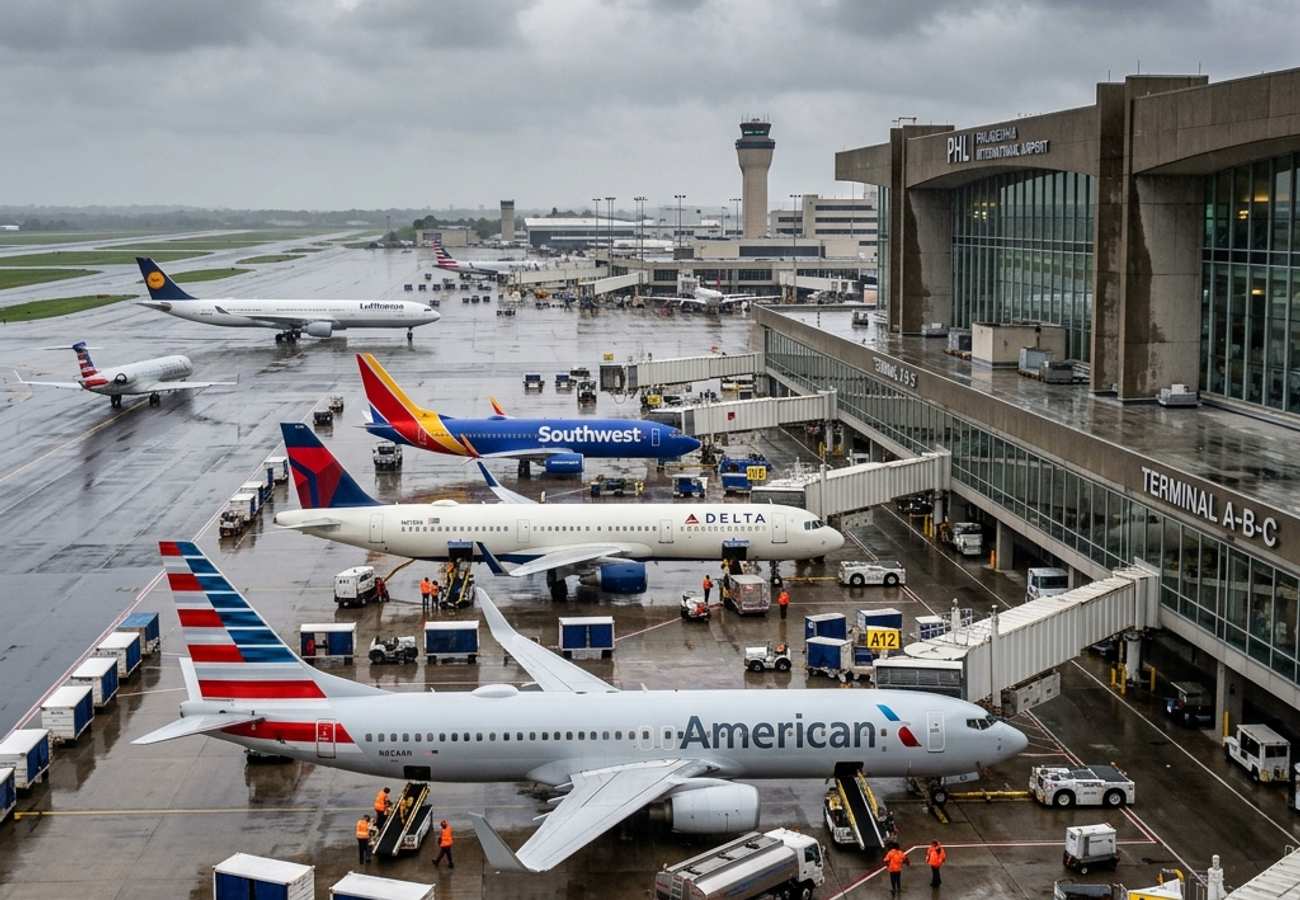
Image generated by AI
Philadelphia International Airport (PHL) is currently gripped by a period of significant travel chaos, as operational data confirms 98 delays and 13 cancellations in a single day. For thousands of travelers moving through the Northeast corridor, what was supposed to be a routine flight has transformed into an exhausting ordeal. Passengers have described grueling waits, sudden gate changes, and a mounting sense of anxiety as departure boards continue to flicker with updates that offer little clarity on when normal operations will resume.
Rising Disruptions: A Closer Look at the Operational Surge at PHL
The current wave of setbacks at Philadelphia is part of a broader pattern of instability. Aviation reports indicate that PHL has experienced repeated surges in delays throughout the month of May 2026, with earlier incidents affecting over 100 flights in a 24-hour window.
While the Federal Aviation Administration (FAA) notes that many delays stem from a combination of weather and congestion, real-time airline operations at PHL reveal a more complex and damaging picture. Cascading delays are now significantly impacting schedules, leaving families, business travelers, and international passengers trapped in a cycle of rescheduling and frustration.
The Northeast Corridor Trap: Why Philadelphia’s Airspace is Under Pressure
Weather remains a primary catalyst for the chaos at Philadelphia. Intermittent showers and unstable atmospheric conditions in the region have slowed down both arrivals and departures. However, weather alone does not explain the scale of the current meltdown.
Industry analysts highlight that the Northeast corridor—one of the busiest and most congested aviation regions in the world—is currently operating under intense airspace and staffing pressure. When multiple hubs in this region face simultaneous operational shocks, the ripple effect spreads with terrifying speed, causing delays to multiply far beyond the original point of disruption.
A Systemic Breakdown: National Aviation Strain Intensifies Local Delays
Philadelphia’s challenges are symptomatic of a larger national trend. On peak disruption days in May 2026, more than 3,000 flights across the United States have been delayed. The FAA has been forced into a delicate balancing act, attempting to manage capacity at high-traffic hubs like PHL to maintain safety standards while preventing a total system overload. This has created a fragile environment where even a minor localized issue can escalate into a national travel crisis.
Airlines in the Crosshairs: Major Carriers Scramble to Contain Ripple Effects
Airlines operating at PHL, including major carriers and regional partners, have been significantly compromised. American Airlines, which maintains a massive presence at Philadelphia, has seen notable ripple effects during these disruptions, alongside other primary carriers such as Delta, Southwest, and United.
The logistical complexity of modern airline scheduling means that a single delay for a specific aircraft can derail multiple subsequent flights across the carrier’s network. Once a crew duty-cycle is broken or an aircraft is out of position, the chain reaction becomes nearly impossible to contain.
Terminal Turmoil: The Human Dimension of the Philadelphia Flight Crisis
For travelers, the numbers—98 delays and 13 cancellations—translate into real-life hardships. Missed connections, extended layovers, and the financial burden of unexpected overnight stays have become common stories in the PHL terminals.
Airports, traditionally designed as seamless gateways, are instead serving as holding spaces where travelers are left in a state of perpetual uncertainty. Many passengers are forced to rely on inconsistent airline updates, making it increasingly difficult to plan for necessary family events or professional commitments.
Shifting Flows: Why Frustrated Travelers are Rethinking Their Routes
In response to the ongoing unreliability at PHL, a growing number of travelers are choosing to reroute through alternative hubs or delay their trips entirely. Reliability has become the primary metric for the modern traveler, sometimes outweighing the convenience of a direct route. This shift in passenger flow underscores a significant decline in travel confidence when airport delays reach a certain threshold.
Looking Forward: The Path to Recovery for Philadelphia Travelers
The immediate future of operations at Philadelphia International Airport depends on a combination of weather stabilization, staffing improvements, and broader air traffic management strategies. While the FAA continues to optimize airspace usage, the system remains vulnerable to the high-volume pressures of the early summer travel season. For now, passengers are advised to maintain extreme flexibility and to confirm their specific flight status through official carrier channels before proceeding to the airport.
Related Travel Guides
Disclaimer
This article is for informational and educational purposes only. It does not constitute legal, financial, or professional advice. While we strive to provide accurate and up-to-date information, travel policies, regulations, and conditions change rapidly. Always verify information with official sources before making travel decisions. Nomad Lawyer makes no representations about the accuracy, reliability, completeness, or suitability of the information provided. Readers should consult qualified professionals for advice specific to their circumstances. The views expressed in this article are those of the author and do not necessarily reflect the views of Nomad Lawyer.
Kunal K Choudhary
Co-Founder & Contributor
A passionate traveller and tech enthusiast. Kunal contributes to the vision and growth of Nomad Lawyer, bringing fresh perspectives and driving the community forward.
Learn more about our team →