
Travel Chaos Engulfs Pensacola International Airport as 13 Flight Cancellations Strand Florida Gulf Coast Passengers: Latest Airline News
Severe operational breakdowns and unexpected flight cancellations paralyze Pensacola International Airport, triggering massive travel chaos across Delta, Southwest, and American Airlines networks.

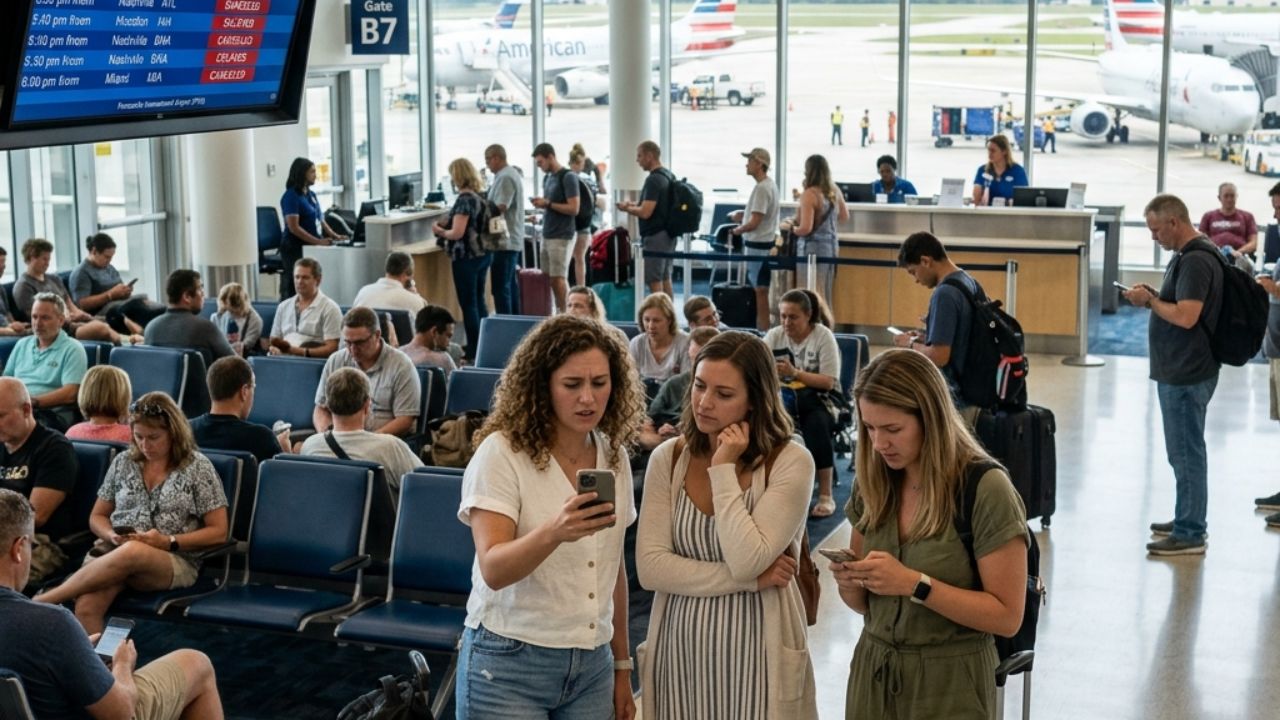
Image generated by AI
In a devastating operational breakdown that rapidly paralyzed one of the most critical transit gateways along the Florida Gulf Coast, massive, compounding travel chaos has violently engulfed Pensacola International Airport. Reported on June 20, 2026, hundreds of domestic vacationers and corporate travelers were left entirely stranded as the regional facility suffered a severe wave of rolling delays and sudden flight cancellations. With official data confirming exactly 26 flights delayed alongside 13 flights completely canceled, the immediate terminal gridlock heavily disrupted operations across a massive roster of carriers, explicitly including American Airlines, Delta Air Lines, Southwest Airlines, United Airlines, and Spirit Airlines. As the crisis severely impedes the flow of traffic linking the Gulf Coast to major hub corridors like Atlanta, Charlotte, Dallas, Houston, Nashville, and Miami, this localized breakdown explicitly highlights the extreme fragility of the US domestic aviation network, commanding today's most crucial headline in breaking airline news and essential aviation updates.
By introducing direct passenger coordination and dynamic scheduling backups, the regional aviation hubs target growing passenger demand across vital commerce sectors. The choice to coordinate flight departures in phases helps to manage gate capacity, supporting the country's broader regional transportation network.
Context: The Vulnerability of Gulf Coast Gateways
For the domestic aviation industry, the sudden operational collapse at Pensacola International Airport represents the intense vulnerability of regional feeder networks operating under peak summer travel pressure.
Historically, Pensacola serves as a vital connecting point for tourists accessing the Florida Panhandle and local residents attempting to feed into massive Southern mega-hubs. When the airport suffers from 13 outright cancellations and 26 rolling delays, the resulting travel chaos is deeply frustrating for passengers. Because regional airports operate with highly specific airline schedules—often featuring only two or three flights per day to a specific destination—a single canceled flight means there are virtually zero empty seats available for immediate rebooking. A canceled Delta flight to Atlanta or a Southwest flight to Nashville completely destroys a family’s carefully planned vacation or a corporate executive's connecting international itinerary. This forces airlines to rapidly alter crew allocations while stranded passengers scramble to secure the few remaining seats departing the following day, triggering severe airport disruptions that overwhelm local infrastructure.
To view live flight schedules, verify the active departure status of your specific Pensacola itinerary, or to track potential route restorations out of Florida, travelers must consult official aviation directories. For direct updates regarding how this localized operational failure impacts your current flight cancellations out of the Gulf Coast, travelers should aggressively utilize the official digital portals of Delta, Southwest, and American Airlines. To explore live flight tracking and monitor the exact severity of the cascading bottlenecks paralyzing the broader National Airspace System, passengers can consult the official FlightAware tracking service.
Section-Wise Breakdown: The FAA Assessment
The Pensacola Operational Environment
Pensacola International Airport operates as a highly strategic aviation environment, heavily supporting both regional tourism and critical economic activity along the Panhandle. Despite the reported delays and cancellations, Pensacola continues to operate as an important transportation hub. However, when travel demand peaks, this localized infrastructure can occasionally face severe operational constraints. The sheer volume of 26 delayed departures completely fills the terminal capacity, creating severe passenger bottlenecks at security checkpoints and customer service desks.
The Catalysts for Disruption
According to explicit Federal Aviation Administration (FAA) guidance, the terminal gridlock at Pensacola stems from a massive combination of overlapping factors. The FAA’s National Airspace System updates emphasize that severe weather remains one of the leading causes of delays across the country. Thunderstorms, strong winds, and reduced visibility routinely force the FAA to implement ground stops. Beyond weather, staffing constraints, mechanical inspections, complex crew scheduling issues, and air traffic management directives originating from congested airspace often trigger immediate flight cancellations to ensure passenger safety.
The Interconnected Network Bleed
The FAA notes that airport operations are highly dynamic, meaning these localized Florida delays do not remain isolated. Because Pensacola heavily feeds major hubs like Charlotte, Dallas, and Houston, an aircraft stuck on the tarmac at Pensacola guarantees that its subsequent flight out of Texas or North Carolina will also be delayed. Aircraft and crews become temporarily out of position, leading to massive schedule adjustments across entire airline networks.
Technical Roster: The Pensacola Disruption Matrix
To ensure absolute factual accuracy regarding the exact severity of the terminal gridlock, the specific airlines paralyzed, and the affected routes, the following matrix details the verified disruption data:
Pensacola International Airport Disruption Matrix
| Operational Parameter | Verified Disruption Metric |
|---|---|
| Airport Facility | Pensacola International Airport |
| Delayed Flights | 26 |
| Cancelled Flights | 13 |
| Major Carriers Impacted | American Airlines, Delta, Southwest, United, Spirit |
| Domestic Routes Disrupted | Atlanta, Charlotte, Dallas, Houston, Nashville, Miami |
Data strictly reflects the verified operational interruptions reported on June 20, 2026, highlighting the specific impact on the Florida Panhandle aviation gateway.
Passenger Impact: Stranded on the Panhandle
For the travelers physically trapped inside the congested terminal of Pensacola International Airport, this operational breakdown triggered a highly stressful, financially damaging logistical nightmare.
The immediate passenger impact of 13 cancelled flights is complete schedule uncertainty and the total destruction of the connecting itinerary. When a passenger flying United from Pensacola to connect through Houston onto an international widebody flight discovers their first leg is cancelled, the entire vacation is ruined. Because security lines and terminal activity become aggressively congested during massive delays, the airport infrastructure itself buckles under the pressure. Passengers are forced to stand in lengthy customer service lines, competing against hundreds of other stranded travelers simply to secure one of the few remaining seats on alternate flights. This level of disruption fundamentally destroys the passenger experience, replacing the excitement of travel with the sheer exhaustion of terminal gridlock and forcing travelers to absorb unexpected hotel costs along the Gulf Coast.
Industry Analysis: Prioritizing Safety Over Schedule
Aviation analysts monitoring the localized travel chaos radiating out of Pensacola note that while the delays are incredibly frustrating, they represent the absolute success of the FAA's highly conservative safety procedures.
Analysts emphasize that government aviation authorities and air traffic controllers will permanently prioritize passenger and crew safety over maintaining a profitable airline schedule. When severe thunderstorms hit the Gulf Coast, or when airspace congestion peaks over Atlanta, airlines like Delta, Southwest, and Spirit must aggressively hold aircraft on the ground rather than risk pushing them into dangerous airspace. While the 13 cancellations are financially damaging to the carriers and massively inconvenient for passengers, they are often a necessary, calculated sacrifice. Flight delays are implemented strictly to maintain safe flying conditions, proving that modern operational safety metrics supersede schedule reliability.
Actionable Advice for Surviving Regional Cancellations
Because passengers cannot force airlines to operate canceled flights or control FAA-mandated ground stops, you must execute this strategic survival checklist the exact second you learn your flight out of Pensacola has been compromised:
- Never Wait in the Terminal Line: If your Delta or American flight is abruptly canceled at Pensacola, absolutely do not join the panicked line at the customer service desk. While you are standing in line, all the remaining available seats on alternate flights are being snatched up by proactive travelers. Immediately open the airline’s mobile application to rebook digitally, bypassing the overwhelmed physical agents entirely.
- Propose Alternate Routing: Do not passively wait 24 hours for the airline to find an alternate flight directly from Pensacola. If you are flying to a major destination like Dallas or Miami, aggressively check for alternate airports within driving distance (such as Mobile or Destin-Fort Walton Beach) and request the airline endorse your ticket to a flight departing from a neighboring facility.
- Review Airline Compensation Policies: Keep your travel documents readily accessible and review your carrier's specific delay policies. If the cancellation is deemed within the airline's control (such as a mechanical issue or crew shortage), you may be eligible for hotel vouchers, travel credits, or alternative flight arrangements on competing carriers. However, weather-related cancellations generally do not require airlines to provide lodging.
FAQ: Pensacola Flight Cancellations
Why are there massive delays at Pensacola International Airport?
On June 20, 2026, localized operational disruptions triggered exactly 26 delays and 13 major flight cancellations, driven by a combination of severe weather, staffing constraints, and complex air traffic management.
Which specific airlines were impacted by the Pensacola disruptions?
The localized travel chaos disrupted operations across major carriers including American Airlines, Delta, Southwest, United, and Spirit.
Which major domestic routes were severely affected?
The terminal gridlock severed vital connectivity linking the Gulf Coast to massive mainland hubs, explicitly impacting flights to Atlanta, Charlotte, Dallas, Houston, Nashville, and Miami.
The Reality of Navigating Gulf Coast Gateways
The sudden operational collapse at Pensacola International Airport proves definitively that regional aviation gateways remain incredibly fragile, constantly teetering on the edge of localized travel chaos. By relying heavily on airports like Pensacola to funnel Florida Panhandle travelers into the broader domestic network, airlines ensure that a minor weather event or staffing constraint can instantly metastasize into 13 outright cancellations. Yet, as travelers desperately attempt to navigate these congested terminals to salvage their itineraries, they must accept a critical new reality: surviving an airport meltdown requires extreme digital proactivity, a complete refusal to wait passively in customer service lines, and the tactical awareness to secure alternate routing the exact second a flight cancellation is announced.
Key Takeaways
- Localized Hub Disruption: Pensacola International Airport suffered a severe operational breakdown on June 20, 2026, stranding Florida Gulf Coast passengers.
- The Disruption Metrics: The airport officially recorded exactly 26 flight delays and 13 total flight cancellations.
- The Affected Carriers: The terminal gridlock heavily paralyzed regional operations for American Airlines, Delta, Southwest, United, and Spirit.
- Global Route Infection: The localized delays instantly destroyed connecting itineraries spanning Atlanta, Charlotte, Dallas, Houston, Nashville, and Miami.
- FAA Operational Factors: The delays were driven by a combination of severe weather, staffing constraints, and complex airspace congestion across the National Airspace System.
Related Travel Guides
Massive Travel Chaos Paralyzes Chicago O'Hare with 1,425 Disruptions
Delta Air Lines Triggers US Domestic Flight Cancellations
Pensacola Airport Live Disruption Tracking on Reddit
Disclaimer: Strategic operational metrics (including the specific June 20, 2026 flight disruptions at Pensacola, the exact 26 delays and 13 cancellations, and the specific impact on carriers like Delta, Southwest, United, Spirit, and American Airlines) are manually sourced directly from official FlightAware tracking data and FAA airspace updates, and are subject to immediate, unannounced adjustments as airlines attempt to recover their networks. Travelers are legally advised to constantly verify their exact departure status, explicitly audit their specific passenger rights regarding carrier-controlled cancellations, and maintain extreme adaptability directly via official airline applications prior to navigating the highly volatile US domestic regional transit network.
Kunal K Choudhary
Co-Founder & Contributor
A passionate traveller and tech enthusiast. Kunal contributes to the vision and growth of Nomad Lawyer, bringing fresh perspectives and driving the community forward.
Learn more about our team →