
Paraguay Gran Chaco Travel Guide 2026: Bioceanic Highway Routes, Filadelfia Culture, and Wildlife Corridors

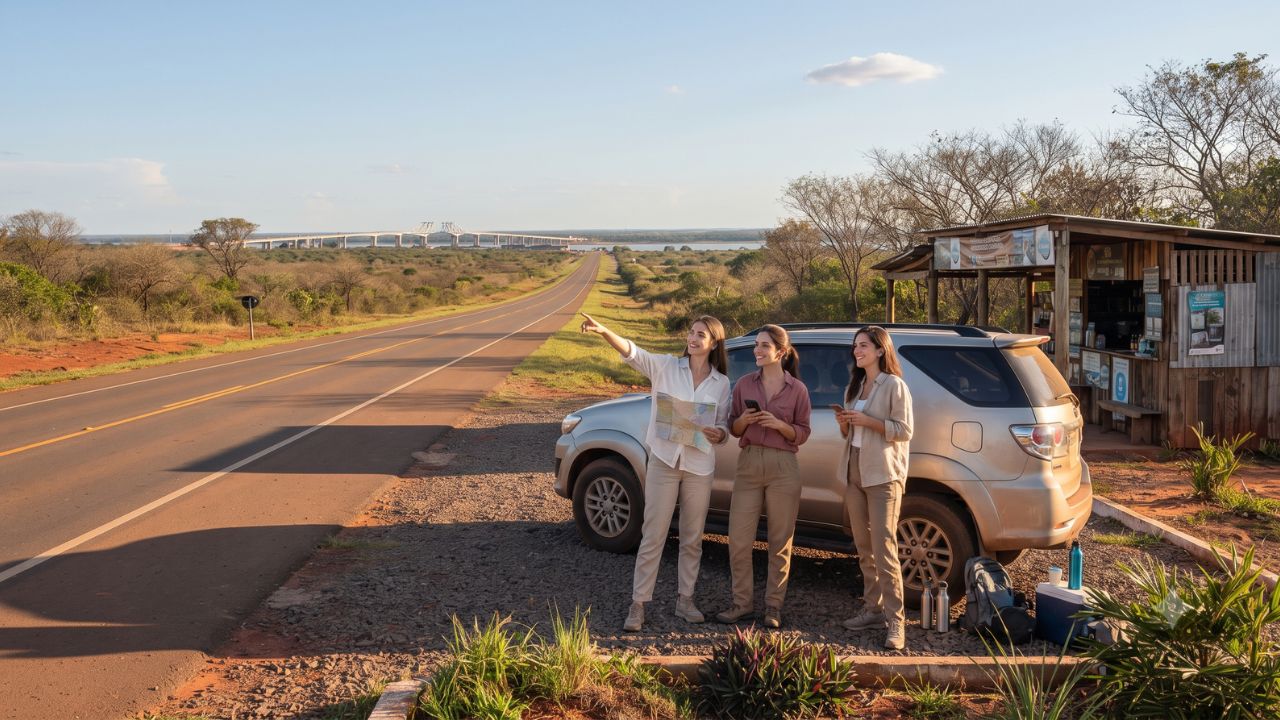
Spanning over sixty percent of Paraguay’s landmass while housing less than three percent of its population, the Gran Chaco is undergoing a historic transformation as the 275.73-kilometer Bioceanic Highway corridor converts one of South America's most formidable thorn-forest frontiers into an accessible self-drive expedition route. Long regarded by overland travelers as an impassable wilderness of impenetrable quebracho trees and extreme seasonal clay mud, multi-stage asphalt engineering overseen by Paraguay’s Ministry of Public Works and Communications (MOPC) is rapidly bridging the transit divide between southwestern Brazil and northern Argentina.
For independent overlanders, naturalist photographers, and cultural heritage enthusiasts, the challenge in the Chaco is shifting from mere physical survival to structured travel planning. While logistical highways make fast transit possible, the true value of a Chaco expedition lies in leaving the main asphalt corridor: exploring German-Mennonite cooperative settlements in the central Boquerón department, spotting elusive jaguars and giant armadillos in remote national reserves, and supporting indigenous handicraft workshops along the Paraguay River basin.
Highway Infrastructure: The Paved Spine of the Bioceanic Axis
The development of the Chaco Bioceanic Corridor represents one of South America’s most ambitious transcontinental highway projects. The completed eastern section spans 275.73 kilometers of modern paved roadway connecting Loma Plata with Carmelo Peralta on the Paraguay River. Construction on the monumental Bioceanic Bridge linking Carmelo Peralta with Porto Murtinho in Brazil entered its final structural phase on 23 September 2026 under ITAIPU Binacional, while municipal approach roads in Carmelo Peralta achieved 23 percent completion by late August 2026.
Simultaneously, western road construction along National Route PY15 is expanding across 224 kilometers between Mariscal Estigarribia and Pozo Hondo on the Argentine frontier. Lot 3 reached 40.5 percent physical progress on 7 September 2026, while asphalt paving commenced on the 52-kilometer western Lot 4 in August 2026. Closer to Asunción, the 166-kilometer PY12 corridor from Chaco'i to General Bruguez is providing all-weather access across the humid Bajo Chaco floodplains.
| Highway Corridor & Engineering Sector | Total Distance & Scope | Construction Status (Late 2026) | Regional Travel Connectivity |
|---|---|---|---|
| Carmelo Peralta to Loma Plata | 275.73 km paved asphalt | 100% Fully Operational | Main eastern artery of the Bioceanic Corridor |
| Bioceanic International Bridge | Trans-Paraguay River span | Final construction stage (Sept 2026) | Direct future overland crossing to Porto Murtinho, Brazil |
| PY15 Mariscal Estigarribia–Pozo Hondo | 224 km across 4 contract lots | Lot 3 at 40.5%; Lot 4 asphalt underway | Future western gateway linking to northern Argentina |
| PY12 Chaco'i to General Bruguez | 166 km across 4 lots | Active paving across Bajo Chaco | All-weather ecotourism access from Asunción |
| Carmelo Peralta Urban Access Sector | Municipal bridge approaches | 23% completion reached August 2026 | Links town center directly to the international bridge |
What Makes the Gran Chaco Cultural Ecosystem Unique
The Paraguayan Chaco contains a cultural and ecological mosaic found nowhere else on the continent. In the central plains, the town of Filadelfia serves as the administrative capital of Boquerón and the primary operational base for travelers. Founded in 1931 by German-speaking Mennonite settlers fleeing persecution in the Soviet Union, Filadelfia anchors a network of thriving agricultural cooperatives alongside neighboring colonies Neuland and Loma Plata.
Travelers can orient their journey at the Centro de Interpretación del Gran Chaco Americano, situated near Cruce Filadelfia. Supported by the National Tourism Secretariat through SENATUR / Visit Paraguay, the center operates Wednesday to Sunday from 09:00 to 17:00 with free public admission, offering rich historical exhibits detailing Chaco War battlegrounds (1932–1935), indigenous ethnography, and regional fauna.
According to market research conducted by SENATUR with the Inter-American Development Bank, over 1.5 million regional travelers demonstrate active demand for nature and cultural journeys in Paraguay. Transforming transit traffic into retained community revenue requires encouraging multi-day stays, hiring certified local guides, and patronizing indigenous artisan cooperatives produced by Nivaclê, Enxet, and Ayoreo communities.
| Cultural & Wildlife Asset | Geographic Setting | Primary Heritage Focus | Traveler Experience & Access |
|---|---|---|---|
| Centro de Interpretación del Chaco | Cruce Filadelfia | Regional ecology & Chaco War history | Free entry, open Wednesday to Sunday 09:00–17:00 |
| Mennonite Colony Cooperatives | Filadelfia, Loma Plata, Neuland | Dairy heritage, historical museums | Boutique guesthouses, artisan bakeries, and farm tours |
| Médanos del Chaco National Park | Northern Boquerón / Alto Paraguay | Sand dunes, dry scrub, endemic cacti | Remote dirt tracks requiring high-clearance 4x4 vehicles |
| Defensores del Chaco National Park | Northern Chaco wilderness | Cerro León peak, big cats, tapirs | Subject to MADES conservation permits & weather |
| Carmelo Peralta Riverfront | Upper Paraguay River basin | Pantanal transition zone, sport fishing | Boat expeditions, wetland birding, indigenous crafts |
Visitor Insider Tips
- Prepare for Self-Sufficiency Beyond Trunk Roads: While the central Bioceanic asphalt is modern, dirt feeder tracks leading toward national parks turn into impassable clay mud during sudden downpours. Carry a dual-battery setup, minimum 40 liters of potable water, two spare tires, an air compressor, and satellite communication (such as Garmin inReach) when venturing off National Route PY15.
- Base Yourself in Filadelfia for Logistics: Make Filadelfia your central provisioning outpost. The town offers air-conditioned cooperative hotels, modern supermarkets stocked with regional dairy and cured meats, authorized vehicle mechanics, and high-speed satellite internet.
- Observe Seasonal Protected-Area Access: Verify park permissions directly with the Ministry of Environment and Sustainable Development (MADES) before setting out. MADES temporarily suspended visits to Defensores del Chaco and Teniente Agripino Enciso national parks starting 18 December 2025 for facility upgrades, and unannounced wet-season closures can occur.
- Travel During Winter Dry Season (May to September): The best window for wildlife observation and overlanding is the southern hemisphere winter. Temperatures remain comfortable (20°C to 28°C) and waterhole aggregation makes spotting giant anteaters, lowland tapirs, and maned wolves far more reliable.
Cultural and Environmental Context
The rapid expansion of high-speed transit corridors presents both economic opportunities and critical conservation challenges across the UNESCO Biosphere Reserve Network. The Gran Chaco forms South America’s second-largest forest biome after the Amazon, serving as a vital sanctuary for endangered wildlife and indigenous groups living in voluntary isolation within northern wilderness sectors.
To prevent habitat fragmentation, MOPC installed 13 dedicated wildlife underpasses along the completed Carmelo Peralta–Loma Plata section, with roughly 15 additional crossings planned for Stage 2 and another 13 engineered into Stage 3. Environmental monitoring updates published on 30 September 2026 confirmed that camera traps regularly document lowland tapirs, pumas, and giant armadillos safely using these tunnels.
Domestic road tourism already generates substantial economic activity in Paraguay. Official SENATUR figures recorded 185,791 vehicles moving across national highways during the 2026 Heroes Day holiday (27 February – 2 March), driving US$26.29 million in direct mobility spending and over US$36 million in total holiday economic impact. During Holy Week (1–5 April 2026), 409,431 domestic travelers generated US$55.48 million—a 36 percent increase over 2025. Establishing Japanese-style "Michi No Eki" roadside stations under SENATUR’s JAPYTA quality initiative ensures highway development directly enriches rural Chaco families while safeguarding fragile ecosystems.
FAQ: Visiting the Paraguayan Chaco 2026
Is the Bioceanic Bridge between Carmelo Peralta and Brazil open to tourists?
No. While the bridge entered its final construction phase in late September 2026, it remains closed to civilian traffic until official border facilities and bilateral customs controls are formally inaugurated.
What vehicle is required to explore the Gran Chaco?
A standard passenger vehicle is suitable for paved trunk routes like the Bioceanic Highway to Filadelfia, but exploring national parks and unpaved secondary routes strictly requires a high-clearance 4x4 vehicle.
What are the operating hours for the Gran Chaco Interpretation Center?
The Centro de Interpretación del Gran Chaco Americano near Cruce Filadelfia is open Wednesday through Sunday from 09:00 to 17:00, offering free admission to all visitors.
Do international travelers need special permits to visit national parks?
Yes. Visiting remote protected areas like Defensores del Chaco or Médanos del Chaco requires prior verification and entry authorization from MADES due to infrastructure projects and seasonal conservation controls.
By trading speed for deep curiosity, travelers crossing the Chaco uncover an untamed heartland where ancient forests and resilient cultures thrive side by side.
Related Travel Guides
- US Border Entry Guide 2026: CBP Ends Routine Passport Stamps in Shift to Form I-94
- Western Sydney International Airport Guide 2026: Flights and Blue Mountains
- Northern Ethiopia Travel Guide 2026: Aviation Suspensions and Aksum Heritage
- Transatlantic Travel Guide 2026: Decoding New York to Milan Flights
Disclaimer
This article is for informational and educational purposes only. It does not constitute legal, financial, or professional advice. While we strive to provide accurate and up-to-date information, travel policies, regulations, and conditions change rapidly. Always verify information with official sources before making travel decisions. Nomad Lawyer makes no representations about the accuracy, reliability, completeness, or suitability of the information provided. Readers should consult qualified professionals for advice specific to their circumstances. The views expressed in this article are those of the author and do not necessarily reflect the views of Nomad Lawyer.
Raushan Kumar
Founder & Lead Developer
Full-stack developer with 11+ years of experience and a passionate traveller. Raushan built Nomad Lawyer from the ground up with a vision to create the best travel and law experience on the web.
Learn more about our team →