
Oslo Airport Gardermoen Chaos: Norwegian Air Sweden and SAS Cancel 3 Flights, Delay 87 More Across Europe
Norwegian Air Sweden and Scandinavian Airlines cancel 3 flights and report 87 delays at Oslo Airport Gardermoen on June 5, 2026, affecting routes across Norway, Denmark, Spain, Switzerland, and the UK.

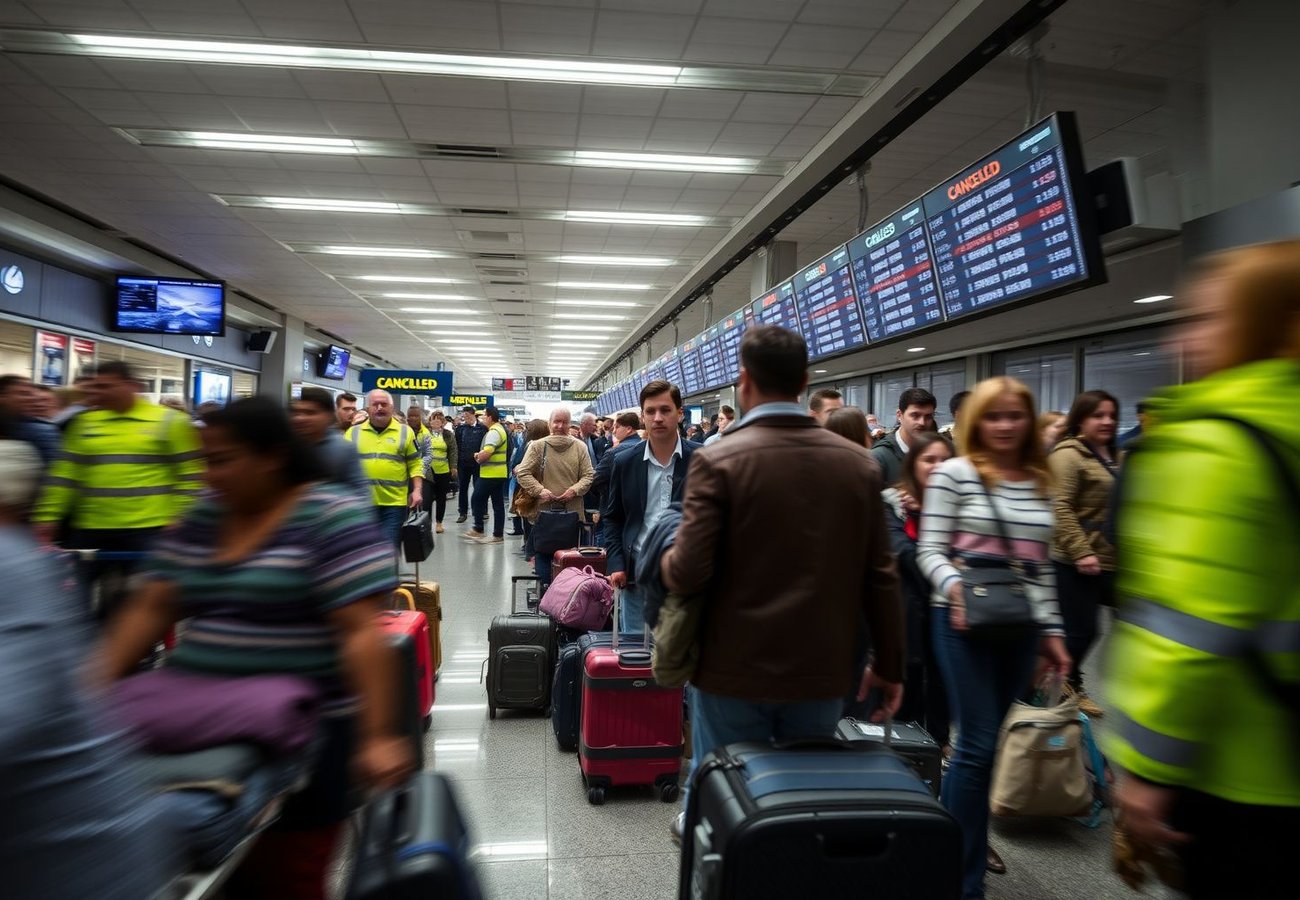
Image generated by AI
A Cascade of Cancellations and Delays Hits Northern Europe's Aviation Hub
On June 5, 2026, what started as a routine Thursday morning at Oslo Airport Gardermoen spiraled into a significant operational crisis. Norwegian Air Sweden and Scandinavian Airlines (SAS) cancelled a combined three flights while simultaneously reporting 87 delays across their joint operations. The disruption didn't stay contained within Norway's borders—it rippled across Europe's interconnected aviation network like dominoes toppling in slow motion.
For passengers, this meant missed connections, rebooked itineraries, and hours of uncertainty. For airlines managing hub operations, it underscored a hard truth: even modest cancellation numbers can trigger exponential chaos when they affect a major Nordic gateway.
Reddit: "Lost my connection through Oslo because of the cascading delays. Six hours stuck at the airport with no clear communication from the airline. This is exactly why I'm starting to avoid hub transfers." — r/travel
The Scale of Disruption: 87 Delays Across Continents
The numbers tell an illuminating story. Norwegian Air Sweden absorbed the bulk of the operational pain, cancelling 2 flights while managing 35 delays across its schedule. Scandinavian Airlines cancelled 1 flight but reported a staggering 52 delays, transforming what appeared to be isolated cancellations into network-wide timing complications.
The distinction matters legally and practically. Under EU Regulation 261/2004, flight delay compensation obligations differ dramatically based on delay duration and causation. Cancellations typically trigger stronger passenger rights than delays—a critical distinction passengers often misunderstand when filing compensation claims.
What's remarkable is that three cancellations produced 87 delays—a 29-to-1 ratio. This cascading effect illustrates how modern aviation networks create hidden interdependencies. A cancelled afternoon flight doesn't just affect those 150-200 passengers; it affects the aircraft rotation schedule, crew positioning, and every subsequent flight that aircraft was assigned to operate.
The Geographic Reach: From Scandinavia to Southern Europe
Oslo experienced the epicenter of disruption, but the chaos didn't stop there. Affected cities included:
- Domestic Norwegian routes: Ålesund, Bodø, Bergen, Kristiansand, Harstad, Narvik, Haugesund, Kristiansund, Kirkeles, Molde, Ørland, Ørsta, Røros, Sandane, Stord, Tromsø, Trondheim, Stavanger
- Nordic and Baltic hubs: Stockholm, Copenhagen, Helsinki, Riga, Vilnius
- Western European gateways: London, Amsterdam, Dublin, Paris
- Southern European destinations: Barcelona, Madrid, Alicante, Palma de Mallorca, Nice, Split, Chania, Rome, Bologna, Pisa, Prague, Faro, Lisbon
- Alpine routes: Basel, Zurich
- Atlantic: Reykjavík
This 50-plus city network disruption demonstrates how a single Nordic airport's operational problems create continental consequences. A 90-minute delay in Oslo becomes a missed connection in Barcelona. A cancelled morning flight from Tromsø becomes a hotel night in Oslo that nobody budgeted for.
What Actually Happened: The Cancellation Breakdown
The operational snapshot from June 5 reveals a precise but limited cancellation event:
Norwegian Air Sweden: 2 cancellations, 35 delays
Scandinavian Airlines: 1 cancellation, 52 delays
Total impact: 3 cancelled flights, 87 delayed flights
Interestingly, neither airline publicly disclosed the root cause of the cancellations that day. Operational disruptions can stem from multiple sources: mechanical issues, crew unavailability, air traffic control constraints, weather complications, or staffing shortages. Without transparent causation disclosure, passengers face uncertainty when determining whether compensation claims fall under airline-controlled circumstances or extraordinary circumstances exemptions.
The delays vastly outnumbered the cancellations, suggesting the disruption wasn't catastrophic mechanical failure but rather network congestion and downstream scheduling complications.
Passenger Rights in Flight Cancellations: What You Actually Get
If your flight gets cancelled, knowing your legal rights separates successful compensation claims from silent acceptance. Here's the operational reality:
Immediate Action Steps:
Monitor your airline's communication channels obsessively—email, SMS, mobile app, and the airline website. Don't wait for the airline to contact you; contact their customer service desk at the airport or via phone or chat systems immediately.
Rebooking Options:
Airlines must rebook you on the next available flight to your destination, either on their own services or through other carriers. You're legally entitled to request accommodations (meals, hotel, transportation) if the rebooked flight departs the next day or later.
Compensation Eligibility:
Under EU Regulation 261/2004, if your flight was cancelled less than 14 days before departure and you weren't notified at least 2 weeks in advance, you're entitled to compensation: €250 for flights up to 1,500 km, €400 for intra-EU flights over 1,500 km or other flights 1,500-3,500 km, and €600 for other flights over 3,500 km—unless extraordinary circumstances applied.
Critical Limitation:
"Extraordinary circumstances" (severe weather, security risks, air traffic control decisions, airport emergencies) exempt airlines from compensation obligations. This is where passenger claims typically fail. Airlines cite these exemptions far more frequently than courts ultimately sustain them, but the burden of proof rests with the airline.
The Interconnection Problem: Why Three Cancellations Became 87 Delays
Modern airline networks operate on razor-thin margins. Aircraft are scheduled for 7-9 flights per day, with crew rotations planned down to the minute. A cancelled Oslo-Stockholm flight doesn't free up resources; it creates a domino chain.
The crew that would have operated that flight is now out of position. The aircraft that would have continued to Copenhagen is delayed. Passengers booked on connecting flights wait in limbo. Ground staff scrambles to reorganize gate assignments. Catering trucks miss their loading windows.
What seems like a single cancellation becomes dozens of delays because the system has no redundancy built in. Airlines have optimized for efficiency over resilience, and disruptions expose this ruthlessly.
Monitoring Your Flight: Real-Time Tools and Transparency
Passengers at Oslo Airport Gardermoen on June 5 faced a critical challenge: reliable real-time information. Airlines often lag in updating systems, leaving travelers uncertain whether departure times will shift further.
FlightAware provides real-time flight tracking and delay data that often refreshes faster than airline websites. Combining official airline channels with independent flight tracking tools gives you the most current picture. Call the airline directly—their customer service agents access systems 15-30 minutes ahead of public-facing websites.
Don't rely on scheduled departure times once delays exceed 30 minutes. The situation is actively changing, and stale information leads to missed standby flights or hotel bookings at disadvantageous rates.
Why Oslo Matters: The Nordic Aviation Nexus
Oslo Airport Gardermoen is Scandinavia's busiest aviation hub, handling 27+ million passengers annually. It's not just a Norwegian airport; it's the connection point for Nordic travel to the rest of Europe. Disruptions here affect Swedish, Danish, Finnish, and Finnish travelers cascading outward.
Scandinavian Airlines operates its primary Nordic hub at Copenhagen, but Oslo remains critical for SAS's network strategy. Norwegian Air Sweden built its entire low-cost model around Scandinavian connectivity. When both carriers experience simultaneous disruptions at Oslo, the cumulative effect paralyzes Northern European travel.
The Delayed Flight vs. Cancelled Flight Distinction: Compensation Reality Check
Passengers often conflate these categories, but they create entirely different legal consequences:
Delayed flights: You stay on the aircraft and eventually reach your destination (usually). Compensation requires delays exceeding 3 hours at final destination, subject to extraordinary circumstances exemptions and passenger proof of actual damages (hotel, meals, transportation).
Cancelled flights: You don't depart. Compensation applies more liberally—€250-€600 based on distance, with fewer extraordinary circumstances withstanding judicial scrutiny. However, if rebooking gets you to your destination within 1-2 hours of original schedule, compensation often doesn't apply.
For the 87 delays reported June 5, passengers could claim compensation only if final arrival exceeded 3 hours late. For the 3 cancellations, compensation eligibility hinged on advance notification timing and the airline's extraordinary circumstances justification.
What This Disruption Reveals About Modern Aviation
The Oslo Airport incident on June 5 exposes uncomfortable truths about European aviation:
1. Hub fragility: Concentrated traffic creates vulnerability. A single airport's operational hiccup affects an entire continent's schedule.
2. Compensation claims are theater: Technically, passengers have rights. Practically, most never file claims. Fewer still successfully navigate airline disputes.
3. Network optimization creates cascades: Airlines designed these systems for 99% reliability. They didn't account for how quickly failure spreads.
4. Communication lags reality: By the time passengers receive official announcements, the situation has usually evolved beyond what airlines are saying.
Actions to Take If You're Affected by Similar Disruptions
Document everything: Photograph your boarding pass, save all airline communications, collect receipts for meals and accommodation.
File compensation claims immediately: Don't assume the airline will volunteer payment. EU261 claims must typically be filed within the airline's deadline—often 3-6 months. Use specialized claim services if the airline denies your case.
Monitor airline communication obsessively: Sign up for SMS alerts, enable app notifications, and refresh the airline website every 15-30 minutes once delays exceed 45 minutes.
Know the reboooking hierarchy: Your airline's next flight first, partner carriers second, any carrier to your destination third. You're entitled to comparable routing or a full refund if no suitable rebooking exists.
Request accommodations in writing: If your rebooked flight departs the next day or later, request hotel accommodations and meal vouchers via email—this creates a paper trail for future disputes.
When aviation networks fail, passenger preparedness becomes the only reliable safety net.
Related Travel Guides
Air New Zealand's Skynest Bunk Beds: What Travelers Actually Pay Beyond the $292 Headline Price
Condor Anniversary Promotion: 70,000 Flights Under €70 for 2026
EasyJet Flight Aborts Landing at Paris-Orly After Wedding Fireworks Trigger Emergency Go-Around
Disclaimer
This article is for informational and educational purposes only. It does not constitute legal, financial, or professional advice. While we strive to provide accurate and up-to-date information, travel policies, regulations, and conditions change rapidly. Always verify information with official sources before making travel decisions. Nomad Lawyer makes no representations about the accuracy, reliability, completeness, or suitability of the information provided. Readers should consult qualified professionals for advice specific to their circumstances. The views expressed in this article are those of the author and do not necessarily reflect the views of Nomad Lawyer.
Preeti Gunjan
Contributor & Community Manager
A passionate traveller and community builder. Preeti helps grow the Nomad Lawyer community, fostering engagement and bringing the reader experience to life.
Learn more about our team →