
Alaska Airlines Struggles with Half-Empty International Flights as Capacity Expansion Outpaces Demand
Breaking airline news and aviation industry updates for 2026.

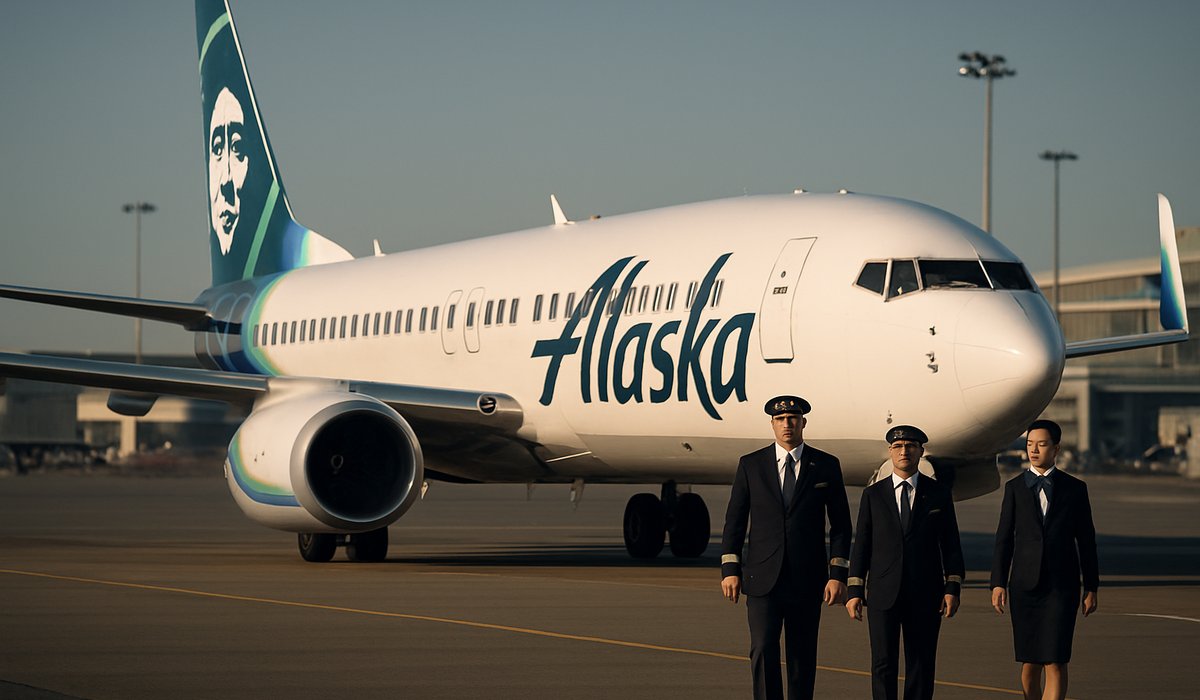
Image generated by AI
Alaska Airlines Struggles with Half-Empty International Flights as Capacity Expansion Outpaces Demand
Carrier's overseas routes hit just 53% occupancy on weakest services, signaling deeper challenges in post-pandemic travel recovery
Capacity Crunch Outpaces Passenger Recovery
Alaska Airlines is grappling with a significant mismatch between aircraft supply and international demand, new data from the U.S. Department of Transportation reveals. Despite carrying over 3.5 million international passengers between March 2025 and February 2026—a respectable 6.8% increase year-over-year—the carrier's aggressive fleet expansion has left many routes dangerously underutilized.
The core problem: while passenger traffic climbed modestly, available seating capacity surged by 11.2% during the same period. This widening gap has compressed the airline's overall seat load factor on international services to 82.0%, masking a troubling reality underneath: Alaska's ten weakest international routes are operating at barely 53% occupancy.
Strategic Expansion Backfires Amid Volatile Travel Markets
The disparity underscores a growing industry headache facing major U.S. carriers. Alaska Airlines, capitalizing on Hawaiian Airlines' Asia-Pacific operations out of Seattle-Tacoma International Airport (SEA), expanded its international network more aggressively than market demand could support. While the Hawaiian partnership injection boosted total international passenger volume, the math no longer works on peripheral routes.
Load factors above 85% are generally considered profitable in modern aviation, where jet fuel costs and labor expenses consume 60-70% of operating budgets. At 53% capacity utilization, those underperforming routes are almost certainly operating at losses, compounded by post-pandemic fuel price volatility and inflationary pressure on crew scheduling and maintenance costs.
Industry-Wide Pattern Emerges
Alaska's situation reflects a broader aviation industry challenge: carriers are racing to restart international capacity ahead of sustained demand recovery, particularly on long-haul routes where fuel consumption per available seat-mile remains elevated. This aggressive positioning, driven partly by competitive pressure and partly by optimistic forecasting, has created pockets of excess inventory on secondary and tertiary markets.
For consumers, the short-term pain may translate to incentives—airlines typically deploy targeted discounting on persistently weak routes to stimulate demand. However, if load factors remain depressed through the summer peak season, carriers may respond with capacity reductions, ultimately raising fares on surviving routes through the principle of supply scarcity.
What Comes Next
Alaska Airlines has not publicly detailed its strategy for underperforming international services. Options range from aircraft right-sizing to route suspensions or consolidation of frequencies. Industry watchers will scrutinize whether the carrier's Q2 and Q3 performance data—typically the strongest travel periods—can reverse the occupancy trends revealed in this annual snapshot.
The Hawaiian partnership, despite its current benefits, may need recalibration if Asia-Pacific expansion continues outpacing realistic demand forecasts.
FAQ: Understanding Airline Capacity and Route Performance
Why are airlines adding flights if seats aren't filling up? Carriers typically deploy capacity 18-24 months in advance based on demand forecasting. Market conditions shift rapidly; what looked promising during route planning may prove overoptimistic during execution. Competition also drives preemptive capacity increases.
How does this affect airline ticket prices? Weak load factors on international routes often trigger temporary price cuts to stimulate demand. However, if routes ultimately close, remaining flights become scarcer, potentially raising fares.
What is a "seat load factor" and why does it matter? Load factor measures the percentage of available seats actually occupied by paying passengers. Airlines need 85%+ to cover fuel, crew, and maintenance costs on most international routes. Below 75%, routes typically lose money.
Could Alaska Airlines suspend these unprofitable routes? Yes. Carriers frequently trim underperforming international services, particularly if they fail to improve during peak summer travel periods.
How do international routes compare to domestic aviation profitability? International flights require longer aircraft, higher fuel consumption, more crew training, and airport fees in multiple countries. They need significantly higher load factors to break even compared to domestic services.
Related Travel Guides
Flight Delay Compensation Guide 2026
Understanding Airline Route Changes
Airport Security Process Updated (2026)
External Resources
Disclaimer
This article is for informational and educational purposes only. It does not constitute legal, financial, or professional advice. While we strive to provide accurate and up-to-date information, travel policies, regulations, and conditions change rapidly. Always verify information with official sources before making travel decisions. Nomad Lawyer makes no representations about the accuracy, reliability, completeness, or suitability of the information provided. Readers should consult qualified professionals for advice specific to their circumstances. The views expressed in this article are those of the author and do not necessarily reflect the views of Nomad Lawyer.
Preeti Gunjan
Contributor & Community Manager
A passionate traveller and community builder. Preeti helps grow the Nomad Lawyer community, fostering engagement and bringing the reader experience to life.
Learn more about our team →