
Oman Air Launches Five New Routes Across Gulf, Asia and Central Asia in July 2026
Oman Air inaugurates five new international routes connecting Muscat and Salalah to Singapore, Abu Dhabi, Dubai, Sochi and Tashkent, expanding regional connectivity and supporting tourism growth across the Gulf and Asia.

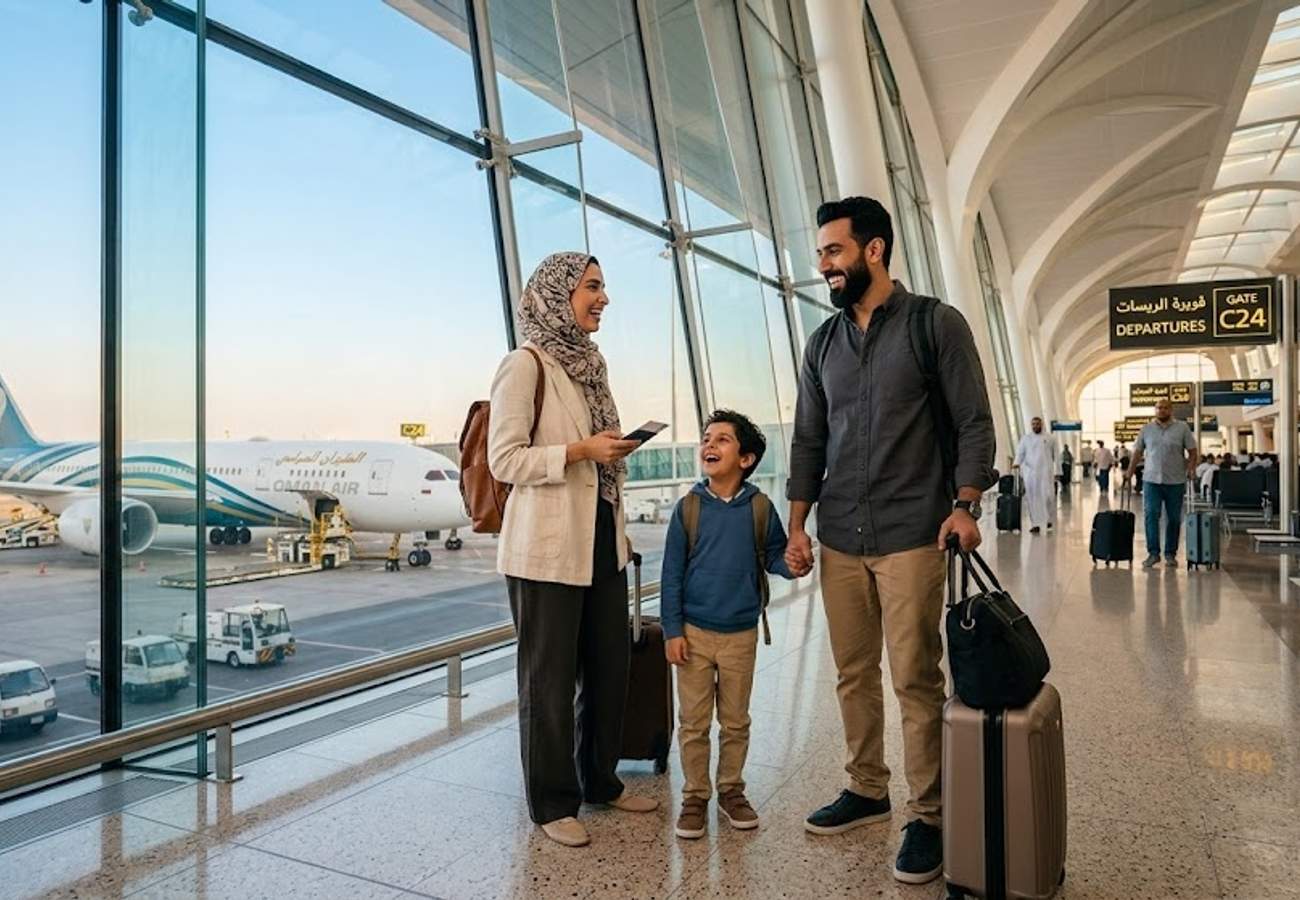
Image generated by AI
Oman Air is reshaping regional aviation connectivity with one of its most ambitious network expansions in recent years. Within a single week in July 2026, the Omani national carrier is launching five new scheduled services linking Muscat (MCT) and Salalah (SLL) with Singapore (SIN), the United Arab Emirates, Russia and Uzbekistan. This aggressive expansion reinforces Oman's positioning as a regional aviation hub while capitalizing on sustained global aviation demand and emerging tourism markets across Asia and Central Asia.
The timing aligns with robust recovery in Middle Eastern aviation. International traffic across Gulf carriers reached record levels over the past 12 months, with carriers increasingly focusing on point-to-point services rather than pure transfer operations. Oman Air's strategy reflects this broader shift—the airline is targeting leisure travellers, business passengers and emerging tourism markets simultaneously rather than relying exclusively on connecting traffic through its Muscat hub.
Five New Routes Transform Regional Connectivity
Oman Air has adopted a deliberately diversified expansion strategy, spreading commercial risk across multiple regions while opening opportunities across leisure, corporate and emerging-market segments.
The expansion encompasses routes to the Gulf's financial centres, Southeast Asia's premier aviation hub, and rapidly developing tourism markets in Central Asia and southern Russia. This balanced approach contrasts sharply with traditional Gulf hub strategies that concentrate on maximizing transfer traffic through primary hubs.
| Route | Launch Date | Weekly Frequency | Aircraft |
|---|---|---|---|
| Muscat–Singapore | July 2026 | 4x weekly | Boeing 737 MAX 8 |
| Muscat–Sochi | July 2026 | Weekly | Boeing 737 MAX 8 |
| Muscat–Tashkent | July 2026 | 2x weekly | Boeing 737 MAX 8 |
| Muscat–Abu Dhabi | July 2026 | Daily | Boeing 737 MAX 8 / 737-800 |
| Salalah–Dubai | July 2026 | 3x weekly | Boeing 737 MAX 8 |
The route selection reflects Oman Air's focus on markets combining tourism demand, business activity and onward connectivity. The Abu Dhabi (AUH) and Dubai (DXB) services reinforce essential Gulf connectivity, while the Singapore (SIN) launch provides access to one of Asia's most efficient aviation hubs. Meanwhile, Sochi (AER) and Tashkent (TAS) strengthen links with rapidly expanding leisure destinations attracting increasing interest from Gulf travellers.
Singapore: The Strategic Standout
The Muscat–Singapore service emerges as the expansion's most strategically significant launch. Singapore Changi Airport (SIN) consistently ranks among Asia's leading international gateways, with extensive onward connections across Southeast Asia, Australia, East Asia and the Pacific region.
For Oman Air, operating Singapore (SIN) creates dual commercial opportunities. Point-to-point travellers between Oman and Singapore will have a direct alternative to traditional Gulf hub connections, while connecting passengers gain access to Changi's world-class transfer facilities and extensive network.
The route operates on an eight-hour block time using the Boeing 737 MAX 8—a choice that exemplifies how next-generation narrowbody aircraft are increasingly viable for medium and long-haul operations. Airlines worldwide now deploy aircraft like the Boeing 737 MAX and Airbus A321neo on routes previously requiring widebody equipment, enabling higher frequency on thinner markets.
| Route | Block Time Eastbound | Block Time Westbound |
|---|---|---|
| Muscat–Singapore | 7 hr 50 min | 7 hr 20 min |
| Muscat–Sochi | 4 hr 25 min | 4 hr 14 min |
| Muscat–Tashkent | 3 hr 45 min | 3 hr 45 min |
For travellers, this operational approach translates into expanded nonstop route networks that previously could not sustain traditional widebody economics.
Salalah: Distributed Tourism Growth
Though Muscat (MCT) remains Oman Air's principal hub, the inclusion of Salalah (SLL) represents significant regional development strategy. Southern Oman's Salalah has emerged as a distinctive seasonal leisure destination, renowned for its monsoon-driven Khareef season, mountain topography and coastal attractions.
The new Dubai (DXB) connection from Salalah (SLL) supports cross-border leisure travel between the UAE and southern Oman, particularly during peak holiday periods. Enhanced international connectivity improves direct accessibility for international visitors while reducing reliance on domestic connections through Muscat (MCT).
This routing aligns with the Sultanate's broader objective of distributing tourism activity beyond the capital region and catalyzing regional economic development. Tourism authorities recognize that expanded direct air access functions as one of the strongest drivers for destination growth and visitor volume expansion.
Fleet Alignment Supports Sustainable Expansion
Oman Air's network additions align closely with its existing aircraft fleet strategy. The airline continues deploying its modern Boeing 737 MAX 8 fleet across these new services rather than introducing widebody aircraft to nascent markets.
The Boeing 737 MAX 8 delivers superior fuel efficiency, reduced operating costs and sufficient range to operate routes extending from the Gulf to Southeast Asia. This aircraft flexibility enables airlines to test emerging markets while maintaining commercially sustainable seat capacity and manageable risk profiles.
The Abu Dhabi (AUH) service includes selected frequencies operated by Boeing 737-800 equipment, providing operational flexibility during peak travel periods. The consistent narrowbody fleet composition also simplifies crew training, maintenance scheduling and passenger experience standardization across different markets.
Strategic Shift From Transfer Hub to Destination Focus
Oman Air's expansion strategy reflects a deliberate pivot away from the traditional Gulf hub model. Rather than concentrating exclusively on connecting traffic volumes, the airline is prioritizing point-to-point passengers who intend to spend time in Oman before continuing their journeys.
Recent data demonstrates this shift's commercial success. Oman Air transported 5.8 million passengers in 2025, with point-to-point travellers now representing a significantly larger share of the airline's passenger base. This approach complements the Sultanate's tourism diversification strategy and reduces structural dependence on transfer passenger volatility.
The expansion enhances itinerary flexibility across multiple regions while offering travellers direct alternatives that reduce dependence on larger Gulf transfer hubs. Business travellers benefit particularly from improved access to Abu Dhabi (AUH), Singapore (SIN) and Dubai (DXB)—regions experiencing sustained investment activity across infrastructure, logistics, energy and technology sectors. Central Asia's growing economic momentum further supports business travel demand on the Tashkent (TAS) and Sochi (AER) routes.
Market Implications for Competitive Landscape
Oman Air's aggressive expansion arrives as Middle Eastern carriers broadly enhance capacity and frequency on long-haul services. The airline's focus on point-to-point markets rather than pure hub transfer strategies introduces new competitive dynamics across the Gulf region.
For travellers, these launches materially expand available itinerary options and reduce connection times on multiple city pairs. Tourism operators gain enhanced access to emerging markets while corporate travel managers benefit from improved scheduling flexibility and direct routing alternatives.
Oman Air's five-route expansion demonstrates how regional carriers are reshaping Gulf aviation through destination-focused strategies rather than traditional hub concentration.
Related Travel Guides
Disclaimer
This article is for informational and educational purposes only. It does not constitute legal, financial, or professional advice. While we strive to provide accurate and up-to-date information, travel policies, regulations, and conditions change rapidly. Always verify information with official sources before making travel decisions. Nomad Lawyer makes no representations about the accuracy, reliability, completeness, or suitability of the information provided. Readers should consult qualified professionals for advice specific to their circumstances. The views expressed in this article are those of the author and do not necessarily reflect the views of Nomad Lawyer.
Raushan Kumar
Founder & Lead Developer
Full-stack developer with 11+ years of experience and a passionate traveller. Raushan built Nomad Lawyer from the ground up with a vision to create the best travel and law experience on the web.
Learn more about our team →