
Oman Air Launches Nonstop Muscat to Singapore Flights as Part of Asian Expansion
Oman Air launches new direct flights between Muscat and Singapore, targeting tourism growth and future North Asian expansion.

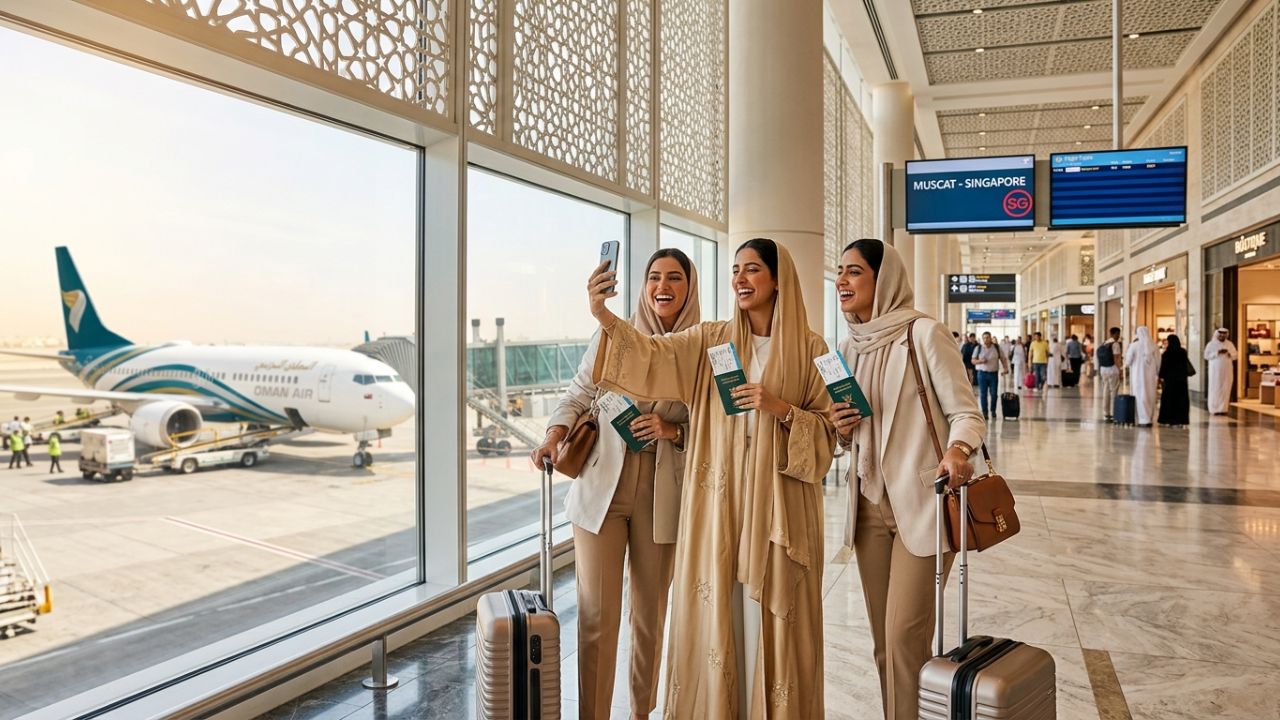
Image generated by AI
[Muscat, Oman – July 2, 2026]
Commercial aviation updates confirm Oman Air launches Singapore flights to establish a new Southeast Asian travel corridor. This nonstop service from Muscat (MCT) to Singapore Changi Airport (SIN) operates four times weekly.
Our analysis indicates this route supports the carrier's broader expansion plans into North Asian markets.
Direct Aviation Expansion into Southeast Asia
Gulf carriers are reorganizing their network routes to capture growing leisure travel demand from Asian source markets.
Oman Air has launched a nonstop service connecting its Muscat hub with Singapore Changi Airport.
The route operates four times each week using a Boeing 737 MAX single-aisle aircraft.
Our analysis indicates that the service represents a major step in the carrier's ongoing post-2024 restructuring plan.
By offering direct flights, the airline aims to promote Oman as a primary tourist destination rather than a simple transit corridor.
Singapore serves as a gateway to connect passengers with broader destinations through the oneworld alliance.
Early bookings are strong, with projected first-year seat load factors expected to reach the mid-to-high 70% range.
Contrast with Historical Flight Routes
The nonstop service is different from the carrier's previous flights to Singapore operated nine years ago.
The older route was operated with an intermediate stop in Kuala Lumpur, which reduced commercial returns.
Under the new strategy, the carrier operates with a restructured cost base and renegotiated supplier contracts.
- Direct Routing: Nonstop flights reduce travel times to approximately eight hours.
- Narrow-Body Operation: The route is one of the longest scheduled flights operated by a Boeing 737 MAX.
- Alliance Connectivity: Membership in the oneworld alliance enables seamless passenger transfer connections.
- Cost Efficiency: Workforce restructuring and route optimization programs support sustainable margins.
These changes help the airline maintain competitive pricing while minimizing fleet operating risks.
North Asian Tourism Markets as Next Priorities
Following the Singapore launch, the carrier is targeting tourist markets in North Asia.
Airline planners intend to announce at least one nonstop destination in the region within the next twelve months.
- China Market: High potential for cultural and heritage group travel packages to Oman's historic sites.
- Japan Market: Demand for nature-based tourism, hiking corridors, and coastal excursions.
- South Korea Market: Interest in less-crowded destinations with distinct geographical landscapes.
Oman's mountains, coastlines, and cultural heritage match the preferences of travelers from these countries.
Direct flights will support national goals to diversify local tourism arrivals away from regional mass tourism models.
Geopolitical Airspace Resilience and Local Impacts
Recent regional tensions in the Middle East have tested flight operations and airspace safety.
During conflicts, several regional airlines adjusted routes due to temporary airspace restrictions.
Oman's airspace remained open, allowing the carrier to handle diverted transit traffic.
However, regional uncertainty did cause a temporary drop of 8 to 10 percentage points in passenger load factors.
Booking levels have since recovered as regional travel conditions stabilized.
This resilience shows the strategic value of Muscat's geographical position as a secure gateway.
Corporate Restructuring and Fleet Optimization
The Singapore route launch is a result of a corporate transformation program started in early 2024.
The program focuses on reducing operating costs and maximizing aircraft use.
- Contract Reviews: Renegotiating supplier agreements to lower ground handling and catering costs.
- Route Rationalization: Discontinuing underperforming destinations to reallocate fleet resources.
- Staff Optimization: Restructuring the workforce to improve operational productivity.
- Onboard Enhancements: Improving cabin experiences on narrow-body fleets to compete on longer flights.
These efficiency measures provide the financial stability needed to support long-haul routes.
Sustainability and Environmental Considerations
Prioritizing fleet efficiency and carbon emissions is a key component of the route's rollout.
The carrier selected fuel-efficient narrow-body aircraft to minimize emissions on long-haul sectors.
- Fuel Efficiency: The Boeing 737 MAX uses advanced engines to reduce fuel burn.
- Slot Management: Airport coordinators optimized turnaround times at Changi Airport to reduce ground emissions.
- Fleet Harmonization: Standardizing aircraft models simplifies maintenance and lowers spare parts transport emissions.
These measures align with global aviation industry commitments to reduce environmental impact.
Economic and Diplomatic Synergy
The Singapore route serves as a practical tool for bilateral economic diplomacy.
Improved connectivity supports trade missions and business investment delegations between the two nations.
It facilitates cultural exchange programs and strengthens academic partnerships between universities.
Aviation remains a key driver of international trade and bilateral cooperation.
Key Takeaways
- Direct Air Link: Oman Air launched nonstop flights between Muscat and Singapore on Thursday.
- Flight Frequency: The service operates four times weekly using a Boeing 737 MAX narrow-body aircraft.
- Route Endurance: At eight hours, this route is one of the longest scheduled 737 MAX flights in the world.
- Future Expansion: The carrier expects to launch a new route to China, Japan, or South Korea within 12 months.
- Geopolitical Resilience: Oman's open airspace allowed the carrier to capture traffic during regional disruptions.
Oman Air Muscat-Singapore Route Specifications
| Route Segment Details | Weekly Flight Frequency | Aircraft Model Deployed | Estimated Flight Duration | Target Load Factor (Year 1) |
|---|---|---|---|---|
| Muscat to Singapore | 4 Flights Weekly | Boeing 737 MAX | ~8 Hours | Mid-to-High 70% Range |
| Singapore to Muscat | 4 Flights Weekly | Boeing 737 MAX | ~8 Hours | Mid-to-High 70% Range |
Future Target Markets in North Asia
| Target Country | Key Tourism Segment | Estimated Launch Timeline | Strategic Connectivity Goal |
|---|---|---|---|
| China | Heritage & historical group travel | Next 12 Months | Direct access to East Asian markets |
| Japan | Nature-based & coastal hiking | Next 12 Months | Premium independent traveler capture |
| South Korea | Eco-tourism & cultural travel | Next 12 Months | High-yield leisure corridor |
Why This Matters
Market trends suggest that long-haul narrow-body flights lower network operating costs.
Our analysis of the flight data indicates that because Oman Air deploys the 737 MAX, fuel efficiency increases. Consequently, the airline bypasses high-capacity widebody requirements on experimental routes.
This network expansion protects the carrier against regional transit hub declines. Travelers benefit from nonstop access to Muscat's premium nature destinations.
Industry Outlook
Expect carrier planning teams to announce a new nonstop North Asian destination within twelve months.
Competing Gulf airlines will explore medium-haul narrow-body operations to Southeast Asian airports.
Singapore slot coordinators will adjust gate schedules to support Oman's expanding flight frequencies.
FAQ
How often does Oman Air fly between Muscat and Singapore?
The nonstop service operates four times weekly in each direction between Muscat and Singapore Changi Airport.
What aircraft is deployed on the Muscat-Singapore route?
Oman Air operates a Boeing 737 MAX narrow-body aircraft on this eight-hour intercontinental route.
When did Oman Air begin its corporate transformation program?
The carrier introduced its transformation and restructuring program in early 2024 to optimize costs and routes.
Which North Asian markets is Oman Air targeting for future flights?
The airline is evaluating new nonstop routes to major airports in China, Japan, and South Korea.
Related Travel Guides
- Delta Airlines LAX Delta One Lounge Travel Chaos 2026
- Air India Boeing 777 Melbourne Flights Travel Chaos 2026
- SAS Airbus Order Copenhagen Travel Chaos 2026
Disclaimer: This article is strictly for informational and travel planning purposes. The specific flight metrics (frequencies, schedules, destinations, fleet models, and load factors) are based on Oman Air corporate statements available at the time of publication. Flight paths, slot availability, weather rules, airspace policies, and ticket booking rates are highly dynamic and subject to change. Travelers should check flight availability before booking.
Disclaimer
This article is for informational and educational purposes only. It does not constitute legal, financial, or professional advice. While we strive to provide accurate and up-to-date information, travel policies, regulations, and conditions change rapidly. Always verify information with official sources before making travel decisions. Nomad Lawyer makes no representations about the accuracy, reliability, completeness, or suitability of the information provided. Readers should consult qualified professionals for advice specific to their circumstances. The views expressed in this article are those of the author and do not necessarily reflect the views of Nomad Lawyer.
Preeti Gunjan
Contributor & Community Manager
A passionate traveller and community builder. Preeti helps grow the Nomad Lawyer community, fostering engagement and bringing the reader experience to life.
Learn more about our team →