
Sydney and Auckland Airports Hit by 303 Flight Delays and Cancellations in August 2026
Operational pressures and volatile weather triggered 303 flight delays and six cancellations across Sydney and Auckland hubs on August 26, 2026, disrupting thousands of travelers.

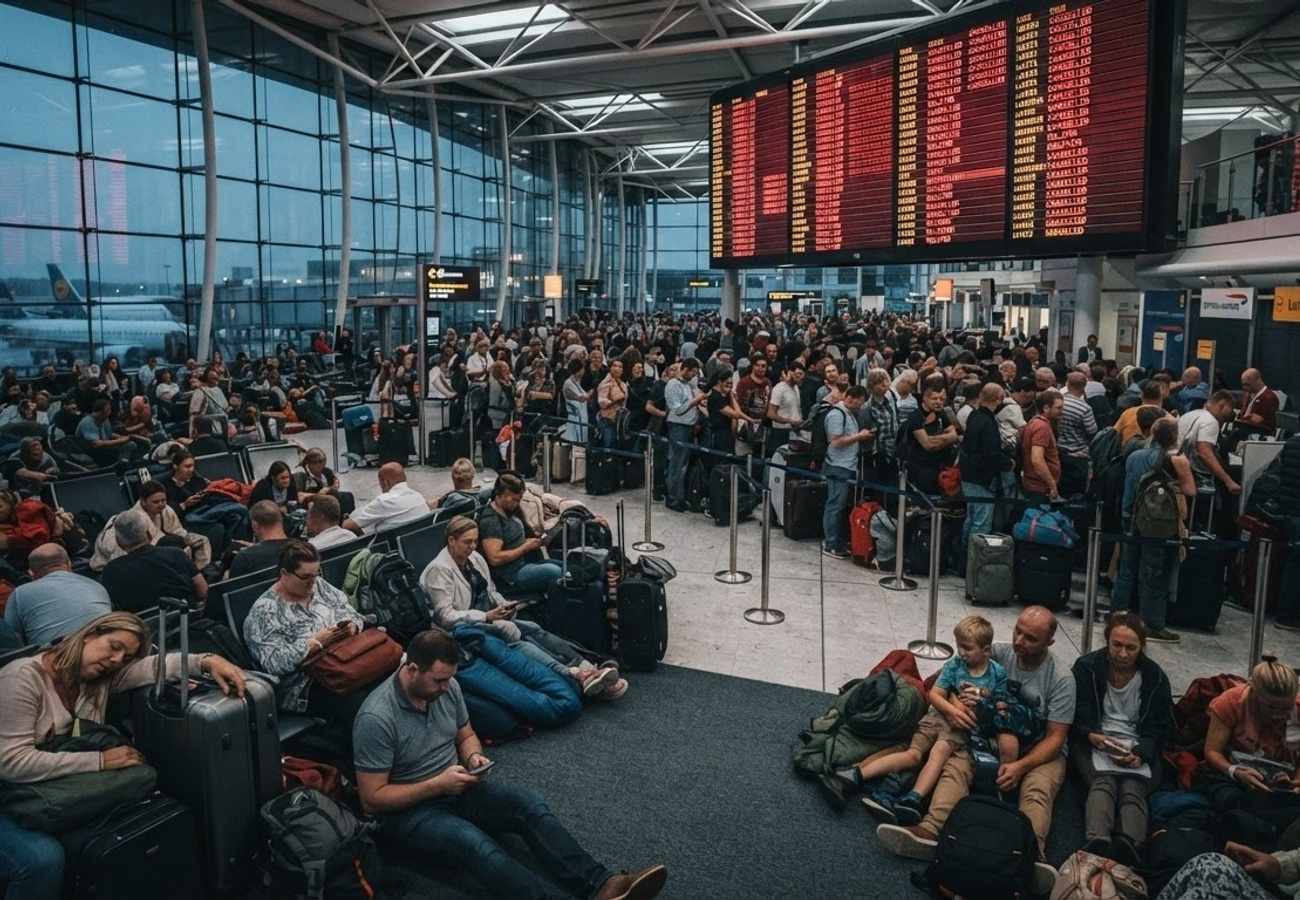
Image generated by AI
A combined total of 303 delayed flights and six cancellations paralyzed travel across Oceania's primary gateways on August 26, 2026, as Sydney and Auckland airports struggled with a convergence of weather volatility and operational bottlenecks. The disruptions impacted thousands of passengers across trans-Tasman and long-haul sectors, highlighting the fragility of the region's current aviation infrastructure.
The crisis unfolded at a time when both Sydney Kingsford Smith Airport and Auckland Airport are operating at or beyond their pre-pandemic capacities. With demand for domestic and international travel surging, the lack of operational "slack" in the system means that minor incidents now trigger widespread cascading failures.
Systemic Pressure at Sydney and Auckland Gateways
Current operational data indicates that Sydney Airport manages a grueling schedule of over 400 flights daily, connecting to approximately 100 different destinations. This high volume is handled by a diverse mix of low-cost carriers and full-service airlines, leaving the hub susceptible to "knock-on" effects where a single late arrival disrupts multiple subsequent departures.
On August 26, flight tracking data revealed that delays were most acute during the morning and early afternoon peak windows. While most aircraft eventually took off, the initial setbacks left flight crews and aircraft out of position, creating a rolling wave of tardiness. In Auckland, the impact was heavily felt on short-haul regional routes to centers such as Tauranga and Blenheim, alongside several international departures.
Because these two hubs serve as the primary conduits for travel between Australia, New Zealand, the Pacific Islands, and North America, simultaneous failures at both locations amplified the chaos for connecting passengers.
Safety Concerns and Air Traffic Control Strain in Sydney
The recent surge in disruptions is occurring against a worrying backdrop of safety concerns within Australian airspace. Industry reports have highlighted a series of "close calls" involving major airlines in the Sydney sector, sparking an urgent debate regarding staffing levels and the mental workload of air traffic controllers.
Within the last 30 days, at least six safety-related incidents have been documented in the Sydney area, including runway incursions and ground-movement errors. While officials have not directly linked the August 26 delays to these specific safety events, the underlying pressure on air traffic management reduces the system's ability to absorb daily irregularities.
Parliamentary and regulatory filings in Australia have previously detailed how chronic staffing shortages in air traffic control have forced airlines to accept ground delay programs. These systemic constraints mean that when weather or technical glitches occur, the environment is too fragile to recover quickly, leading to the spike in cancellations and delays seen this week.
Weather Volatility and Infrastructure Bottlenecks
Atmospheric conditions played a significant role in the August 26 disruptions. Meteorological data for the Sydney basin indicated unstable weather patterns around the airport precinct. Even minor shifts in wind direction, low cloud cover, or sporadic showers force air traffic controllers to increase the spacing between arriving and departing aircraft, which immediately reduces the hourly throughput of the airport.
In New Zealand, the situation is further complicated by technical failures and ongoing construction. Aviation bulletins have noted a rise in maintenance-related aircraft withdrawals at Auckland, forcing airlines to perform last-minute equipment swaps.
Furthermore, Auckland Airport is currently executing an aggressive infrastructure upgrade program to modernize its airfield and expand terminal capacity. While these improvements are intended to prevent future crises, the active construction zones create short-term operational constraints that exacerbate delays when paired with poor weather.
Quantifying the Impact on Regional Connectivity
The operational failure manifested as overcrowded check-in halls, surging queues at security checkpoints, and packed departure lounges. For passengers utilizing Sydney or Auckland as transit points to secondary cities, these delays resulted in missed connections and forced overnight stays.
Flight tracking platforms recorded a spectrum of disruptions:
- Minor Delays: 15 to 30 minutes (affecting a large volume of flights).
- Major Disruptions: Exceeding 60 minutes (concentrated in morning departures).
- Cancellations: Six flights completely scrubbed from the schedule.
Data from Sydney shows that while average timings usually remain stable, the airport is prone to sharp "spikes" in cancellations during periods of staffing shortages or weather alerts. Conversely, documents from Auckland suggest that while airport-led delays are relatively low, airline-specific network issues often drive the overall variance in schedule reliability.
| Metric | Sydney & Auckland Combined (Aug 26) |
|---|---|
| Total Delayed Flights | 303 |
| Total Cancellations | 6 |
| Primary Peak Windows | Morning & Early Afternoon |
| Key Affected Routes | Trans-Tasman, Asia, Pacific Islands, North America |
Why This Matters: The Traveler's Perspective
For the modern traveler, this event signals a shift in how trips through Oceania must be planned. The era of the "tight connection" is effectively over at these hubs. Because the system is operating at maximum capacity with minimal redundancy, a 30-minute delay in Sydney can realistically result in a missed flight in Auckland.
From a logistical standpoint, the combination of infrastructure work and staffing shortages creates a "permanent state of fragility." Travelers are no longer just fighting the weather; they are fighting a systemic capacity gap. To mitigate this, passengers should now treat a 3-hour connection buffer as the minimum safety margin, rather than the luxury it once was.
Furthermore, the disparity in consumer protection means passengers must be proactive. Unlike the EU's strict EC 261 regulations, Oceania's frameworks rely more heavily on individual airline charters. Travelers should meticulously document every hour of delay and keep all receipts for food and lodging, as reimbursement is often granted only upon formal request and proof of hardship.
As Oceania's hubs struggle to balance record-breaking demand with aging infrastructure, the risk of systemic collapse during peak travel windows remains high.
Related Travel Guides
Disclaimer
This article is for informational and educational purposes only. It does not constitute legal, financial, or professional advice. While we strive to provide accurate and up-to-date information, travel policies, regulations, and conditions change rapidly. Always verify information with official sources before making travel decisions. Nomad Lawyer makes no representations about the accuracy, reliability, completeness, or suitability of the information provided. Readers should consult qualified professionals for advice specific to their circumstances. The views expressed in this article are those of the author and do not necessarily reflect the views of Nomad Lawyer.
Kunal K Choudhary
Co-Founder & Contributor
A passionate traveller and tech enthusiast. Kunal contributes to the vision and growth of Nomad Lawyer, bringing fresh perspectives and driving the community forward.
Learn more about our team →