
Atlanta Hartsfield-Jackson and Chicago O'Hare Lead Global Flight Disruptions in 2026
New aviation data reveals that Atlanta and Chicago O'Hare are now the world's most disruption-prone airports due to record passenger volumes and severe weather.

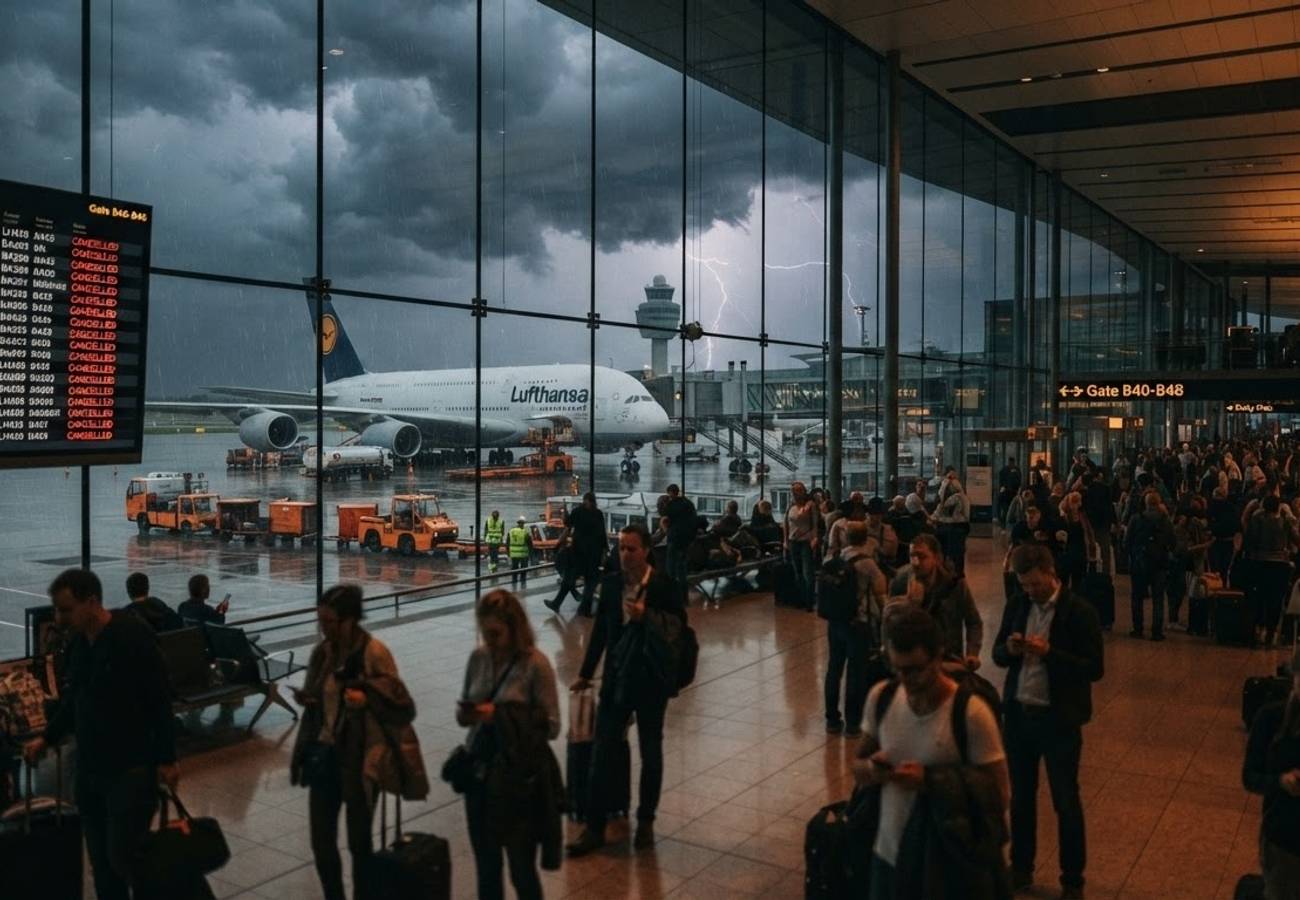
Image generated by AI
Two of the United States' largest aviation hubs, Hartsfield-Jackson Atlanta International (ATL) and Chicago O’Hare International (ORD), have emerged as the global epicenters for flight cancellations and delays. This trend is driven by a volatile combination of record-breaking passenger numbers, severe summer weather, and systemic ground stoppages.
The scale of these operations means that even minor percentage shifts in efficiency result in massive raw numbers of stranded passengers. As travel demand reaches unprecedented heights, the lack of operational "slack" in these megahubs is creating a ripple effect that impacts flight schedules across North America and international networks.
U.S. Megahubs Anchor Global Disruption Hotspots
Recent data from aviation tracking providers and live disruption dashboards indicate that ATL and ORD consistently occupy the top positions for daily flight cancellations. The sheer density of their flight schedules amplifies every operational hiccup, turning local delays into global news.
According to Airports Council International, Atlanta maintains its status as the world's busiest airport, having processed over 108 million passengers in 2024. Chicago O'Hare similarly ranks among the top global hubs for both total passenger volume and aircraft movements. Because they handle such immense traffic, a small operational failure at these sites produces a higher volume of canceled flights than a total system collapse at a smaller airport.
Flight tracking tools like FlightQueue and FlightAware show that these two hubs frequently trade the top spot for same-day cancellations during peak windows. When the system reaches a breaking point, hundreds of departures are grounded in a single afternoon, leaving thousands of travelers stranded and forcing airlines to scramble for alternative routing.
Weather Ground Stops Creating Global Bottlenecks
The Federal Aviation Administration (FAA) identifies weather as the primary driver of flight delays in the U.S., outweighing runway constraints and general traffic volume. To maintain safety during severe weather, traffic managers implement ground delay programs and ground stops, which effectively freeze arrivals and departures.
Atlanta and Chicago are uniquely susceptible to these interventions due to their geography:
- Atlanta (ATL): Highly exposed to intense summer thunderstorms and convective weather patterns common in the American Southeast.
- Chicago (ORD): Vulnerable to lake-effect snow, severe icing events, and aggressive frontal systems throughout the year.
The fragility of these hubs was highlighted during the global technology outage of July 2024. Reports indicate that as major airlines requested nationwide ground stops, Atlanta and O’Hare recorded some of the highest concentrations of canceled flights. This event demonstrated how a technical failure, layered over a busy summer schedule and scattered storms, can push these airports to the top of global "misery maps."
Under the U.S. Department of Transportation's National Aviation System delay categories, disruptions are not limited to extreme weather. They include airport operations and heavy traffic volume, proving that even marginal weather conditions can trigger a cascade of failures when the airport is operating at near-maximum capacity.
Record Passenger Volumes Shrink Recovery Windows
The surge in U.S. travel demand has left aviation infrastructure with almost no margin for error. FAA briefings prior to the 2024 summer season noted that the period was one of the busiest in history, with the ten busiest travel days on record occurring within a very narrow timeframe.
At ATL and ORD, this manifests as "banks" of connecting flights—tightly timed waves of arrivals and departures. If a single bank is interrupted by a ground stop or crew shortage, the delay propagates through every subsequent wave, often bleeding into the following calendar day. Because aircraft and flight crews are utilized at maximum efficiency, there are few backup resources available to reset the schedule quickly.
Consumer research from insurance providers and travel platforms suggests that while the overall national cancellation rate has improved since the pandemic era, summer peaks remain high-risk. For the modern traveler, flying through a megahub during a holiday weekend now carries a statistically higher risk of experiencing a system-wide reset.
Structural Drivers of Global Impact
Aviation performance experts attribute the dominance of Atlanta and Chicago in disruption rankings to three primary structural factors:
1. Volume and Scale Both airports serve as the primary hubs for multiple major carriers. When a slowdown occurs at a site hosting thousands of daily movements, the congestion escalates faster than at any other airport in the world.
2. Geographic Crossroads Atlanta is the critical link between the U.S. Southeast, the rest of the domestic market, and Latin America. Chicago O'Hare anchors the primary transcontinental and transatlantic corridors. A disruption at either center can effectively sever connections between continents.
3. Hub-and-Spoke Network Design Many passenger itineraries rely on a single connection through these megahubs, especially those traveling from smaller regional cities to international destinations. If a runway closes at ORD or ATL, there are often very few viable rerouting options that do not involve massive detours or overnight hotel stays.
In contrast, other global airports with similar passenger counts often operate in more stable climates or utilize a more distributed network, which prevents a single local storm from impacting the global flight map.
Strategic Advice for Passengers at High-Risk Hubs
For those scheduled to transit through Atlanta or Chicago, data from recent travel seasons suggests specific strategies to mitigate risk. Morning departures generally experience fewer disruptions than late-afternoon or evening flights, as the latter are subject to the accumulated delays of the previous twelve hours.
Travelers are encouraged to:
- Extend Layover Times: Budget significantly more time for connections during the summer thunderstorm season or winter snow peaks.
- Utilize Live Dashboards: Monitor FAA ground delay programs and airline-specific risk scores via apps before heading to the airport.
- Identify Alternatives Early: When disruption indicators rise at ATL or ORD, available seats on alternative flights vanish rapidly as airlines consolidate passengers.
The era of the megahub now requires a shift in traveler mindset: the largest airports are no longer just the most convenient, but also the most volatile.
Related Travel Guides
Disclaimer
This article is for informational and educational purposes only. It does not constitute legal, financial, or professional advice. While we strive to provide accurate and up-to-date information, travel policies, regulations, and conditions change rapidly. Always verify information with official sources before making travel decisions. Nomad Lawyer makes no representations about the accuracy, reliability, completeness, or suitability of the information provided. Readers should consult qualified professionals for advice specific to their circumstances. The views expressed in this article are those of the author and do not necessarily reflect the views of Nomad Lawyer.
Raushan Kumar
Founder & Lead Developer
Full-stack developer with 11+ years of experience and a passionate traveller. Raushan built Nomad Lawyer from the ground up with a vision to create the best travel and law experience on the web.
Learn more about our team →