
New York’s 9/11 Memorial Solidifies Status as Global Heritage Tourism Powerhouse
The National September 11 Memorial & Museum has become a primary driver for NYC heritage tourism, attracting global visitors through emotional travel experience

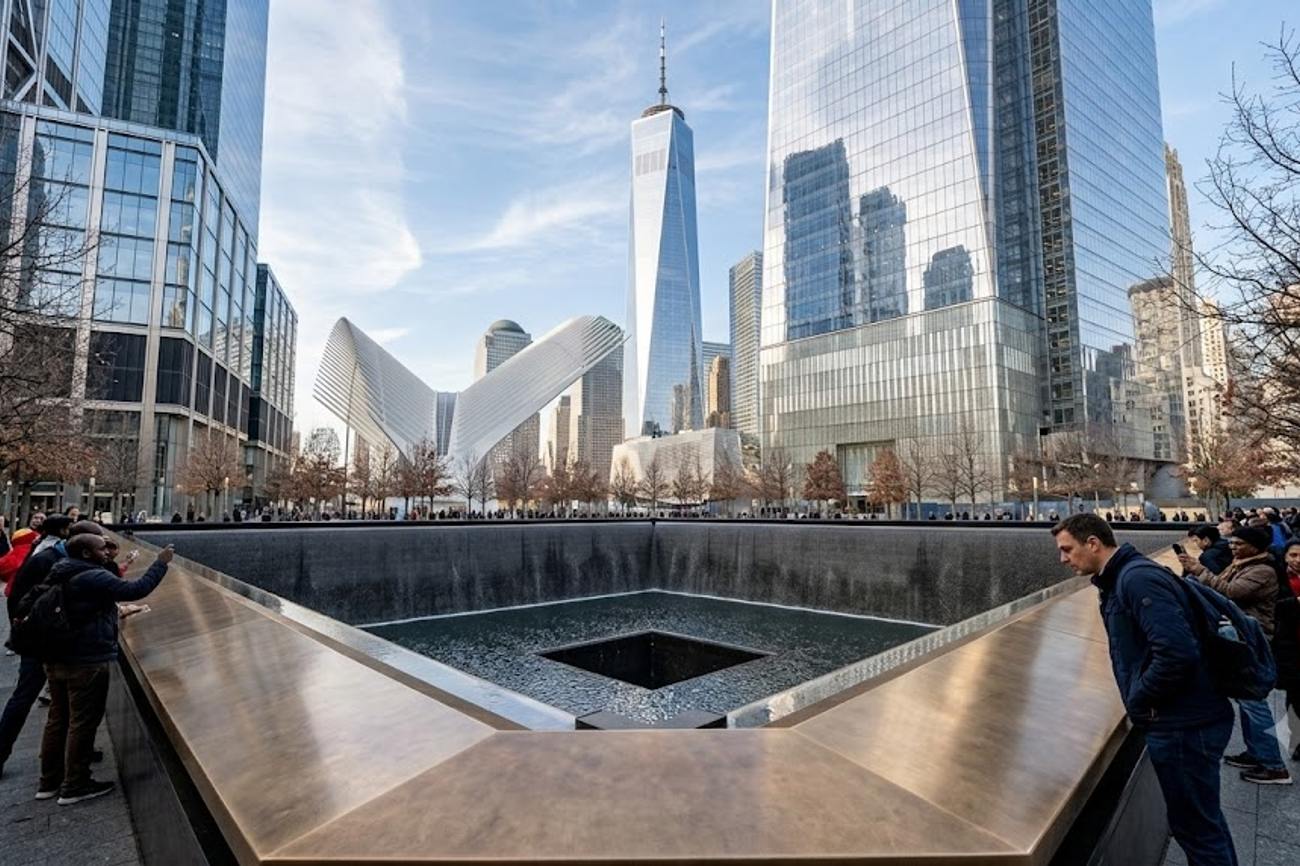
Image generated by AI
New York City
The National September 11 Memorial & Museum has established itself as a cornerstone of heritage tourism in the United States, drawing millions of global visitors to the site of the World Trade Center. Located in the heart of Lower Manhattan, the complex serves as a primary site for reflection on the attacks of September 11, 2001, and the recovery efforts that followed. By blending architectural solemnity with detailed historical archives, the site has shifted from a place of local mourning to a global landmark where travelers from nearly every nation converge to study contemporary world history.
Preserving Global Memory in Lower Manhattan
The outdoor memorial occupies the original footprint of the World Trade Center, serving as a permanent tribute to those who perished during the 2001 terrorist attacks and the 1993 bombing. The architectural centerpiece consists of two massive reflecting pools situated exactly where the Twin Towers once stood. These pools create a stark, quiet contrast to the surrounding intensity of New York City’s financial district.
The edges of these pools feature the engraved names of the victims, a design choice that allows visitors to move beyond statistics and connect with the individual human stories of the tragedy. This transition from a site of absolute destruction to a space of curated remembrance has fundamentally altered the urban fabric of Lower Manhattan. The area has evolved into a comprehensive visitor district where high-stakes business, public leisure, and cultural tourism coexist, providing a diversified experience for both domestic and international tourists.
Deepening Historical Context via the 9/11 Museum
While the outdoor pools offer a space for quiet reflection, the National September 11 Memorial Museum provides the academic and narrative depth required for a full understanding of the events. The museum utilizes a combination of multimedia installations, personal testimonies, and salvaged artifacts to chronicle the timeline of the September 11 attacks and the preceding 1993 bombing.
The facility houses authentic debris and objects recovered from the rubble, creating a tangible link to the event. These exhibits emphasize the bravery of first responders and the resilience of the survivors, offering international visitors a critical perspective on the role of the United States in global geopolitical affairs. This educational focus has made the museum a primary target for student groups and cultural tourists who prioritize historical literacy over traditional sightseeing.
The Surge of Heritage Tourism in the NYC Economy
The trajectory of the 9/11 Memorial mirrors a wider shift in global travel patterns toward heritage and cultural immersion. Modern travelers are increasingly eschewing superficial sightseeing in favor of "meaningful travel"—experiences that offer emotional resonance and a deeper understanding of a destination's soul. While New York City has long been marketed for its shopping, Broadway shows, and iconic skyline, the 9/11 Memorial adds a layer of gravity and intellectual depth to the city's brand.
This influx of heritage tourists provides a significant economic stimulus to the Lower Manhattan area. Visitors who arrive for the memorial frequently extend their stay to explore local hotels, dining establishments, and nearby museums. This synergy demonstrates how the strategic preservation of a historical site can act as a catalyst for broader urban redevelopment and destination management.
A Unique Perspective for International Visitors
For the global traveler, the memorial provides a necessary counterbalance to the fast-paced, commercial energy of Manhattan. The integration of greenery, open public spaces, and the rhythmic sound of falling water in the reflecting pools offers a sanctuary of stillness.
The dual nature of the site—the quietude of the outdoor memorial and the intense, detailed narrative of the museum—creates a comprehensive emotional arc for the visitor. This accessibility makes the site viable for a diverse demographic, ranging from families and educational cohorts to solo travelers seeking a connection to a pivotal moment in 21st-century history.
The Rise of Memorial-Based Travel Frameworks
The success of the 9/11 Memorial highlights a growing industry trend: the professionalization of memorial tourism. Global destination managers are increasingly recognizing that sites of tragedy, when handled with authenticity and respect, can preserve history for future generations while attracting sustainable tourism.
The 9/11 Memorial serves as a blueprint for this approach, balancing the need for high-volume visitor management with the requirement for a somber, respectful atmosphere. For tour operators and travel planners, the site is no longer an optional add-on but a core component of any New York itinerary. It encourages a shift in perspective, prompting visitors to view the city not just as a center of commerce, but as a symbol of resilience and recovery.
Why This Matters: The Evolution of the Traveler's Journey
For the modern traveler, the shift toward heritage sites like the 9/11 Memorial indicates that the "bucket list" mentality is being replaced by a quest for emotional intelligence. Visiting this site is not merely about checking a landmark off a list; it is an exercise in empathy.
From a logistical standpoint, this trend forces cities to rethink how they manage "dark tourism" or memorial sites. The challenge lies in ensuring that the commercialization of the surrounding area does not infringe upon the sanctity of the remembrance space. For the visitor, this means the experience is now curated to move them from a state of shock (through the museum's artifacts) to a state of peace (through the reflecting pools), creating a psychological journey that mirrors the city's own path from tragedy to rebuilding.
Related Travel Guides
Disclaimer
This article is for informational and educational purposes only. It does not constitute legal, financial, or professional advice. While we strive to provide accurate and up-to-date information, travel policies, regulations, and conditions change rapidly. Always verify information with official sources before making travel decisions. Nomad Lawyer makes no representations about the accuracy, reliability, completeness, or suitability of the information provided. Readers should consult qualified professionals for advice specific to their circumstances. The views expressed in this article are those of the author and do not necessarily reflect the views of Nomad Lawyer.
Kunal K Choudhary
Co-Founder & Contributor
A passionate traveller and tech enthusiast. Kunal contributes to the vision and growth of Nomad Lawyer, bringing fresh perspectives and driving the community forward.
Learn more about our team →