
Nordwind Airlines Maintains Rare Monthly Flight Link Between Moscow and Pyongyang in 2026
Russia's Nordwind Airlines continues its strategic monthly passenger service between Moscow and Pyongyang, providing a rare direct air corridor into North Korea amid deepening geopolitical ties.

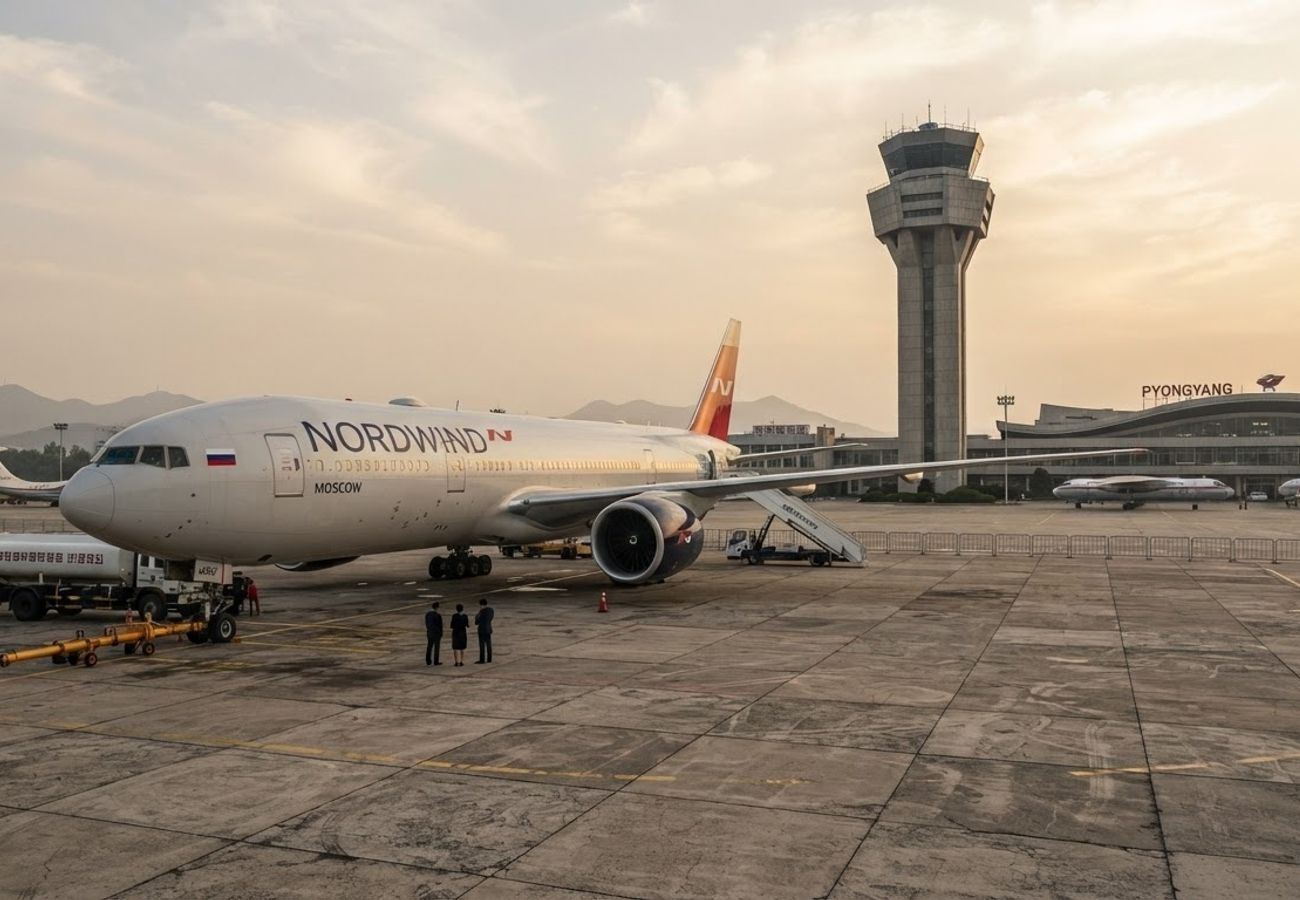
Image generated by AI
A single monthly flight is currently serving as one of the only direct aerial lifelines between Moscow and Pyongyang, as Nordwind Airlines sustains a high-stakes connection into the world's most isolated nation. This rare corridor, established in July 2025, persists despite sweeping international sanctions, reflecting a calculated geopolitical alignment between Russia and North Korea.
The service represents a significant shift in regional connectivity, marking the first time in decades that a direct air link has been restored between the two capitals. While most of the world remains locked out of the Democratic People's Republic of Korea (DPRK), this specific Russian leisure carrier has carved out a niche, albeit limited, operational window.
Moscow-Pyongyang Air Corridor and Operational Frequency
Current aviation data and tourism records confirm that Nordwind Airlines continues to execute its Moscow–Pyongyang rotations on a strict monthly basis. The route was formally authorized by Russia’s civil aviation regulator following a strategic push by the Association of Tour Operators of Russia to establish charter services from Moscow’s Sheremetyevo Airport.
Industry reports indicate that while the flights were technically approved for a higher frequency—potentially operating several times per week—the airline has opted for a once-a-month schedule. This conservative approach allows the carrier to gauge a highly specialized market without overextending capacity.
In the broader context of global aviation, the options for entering North Korea are nearly non-existent. Nordwind’s service operates alongside the extremely limited network of Air Koryo, which maintains sparse connections from Pyongyang to Vladivostok, Shenyang, and Beijing. Flight tracking data suggests that Nordwind has maintained this low-frequency pattern to mitigate risk while fulfilling a politically significant mandate.
Restricted Tourism and the Russian Market
Despite the existence of a direct flight, entry into North Korea is far from open. Tourism remains a tightly choreographed experience, available only through state-sanctioned tour operators. Russian travelers utilizing Nordwind’s service are typically part of bundled packages that include flights and highly supervised itineraries within Pyongyang and a few selected provinces.
These travel packages often involve rigorous requirements, including:
- Mandatory group travel arrangements.
- Full prepayment in hard currency.
- Advance surrender of passports for visa processing.
Market analysis suggests these trips are primarily targeted at Russian citizens who view North Korea as an "exotic" alternative to traditional vacation spots. Despite the geopolitical climate, Russian-language travel forums indicate a steady demand driven by the novelty of the destination and relatively low entry-level package pricing.
Data on visitor flows indicate a marked increase in Russian arrivals since the DPRK began a gradual border reopening in 2023. While absolute numbers remain low compared to global standards, Russian visitor statistics have surged several times over compared to 2023 levels, a trend directly linked to the Nordwind flight route and expanded rail connectivity.
Strategic Alignment and Multi-Modal Transport
The persistence of the Nordwind route is viewed by analysts as a physical manifestation of the 2024 strategic partnership agreement between Moscow and Pyongyang. This diplomatic pivot has seen the two nations deepen ties in military and economic spheres, often in direct defiance of Western sanctions.
Aviation is only one part of this expanded infrastructure. Other transport links have mirrored the flight route's growth:
- Rail Connectivity: Limited passenger rail services between Moscow and Pyongyang have resumed, operating roughly twice a month on one of the longest rail journeys globally.
- Freight Logistics: Land border crossings near the Russian town of Khasan have seen increased activity, facilitating the movement of goods that are otherwise blocked by international trade restrictions.
The presence of Russian aircraft at Pyongyang’s Sunan International Airport is widely seen as a strategic signal. For the DPRK, it reduces total reliance on China for international access. For Russia, it solidifies a partnership with a politically aligned state during a period of extreme diplomatic isolation.
Sanctions Pressure and Flight Logistics
Operating this route is not without significant risk. Nordwind Airlines operates under a cloud of Western export controls and sanctions, particularly from the United States. These restrictions have historically targeted the airline's aircraft movements and have created systemic challenges regarding the procurement of spare parts for Western-built aircraft.
Logistically, the flight path presents unique challenges. The journey from Russia’s Far East into the Korean Peninsula requires precise coordination with North Korean air traffic controllers. Due to patchy international radar coverage and the secretive nature of DPRK airspace, aviation enthusiasts have noted that Nordwind flights frequently vanish from public tracking platforms upon entering North Korean-controlled zones.
By maintaining a monthly rather than daily schedule, Nordwind minimizes its operational exposure. This allows the airline to utilize a specialized crew and maintain a lean operational plan that can be quickly adjusted if political tensions or regulatory pressures shift abruptly.
Future Implications for Regional Access
While a single monthly flight may seem negligible in the context of global aviation, in the DPRK, it is a major variable. Travel experts suggest that such low-frequency charters often serve as "proof of concept" for future expansions. If the political alliance continues to harden, there is a possibility that Nordwind or other Russian carriers could increase flight frequencies to a weekly or daily schedule.
For the average traveler, this route remains an exclusive and highly regulated option, largely restricted to Russian nationals and approved groups. However, for geopolitical observers, the departure of a Nordwind jet from Sheremetyevo serves as a real-time barometer for the strength of the Moscow-Pyongyang axis.
The continued operation of this route underscores how political necessity can override commercial logic in the most isolated corners of the aviation map.
Related Travel Guides
Disclaimer
This article is for informational and educational purposes only. It does not constitute legal, financial, or professional advice. While we strive to provide accurate and up-to-date information, travel policies, regulations, and conditions change rapidly. Always verify information with official sources before making travel decisions. Nomad Lawyer makes no representations about the accuracy, reliability, completeness, or suitability of the information provided. Readers should consult qualified professionals for advice specific to their circumstances. The views expressed in this article are those of the author and do not necessarily reflect the views of Nomad Lawyer.
Raushan Kumar
Founder & Lead Developer
Full-stack developer with 11+ years of experience and a passionate traveller. Raushan built Nomad Lawyer from the ground up with a vision to create the best travel and law experience on the web.
Learn more about our team →