
Saudi Arabia Targets $1B Business Hotel Expansion Amid Corporate Demand
Saudi Arabia targets a $1 billion investment push in mid-market business hotels through 2026, addressing critical accommodation shortages for corporate travelers across Riyadh, Jeddah, and Dammam as Vision 2030 projects accelerate.

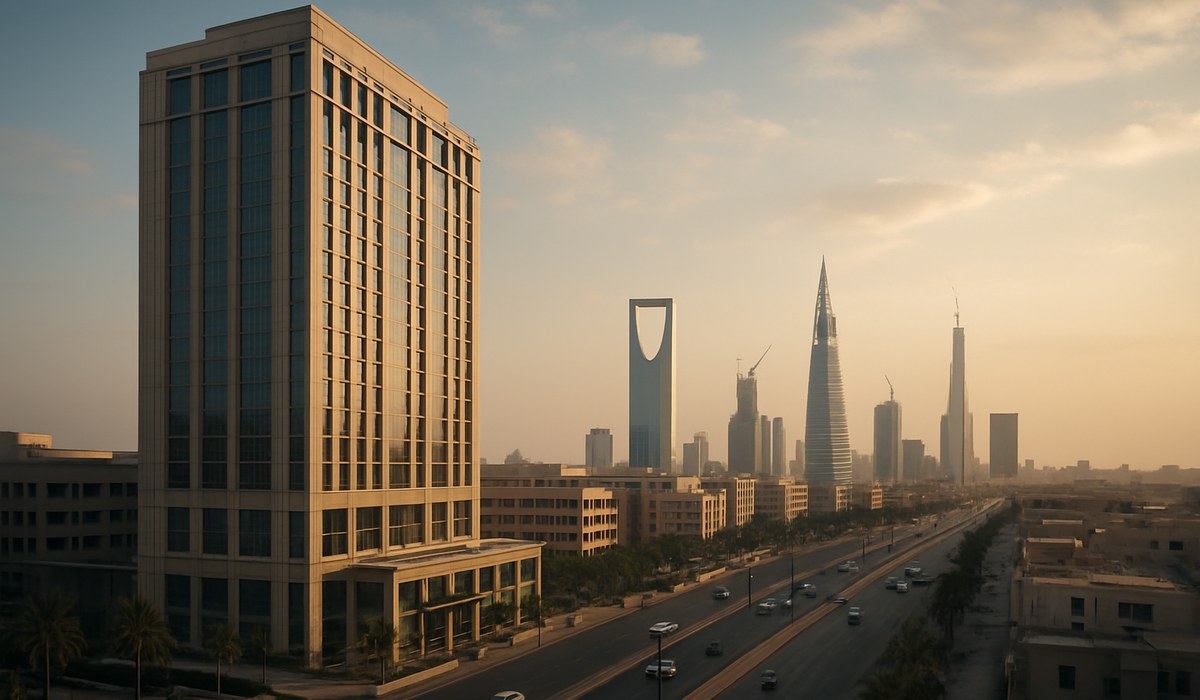
Image generated by AI
Saudi Arabia Targets $1B Business Hotel Expansion to Close Corporate Accommodation Gap
Saudi Arabia is redirecting $1 billion in capital toward mid-market and select-service business hotels, addressing a structural shortage in affordable corporate accommodation across major commercial hubs. The investment surge targets Riyadh, Jeddah, and Dammam—three cities experiencing sustained growth in business travel driven by Vision 2030 infrastructure projects and expanding meetings, incentives, conferences, and exhibitions (MICE) activity. Unlike luxury-focused development dominating recent years, this new wave prioritizes compact, efficient properties that serve project teams, consultants, and frequent business visitors seeking value-oriented stays near commercial districts and transportation hubs.
Riyadh's Corporate Travel Boom Reveals Mid-Market Shortage
Corporate demand in Riyadh now outpaces available mid-range supply, creating pricing pressure and booking challenges for business travelers. High occupancy rates in central commercial submarkets have pushed many corporate guests toward either premium luxury properties during peak periods or properties located far from business districts. Global distribution channels and travel management companies report increasing demand from construction firms, engineering consultants, and professional services companies working on government-backed Vision 2030 projects—most seeking rooms priced below luxury categories. This supply-demand imbalance has made Riyadh an attractive hub for developers planning new business-class properties. Recent feasibility studies confirm that mid-market hotels with standardized room designs, strong WiFi connectivity, and dedicated workspaces command high occupancy rates year-round. Booking.com market data shows business travelers now account for over 40% of corporate bookings in Riyadh's financial districts, up significantly from 2024 levels.
Mid-Market and Extended-Stay Formats Drive Investment Strategy
The $1 billion investment deployment favors two distinct property types: compact mid-market select-service hotels and apartment-style extended-stay concepts. Mid-market properties feature 120–200 rooms with efficient floor plans, limited but high-quality food and beverage offerings, and premium business amenities like 24-hour business centers and meeting pods. These standardized designs reduce construction costs by 30–40% compared to full-service hotels while maintaining corporate guest expectations. Extended-stay properties, positioned around Jeddah and emerging industrial zones near Riyadh, offer kitchenette-equipped units, on-site laundry, and flexible communal workspaces for consultants and project managers staying weeks or months. Investment materials reveal that most funding flows through joint ventures between local Saudi developers and international hospitality groups, sharing development risk while expanding brand presence. Leading operators including Accor, IHG, and Marriott have announced multiple mid-market property launches scheduled for 2026–2027 completion. This partnership model allows international brands to accelerate expansion while maintaining local market expertise and regulatory navigation.
MICE Growth and Vision 2030 Projects Accelerate Business Hotel Demand
Saudi Arabia's emergence as a regional MICE destination directly supports business hotel investment rationale. Recent international conference agreements signed in Riyadh target 150+ major events annually by 2028, drawing thousands of corporate delegates requiring centrally located accommodation near convention venues and airports. The Kingdom's expanding convention infrastructure—including new exhibition halls in both Riyadh and Jeddah—requires hotel stock configured specifically for business travelers rather than resort guests. Vision 2030-linked mega-projects across energy, logistics, culture, and sports sectors generate sustained visiting executive and technical specialist flows. These travelers prioritize functional accommodation near project sites over resort-style amenities, encouraging business hotel development in secondary commercial nodes beyond traditional downtown cores. Industry analysis suggests robust corporate travel demand through 2030, with project teams and MICE segments driving 60% of incremental business hotel bookings. Expedia corporate travel data confirms that business visitors increasingly book properties based on proximity to meeting venues and project sites rather than luxury positioning.
Secondary Cities and Domestic Corporate Travel Reshape Development Pipeline
Decentralization efforts tied to Vision 2030 are driving corporate travel within Saudi Arabia's secondary cities and emerging economic centers. Government agencies and private firms now rotate staff between provinces, supporting development of non-oil sectors across the Kingdom. Market reports indicate growing interest in business-class hotels in emerging urban centers hosting industrial parks, logistics corridors, or administrative hubs. Cities along major transport routes and near domestic airports attract feasibility studies for 80–120-room business hotels serving sales teams, auditors, trainers, and regional managers. Properties in Al Khobar, Yanbu, and Abha are currently in advanced planning phases, with target openings in 2027–2028. This geographic diversification spreads investment risk while capturing underserved domestic business travel segments previously unaddressed by national hotel inventory. Development pipelines now include dedicated business hotels in 8+ secondary cities, representing approximately 25% of the $1 billion total investment commitment.
What Guests Get
Business hotel properties developed under this investment initiative offer streamlined amenities specifically designed for corporate stays:
- High-speed internet and dedicated workspaces in rooms and common areas
- Efficient check-in/check-out systems supporting quick turnarounds for short-stay guests
- Meeting rooms and conference pods ranging from 2-person huddle spaces to 50-person venues
- Flexible room configurations including studio, one-bedroom, and suite options for extended stays
- Kitchenettes and laundry facilities in extended-stay units for multi-week assignments
- Business center services including printing, scanning, and video conferencing equipment
- Proximity to financial districts, transportation hubs, and project sites (not resort locations)
- 24-hour dining options with quick-service formats rather than full-service restaurants
- Ground transportation partnerships with car rental and shuttle services to airports
Investment and Development Timeline
| Property Type | Target Unit Count | Average Daily Rate (SAR) | Typical Market Location | Projected Opening Timeline | Primary Investor Type |
|---|---|---|---|---|---|
| Mid-market select-service | 150 rooms | 450–650 | Central business districts | 2026–2027 | Joint ventures (local + international) |
| Extended-stay apartments | 80–120 units | 350–500 | Near industrial zones | 2027–2028 | Private real estate vehicles |
| Budget business format | 120–180 rooms | 280–400 | Secondary commercial nodes | 2027–2029 | Regional hospitality groups |
| MICE-adjacent hotel | 200–300 rooms | 500–750 | Convention center vicinity | 2026–2027 | Large international brands |
| Domestic-focused business | 90–140 rooms | 300–450 | Secondary cities | 2027–2029 | Local developers |
What This Means for Travelers
Business travelers and corporate groups will benefit from expanded mid-market options across Saudi Arabia's major commercial hubs through 2027. Here's what to expect:
-
More competitive pricing for business-class rooms in Riyadh, Jeddah, and Dammam as new supply enters the market, potentially reducing corporate daily rates by 15–20%.
-
Shorter booking windows for mid-range properties; reserve 4–6 weeks in advance during peak MICE season (October–November) to secure preferred locations near business districts.
-
Better proximity to project sites and business districts compared to existing inventory; new properties cluster strategically around commercial nodes and transportation hubs rather than resort zones.
-
Enhanced business amenities including workspace design and digital connectivity as standard features, even in economy-positioned properties.
-
Extended-stay flexibility for project teams and consultants; kitchenette-equipped units support longer assignments with cost savings compared to daily room bookings.
-
Improved MICE infrastructure as new convention-adjacent hotels open; expect direct venue access and dedicated conference services aligned with international standards.
-
Domestic city accessibility as secondary cities gain business hotel stock; regional travel becomes more economical and accommodating for training sessions, audits, and administrative visits.
Plan corporate trips to major Saudi cities with 8–12 week lead time for peak periods, allowing leverage of new property openings and competitive rate negotiations with travel management companies.
Frequently Asked Questions
What does "Saudi Arabia targets" mean in the context of the $1 billion business hotel push? Saudi Arabia targets refers to the Kingdom's strategic goal of developing mid-market and select-service business hotels using $1 billion in capital deployment. The initiative specifically addresses accommodation gaps for corporate travelers in Riyadh, Jeddah, and Dammam, where Vision 2030 projects and MICE activity drive sustained demand. Government authorities and private investors jointly target these development gaps through 2027–2028 completion timelines.
When will new business hotels open across Saudi Arabia's major cities? Most mid-market and extended-stay properties will begin opening between 2026 and 2027, with secondary city properties following through 2028–2029. MICE-adjacent hotels in Riyadh and Jeddah are prioritized for earlier completion to support international conference scheduling. Properties under development now will progressively enter service throughout 2026 and 2027.
How does Saudi Arabia targets investment impact daily room rates for business travelers? The $1 billion investment push in mid-market hotels is expected to reduce corporate daily rates by 15–20% as new supply enters major commercial markets. Competitive pressure from expanded mid-range inventory will benefit frequent travelers and project teams currently forced into premium luxury properties. Rate impacts will be most pronounced in Riyadh's financial districts and Jeddah's business corridors by late 2026.
Which international hotel brands are involved in Saudi Arabia's business hotel expansion? Leading international operators including Accor, IHG, and Marriott have announced mid-market property launches as part of joint ventures with local Saudi developers. These partnerships leverage international brand standards and operational expertise while maintaining local market knowledge. Most partnerships involve 50/50 ownership structures or local-majority arrangements supporting Saudi Vision 2030 economic participation goals.
Related Travel Guides
Guide to Business Travel in Riyadh: Corporate Districts and Hotel Locations
Jeddah Hotels for Extended-Stay Corporate Assignments
MICE Tourism in Saudi Arabia: Conference Venues and Hotel Access
Secondary Cities Business Travel: Emerging Destinations Beyond Riyadh
Disclaimer
Disclaimer
This article is for informational and educational purposes only. It does not constitute legal, financial, or professional advice. While we strive to provide accurate and up-to-date information, travel policies, regulations, and conditions change rapidly. Always verify information with official sources before making travel decisions. Nomad Lawyer makes no representations about the accuracy, reliability, completeness, or suitability of the information provided. Readers should consult qualified professionals for advice specific to their circumstances. The views expressed in this article are those of the author and do not necessarily reflect the views of Nomad Lawyer.
Preeti Gunjan
Contributor & Community Manager
A passionate traveller and community builder. Preeti helps grow the Nomad Lawyer community, fostering engagement and bringing the reader experience to life.
Learn more about our team →